
Telescopes
Telescopes help you see distant objects in greater detail, from the Moon and planets to stars, landscapes and far away subjects. This category is ideal if you want a telescope for astronomy, garden stargazing, beginner sky watching, family learning, countryside viewing or a more serious outdoor observation hobby.
The right telescope depends on what you want to observe, where you will use it and how much setup you are comfortable with. A simple beginner telescope may be enough for viewing the Moon and brighter objects, while a larger astronomy telescope may suit deeper sky viewing, planets and more detailed observation.
Telescopes Buyers Guide
Learn how to compare telescope types, understand key decision factors, and choose a telescope suited to planetary viewing, home use, travel, and mixed observation needs.
- Telescopes
Celestron 21035 Travel Scope 70 Portable Refractor Telescope Kit with Backpack
Original price was: £99.99.£89.95Current price is: £89.95. *View On Amazon* - Telescopes
MEEZAA Telescope for Adults and Beginners, 90mm Aperture 550mm Portable Refractor Astronomical Telescope with Tripod, Phone Adapter, Carry Bag and Moon Filter
Original price was: £169.99.£139.99Current price is: £139.99. *View On Amazon* - Telescopes
FAMIROSA Telescope for Adults Astronomy 90mm Aperture 900mm Refractor Telescope for Beginners with Phone Adapter, Tripod and Carry Bag White
Original price was: £72.59.£68.19Current price is: £68.19. *View On Amazon* - Telescopes
FAMIROSA Telescope for Adults and Beginners, 70mm Aperture 500mm Astronomical Refractor Telescope with Tripod, Phone Adapter, Stickers and Carry Bag, Black
Original price was: £47.99.£44.99Current price is: £44.99. *View On Amazon* - Telescopes
Telescope for Beginners and Kids, 70mm Aperture Refractor Astronomy Telescope with 300mm Focal Length, 15X to 150X Magnification, Tripod, Phone Adapter, Wireless Remote
Original price was: £59.99.£49.99Current price is: £49.99. *View On Amazon* - Telescopes
Telescope for Adults Beginners 60mm Aperture 700mm AZ Mount Fully Multi Coated Optics Refractor Telescope with 2 Kellner Eyepieces and Phone Adapter
Original price was: £29.99.£28.49Current price is: £28.49. *View On Amazon* - Telescopes
Sonoras Astronomical Telescope 70mm Aperture Refractor Telescope with Smartphone Adapter and Solar Filter, 120x Magnification for Moon, Planets and Terrestrial Viewing, Tripod and Accessories Included
Original price was: £165.84.£124.00Current price is: £124.00. *View On Amazon* - Telescopes
Gaterda Telescope for Adults and Beginners, 90 mm Opening 550 mm Telescope for Astronomy, with Decorating Stickers, Phone Adapter and Carry Bag
Original price was: £89.99.£85.49Current price is: £85.49. *View On Amazon* - Telescopes
90mm Aperture Telescope 800mm Focal Length Refractor with 32X to 240X Magnification, 3X Barlow Lens and Phone Adapter
Original price was: £99.99.£89.99Current price is: £89.99. *View On Amazon* - Telescopes
Astronomical Telescope Pro 400/70 FMC Refractor with Adjustable Tripod and Finder Compass
Original price was: £39.99.£37.99Current price is: £37.99. *View On Amazon* - Telescopes
Dianfan Telescope for Adults Astronomy 80mm Aperture 500mm Telescope for Kids and Beginners
Original price was: £104.23.£85.99Current price is: £85.99. *View On Amazon*


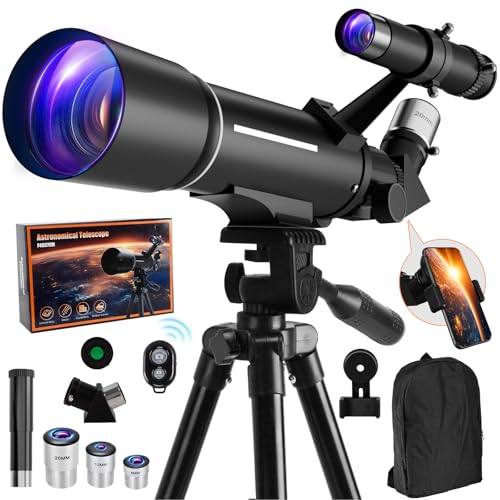


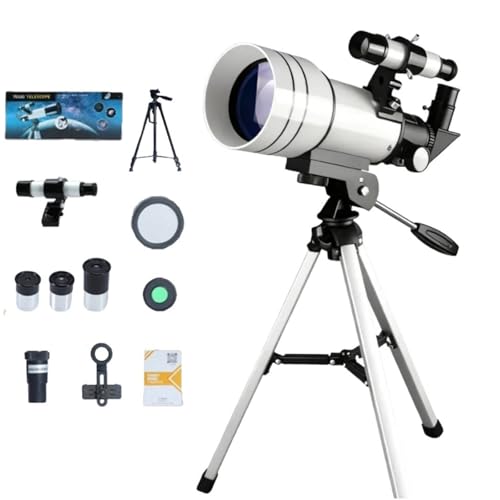


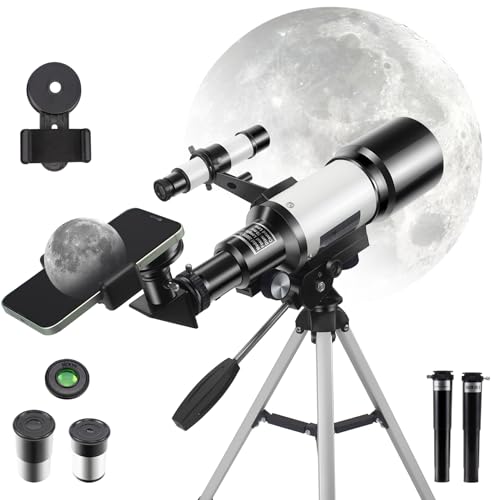

What Is A Telescope Used For?
A telescope is an optical instrument designed to gather light and magnify distant subjects. It can help you view the Moon, planets, stars, star clusters, bright nebulae, distant landscapes and wildlife from a fixed position.
Telescopes are used by beginners, families, astronomy enthusiasts, students, countryside observers and people who enjoy learning about the night sky. Some models are simple and portable, while others need more careful setup, alignment and support.
How To Choose The Right Telescope
Start with what you want to see. If your main goal is the Moon, planets and simple stargazing, a beginner friendly telescope with easy setup is usually the best starting point. If you want deeper sky objects, aperture, mount stability and darker viewing conditions become more important.
Aperture is one of the most important buying factors. It tells you how much light the telescope can gather. A larger aperture can show fainter objects and more detail, but it usually means a larger, heavier telescope.
Magnification matters, but it should not be the main reason to buy. A telescope with poor stability, weak optics or difficult focusing will not give good views just because the magnification sounds high. Clear optics, a steady mount and suitable eyepieces are usually more important than the biggest magnification number.
Refractor, Reflector Or Compound Telescope?
A refractor telescope uses lenses and is often simple to use, low maintenance and good for the Moon, planets and daytime viewing where suitable. The trade off is that larger refractors can become expensive or bulky.
A reflector telescope uses mirrors and can offer good light gathering for the price. Reflectors are popular for astronomy and can be useful for viewing fainter night sky objects. The trade off is that they may need occasional adjustment and are usually not suited to normal daytime viewing without the right design.
A compound telescope uses a combination of lenses and mirrors in a more compact design. These can be useful for astronomy and travel friendly setups, but they may cost more and need more careful handling.
Mounts, Tripods And Stability
A telescope is only as good as the mount holding it. A shaky mount can make even a good telescope frustrating because small movements are magnified when viewing distant objects.
An altazimuth mount moves up and down and side to side, which can be simple for beginners. An equatorial mount is designed to follow the motion of the night sky more accurately, but it usually takes more practice to set up and use.
For casual garden stargazing, simple and stable is often better than complicated. For more serious astronomy, a stronger mount can make viewing smoother and more enjoyable.
Key Features To Compare
When comparing telescopes, look at aperture, focal length, mount type, tripod stability, eyepieces, finder scope, portability, setup time, weight, optical design and whether the telescope suits astronomy, daytime viewing or both.
Eyepieces affect magnification and viewing comfort. A finder scope or red dot finder can help you aim the telescope at the right part of the sky. Portability matters if you need to move the telescope between the house, garden, car or a darker viewing location.
Also think about storage. A telescope that is too large or awkward may not get used as often as a smaller model that is quick to set up.
Beginner Telescope Or Advanced Astronomy Telescope?
Beginners should look for a telescope that is easy to assemble, easy to aim and steady enough to use comfortably. A simple setup that gives clear views of the Moon and brighter planets can be more rewarding than a complicated telescope that rarely leaves the box.
Enthusiasts may want larger aperture, better eyepieces, stronger mounts, tracking features or a design suited to darker sky locations. Serious astronomy users may compare optical design, mount accuracy, accessories and upgrade paths more carefully.
The best telescope is not always the most powerful one. It is the telescope that suits your space, patience, viewing goals and how often you will actually use it.
Using Telescopes Safely
Never look directly at the Sun through a telescope unless you have the correct specialist solar filter fitted safely to the front of the telescope and you know exactly how to use it. Looking at the Sun through a telescope without proper protection can cause serious eye damage.
Do not rely on sunglasses, ordinary tinted glass or makeshift filters for solar viewing. If you want to observe the Sun, use equipment specifically designed for safe solar observation and follow the manufacturer’s instructions carefully.
Use telescopes respectfully. Do not aim them into homes, gardens, private land or anywhere people would reasonably expect privacy.
Useful Telescope Accessories To Consider
Useful telescope accessories can include eyepieces, Barlow lenses, finder scopes, moon filters, star charts, phone adapters, carry cases, lens cloths, tripods, mounts, power supplies and storage bags.
Extra eyepieces can give different magnification options. A moon filter can make lunar viewing more comfortable. A carry case helps protect the telescope, eyepieces and small accessories when moving or storing the kit.
Choose accessories that match your exact telescope, as eyepiece sizes, mounts, adapters and fittings are not always universal.
Why Buy Telescopes From YPC?
At YPC, we have used a lot of outdoor equipment ourselves in real activity settings, so we understand why practical kit matters. A telescope needs to be clear, stable and suitable for where you will actually use it.
Browse the Telescopes range, compare the options and choose the telescope that fits your viewing goals, space and level of experience.
Telescopes FAQs
What is a telescope used for?
A telescope is used to view distant objects in greater detail. It can help with astronomy, Moon viewing, planet viewing, stargazing, countryside observation and long distance viewing.
What telescope is best for beginners?
A beginner telescope should be easy to set up, simple to aim and steady enough to use comfortably. Clear optics and a stable mount are more important than very high magnification.
What can I see with a beginner telescope?
A beginner telescope can often show the Moon, brighter planets, some star clusters and bright night sky objects, depending on the telescope, sky conditions and light pollution.
Is higher magnification better in a telescope?
Not always. Higher magnification can make the image harder to keep steady and may reduce clarity. Aperture, optical quality, eyepieces and mount stability are usually more important.
What is the difference between a refractor and reflector telescope?
A refractor telescope uses lenses, while a reflector telescope uses mirrors. Refractors are often simple to use, while reflectors can offer good light gathering for astronomy.
Do telescopes need a tripod?
Many telescopes need a tripod or mount to stay steady. Stability is very important because small shakes become much more noticeable when viewing distant objects.
Can I use a telescope in my garden?
Yes, a garden can be a good place to use a telescope, especially for the Moon and brighter planets. Darker skies away from street lights are usually better for fainter objects.
Can telescopes be used in daytime?
Some telescopes can be used for daytime viewing, but not all designs are ideal for it. Never use any telescope to look at the Sun unless it has the correct specialist solar filter.
Can I look at the Sun through a telescope?
No, not without the correct specialist solar equipment. Looking at the Sun through a telescope without proper protection can cause serious eye damage.
Are telescopes good for children?
Some beginner telescopes can suit children with adult supervision. Choose a simple, stable model and make sure children are taught never to point it at the Sun.
What accessories are useful for telescopes?
Useful accessories can include eyepieces, moon filters, finder scopes, star charts, phone adapters, carry cases, lens cloths and suitable mounts or tripods.
Is a telescope better than binoculars for stargazing?
A telescope is better for closer views of the Moon, planets and specific sky objects. Binoculars are often easier for wide sky scanning, quick viewing and learning the night sky.
 Getting ready for Summer? View our Home and Garden Products

Heading outdoors this winter? Take a look at our Outdoor Clothing.