

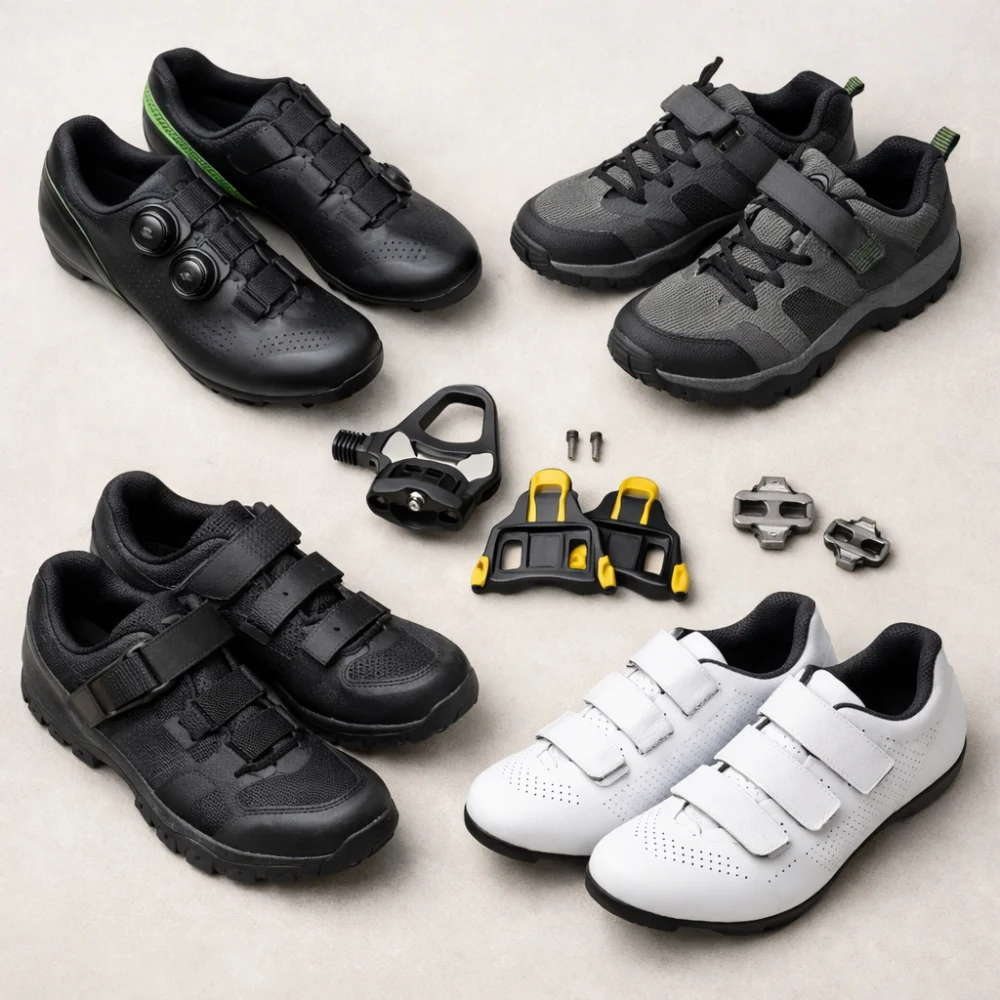

Cycling shoes can make riding feel more efficient and more secure, but the right choice depends on how you ride and what pedals you use. Some pairs are built for road riding, others for mountain biking, indoor training or everyday use, and those categories do not always overlap neatly.
If you are comparing options for the first time, the main task is to match the shoe to your pedal system, your comfort preferences and the kind of riding you actually do. A shoe that looks similar on the outside can behave very differently once you add cleats, walking needs and weather exposure.
Specifications vary by model, so always check the individual product page before buying.
Compare Cycling Shoes


As an Amazon Associate we earn from qualifying purchases.
What should I look for when choosing cycling shoes?
The best starting point is compatibility: make sure the shoe suits your pedal or cleat system before you consider anything else. After that, focus on fit, sole stiffness, closure type and whether you need a shoe that is easy to walk in as well as ride in. The main trade-off is usually between pedalling efficiency and everyday comfort off the bike.
| Feature | What it means | Why it matters | What to check |
|---|---|---|---|
| Pedal and cleat compatibility | Whether the shoe works with the pedal system you use | It affects whether you can fit and use the shoe at all | Look for the cleat pattern, pedal type and any system-specific wording on the product page |
| Sole stiffness | How much the sole flexes when you pedal or walk | Stiffer soles usually support more direct power transfer, while softer soles can feel easier to walk in | Check whether the shoe is described as more performance-focused or more walking-friendly |
| Closure system | The way the shoe tightens, such as straps, dials or laces | It influences how evenly the shoe fits and how easy it is to adjust on the move | Consider whether you prefer quick adjustment, a simple feel or a more personalised fit |
| Ventilation and weather protection | How open or covered the upper is | Helps you judge comfort in warm, wet or changeable conditions | Check the material description and whether the shoe is intended for summer, all-season use or indoor riding |
| Walkability | How practical the shoe is off the bike | Important if you stop often, commute, or walk on mixed surfaces | Look at tread shape, cleat recess and the overall shoe style |
| Fit shape | The overall shape and volume of the shoe | Fit has a big effect on comfort, especially on longer rides | Compare size guidance, width clues and any notes about unisex, men’s or women’s sizing |
Key decision criteria explained
Compatibility comes first
Cycling shoes are not one universal type. Road shoes, mountain-bike shoes, indoor shoes and casual commuter styles can all use different cleat arrangements or none at all. The most important check is whether the shoe matches the pedals you already have, or the pedals you plan to use.
If you are unsure, compare the shoe description with your pedal system rather than relying on appearance alone. A shoe may look similar to another style but still use a different cleat format.
Fit matters more than most buyers expect
A cycling shoe should feel secure without creating pressure points. Because your foot is held more firmly than in an ordinary trainer, small fit differences can matter on longer rides. Toe room, heel hold and overall width all affect comfort.
If you often find normal shoes too narrow or too loose, pay close attention to sizing notes and product details. Specifications vary by model, so always check the individual product page before buying.
Sole stiffness changes the riding feel
More rigid soles usually feel more direct when pedalling, which many riders prefer for road riding and harder efforts. More flexible soles can be more forgiving for walking and all-day use. Neither is automatically better; the right choice depends on whether your priority is riding performance or everyday practicality.
Closure style affects convenience
Straps, laces and dial systems each have different strengths. Simple closures can be quick and familiar, while more adjustable systems can help you fine-tune fit during a ride. Think about whether you want something easy to manage with gloves, or something that is set-and-forget.
Weather and terrain should shape the choice
A shoe intended for dry road riding may not be ideal for muddy paths, repeated rain or winter commuting. Some buyers also need a shoe that pairs well with overshoes or covers. Consider how often you ride in poor weather and whether the shoe needs to cope with walking, carrying the bike or stops on rough ground.
Common cycling shoe types and variants
The main variation is by riding style. Road cycling shoes are usually aimed at efficient pedalling and a secure feel on the bike, while mountain-bike and gravel-oriented shoes are often chosen by riders who need more walking practicality. Indoor cycling shoes are typically bought for studio or home use, where the focus is on pedal compatibility and comfort during the session.
Some shoes are more casual in appearance and are designed for commuters or mixed-use riders who want an easier transition between riding and everyday wear. The limitation is usually a compromise: the more a shoe is designed for walking or casual use, the less race-like it may feel on the bike.
Which cycling shoe suits which rider?
| Buyer need | What to prioritise | Typical trade-off |
|---|---|---|
| Road riding | Secure fit, stiffer sole, cleat system suited to road pedals | Less comfortable for frequent walking |
| Mountain biking or gravel riding | Walkability, tread, mud clearance and secure closure | Usually less streamlined than road-focused shoes |
| Indoor training | Cleat compatibility, comfort and easy fastening | Less need for weather protection |
| Commuting | Comfort off the bike, practicality and all-round versatility | May feel less performance-focused when riding hard |
| Occasional or beginner use | Simple fit, easy closure and clear compatibility | May not offer the most specialised ride feel |
Common mistakes to avoid
- Choosing by looks alone: two shoes can look similar while fitting different pedal systems. Check compatibility first.
- Ignoring walking needs: if you stop often or walk indoors and outdoors, a more walkable shoe may be the better choice.
- Assuming one size will feel like another brand: sizing can vary, so use the product page guidance rather than memory alone.
- Overlooking weather use: a shoe that feels fine in the dry may be less comfortable when conditions change.
- Buying more stiffness than you need: a performance-oriented shoe is not always the most practical option for commuting or mixed riding.
Safety and suitability checks
Cycling shoes should suit both your bike setup and your riding environment. If you use clip-in pedals, make sure you understand how the shoe interfaces with the cleat system you have chosen. If you ride in traffic, on rough surfaces or in wet weather, think about whether you also need practical grip and walking comfort off the bike.
It is also worth checking whether the shoe is intended for men, women or unisex use only as a sizing guide, not as a guarantee of fit. The best choice is the one that matches your foot shape, riding style and planned use.
Maintenance, storage and lifespan
Cycling shoes usually last longer when they are cleaned and dried after muddy or wet rides. Keep them stored somewhere ventilated rather than sealed up damp, and check closures, soles and cleat mounting points regularly for signs of wear. If your shoe uses replaceable cleats or covers, those accessories may need attention before the shoe itself does.
How long a pair remains comfortable or functional depends on how often you ride, how far you walk in them and the conditions they face. A shoe used mainly indoors will face different wear from one used for commuting in wet weather.
How to compare cycling shoes efficiently
- Start with your riding style: road, mountain bike, indoor, commuting or mixed use.
- Check the pedal and cleat compatibility before comparing anything else.
- Compare fit clues, closure type and sole stiffness against your comfort needs.
- Think about weather, walking and storage needs, not only riding performance.
- Read the individual product page carefully for the details that matter to that model.
Summary buyer decision checklist
- Does the shoe match your pedal or cleat system?
- Will you need to walk in it regularly?
- Is the fit likely to suit your foot shape and sizing needs?
- Is the sole stiffness appropriate for your riding style?
- Does the closure style match how you like to adjust footwear?
- Will the shoe work in the conditions you usually ride in?
Frequently asked questions
Do all cycling shoes work with all pedals?
No. Compatibility depends on the pedal and cleat system, so this is the first thing to confirm. If the shoe is not matched to your pedals, it may not be usable in the way you expect.
Are cycling shoes meant to be very tight?
They should feel secure, but not painfully tight. A firm hold helps control the foot on the pedal, while pressure points or numbness suggest the fit is wrong.
Can I walk normally in cycling shoes?
That depends on the type of shoe. Some are designed with walking in mind, while others are better suited to riding than to frequent use off the bike.
Should beginners choose road-style shoes?
Not necessarily. Beginners often benefit from choosing the style that best matches their riding rather than the most performance-focused option. Comfort, compatibility and ease of use usually matter most at first.
Do I need cycling shoes for indoor training?
They are not always essential, but they can help if your bike or studio setup uses compatible pedals. Check the system you will use before buying.
How important is sole stiffness?
It matters, but not in the same way for every rider. Stiffer soles may feel more efficient when pedalling, while less stiff shoes can be more comfortable for walking and mixed use.
What is the main difference between road and mountain-bike cycling shoes?
Road shoes are generally chosen for a more direct pedalling feel, while mountain-bike shoes are often preferred when walking, grip and off-bike practicality matter more. The right choice depends on how you ride and where you spend time off the bike.
Check the cleat mounting pattern as well as the pedal system
Compatibility has two parts: the cleat must suit the pedal, and the shoe must have a mounting pattern that accepts that cleat. Many off-road shoes use a two-bolt mounting pattern, while many road shoes use a three-bolt pattern, but these are common arrangements rather than rules for every model. Check the shoe and pedal details together rather than assuming a cleat will fit because the shoe is labelled for road or mountain biking.
Also check whether cleats are included or need to be obtained separately. If you already own pedals or cleats, confirm the exact system and mounting requirements before choosing a shoe; when details are unclear, seek confirmation from the product information or retailer.
More Cycling Shoes
See all 309 Cycling Shoes →


As an Amazon Associate we earn from qualifying purchases.


