

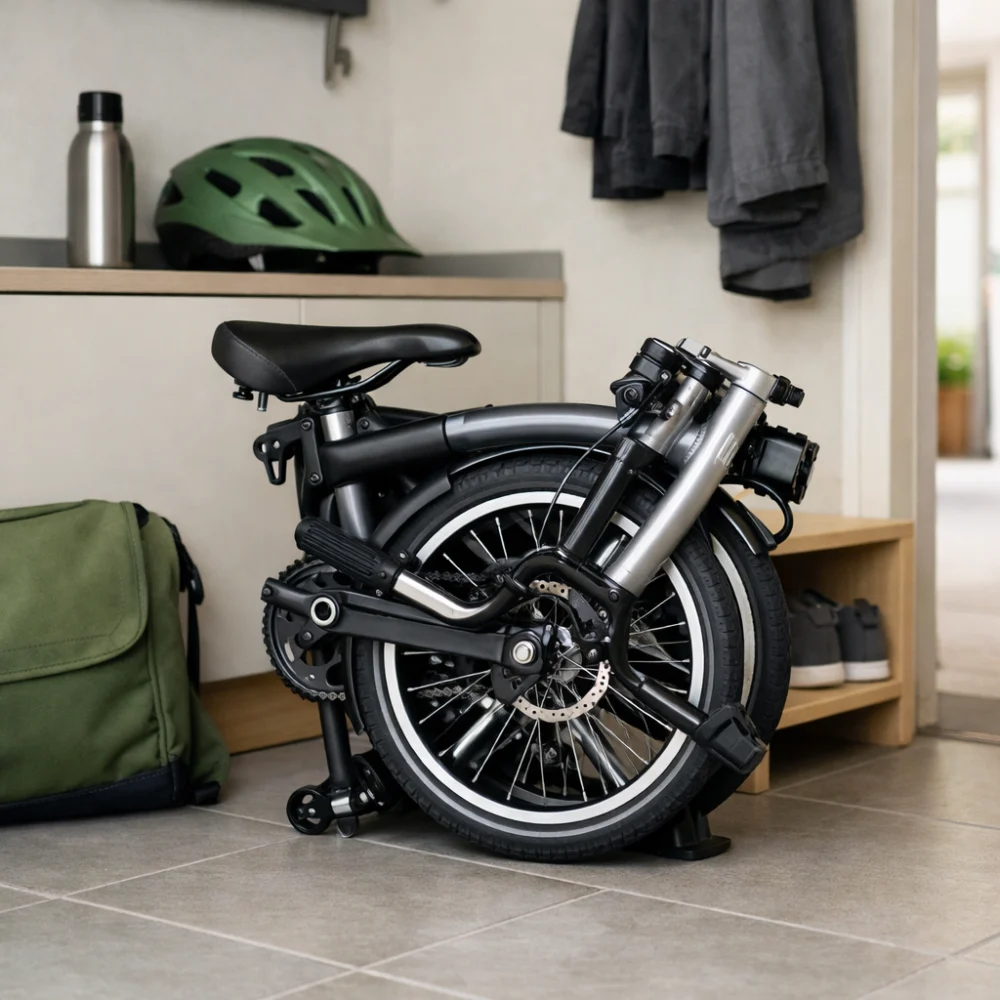
Folding bikes are a practical choice when you need a bicycle that is easier to store, carry or combine with other transport. They appeal to commuters, apartment dwellers, car boot users and anyone who wants a bike that takes up less space when not in use.
The right folding bike depends less on one headline feature and more on how you plan to use it. Wheel size, gearing, folded size, carrying weight and ride comfort can all matter, and the balance between them is different for every rider.
If you are comparing folding bikes for the first time, focus on where the bike will live, how often you will carry it, and how far you expect to ride. Those three questions usually narrow the choice faster than looking at appearance alone.
Compare Folding Bikes


As an Amazon Associate we earn from qualifying purchases.
What should you look for in a folding bike?
The best starting point is your main use case. A folding bike that is easy to carry is not always the most comfortable for longer rides, while a more stable-riding model may be less convenient to lift or store. Think in terms of trade-offs rather than trying to find one bike that does everything equally well.
Specifications vary by model, so always check the individual product page before buying.
| Feature | What it means | Why it matters | What to check |
|---|---|---|---|
| Folded size | How compact the bike becomes when folded | Important for storage, trains, cars and small homes | Measure the space you have available and compare the folded dimensions |
| Weight | How heavy the bike is to lift and move | Matters if you need stairs, carry it onto transport or lift it regularly | Look for the stated weight and think about how far you will carry it |
| Wheel size | The size of the wheels fitted to the bike | Affects ride feel, stability and compactness when folded | Consider whether you want a more compact fold or a more road-like ride |
| Gearing | How many gear options the bike offers | Helps with hills, headwinds and varied routes | Check whether the gearing suits your terrain and typical journey length |
| Braking system | The type of brakes fitted to the bike | Influences stopping feel and maintenance needs | Read the product details to see the brake type and any setup notes |
| Frame and folding mechanism | How the bike folds and the materials used | Can affect ease of folding, carry comfort and overall durability | Look for the fold style, hinge description and any handlebar or pedal folding features |
Key decision criteria explained
Where will you store it?
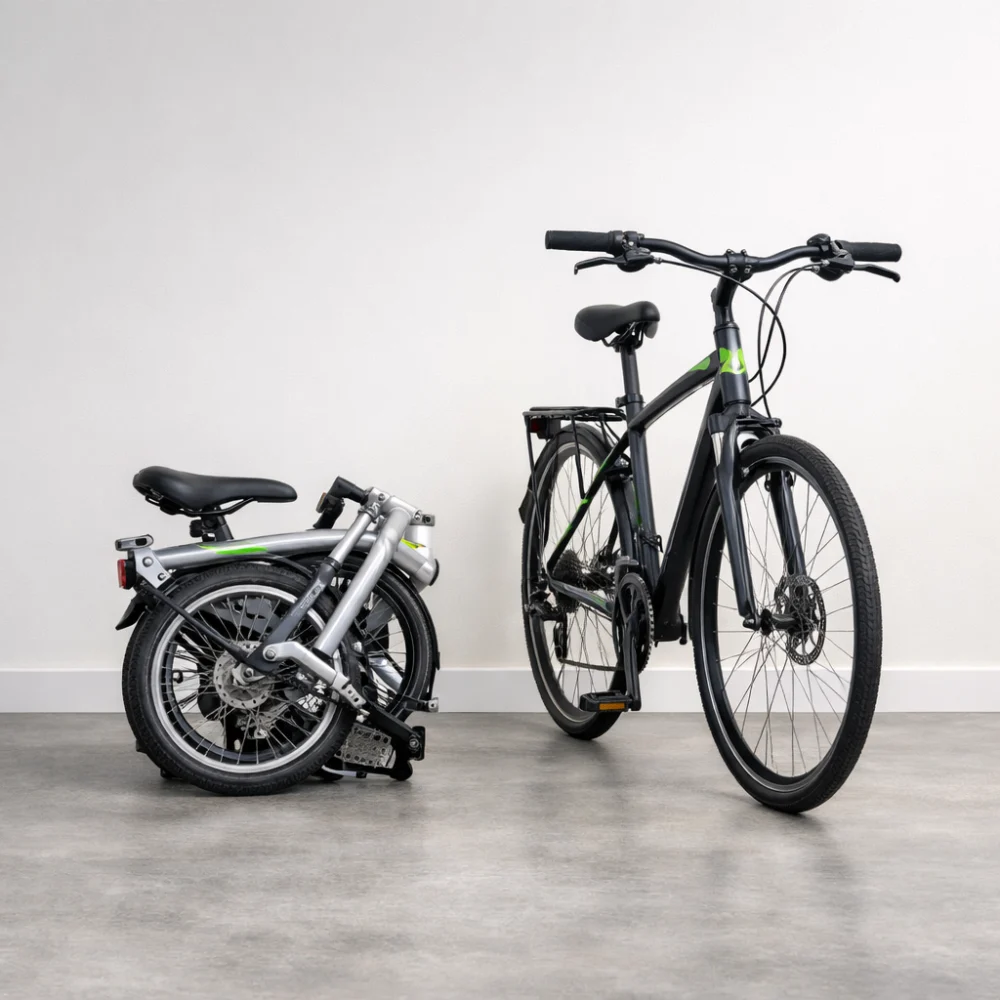
If space is tight, the folded dimensions may be more important than almost anything else. A bike that folds neatly can be easier to keep indoors, under a desk or in a car boot, but the smallest fold is not always the lightest or easiest to ride.
How often will you carry it?
Some riders only fold a bike occasionally, while others need to lift it often. If you expect stairs, station platforms or frequent carrying, weight and carrying shape become more important than extra comfort features.
How far and how fast will you ride?
For short urban hops, convenience may matter more than ride softness. For longer commutes or regular leisure rides, a more settled riding position and a sensible gear range may be worth prioritising over the absolute smallest fold.
What kind of route do you ride?
Flat city routes usually place different demands on a folding bike than hilly or mixed terrain. A simple city setup may suit short, predictable journeys, while more varied routes can make gearing and overall stability more relevant.
Common folding bike types and variants
Folding bikes are often grouped less by strict category and more by how they are set up for everyday use. The main differences usually come from riding position, wheel size, gearing and the overall emphasis of the design.
- Compact city styles suit short commutes, mixed transport and easier storage. Their main trade-off is that they may feel less relaxed on longer rides.
- More road-focused folding bikes are aimed at covering longer distances more comfortably. Their trade-off is often a larger or less compact folded package.
- More rugged or mixed-surface styles are intended for rougher routes or a broader range of riding. They may be a sensible compromise, but they are not always the easiest to carry or store.
Which folding bike suits which buyer?
| Buyer need | What to prioritise | Why it helps |
|---|---|---|
| Daily commuter with limited storage | Compact fold, manageable weight, easy carry points | Makes the bike simpler to store indoors and move through stations or buildings |
| Short local journeys | Convenient fold, easy handling, straightforward gearing | Keeps the bike practical for quick trips without unnecessary complexity |
| Longer rides | Comfort, stable ride feel, suitable gearing | Helps the bike feel less compromised over more time in the saddle |
| Mixed transport use | Folded size and liftability | Important if the bike will be carried, packed or moved frequently |
| Buyer with storage constraints | Folded footprint and ease of folding | Helps ensure the bike will actually fit the space available at home or work |
Common mistakes to avoid
- Choosing only by folded size. A very compact fold can be useful, but it may come with a heavier lift or a firmer ride.
- Ignoring the real carry weight. If you need to lift the bike often, a small difference in weight can matter more than expected.
- Overlooking gearing. A simple setup can be fine on flat ground, but less suitable if your route includes hills.
- Assuming all folding bikes ride the same. Wheel size, frame geometry and components can make two bikes feel very different.
- Forgetting about where it will be stored. Measure the place you plan to keep it before you buy, not after.
Suitability and practical caveats
Folding bikes are designed for convenience, but they still need to suit your body, your route and your storage needs. Check the individual product page for the folded dimensions, weight, gearing and brake details rather than assuming all folding bikes share the same setup.
If you plan to use the bike in busy shared spaces, on public transport or in a car, think about how easy it will be to fold, lift and secure. A convenient design is often the one you can handle confidently in everyday conditions, not just the one with the smallest folded footprint.
Maintenance, storage and everyday ownership
Like any bike, a folding bike benefits from regular cleaning, basic checks and sensible storage. Moving parts, folding joints and brakes may all need attention over time, so it is worth looking for a bike that seems practical to live with, not just attractive on paper.
If you will store it indoors, make sure you have a dry, safe place where the folded bike will not be knocked over or obstructed. If you expect to fold and unfold it frequently, choose a design that seems straightforward to use rather than one that looks awkward to handle.
How to compare folding bike options efficiently
- Decide where the bike will be used most often.
- Work out how much storage space and carrying effort you can realistically manage.
- Compare folded size, weight, gearing and wheel size first.
- Think about the trade-off between compactness and ride comfort.
- Check the individual product page for the exact specifications before you choose.
Summary buyer decision checklist
- Will the folded bike fit the space you have available?
- Can you lift and carry it comfortably when needed?
- Is the gearing suitable for your route and hills?
- Does the wheel size suit your balance of compactness and comfort?
- Does the brake and frame setup match how you plan to ride?
- Have you checked the exact product page for the final specifications?
Frequently asked questions
Are folding bikes only for commuting?
No. Commuting is a common use, but folding bikes are also useful for leisure rides, storage-limited homes and journeys that mix cycling with other transport. The important question is whether the bike suits your route and how you plan to carry or store it.
Is a smaller folded bike always better?
Not necessarily. A smaller fold can be easier to store, but it may not be as comfortable or stable for longer rides. It is usually better to balance folded size against weight, ride feel and ease of carrying.
Do folding bikes feel different from standard bikes?
They often do, especially in how they fold, carry and store. Some riders notice differences in steering feel, comfort and ride stability depending on wheel size and frame design. That is why it helps to compare the overall setup rather than focus on one feature alone.
What matters most for a folding bike commuter?
For most commuters, the main questions are whether the bike is easy to fold, easy to lift and suitable for the route. Folded size matters if storage is tight, but weight and gearing can be just as important if you need to handle the bike every day.
Should I choose more gears or a simpler setup?
Choose gears based on your route. If your riding is mostly flat and short, a simpler setup may be perfectly adequate. If you face hills or longer distances, extra gearing can make the bike easier to live with.
What should I check before ordering one online?
Check the folded dimensions, weight, gearing, brake type and any notes about the folding mechanism. It is also sensible to think about your storage space and whether you will need to carry the bike up stairs or onto transport.
Check that the bike fits its intended rider
A compact fold does not guarantee a suitable riding fit. Check any stated rider height or load limits, and whether the saddle and handlebar adjustments can accommodate the intended rider comfortably. If more than one person will use the bike, make sure the specified fit range suits each of them rather than assuming one setup will work for everyone.
More Folding Bikes
See all 280 Folding Bikes →


As an Amazon Associate we earn from qualifying purchases.


