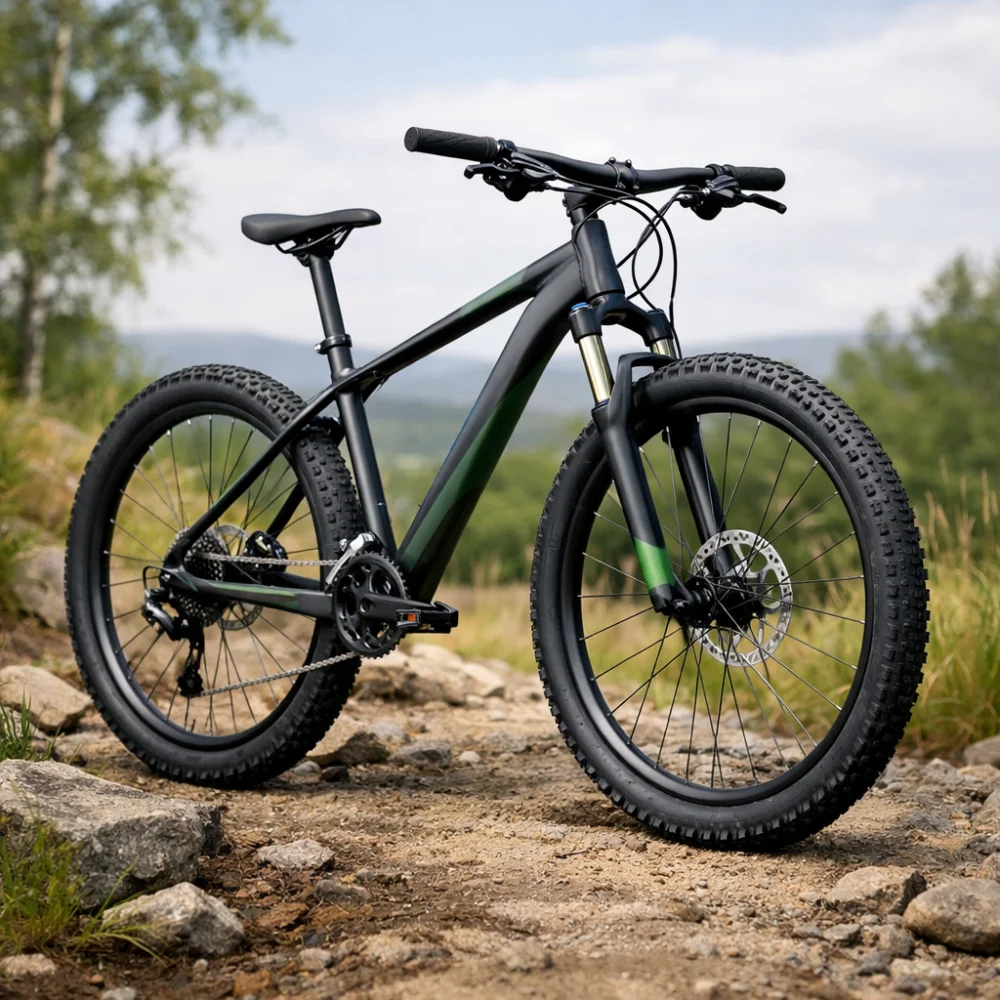

Mountain bikes are built for mixed surfaces, rough paths and off-road riding, but the right choice depends on where you plan to ride and how confident you feel on the bike. Some buyers want a simple bike for local trails and park paths, while others need something more capable for steeper or rougher ground.
This guide helps you compare the main decisions without getting lost in technical detail. It focuses on the choices that usually matter most at category level: frame style, suspension, brake type, tyre choice and overall fit for the rider.
If you are choosing between similar-looking bikes, the biggest differences are often in comfort, control and how much maintenance you are prepared to manage. Specifications vary by model, so always check the individual product page before buying.
Compare Mountain Bikes


As an Amazon Associate we earn from qualifying purchases.
What should you look for in a mountain bike?
The best starting point is the kind of riding you expect to do most often. A bike for gentle off-road routes can feel very different from one intended for rougher trails, and a design that looks similar on paper may suit a different rider profile. The main trade-off is usually between comfort, capability and simplicity: more capable bikes can be more complex, while simpler bikes can be easier to live with.
Think first about terrain, rider fit and the level of control you want, then compare the suspension, braking and tyre setup. That approach is usually more useful than focusing on one headline feature in isolation.
| Feature | What It Means | Why It Matters | What To Check |
|---|---|---|---|
| Intended terrain | The kind of ground the bike is designed to handle. | Helps match the bike to trails, paths or mixed-use riding. | Look at the product description for the suggested riding use. |
| Suspension | Whether the bike has no suspension, front suspension or full suspension. | Affects comfort, control and how the bike handles bumps. | Check the suspension type and whether it suits your routes. |
| Brakes | The braking system used on the bike. | Influences stopping feel and confidence in varied conditions. | Confirm the brake type on the individual listing. |
| Tyres | Tyre shape and tread intended for different surfaces. | Changes grip, rolling feel and comfort on rough ground. | Look for tyre description and whether it suits trail or mixed riding. |
| Frame and fit | The size and shape of the bike relative to the rider. | Affects comfort, control and how easy the bike is to handle. | Check frame size, wheel size and any sizing guidance provided. |
| Drivetrain | The gearing setup that helps with climbing and speed changes. | Supports easier pedalling across varied terrain. | Review the number of gears and the intended use. |
Key decision criteria explained
Frame size and rider fit
A mountain bike should feel manageable, stable and comfortable for the rider. Fit matters because a bike that is too large or too small can be harder to control and less enjoyable to ride. Check the frame size, wheel size and any sizing advice on the product page, especially if the bike is for a younger rider or someone returning to cycling.
Suspension choice
Suspension helps smooth out bumps and can improve comfort on uneven ground. A front suspension bike may suit riders who want a simpler setup for light trails and paths, while a full suspension bike may appeal to people expecting rougher terrain and more impact from the ground. The trade-off is usually between comfort, weight, complexity and maintenance expectations.
Braking feel
Brakes affect confidence as much as stopping power. Some riders prefer a straightforward setup for general use, while others want stronger, more controlled braking for steeper or wetter conditions. Check what brake system is fitted and remember that the feel of the bike depends on the full setup, not just one component.
Tyre style and grip
Tyres are one of the clearest signs of how a bike is intended to be used. A more aggressive tread can help on loose ground, while a less knobbly tyre may feel easier on paths and harder surfaces. Choose a tyre style that suits your regular routes rather than the most extreme terrain you might only ride occasionally.
Gearing and climbing
Gears help the rider keep pedalling comfortably when the route changes. If you expect hills or mixed off-road climbs, gearing becomes more important than it might for flatter, easier rides. Look at the number of gears and the overall description of the bike, but avoid assuming that a higher number automatically means a better ride for your needs.
Mountain bike types and variants
At category level, the main differences are usually less about a strict type name and more about how the bike is built for its intended use.
- Hardtail mountain bikes: These usually have front suspension only and are often chosen for simplicity and lower maintenance expectations. They can suit general trail use and mixed riding where full suspension is not necessary.
- Full suspension mountain bikes: These add rear suspension as well, which can improve comfort and control on rougher ground. They may suit riders who want a more forgiving ride, but they are typically more complex.
- Budget or entry-level mountain bikes: These can be appealing for casual use, occasional trails or first-time buyers. The trade-off is often fewer refinement features, so checking fit and intended use is especially important.
- Heavier-duty or terrain-focused bikes: These are aimed more at demanding terrain and riders who prioritise stability and control. They may be less convenient for everyday use on smoother routes.
Which mountain bike suits which rider?
| Buyer need | What usually matters most | Why that matters |
|---|---|---|
| Beginner or occasional rider | Simple setup, comfortable fit and easy handling | Makes the first few rides more enjoyable and less intimidating. |
| Mixed paths and light trails | Balanced suspension, reliable brakes and sensible tyres | Works across a range of surfaces without overcomplicating the bike. |
| Rougher trails | More control, stronger suspension and stable tyre grip | Helps the bike feel composed on more uneven ground. |
| Commuting with off-road shortcuts | Practical comfort and a setup that is not too extreme | Balances trail ability with easier everyday use. |
| Younger rider | Appropriate size, manageable weight and easy reach | Fit and control matter more than extra features. |
Common mistakes and misunderstandings
- Choosing by appearance alone: A bike can look capable without being the right fit for the rider or terrain.
- Focusing only on the number of gears: More gears do not automatically mean a better bike for your routes.
- Ignoring fit: A bike that is uncomfortable or awkward to control is unlikely to feel right, even if the specification looks impressive.
- Assuming one suspension type suits everyone: The right choice depends on where and how often the bike will be used.
- Overbuying for the route: A very capable bike may be unnecessary if most riding is on easier surfaces.
Safety and suitability caveats
Mountain bikes vary widely in how they feel and what they are suited to, so the product description matters. Check that the bike is intended for the kind of riding you plan to do, and make sure the rider can comfortably manage the size and control setup. If the bike will be used for a child, a gift or a return to cycling after a long gap, fit and confidence should be considered just as carefully as features.
Maintenance, storage and ownership considerations
Mountain bikes usually need more care than a simple leisure bike if they are used off road, because dirt, moisture and rough surfaces can affect the moving parts. Think about how often you are willing to clean the bike, whether you have dry storage and whether you are comfortable with a more involved setup such as suspension. A bike that is easier to maintain may be a better long-term choice than one with extra features you will not use.
How to compare mountain bikes efficiently
- Start with the terrain you will ride most often.
- Decide whether you want the simplicity of a less complex bike or the comfort of a more capable setup.
- Compare fit, suspension, brakes, tyres and gears rather than one feature in isolation.
- Check the product page for the specific size guidance and component description.
- Choose the bike that best matches your actual use, not the most ambitious version of it.
Summary buyer decision checklist
- Have you matched the bike to the terrain you will ride most often?
- Does the size and fit sound suitable for the rider?
- Have you checked the suspension type and whether it is appropriate?
- Do the tyres and brakes suit the sort of riding you plan to do?
- Have you compared the gearing and overall complexity with your needs?
- Have you read the individual product page for the exact specification?
Frequently asked questions
Do I need full suspension for a mountain bike?
Not always. Full suspension can be useful for rougher ground, but many riders are better served by a simpler bike if their routes are mainly paths, light trails or mixed surfaces. The right choice depends on comfort, control and how demanding the riding will be.
Is a mountain bike suitable for everyday use?
It can be, especially if your route includes poor surfaces, kerbs or occasional off-road sections. The trade-off is that a more trail-focused bike may feel less efficient on smooth roads than a bike designed mainly for everyday riding.
What matters more: gears or suspension?
Both matter, but in different ways. Suspension affects comfort and control over bumps, while gears help with climbing and changing terrain. For many buyers, fit and intended use are still more important than either feature on its own.
How do I know what size mountain bike to buy?
Check the size guidance on the individual product page and match it to the rider’s height and reach comfort where guidance is provided. A bike that fits well is easier to control and more pleasant to ride.
Are wider tyres always better?
Not necessarily. Wider or more aggressive tyres can improve comfort and grip on rougher ground, but they are not automatically the best choice for every route. It is usually better to choose tyres that suit your main terrain rather than the most extreme conditions you might only encounter occasionally.
Can a beginner buy a mountain bike?
Yes. Beginners often do well with a straightforward bike that feels stable, comfortable and easy to handle. It is usually wiser to prioritise fit and sensible features over a more complex setup.
Wheel size and frame material
How to compare wheel sizes
Wheel size can affect how a bike feels and how well it suits the rider, but it does not determine fit on its own. Compare it alongside the frame size and the product’s sizing guidance; this is particularly useful when choosing a bike for a younger rider. Avoid choosing by wheel size alone if the product page gives more specific fit information.
What frame material tells you
The frame material is one part of the bike’s overall design, not a standalone measure of quality or suitability. If the product information gives the material and weight, consider those details alongside fit, intended terrain and the rest of the specification. A material label alone cannot tell you how the complete bike will feel or perform.
More Mountain Bikes
See all 204 Mountain Bikes →


As an Amazon Associate we earn from qualifying purchases.