

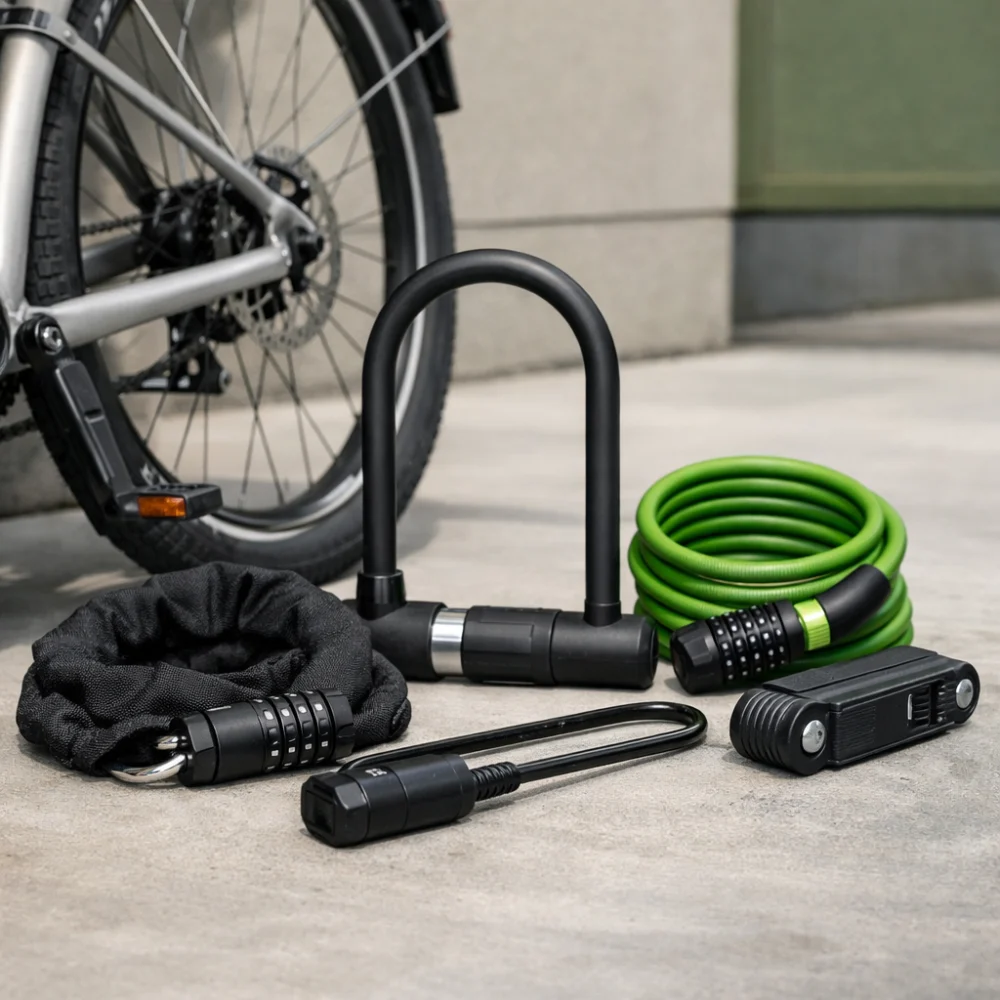

Choosing a cycling lock is mostly about matching security, convenience and carrying practicalities to how you use your bike. A lock that is easy to carry but too light for your parking routine can be the wrong trade-off, while a heavier option may be awkward for everyday riding.
This guide helps you compare the main lock styles and decide what matters most before you buy. It focuses on real shopping questions such as where you park, how often you lock up and how much inconvenience you are willing to accept for better security.
If you are buying a lock for a new bike, a commuter bike or a second lock for added peace of mind, the key is to judge the product by its intended use rather than by appearance alone. Specifications vary by model, so always check the individual product page before buying.
Compare Cycling Locks


As an Amazon Associate we earn from qualifying purchases.
What should you look for in a cycling lock?
The best starting point is the place and duration of parking. Short stops in lower-risk places may suit a lighter, more portable lock, while longer unattended parking usually calls for a more substantial option. The other main trade-off is convenience: stronger locks often weigh more, take up more space or are slower to use.
| Feature | What it means | Why it matters | What to check |
|---|---|---|---|
| Lock type | The style of lock, such as U-lock, chain, folding or cable | Different shapes suit different parking situations and carrying preferences | Think about what you lock to, how much flexibility you need and how easy it is to transport |
| Security level | The relative strength or resistance of the lock | Helps you match the lock to the risk level of the parking area | Look for the product’s stated security information and compare it with your use case |
| Portability | How easy it is to carry on the bike or in a bag | Important if you ride daily and do not want extra bulk | Consider weight, pack size and whether a mount, pouch or bracket is included |
| Length or reach | How much space the lock gives you around the bike and fixture | More reach can make it easier to secure the frame and wheel properly | Check whether the lock can fit your usual parking points and bike setup |
| Key or combination | How the lock is opened | Affects ease of use and the risk of losing access | Choose the style you will find simpler to manage day to day |
| Mounting or storage | How the lock is carried when not in use | A tidy carry solution can make a heavier lock more practical | See whether a bracket, pouch or clip is included and whether it suits your bike |
Key decision criteria explained
Security level and parking risk
Not every lock needs to do the same job. A lock used for a quick café stop has different needs from one left outside a station all day. A more robust lock usually brings more reassurance, but it may also be heavier and less convenient to carry.
Rather than assuming the toughest-looking option is always the right choice, consider how tempting your bike may be to someone else and how long it is likely to be unattended. Check the individual product page for the lock’s stated security details and use that alongside your own parking routine.
Lock type and everyday handling
U-locks, chains, folding locks and cable-style locks each bring different advantages. A rigid shape can feel secure and straightforward to use, while a chain may offer more flexibility around awkward stands or rails. Folding designs often aim to balance compact storage with useful reach, and cable-style locks are usually chosen for lighter duty or as a secondary lock.
The main compromise is between flexibility, weight and perceived security. Think about the objects you lock to, whether you need to secure both frame and wheel, and how quickly you want to lock and unlock the bike.
Length, reach and fit
Lock size matters more than many buyers expect. Too little reach can make everyday use frustrating, especially if you need to secure the bike to thicker stands or beside another bicycle. Too much length can add bulk and may be harder to carry neatly.
Check the lock’s dimensions against the kind of places you normally park. If you ride a bike with larger tyres, accessories or a frame shape that is hard to thread through narrow gaps, a little extra room can be useful.
Carrying and mounting
If you ride often, the easiest lock is usually the one you can carry without thinking about it. Some locks are designed to sit on the bike frame, while others are better kept in a bag or basket. A lock that is annoying to transport is more likely to be left behind, which reduces its practical value.
Look for mounting or storage options only if they suit your bike and riding setup. A simple carry method is often more useful than a more complex one that does not fit well in practice.
Open with a key or combination
Keyed and combination locks both have their place. A key can be quick and familiar, while a combination avoids carrying a separate key. The better choice depends on what you are more likely to manage reliably in daily use.
Consider whether you want one less item to carry, or whether you prefer the simple certainty of a physical key. The right answer is usually the one that suits your habits, not the one that sounds more technical.
Common lock types and who they suit
- U-locks: A compact, rigid shape that can be practical for routine locking where security and portability both matter.
- Chain locks: Flexible around different fixtures and bike positions, though they can be bulkier to carry.
- Folding locks: A middle ground for riders who want easier storage without a very loose, floppy carry solution.
- Cable and lighter locks: Useful where portability matters more, or as an extra layer rather than the only lock.
Each type is a compromise. A more flexible lock may be easier to live with, while a more rigid lock may be better for everyday confidence. The important question is how well the style matches your parking routine.
Which lock suits different buyers?
| Buyer need | What to prioritise | Why it helps |
|---|---|---|
| Daily commuter | Good balance of security, quick use and carry comfort | You are more likely to use it consistently if it is not awkward to manage |
| Occasional rider | Simple storage and straightforward locking | You may value convenience more than a very heavy-duty setup |
| Long-stay parking | Higher security and the ability to secure the frame properly | Longer unattended periods usually justify a stronger choice |
| Secondary lock buyer | Compact size and easy handling | An extra lock can add deterrence without becoming too cumbersome |
| Gift buyer | Broad usefulness and low-fuss storage | A practical, general-purpose lock is easier to choose when you do not know the recipient’s exact setup |
Common mistakes to avoid
- Choosing on appearance alone: A bulky-looking lock is not automatically the right fit. Check the type, size and storage method instead.
- Underestimating the parking situation: A lock that feels fine for a quick stop may not be enough for longer unattended parking.
- Ignoring carry practicalities: If the lock is unpleasant to transport, you may stop using it as intended.
- Not checking the lock length: A lock that is too short can be awkward even if it seems secure on paper.
- Assuming one lock suits every job: Some riders need a main lock plus a lighter backup rather than a single compromise choice.
Safety and suitability caveats
A cycling lock is only one part of protecting a bike. Suitability depends on where the bike is left, what it is attached to and how much time it will be unattended. No lock can be treated as a guarantee against theft, so it is sensible to match the product to the situation rather than to assume any one option is enough for every case.
Also think about whether the lock will fit your usual parking points and whether you can carry and use it comfortably. A lock that is inconvenient may not get used consistently, even if it looks suitable at first glance.
Maintenance, storage and lifespan considerations
Most locks are straightforward to live with, but they still benefit from sensible care. Keep the locking mechanism clean and dry where practical, store the lock so it does not rattle or rub during rides, and check that the key or combination method remains easy to use over time.
If a lock is mounted on the bike, make sure the fixing method stays secure. If it is carried in a bag or pannier, look for a storage approach that protects your bike frame and keeps the lock easy to reach when you need it.
How to compare options efficiently
- Start with where you park most often and how long the bike is left unattended.
- Choose a lock type that fits that routine and is realistic to carry.
- Compare length, mounting, opening method and the stated security details.
- Think through the trade-off between portability and reassurance.
- Check the individual product page for the exact details before buying.
Summary buyer decision checklist
- Will the lock suit the places where you usually park?
- Is the type of lock practical for your daily riding routine?
- Does the length give you enough reach for your frame and parking point?
- Is the carrying or mounting method convenient enough that you will actually use it?
- Have you checked the product page for the exact security and size details?
Frequently asked questions
Is a heavier lock always better?
Not necessarily. Heavier locks are often more substantial, but the right choice depends on where you park and how much weight you are willing to carry. A lock that is too awkward to use may be left at home, which defeats the purpose.
Do I need a long lock for a bike?
Only if your usual parking setup makes it useful. Longer locks can be easier to thread around thicker stands or multiple parts of the bike, but they may be bulkier. Check the reach against the places you actually lock up.
Should I choose a key or combination lock?
Choose the one that suits your routine. Keys are familiar and simple, while combination locks remove the need to carry a key. The practical answer is the option you are least likely to misplace or misuse.
Are cable locks enough on their own?
They can be suitable for lighter-duty use or as an extra layer, but they are usually chosen for convenience rather than maximum reassurance. If the bike will be left for longer periods or in a higher-risk area, a more robust lock style may be more appropriate.
What matters more: the lock type or the size?
Both matter. The type affects how practical and secure the lock feels, while the size affects whether you can actually use it easily in your usual parking spots. A well-chosen lock needs to work on both counts.
Can one lock suit every bike?
Usually not perfectly. A lock that works well on a commuter bike may be less convenient on a smaller frame, a bike with accessories or one that is carried in a different way. It is better to choose for the bike and the parking situation together.
More Cycling Locks
See all 237 Cycling Locks →


As an Amazon Associate we earn from qualifying purchases.


