Plyometric boxes are a simple but versatile piece of training equipment for jump work, step-ups, conditioning drills and general functional exercise. They are used in home gyms, studios and sports training spaces, but the right choice depends on who will use it, how much space you have and how demanding the training plan is.
This guide focuses on the practical differences buyers are likely to compare, rather than listing every possible model feature. If you are choosing between foam, wooden or metal styles, the main questions are about stability, size, surface feel, storage and how the box will fit your training.
Because the category includes many product styles and sizes, it helps to start with your intended use and then narrow down the material and height options that suit it.
What should you look for in a plyometric box?
The best starting point is to match the box to the user and the exercise. A softer foam style may suit people who want a more forgiving landing surface, while a firmer box may suit controlled step-ups or training where a stable, rigid platform matters more. Storage and available floor space also matter, especially if the box will be moved often.
Specifications vary by model, so always check the individual product page before buying.
| Feature | What it means | Why it matters | What to check |
|---|---|---|---|
| Material | Commonly foam, wood or metal-style construction | Affects feel, rigidity and how forgiving the box is on contact | Which material suits the intended exercise and user confidence |
| Height options | One fixed height or multiple usable heights | Changes the exercise challenge and how versatile the box is | Whether the box offers one height or several usable faces |
| Stability | How securely the box stays in place during use | Important for safer-feeling training and smoother movement | Base design, construction style and whether it is meant for dynamic use |
| Surface finish | Outer covering or texture on the box | Influences grip, comfort and ease of cleaning | Whether the surface is designed for indoor training and regular handling |
| Size and footprint | How much floor space the box occupies | Determines where it can be used and stored | Dimensions and whether the box can be moved or stacked |
| Weight and portability | How easy it is to move around | Useful if the box will be shared or stored between sessions | Whether it can be carried, repositioned or stored without difficulty |
Key decision criteria
Material and construction
Material is one of the biggest differences buyers notice. Foam styles are often chosen for a more forgiving feel, while wooden or metal-style boxes appeal to buyers who want a firmer training platform. The trade-off is usually between comfort and rigidity, so think about who will use the box and how confident they are with jumping or step-up movements.
Check whether the box is intended for repeated dynamic training, not just light use, and whether its construction suits your flooring and space.
Fixed height or multi-height use
Some plyometric boxes provide a single height, while others can be used at more than one height by changing the orientation or configuration. Multi-height designs are useful when several people will use the same box or when you want more progression from one item. A fixed-height box can be simpler and more predictable for a specific training plan.
If the box offers more than one usable height, make sure you are comfortable with how those heights work in practice.
Stability and footprint
For this category, stability is often more important than a buyer expects. A box that feels secure underfoot can make training easier to plan and less distracting to use. At the same time, a larger footprint may be less convenient in a small home gym or shared room.
Compare the base size, the overall footprint and how much open space you need around the box for safe movement.
Surface and handling
The outer surface affects everyday use more than many shoppers realise. A smoother finish may be easier to wipe clean, while a more textured surface may feel more reassuring for grip. If the box will be moved regularly, handling points and overall shape can also matter.
Look for details that suggest the box is easy to reposition without creating awkward lifting or storage problems.
Common plyometric box types
There are a few broad styles that tend to suit different users.

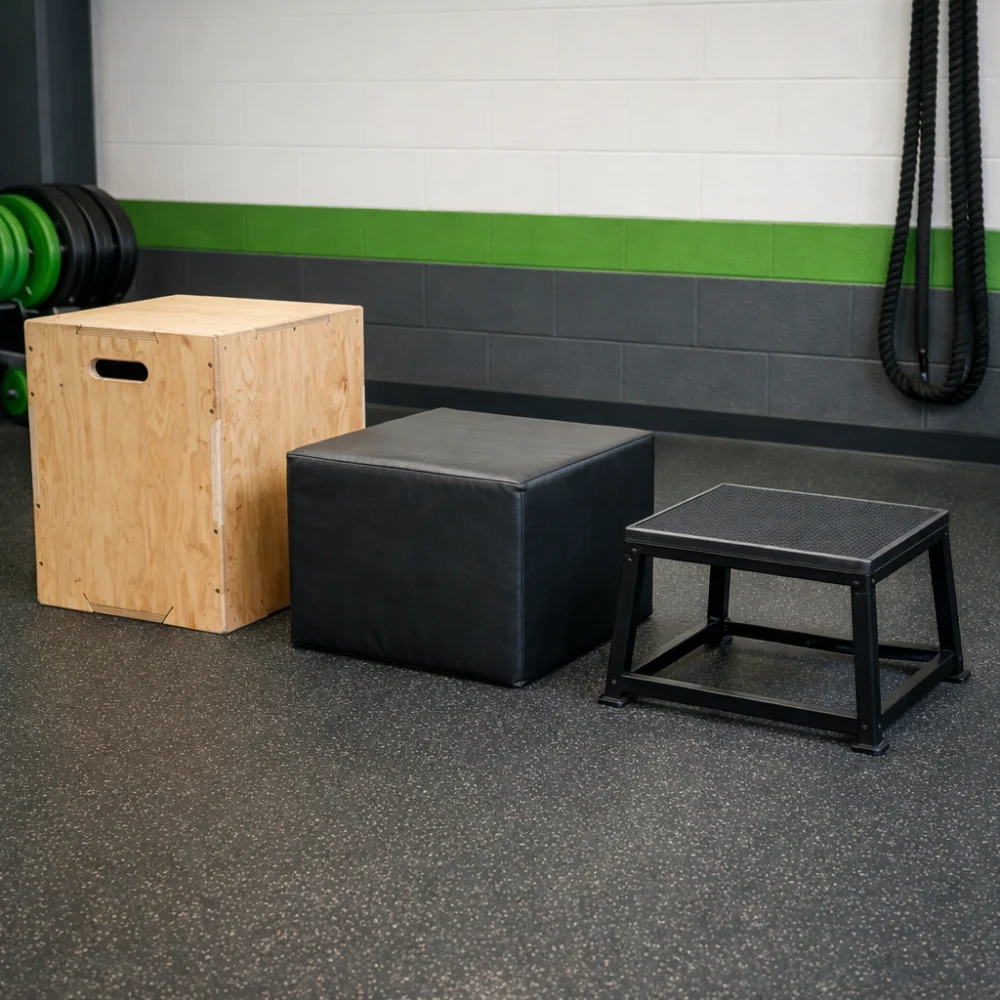
- Foam boxes may suit home users or anyone who wants a more forgiving landing surface. The main trade-off is that they are usually chosen for feel and confidence rather than a rigid platform.
- Wooden boxes are often chosen for a firm, straightforward training surface. They can be a good fit for controlled workouts, but the rigid feel may be less forgiving.
- Metal-style boxes may suit users who want a robust, compact option. The trade-off is that the feel and surface finish may matter more because the box is less forgiving on contact.
- Multi-height designs can suit buyers who want one item for more than one exercise or user. They are practical, but you should check how the usable heights are achieved.
Which type suits different buyers?
| Buyer need | What usually matters most | Why that fit can help | What to compare |
|---|---|---|---|
| Beginner home user | Confidence, stability and a manageable size | Helps the box feel approachable and easier to place in a home space | Construction, footprint and whether the surface seems suitable for indoor use |
| Shared gym or studio | Durability and easy handling | Useful when several people will move or use the box regularly | Weight, finish and how the box is intended to be stored |
| Progression-focused training | Clear height options and repeatable setup | Supports structured training without changing equipment each time | Whether the box has one height or several usable faces |
| Space-limited buyer | Footprint and storage practicality | Helps avoid equipment that dominates the room | Dimensions, stackability and how easy it is to move |
Common mistakes to avoid
- Choosing by appearance alone. A box may look simple, but the material and footprint affect how usable it is day to day.
- Ignoring available space. A box that fits the training idea may still be awkward in a small room or garage.
- Assuming one height suits everyone. The right height depends on the user, the exercise and how the box will be used.
- Overlooking handling and storage. If the box is heavy or bulky, moving it often can become inconvenient.
Safety and suitability caveats
Plyometric boxes are used for dynamic exercise, so suitability matters as much as size. Choose a box that matches the user’s ability and the intended movement, and make sure the surrounding area is clear before training. If the product page gives guidance on intended use, weight-bearing details or surface expectations, check that carefully before buying.
Maintenance, storage and lifespan considerations
Most buyers should think about cleaning, storage and repeated handling as part of the purchase. A box that is easy to wipe down and simple to move may be more practical for regular use than one that is awkward to store. If the box has a covered surface, seams or edges may affect long-term appearance and handling, so consider how often it will be moved or shared.
For shared spaces, practical maintenance can matter as much as training performance.
How to compare options efficiently
- Decide who will use the box and what exercises it needs to support.
- Choose the broad type that matches your confidence level and training style.
- Compare material, height use, stability and footprint first.
- Check handling, storage and surface finish for everyday practicality.
- Review the individual product page for the exact details before you buy.
Summary buyer decision checklist
- Does the box suit the user’s experience and intended exercises?
- Is the material and construction style appropriate for how it will be used?
- Does the height or multi-height setup match the training plan?
- Will the footprint and storage needs fit your space?
- Is the surface and handling practical for regular use?
- Have you checked the individual product page for the exact model details?
Frequently asked questions
What is a plyometric box used for?
A plyometric box is used for exercises such as box jumps, step-ups and other functional training movements. It gives you a raised platform for training power, coordination and lower-body conditioning. The exact exercises depend on the box type and the user’s ability.
Should I choose foam, wood or metal-style construction?
It depends on the feel you want and the space you have. Foam styles tend to feel more forgiving, while wood and metal-style options are usually chosen for a firmer training platform. Think about confidence, stability and how the box will be used day to day.
Is a multi-height box worth considering?
It can be, especially if more than one person will use the same box or if you want one item to support progression. The benefit is flexibility, but you should still check exactly how the heights are achieved and whether that setup suits your training space.
How much space do I need?
You need room for the box itself and enough clearance around it for the movement you plan to do. A compact box can still need a generous open area for safe use. Check the footprint and think about the direction you will approach it from.
Are plyometric boxes suitable for beginners?
They can be, provided the box and the training plan are appropriate to the user. Beginners often benefit from a stable, manageable design that feels reassuring to use. It is sensible to start with an option that matches current ability rather than choosing purely by size or appearance.
What should I check on the product page before buying?
Focus on the box’s construction, height options, footprint and intended use. Also check any information about handling, storage or surface finish if those matter to you. Specifications vary by model, so always check the individual product page before buying.