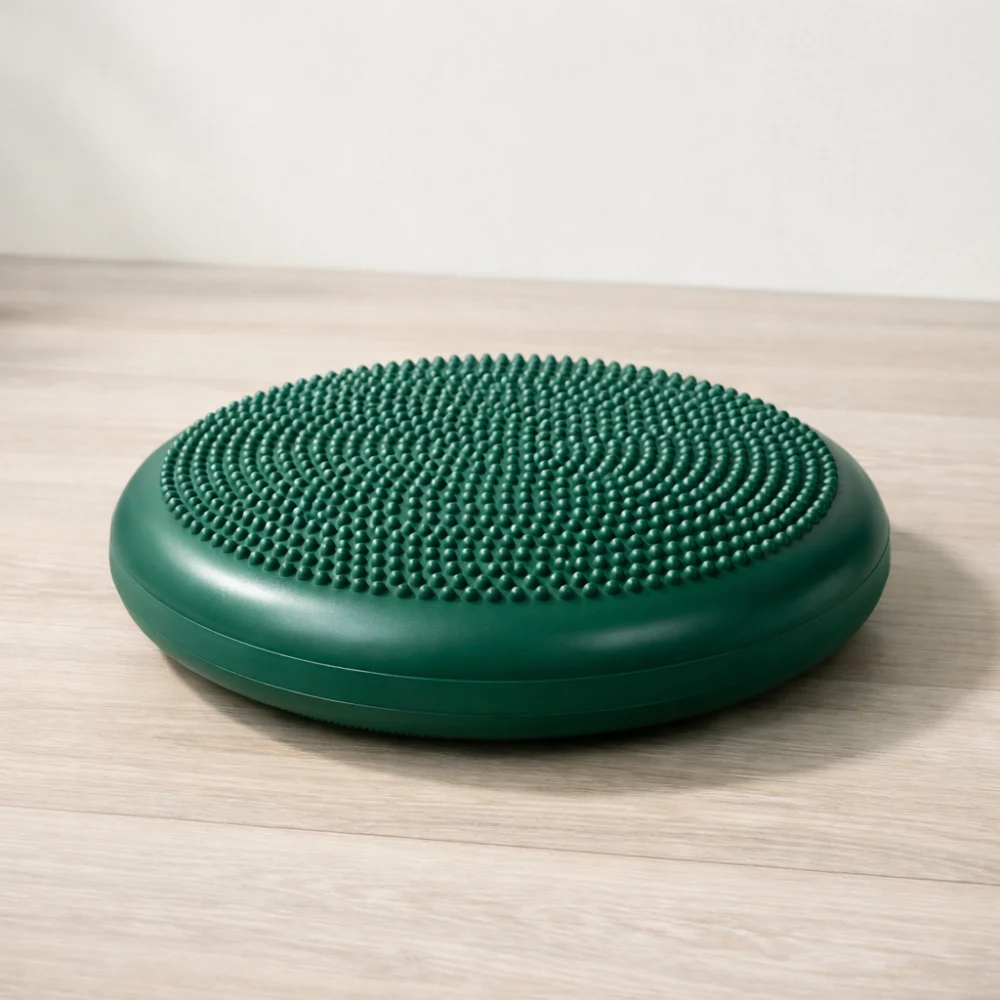
Core balance cushions are simple, inflatable balance tools used to add instability to exercises, seated posture work and other controlled movement drills. They are often chosen by people who want a compact way to challenge balance, engage core muscles or make sitting slightly less static.
The main buying decision is not about finding the most advanced product, but about choosing the right size, feel and intended use. That matters because a cushion that suits exercise drills may feel very different from one chosen for desk use or gentle stability work.
As with many fitness accessories, the details can vary from one product to another. Specifications vary by model, so always check the individual product page before buying.
What should you look for in a core balance cushion?
The best starting point is to match the cushion to how you plan to use it. If you want a firmer challenge, you may prefer a less forgiving feel; if you want something for seated comfort or beginner balance work, a more moderate option may be easier to live with. The most useful trade-off is usually between stability and wobble: more instability can increase difficulty, but it can also make the cushion less comfortable or less suitable for longer sessions.
| Feature | What it means | Why it matters | What to check |
|---|---|---|---|
| Intended use | Whether the cushion is aimed at exercise, seated support or general balance practice | Different uses benefit from different levels of firmness and size | Look for the stated use and any product guidance on how it is meant to be used |
| Size | The overall diameter or footprint of the cushion | Affects how much space you have to move on it and how it feels underfoot or under seat | Check the listed dimensions and make sure they suit the space available |
| Inflation level | How full the cushion is when used | Changes the wobble, firmness and comfort level | See whether the product includes a pump and whether inflation is adjustable |
| Surface feel | The texture and grip of the top and bottom surfaces | Can affect comfort, stability and how securely it stays in place | Check for any description of grip, texture or anti-slip design |
| Included accessories | Items supplied with the cushion, such as a pump | Useful for convenience and first use | Review the full listing to see what is included in the box |
| Intended user | Whether the product is suited to adults, children or mixed use | Different users may need different levels of challenge and size | Check the product page rather than assuming it suits everyone |
Which features matter most?
Firmness and air level
Inflation is one of the most important choices because it changes how the cushion behaves. A fuller cushion usually feels firmer and more stable, while a less inflated cushion often feels softer and more unstable. That makes air level a practical way to tune the experience, but only if the product is easy to inflate and adjust.
Grip and surface texture
If you are standing, kneeling or doing controlled movement on the cushion, surface feel matters. A grippier texture can make the product feel more secure, while a smoother surface may feel less planted. For seated use, the finish can also affect comfort over time.
Size and space
Balance cushions are compact, but size still matters. A larger cushion may give a more forgiving platform, while a smaller one can feel more demanding. If you have limited floor space or plan to carry it between rooms, compactness may be part of the decision.
Accessories and setup
Some products are sold with a pump, which can make first use easier. Others may require you to source inflation separately. If quick setup matters to you, check what is supplied so there are no surprises on arrival.
What types of core balance cushion are there?
Most products in this category are variations on the same idea: an inflatable cushion designed to create instability. The differences tend to be in size, surface design and the accessories included rather than in radically different functions.
- Exercise-focused cushions: suited to balance drills, core work and movement practice.
- Seated cushions: used by people who want a slightly unstable seat for short periods.
- More compact cushions: easier to store and move, but may feel less forgiving.
- Larger cushions: may offer more surface area and feel easier to use for some exercises.
Because the same category can cover a wide range of setups, it is worth reading the listing carefully rather than assuming every cushion behaves the same way.
How do different buyers choose?
| Buyer need | What to prioritise | What to avoid overlooking |
|---|---|---|
| Beginner balance practice | Moderate firmness, clear size information and simple setup | Choosing a cushion that is overly challenging for your current ability |
| Desk or seated use | Comfort, stable feel and a surface that suits longer sitting periods | Assuming a very wobbly cushion will be comfortable for extended use |
| Exercise and conditioning | Grip, adjustability and a size that suits the movements you want to do | Ignoring whether the cushion is easy to keep in the position you want |
| Gift buying | Broad usability and straightforward product information | Buying without checking the likely user’s age, comfort needs or intended use |
Common mistakes to avoid
- Choosing only by appearance: colour and presentation are less important than size, firmness and intended use.
- Assuming all cushions feel the same: inflation level and surface texture can change the experience a lot.
- Ignoring the box contents: if you need a pump, make sure it is included or easy to provide separately.
- Buying for the wrong use: a cushion suitable for exercise may not be the most comfortable choice for sitting.
- Overlooking space: compact products still need enough room for safe and comfortable use.
Safety and suitability checks
Core balance cushions are straightforward products, but suitability still matters. Check that the intended use matches your plan, especially if you want to use it for exercise, seated support or with a child. If balance is a concern, start with a cautious approach and choose a product that feels manageable rather than extreme.
It is also sensible to check the product page for any stated guidance on user type, dimensions and included parts. That helps you avoid buying a cushion that is too small, too soft or not intended for the way you want to use it.
Care, storage and lifespan considerations
Inflatable balance cushions are usually easiest to keep in good condition when they are stored away from sharp objects and excessive heat. If the product relies on air pressure, normal use may mean occasional re-inflation over time. Cleaning needs are usually simple, but the exact care advice can vary by model and surface finish.
If you plan to move the cushion around often, consider how easy it is to deflate, store and reinflate. That practical detail can matter as much as the balance feel itself.
How to compare options efficiently
- Decide whether you want exercise use, seated use or general balance practice.
- Compare the size and shape to make sure it suits your space and intended movements.
- Check firmness, grip and whether the cushion can be adjusted to a more or less challenging feel.
- Review what is included in the box, especially any pump or setup accessories.
- Read the product page carefully for any model-specific guidance before buying.
Summary buyer decision checklist
- Have I chosen the right use case: exercise, seating or mixed use?
- Does the size suit my body, space and intended movements?
- Do I want a firmer or more unstable feel?
- Is the surface likely to feel comfortable and secure enough for my needs?
- Is inflation equipment included if I need it?
- Have I checked the individual product page for model-specific details?
Frequently asked questions
Are core balance cushions suitable for beginners?
They can be, provided you choose a product that is not overly challenging for your current ability. A more moderate firmness is often easier to start with than a very unstable feel. The key is to match the cushion to your confidence level and intended use.
Can I use a core balance cushion at a desk?
Some buyers do use them for seated work, but comfort varies a lot from one product to another. A cushion that is good for exercise may feel too unstable for long periods of sitting. If seated use is your priority, check the product page for dimensions and intended use.
Do balance cushions come with a pump?
Some do and some do not. It is worth checking the listing so you know whether you need to buy or borrow inflation equipment separately. That small detail can affect how easy the product is to start using.
How do I choose the right firmness?
Think about how much challenge you want. More air usually means a firmer, more stable feel, while less air usually creates more wobble. If you are unsure, a product with adjustable inflation gives you more flexibility.
Is a larger cushion always better?
Not necessarily. A larger cushion may feel more forgiving, but it can also be bulkier and less portable. The best size is the one that suits your space, movement pattern and comfort level.
What should I check before buying for a child?
Check the intended user guidance on the product page and make sure the size and challenge level are appropriate. A product that is practical for adults may not be the right choice for a child. It is better to match the cushion to the user’s needs than to buy on size alone.