
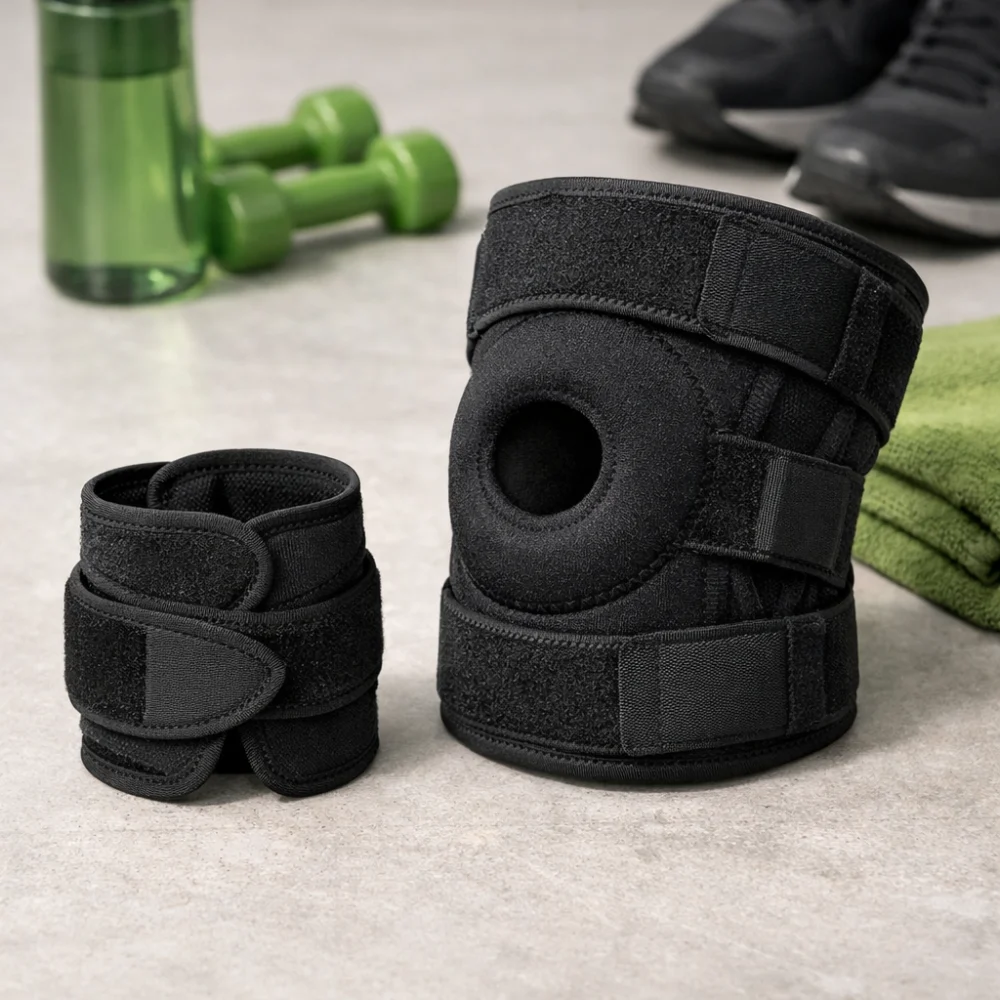
Wrist and knee supports are bought for very different reasons, but the buying questions are often the same: how much support do you want, how much movement do you need, and how easy is it to wear for the full session?
This guide is for shoppers comparing support for training, recovery from a minor strain, or extra confidence during exercise. It focuses on practical choices rather than medical claims, so you can narrow options without overbuying or choosing something that feels restrictive.
Some supports are designed to limit movement, while others are made to add light compression and a more secure feel. The right choice depends on the joint, the activity and how much freedom of movement you still want.
What should you look for in wrist and knee supports?
Start with the job the support needs to do. A wrist support for lifting, for example, may need to feel stable without stopping you gripping, while a knee support for general exercise may be more about comfort and reassurance than rigid control. The biggest trade-off is usually support versus flexibility: more structure can feel steadier, but it may also feel bulkier or less comfortable for longer wear.
Specifications vary by model, so always check the individual product page before buying.
| Feature | What it means | Why it matters | What to check |
|---|---|---|---|
| Support level | How much the item is designed to stabilise the joint | Higher support may feel more secure, while lighter support usually feels less restrictive | Look for whether it is a sleeve, wrap, brace or strap-style support |
| Fit | How closely it matches the joint shape and size | Poor fit can reduce comfort and make the support less effective to wear | Check sizing guidance, left or right orientation if relevant, and whether the fit is adjustable |
| Compression | How snugly the support holds the area | Compression can improve the feeling of stability, but too much can be uncomfortable | See whether the product is described as light, medium or firm support |
| Mobility | How much movement the support leaves free | Some activities need flexibility; others benefit from more limitation | Decide whether you need a sleeve for general movement or a more structured brace |
| Closure style | Whether it slips on, fastens with straps, or combines both | Different styles affect convenience, adjustability and how easy it is to fine-tune the fit | Check how it is worn and whether you can adjust it during use |
| Breatheability and comfort | How comfortable it feels during longer sessions | Comfort affects how often you will actually wear it | Look for material notes and any guidance on intended wear time |
Key decision criteria
Wrist supports: stability versus dexterity
Wrist supports are usually chosen to add reassurance for gripping, pressing or repetitive hand use. If you still need good finger movement and bar control, a lighter support or wrap may suit you better than a more rigid brace. If you want more restriction, check whether the product is built to hold the wrist in a more fixed position.
Knee supports: compression versus structure
Knee supports range from simple compression sleeves to more structured braces. A sleeve can feel easier to wear and move in, while a brace may offer a more defined sense of support. Think about whether you want everyday comfort for exercise, or a product that feels more controlling around the joint.
Adjustability
Adjustable straps can help you fine-tune fit, especially if your body shape sits between sizes or you want to alter how snug the support feels. The downside is that more adjustment often means more bulk and more time putting it on. If speed matters, a slip-on design may be more convenient.
Material and comfort
Comfort matters because a support that is annoying to wear often gets left in the bag. Softer, more flexible materials may suit longer sessions, while firmer constructions may feel more secure but less forgiving. Check whether the material is likely to suit the climate, the activity and how long you expect to wear it.
Common product types and variants
Within this category, the main differences are usually in how the support is built rather than in a long list of extra features. A sleeve type is generally simpler and less intrusive. A strap or wrap style is usually easier to adjust. A brace style may feel more supportive and more noticeable on the joint.
For knees, some buyers prefer a design that feels open around the kneecap, while others prefer a more uniform sleeve-like fit. For wrists, some options are designed mainly for compression, while others are intended to limit bending more strongly. Choose the style that matches the amount of movement you still want.
Which support suits which buyer need?
| Buyer need | Likely better fit | Why | Watch out for |
|---|---|---|---|
| Gym use with a need for mobility | Lighter sleeve or wrap | Usually easier to move in and less bulky | May not feel secure enough if you want stronger restriction |
| More adjustability | Strap or wrap style | Lets you fine-tune the snugness | Can take longer to fit and may feel less streamlined |
| All-day or longer wear | Comfort-focused compression design | Often easier to wear for longer periods | May provide less structure than a brace |
| More noticeable joint support | Brace-style support | Usually gives a stronger sense of stability | Can feel bulkier and less flexible |
Common mistakes and misunderstandings
- Choosing support only by size: fit matters, but so does the style of support. A correctly sized item can still be the wrong type for your activity.
- Assuming tighter is always better: a very snug fit can feel secure at first, but comfort and wear time matter too.
- Ignoring movement needs: if you still need to grip, squat, bend or train freely, a highly structured support may be more than you need.
- Overlooking left, right or joint-specific design: some supports are shaped for a particular side or joint position, so check the product details carefully.
Safety and suitability caveats
Supports can be useful for comfort and confidence, but they are not a substitute for professional advice if you have a persistent, severe or unexplained problem. If you are buying for an injury, check that the support is suitable for your situation and stop using it if it causes pain, numbness or extra irritation.
It also helps to think about where and when you will wear it. Some supports are better for exercise sessions than for everyday wear, and some may feel too warm, too tight or too restrictive for long periods.
Maintenance, storage and lifespan considerations
Most wrist and knee supports are easier to keep comfortable if you follow the care guidance on the product page or label. Check whether the item can be washed, how it should be dried and whether frequent washing may affect elasticity or fastening strength. Store it clean and dry so the materials stay in better condition.
If you expect to use a support regularly, it can be worth choosing a design that is easy to put on, remove and clean. That is often more important in real use than a small difference in structure.
How to compare options efficiently
- Decide which joint you need to support and what activity it is for.
- Choose the general type first: sleeve, wrap, strap or brace.
- Compare fit, adjustability, compression and comfort.
- Think about the trade-off between mobility and structure.
- Check the individual product page for sizing, handedness or joint-specific notes before buying.
Summary buyer decision checklist
- Is it for the wrist or the knee?
- Do I want light compression or more structured support?
- Will I need to move freely while wearing it?
- Does the fit guidance suit my size and shape?
- Is it adjustable enough for my comfort?
- Will it be comfortable for the length of wear I expect?
- Have I checked any side-specific or joint-specific details?
Frequently asked questions
What is the difference between a sleeve and a brace?
A sleeve is usually simpler, stretchier and more focused on compression. A brace is often more structured and may give a stronger sense of support. The better choice depends on whether you want more freedom of movement or more control.
Should I choose wrist support or wrist straps?
Wrist straps are often more adjustable and can be useful if you want to fine-tune snugness. A full wrist support may feel more even and secure. If you want less bulk, a strap may be easier to live with.
Are knee supports all the same size?
No, sizing and fit can vary a lot. Some are based on measurements, while others use small, medium or large sizing. Always check the product page carefully rather than assuming one size will suit everyone.
Can I wear a support for long periods?
That depends on the design, the fit and how comfortable it feels for you. A product intended for training may not be ideal for all-day wear. Comfort, breathability and the guidance on the product page all matter.
Do I need a left or right version?
Some supports are side-specific, while others are not. If the product is shaped for one side, make sure you choose the correct one. If no side is specified, check the listing for any fitting notes.
What is the most important thing to check before buying?
Start with the level of support and the fit. If those do not match your activity and comfort needs, the rest matters less. Specifications vary by model, so always check the individual product page before buying.