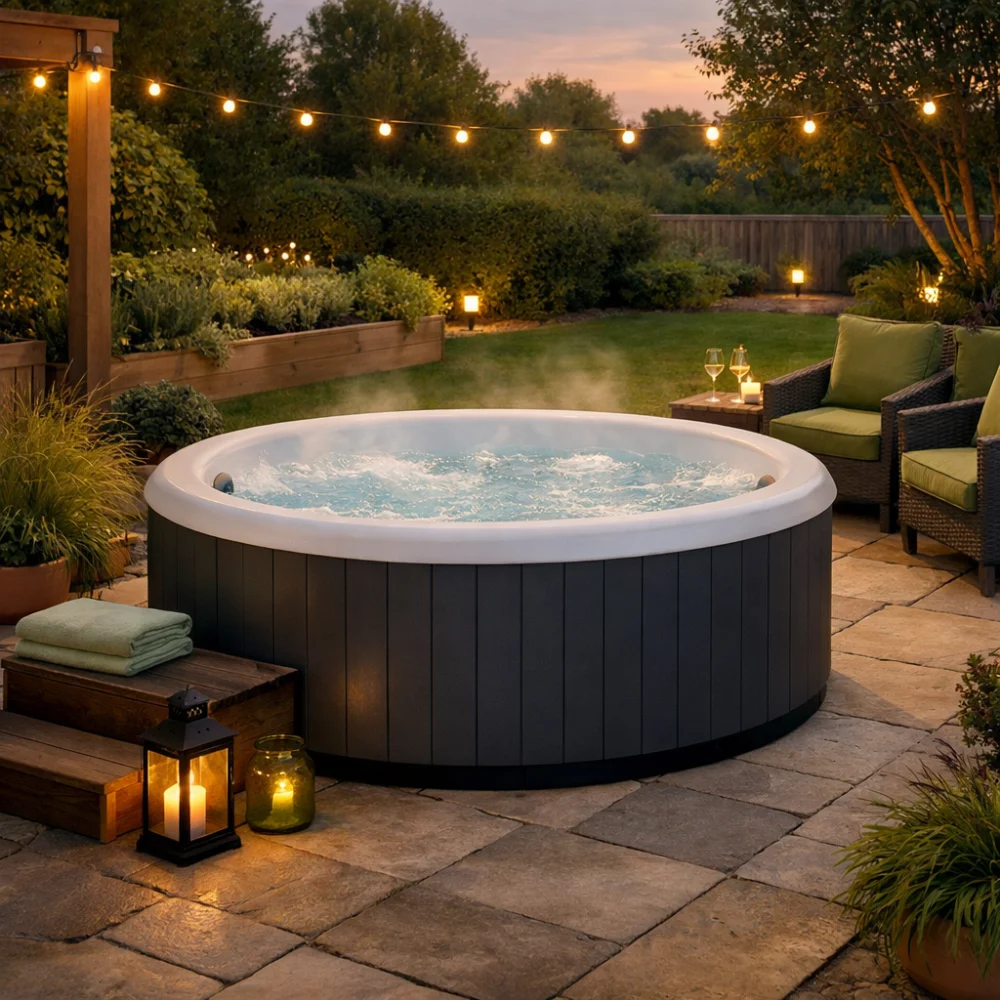
Hot tubs are a leisure purchase with a practical side: the right choice depends on where you will place it, how many people will use it and how much setup you want to handle. Some buyers want a simple, flexible option for occasional relaxation, while others are looking for a more permanent spa experience in the garden.
This guide focuses on the buying decisions that matter before you compare individual products. It helps you separate the features that genuinely affect day-to-day use from the details that sound important but may not change suitability for your space.
Because hot tubs vary widely in construction and features, it is worth starting with the basics rather than the glossiest extras. Specifications vary by model, so always check the individual product page before buying.
What should you look for when choosing a hot tub?
Start with the type of hot tub, the space you have available and the number of people who will realistically use it. Then compare heating, insulation, control features and setup requirements, because these shape running convenience more than cosmetic details do. The main trade-off is usually between portability and a more substantial feel, as well as between simple ownership and a more involved installation.
| Feature | What it means | Why it matters | What to check |
|---|---|---|---|
| Type | Inflatable, portable spa or more permanent-style tub | Sets the likely installation effort, portability and overall ownership style | How it is positioned for setup, storage and regular use |
| Capacity | How many people the tub is designed to accommodate | Affects comfort, spacing and whether the tub suits couples, families or small groups | Practical seating layout, not just the headline person count |
| Space requirements | Overall footprint and room needed around the tub | Determines whether it fits safely and sensibly in the intended area | External dimensions and the clearance needed around it |
| Heating and setup | How the tub reaches and maintains usable water temperature | Influences waiting time, energy use and convenience | Any setup notes, power requirements and guidance on warming time |
| Insulation and cover | How well heat is retained when the tub is not in use | Helps with comfort and can reduce heat loss between sessions | Whether a cover is included or recommended and how the tub is insulated |
| Controls and extras | Features such as massage functions, lighting or app control | These can improve enjoyment, but they rarely matter more than fit and usability | Which features are built in and which are optional or model-specific |
Key decision criteria explained
Size and seating layout
Hot tubs are often described by person count, but that figure does not always tell you how spacious the tub will feel in everyday use. A couple may prefer extra room, while a family may want a design that makes shared use easier even if the tub is not used at full capacity all the time. Check the layout as well as the headline capacity, especially if the space is tight or you want more room to stretch out.
Type of tub
Inflatable tubs usually appeal to buyers who want a simpler and more flexible option, while more rigid or portable spa styles may feel more substantial and permanent. The right choice depends on whether you value ease of moving and storing it, or a more fixed garden feature. Think about who will set it up, how often it will be used and whether it needs to be put away part of the year.
Heating, insulation and efficiency
Warm water comfort is central to the experience, but the way a tub heats and retains heat affects convenience and running expectations. Better insulation, a fitted cover and sensible heat retention features can make ownership easier, especially if you plan to use the tub regularly. Do not assume two tubs with similar-looking features will behave the same way; compare the product details carefully.
Control and comfort features
Massage settings, lighting and digital controls can make a tub more enjoyable, but they should be treated as extras rather than the main decision point. A buyer who wants a relaxing soak may value straightforward controls, while someone seeking a more feature-rich experience may care more about the feature set. Specifications vary by model, so always check the individual product page before buying.
Product types and variants
Within this category, the most useful distinction is between inflatable tubs and more permanent-style spa tubs. Inflatable options usually suit buyers who want flexibility and easier storage, while more substantial tubs are often chosen for a more fixed garden setup and a different feel in use. There can also be meaningful differences in finish, control features and seating shape, so it helps to compare the whole ownership picture rather than focusing on one headline feature.
Which hot tub suits which buyer?
| Buyer need | What to prioritise | Why it helps |
|---|---|---|
| Occasional relaxation | Straightforward setup, manageable size and simple controls | Makes the tub easier to use without turning it into a complicated project |
| Family use | Practical capacity, comfortable seating and enough room around the tub | Helps the tub feel usable for more than one or two people at a time |
| Smaller garden or patio | Careful measurement and compact footprint | Reduces the risk of choosing something that overwhelms the available space |
| Feature-led buyer | Massage functions, lighting or other convenience extras | Lets you compare the extras that actually improve the experience for you |
| Flexible, part-time use | Portable or easier-to-manage construction | Supports storage, repositioning or less permanent ownership plans |
Common mistakes and misunderstandings
- Buying by person count alone. Capacity labels are useful, but they do not tell you how spacious the tub will feel. Check seating layout and dimensions as well.
- Ignoring the space around the tub. The tub itself is only part of the footprint. You also need enough room for access, cover handling and comfortable use.
- Focusing on extras before the basics. Lights and massage functions are pleasant to have, but they should not distract from fit, setup and heating needs.
- Assuming all models need the same setup. Some are easier to position and manage than others, so read the individual product page carefully.
Safety and suitability caveats
Choose a hot tub only if it suits the intended user, the available space and the level of maintenance you are willing to handle. Consider who will be using it, where it will be placed and whether the product information gives you enough detail on setup and power requirements. If you are buying for family use or shared use, a careful read of the product page matters more than any broad assumption about the category.
Maintenance, storage and ownership considerations
Hot tubs generally need regular cleaning, water care and sensible storage or covering when not in use. If you want a lower-effort option, look closely at whether the design makes routine upkeep straightforward and whether accessories such as covers are part of the package or need to be considered separately. Ownership is easier when you think about care from the start, not after delivery.
For part-time buyers, it also helps to consider where the tub will sit between uses and whether you have space for any seasonal storage or repositioning. That practical question can be just as important as the headline feature list.
How to compare hot tubs efficiently
- Decide how you plan to use it most often: occasional relaxation, family use or a more regular spa setup.
- Choose the type that fits your space, storage plans and willingness to manage setup.
- Compare size, seating layout and clearance requirements before looking at extras.
- Check heating, insulation and control features for day-to-day convenience.
- Read the individual product page for the details that vary by model.
Summary buyer decision checklist
- Have I measured the space properly, including room around the tub?
- Does the seating layout suit the people who will use it?
- Does the tub type match how permanent or flexible I want the setup to be?
- Are heating, cover and insulation details clear enough for my needs?
- Have I checked the features that matter to me without overvaluing extras?
- Have I reviewed the individual product page for model-specific information?
Frequently asked questions
How do I choose the right size hot tub?
Choose the size based on how many people are likely to use it at once, then allow for a little extra comfort rather than buying only to the headline capacity. A tub that just meets your minimum need may feel cramped in practice. Check the dimensions and seating arrangement alongside the person count.
Are inflatable hot tubs worth considering?
They can be a sensible option if you want flexibility, simpler positioning or a less permanent setup. The trade-off is that they may not suit everyone looking for a more substantial, fixed-feeling spa experience. The best choice depends on how often you will use it and where you plan to keep it.
What features matter most in everyday use?
For most buyers, fit, comfort, heating and ease of setup matter more than cosmetic extras. A feature like lighting may be nice to have, but it should not outweigh practical considerations. Focus first on the basics that affect use every time.
Do I need a cover?
A cover is often an important part of ownership because it helps protect the tub when not in use and may help with heat retention. Some products include one, while others may not, so check carefully. If a cover is not included, factor that into the overall buying decision.
What should I check before buying for a family?
Look at capacity, seating comfort, space around the tub and how easy it is to manage between uses. You should also think about who will be helping with setup and routine care. The right family choice is usually the one that balances convenience with comfortable use.
Why do product pages sometimes show similar capacities but different experiences?
Because two hot tubs can use similar wording while still differing in layout, dimensions and features. One may feel roomier or be easier to position than another. That is why the individual product page is the best place to compare the details that actually affect ownership.