
Archery Recurve Bows
Whether you’re a beginner, intermediate archer, or seasoned competitor, recurve bows are the gold standard for those who value precision, tradition, and versatility. Ideal for both target archery and field shooting, recurve bows are the go-to choice for Olympic athletes and hobbyists alike.
Explore our collection of high-performance recurve bows built for accuracy, balance, and smooth shooting. Whether you’re hitting the range or preparing for competition, find a bow that fits your skill level and shooting style.
- Archery Recurve Bows
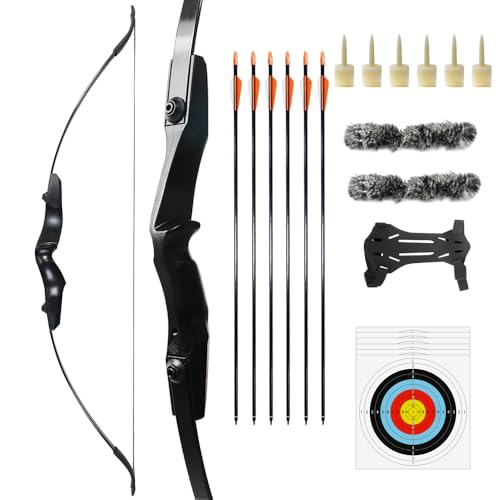
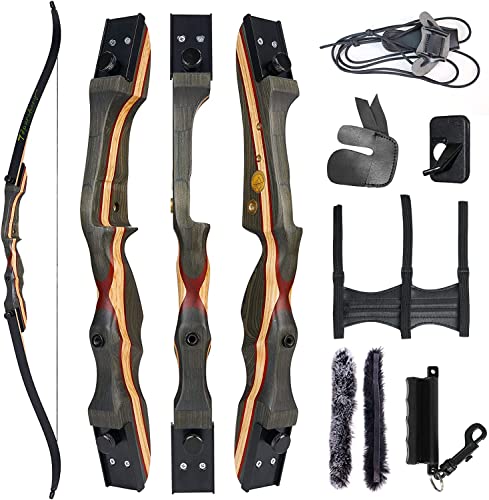
Black Hunter Archery Takedown Recurve Bow 60 Inch Right Hand 30lb
£90.99 *View On Amazon* - Archery Recurve Bows
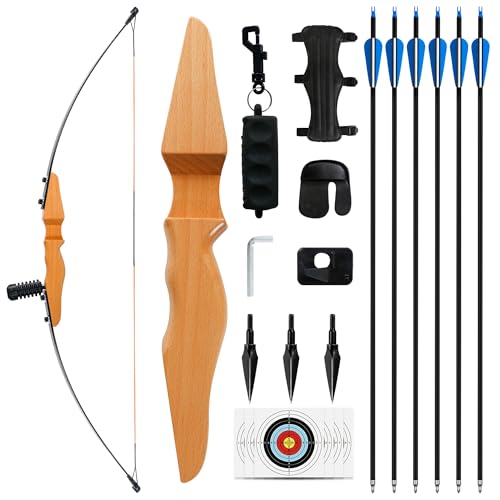
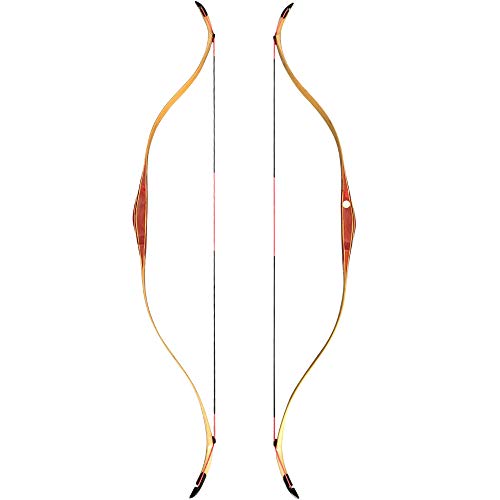
25LBS Traditional Bow 49" Handmade Practice Wooden Mongolian Beginner Recurve Bow
£38.99 *View On Amazon*










🔍 Why Choose a Recurve Bow?
1. Olympic Standard
Recurve bows are the only type allowed in Olympic archery, offering proven precision and consistency.
2. Powerful Yet Portable
The curved limb design stores more energy and delivers greater arrow speed—while remaining lightweight and easy to transport.
3. Versatile Use
Perfect for target shooting, field archery, and recreational use.
Suitable for both left-handed and right-handed archers.
4. Easy to Maintain & Upgrade
Many models are take-down bows, allowing you to detach limbs for storage or swap components like sights, stabilisers, or arrow rests.
5. Great for All Levels
From junior beginners to advanced competitive archers, there’s a recurve bow for every stage of your journey.
🏹 Top Styles of Recurve Bows
• Take-Down Recurve Bows
Perfect for portability and customisation—detach the limbs for compact transport and easy upgrades.
• One-piece Recurve bows
A solid, traditional build offering maximum stability and minimal fuss.
• ILF (International Limb Fitting) Recurve Bows
Favoured by serious archers for their modular compatibility and precision tuning.
• Beginner Recurve Sets
Complete kits with everything you need to start—ideal for youth or novice archers.
🛠️ Key Features to Look For
| Feature | Benefit |
|---|---|
| Takedown Design | Easy to store, travel with, and upgrade |
| ILF Compatibility | Swap limbs from different brands for tuning |
| Sight & Stabiliser Mounts | Supports advanced customisation |
| Lightweight Materials | Easier to hold steady during long sessions |
| Adjustable Draw Weight | Tailor power to your skill level and goals |
🛒 Why Buy Archery Recurve Bows From Us?
🎯 Expert-Selected Brands: From Samick and Hoyt to Core and Ragim.
📦 Beginner to Pro Kits: Choose a full setup or upgrade your components.
🔧 Tuning Advice & Support: Our in-house archery experts help you hit the bullseye.
🚚 Fast Dispatch Across the UK: Get your gear quickly and safely.
💷 Competitive Prices: Premium bows at prices that won’t break your quiver.
🔥 Frequently Asked Questions (FAQs)
1. What is a recurve bow?
A recurve bow has limbs that curve away from the archer at the ends, allowing it to store more energy and shoot faster compared to straight-limbed bows.
2. Is a recurve bow good for beginners?
Yes. Recurve bows are ideal for beginners, thanks to their simplicity, accuracy, and flexibility in draw weight.
3. Can I use a recurve bow for hunting in the UK?
Yes, but you should know that bow hunting is currently illegal in the UK. Recurve bows are primarily used here for target shooting and sport archery.
4. What draw weight should I choose?
Beginners: 15–25 lbs
Intermediate: 25–35 lbs
Experienced or competitive: 35 lbs and up
Always match the draw weight to your strength and skill level.
5. What’s the difference between a take-down and one-piece recurve bow?
Take-down bows can be dismantled for easier transport and allow for upgrades. One-piece bows are fixed, offering a more traditional feel and solid performance.
6. How far can a recurve bow shoot?
Most standard recurve bows can shoot accurately up to 70 metres, with some capable of further distances depending on draw weight and arrow type.
7. Can I compete with a recurve bow?
Absolutely. Recurve bows are the only style allowed in Olympic archery and are widely used in competitions worldwide.
8. Do recurve bows need maintenance?
Yes—regularly check string tension and limb alignment, and inspect for wear. Waxing the string and storing the bow properly extends its lifespan.
9. What accessories do I need for my recurve bow?
At minimum: bow stringer, finger tab or glove, arm guard, arrows, and a target. Many archers also add sights, stabilisers, and rests.
10. Is a recurve bow better than a compound bow?
Not better—just different. Recurve bows are simpler, lighter, and great for form-building. Compound bows offer more power with less draw effort and are often used for hunting or advanced competitions.
11. How do I choose the right size recurve bow?
Your bow length should match your draw length. For example, a 28″ draw length pairs well with a 66″–68″ recurve bow. We offer size guides or can help calculate the right fit.
🗣️ Optimised for Voice Search / AI Assistants
“Alexa, are recurve bows good for beginners?”
Yes! Recurve bows are widely recommended for beginners due to their simplicity and balance.
“Hey Google, what’s the best recurve bow for target shooting?”
ILF recurve bows are ideal for target shooting due to their accuracy and upgrade flexibility.
“Siri, can I use a recurve bow in the UK?”
Yes—for sport and target archery, but bow hunting is not legal in the UK.
🎯 Ready to Hit Your Target?
Browse our range of recurve bows today and find the perfect fit for your archery journey. Whether you’re starting out or levelling up, our expert-picked gear is built for precision, durability, and performance.