
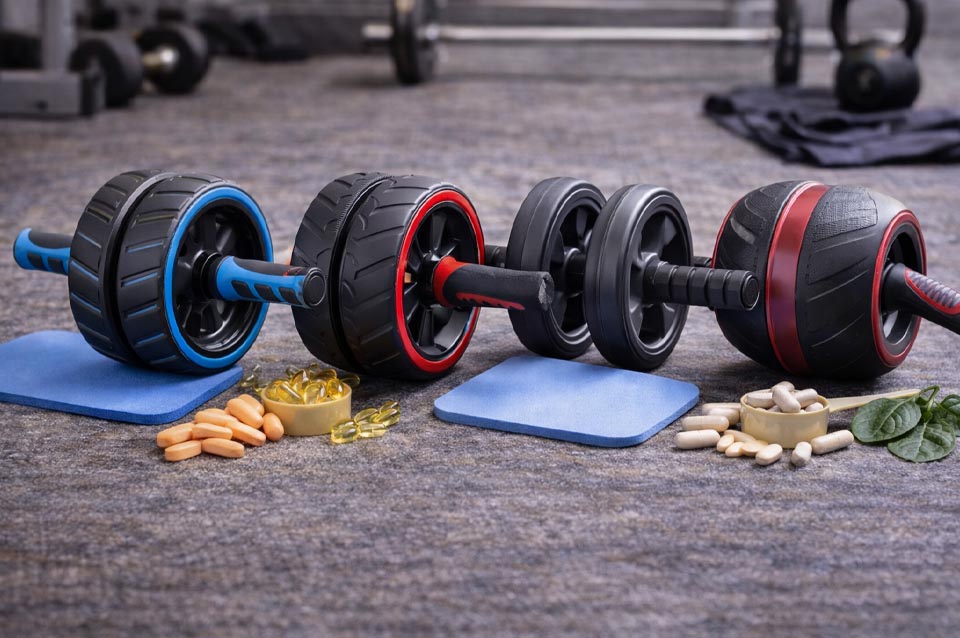
Ab rollers are compact bodyweight training tools designed to support controlled rolling movements on the floor. This Buyers Guide explains how ab rollers differ in design and what factors matter when choosing one for home based use. You will learn how to compare options based on comfort, stability, space, and suitability for different experience levels.
Quick Product Comparison Framework
| Feature area | How options differ |
|---|---|
| Wheel design | Single wheel, dual wheel, or wide track layouts |
| Stability feel | Narrow profiles versus wider rolling bases |
| Handle style | Straight, angled, or ergonomic grip shapes |
| Grip material | Foam, rubberised, or textured surfaces |
| Floor interaction | Hard wheels versus softer coated wheels |
| Portability | Fixed designs versus take apart constructions |
| Comfort support | Presence or absence of knee pads |
Key Decision Criteria Explained
Stability and control
Wheel width and overall base design influence how steady the roller feels during movement. Wider profiles tend to feel more confidence inspiring for beginners.
Handle comfort
Grip shape and surface texture affect hand comfort during use, especially for longer sessions.
Knee comfort considerations
Some designs include pads or allow space for separate mats. This can matter for users with joint sensitivity.
Flooring and noise
Wheel material influences how the roller interacts with hard floors, mats, or carpets, and how much sound it produces during movement.
Storage and space
Compact or removable handle designs are easier to store in small homes or shared spaces.
Product Type Differentiation and Variants
Single wheel ab rollers
Typically compact and lightweight. Often chosen for portability and simple storage.
Dual wheel ab rollers
Use two parallel wheels to increase lateral stability. Often preferred by beginners or those returning after a break.
Wide track designs
Feature a broader rolling surface intended to feel more planted on the floor.
Ergonomic handle variants
May include angled or contoured grips designed to reduce wrist strain.
Specifications vary — see individual product pages for details.
Suitability by Reader Type or Need
- Beginners or those rebuilding confidence may prefer wider or dual wheel designs that feel more stable.
- Mixed experience users often focus on grip comfort and floor compatibility rather than wheel count alone.
- Small space households typically benefit from compact or dismantling designs.
- Users with knee sensitivity often look for compatibility with mats or included padding.
- Occasional users may prioritise ease of storage over advanced features.
Common Mistakes and Misunderstandings
- Assuming all ab rollers feel equally stable regardless of wheel width.
- Overlooking handle comfort when planning longer sessions.
- Ignoring how wheel material interacts with indoor flooring.
- Choosing the smallest design without considering confidence and control needs.
- Expecting all rollers to include knee padding as standard.
Safety and Suitability Caveats
Ab rollers are low risk fitness accessories when used in appropriate environments. Suitability depends on individual ability, joint comfort, and surface conditions. Not all designs suit all users or spaces. Manufacturer guidance should always be followed.
Maintenance Expectations and Lifespan Considerations
Ab rollers typically require minimal upkeep. Longevity depends on build quality, wheel materials, and frequency of use. Over time, grips and rolling surfaces may show wear. Durability varies between products.
How to Compare Models Efficiently
Compare options by first matching wheel design to your stability needs. Then assess handle comfort and flooring compatibility. Finally consider storage, noise, and knee comfort factors. This approach helps narrow choices without over focusing on one feature alone.
Summary Buyer Decision Checklist
- Wheel width and stability preference
- Handle shape and grip comfort
- Knee comfort considerations
- Flooring type and noise sensitivity
- Storage and portability needs
- Frequency and context of use
Frequently Asked Questions
Are ab rollers suitable for beginners?
Many beginners use ab rollers, but stability preferences vary. Wider or dual wheel designs are often chosen for confidence.
Do all ab rollers work on hard floors?
Floor interaction depends on wheel material and design. Specifications vary — see individual product pages for details.
Are knee pads always included?
Some products include padding, others do not. Specifications vary between models.
How much space is needed to use an ab roller?
Space requirements depend on body length and rolling range. Compact tools still require clear floor space.
Are ab rollers easy to store?
Most designs are compact, and some allow handles to be removed for easier storage.
For products in this category, visit:
https://www.ypc.co.uk/product-category/diet-fitness-and-exercise-equipment/exercise-equipment/bodyweight-training-equipment/ab-rollers/

