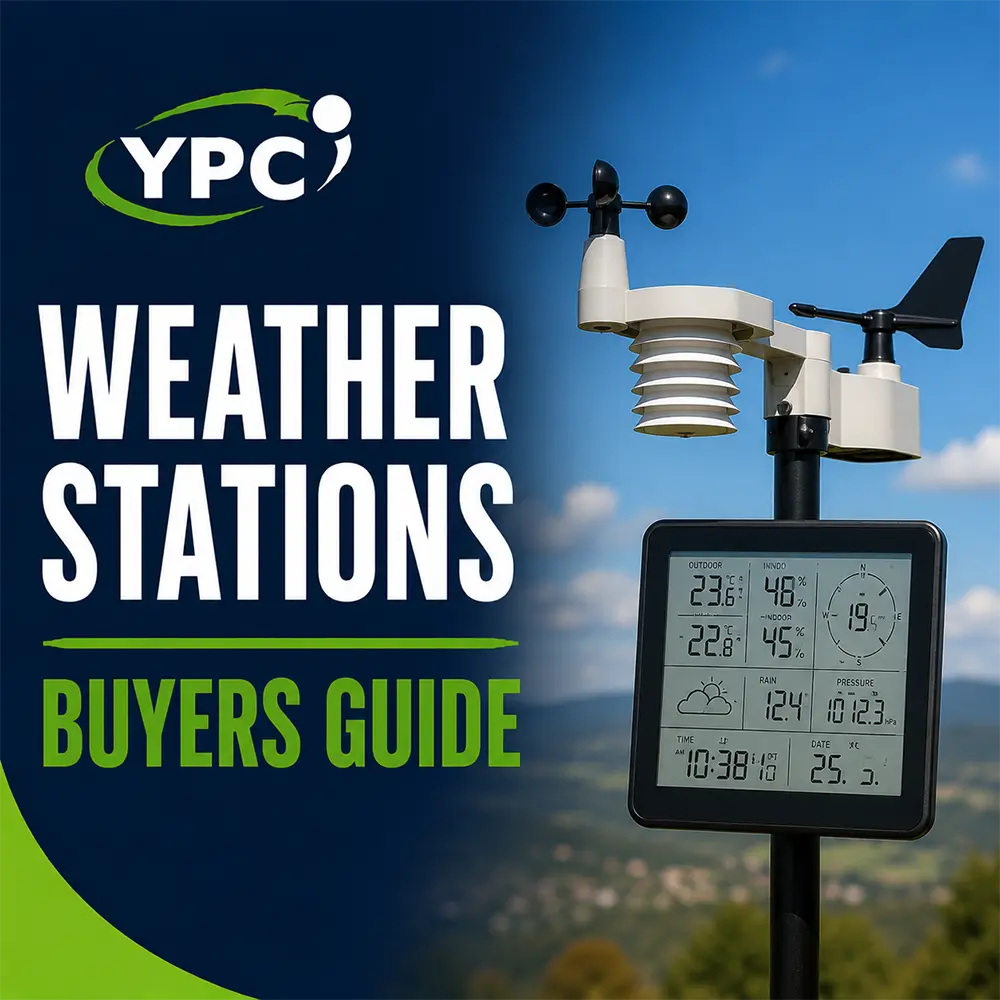
This guide explains how to choose a weather station for home use. It is written for people with little or no prior experience who want clear, reliable local weather information to help them decide whether it will be comfortable to go outside. You will learn how different weather station designs affect accuracy, ease of use, and day to day practicality.
Quick Product Comparison Framework
| Comparison factor | What it refers to | Why it matters |
|---|---|---|
| Sensor type | Indoor only or indoor and outdoor sensors | Determines what conditions can be measured |
| Measurement range | Types of weather data collected | Affects how useful the readings are |
| Display size | Physical size and clarity of the screen | Impacts readability, especially indoors |
| Accuracy focus | Sensor precision and consistency | Supports confidence in the data |
| Connectivity | Standalone or connected systems | Influences how data is viewed and stored |
| Power source | Battery, mains, or mixed | Affects reliability and maintenance |
| Installation style | Wired or wireless sensors | Determines setup complexity |
| Maintenance needs | Sensor care and battery changes | Impacts long term ease of use |
Specifications vary, see individual product listings for details.
Key Decision Criteria Explained
Accuracy and reliability
For most home users, consistent and believable readings matter more than advanced metrics. A weather station should provide dependable local information rather than broad regional estimates.
Display readability
Large, clear displays are easier to read at a glance. This is especially important for indoor use and for users who want quick reassurance before going out.
Ease of setup
Simple installation reduces frustration. Weather stations that are straightforward to position and start using are better suited to inexperienced users.
Indoor and outdoor balance
Many systems use an outdoor sensor and an indoor display. Understanding where each component will sit helps ensure the station fits the home and garden layout.
Connectivity preferences
Some users prefer a simple standalone display. Others like connected systems that store data or show trends. Neither approach is universally better.
Product Type Differentiation and Variants
Indoor only weather stations
These focus on conditions inside the home. They are simple and require minimal setup. Specifications vary — see individual product listings for details.
Indoor and outdoor sensor systems
These provide local outdoor readings alongside indoor conditions. They are commonly chosen for day to day weather awareness.
Wireless sensor weather stations
Sensors communicate without physical cables. This can simplify placement and reduce installation effort.
Connected weather stations
Some systems offer connectivity features for viewing data digitally. Others operate entirely without internet access.
Specifications vary, see individual product listings for details.
Suitability by Reader Type or Need
Older users and reassurance focused buyers
Large displays and simple layouts help provide confidence when checking conditions before leaving the house.
Casual home users
Balanced systems with basic outdoor sensors offer useful information without complexity.
Garden based users
Stations with clearly readable outdoor data help monitor local conditions around the home.
Gift buyers
Simple, reliable weather stations with minimal setup requirements reduce the risk of disappointment.
Common Mistakes and Misunderstandings
- Assuming all weather stations provide professional forecasts
- Choosing complex systems when simple displays would suffice
- Overlooking display readability for indoor use
- Ignoring where outdoor sensors will be placed
- Expecting identical accuracy across all environments
Understanding these points helps buyers set realistic expectations.
Safety and Suitability Caveats
Weather stations are intended for personal awareness and general interest. They should not be relied upon for safety critical or professional decisions. Sensor placement and environment can influence readings. Specifications vary — see individual product listings for details.
Maintenance Expectations and Lifespan Considerations
Weather stations generally require low maintenance. Sensors may need occasional battery changes or repositioning. Lifespan depends on build quality, exposure conditions, and care. Specifications vary — see individual product listings for details.
How to Compare Models Efficiently
- Decide whether outdoor readings are required
- Prioritise accuracy and display clarity
- Match sensor placement to home and garden layout
- Choose wireless or wired based on setup preference
- Consider connectivity needs realistically
- Balance features against budget and ease of use
This keeps the decision practical and focused.
Summary Buyer Decision Checklist
- I want clear and reliable local weather readings
- I have considered where sensors will be placed
- I need a display that is easy to read indoors
- I prefer simple setup and low maintenance
- I have decided whether connectivity matters to me
- I have set a sensible budget for home use
Frequently Asked Questions
Are weather stations difficult to use
Most home weather stations are designed for straightforward use. Ease of operation varies by design. Specifications vary — see individual product listings for details.
Do weather stations replace weather forecasts
No. They provide local readings rather than regional forecasts. They are best used alongside general forecasts.
Are weather stations accurate
Accuracy depends on sensor quality and placement. Consistency is often more important than precision.
Do weather stations need internet access
Some do, some do not. Many operate entirely as standalone devices.
Are weather stations suitable as gifts
Yes, especially models with clear displays and simple setup. They are often appreciated as practical home items.
For products in this category, visit:
https://www.ypc.co.uk/product-category/outdoor-tech/weather-stations/