
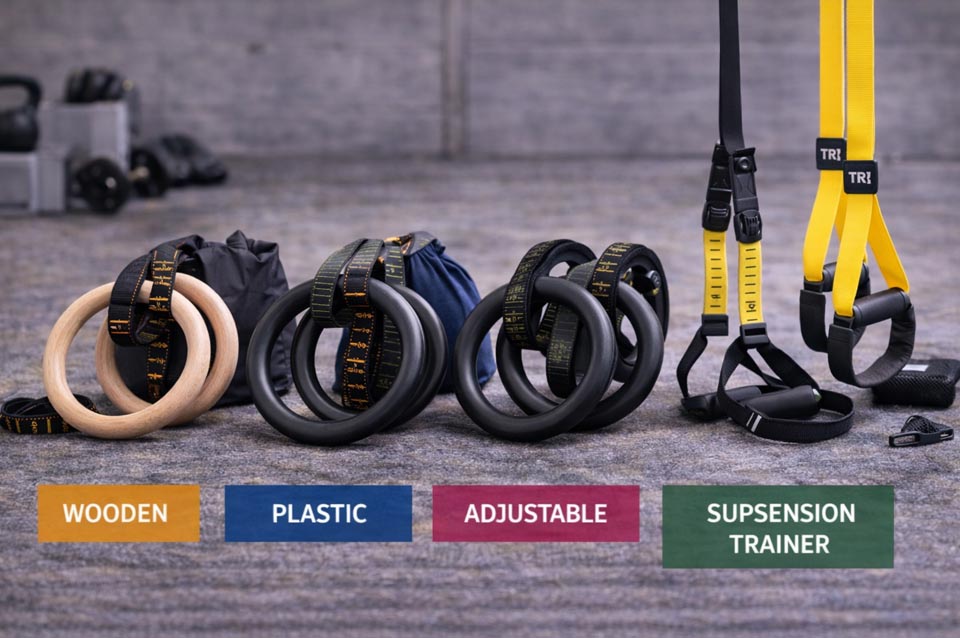
Gymnastic rings are suspended training tools designed for adjustable bodyweight exercise across a wide range of environments. This Buyers Guide explains how gymnastic rings differ in materials, straps, and mounting compatibility, and how those differences affect suitability for different training spaces and experience levels. It focuses on helping you compare options clearly without stepping into setup or usage instruction.
Quick Product Comparison Framework
| Feature area | How options differ |
|---|---|
| Ring material | Wood, plastic, or composite |
| Ring diameter | Standard or slightly thicker profiles |
| Strap length | Short, standard, or extended lengths |
| Strap material | Nylon, polyester, or reinforced webbing |
| Adjustment system | Buckle style or cam based adjusters |
| Mounting compatibility | Beam loop, tree friendly straps, or hardware dependent |
| Portability | Compact roll up systems versus bulkier straps |
Key Decision Criteria Explained
Ring material and grip feel
Material choice affects comfort and grip sensation. Wood often feels warmer and textured, while plastic and composite materials are more weather tolerant.
Strap length and adjustability
Longer straps allow greater height flexibility but may be unnecessary in low ceiling environments.
Adjustment mechanism reliability
Different buckle designs influence how easily height changes can be made between sets or sessions.
Mounting compatibility
Rings must suit the available anchor points in your environment. Not all straps or systems suit every mounting option.
Portability and storage
Compact strap systems are easier to transport and store, especially for travel or shared spaces.
Product Type Differentiation and Variants
Wooden gymnastic rings
Often chosen for grip comfort and tactile feel, particularly in indoor environments.
Plastic or composite rings
Common in outdoor or mixed use settings where moisture and surface wear are considerations.
Short strap systems
Designed for low ceilings or fixed indoor mounting points.
Long strap systems
Provide flexibility for higher anchors, outdoor structures, or varied environments.
Specifications vary — see individual product pages for details.
Suitability by Reader Type or Need
- Intermediate users often balance grip comfort with mounting flexibility.
- Advanced users may prioritise strap durability and adjustability across multiple environments.
- Those returning after a break often focus on shoulder comfort and confidence in mounting stability.
- Outdoor or travel users typically prefer weather tolerant materials and compact storage.
- Home based users often prioritise ceiling height compatibility and quiet adjustment systems.
Common Mistakes and Misunderstandings
- Assuming all rings fit all mounting situations.
- Choosing strap lengths longer than the available ceiling height allows.
- Overlooking how material choice affects grip in different conditions.
- Expecting all adjustment systems to feel equally smooth.
- Treating portability as unimportant until storage becomes an issue.
Safety and Suitability Caveats
Gymnastic rings involve suspended bodyweight loading. Suitability depends on user experience, joint tolerance, and environmental compatibility. Not all mounting options are appropriate for all spaces. Manufacturer guidance should always be followed when selecting and using suspended equipment.
Maintenance Expectations and Lifespan Considerations
Gymnastic rings generally require minimal maintenance. Lifespan depends on material choice, strap quality, buckle wear, and exposure to outdoor conditions. Over time, straps and adjustment components may show wear. Durability varies between products.
How to Compare Models Efficiently
Begin by confirming where the rings will be mounted and available height. Then compare ring material and strap length suitability. Review adjustment system design next, followed by portability and storage needs. This sequence helps narrow choices without overspecifying features.
Summary Buyer Decision Checklist
- Available mounting points and height
- Ring material preference
- Strap length suitability
- Adjustment mechanism design
- Portability and storage needs
- Indoor or outdoor use plans
- Budget alignment
Frequently Asked Questions
Are gymnastic rings suitable for beginners?
They are commonly used by more experienced users, but suitability depends on individual strength and comfort with suspended equipment.
Do all gymnastic rings mount the same way?
No. Mounting compatibility varies by strap design and available anchor points.
Is wood or plastic better for rings?
Material choice depends on grip preference and environment. Specifications vary — see individual product pages for details.
Can gymnastic rings be used outdoors?
Many can, but weather exposure affects material longevity. Suitability varies by product.
How portable are gymnastic rings?
Most designs are highly portable, especially strap based systems.
Do longer straps always offer more flexibility?
Longer straps allow higher mounting but may be unnecessary in low ceiling spaces.
Are all adjustment systems equally durable?
Adjustment durability varies by design and construction. Specifications vary between products.
For products in this category, visit:
https://www.ypc.co.uk/product-category/diet-fitness-and-exercise-equipment/exercise-equipment/bodyweight-training-equipment/gymnastic-rings/

