
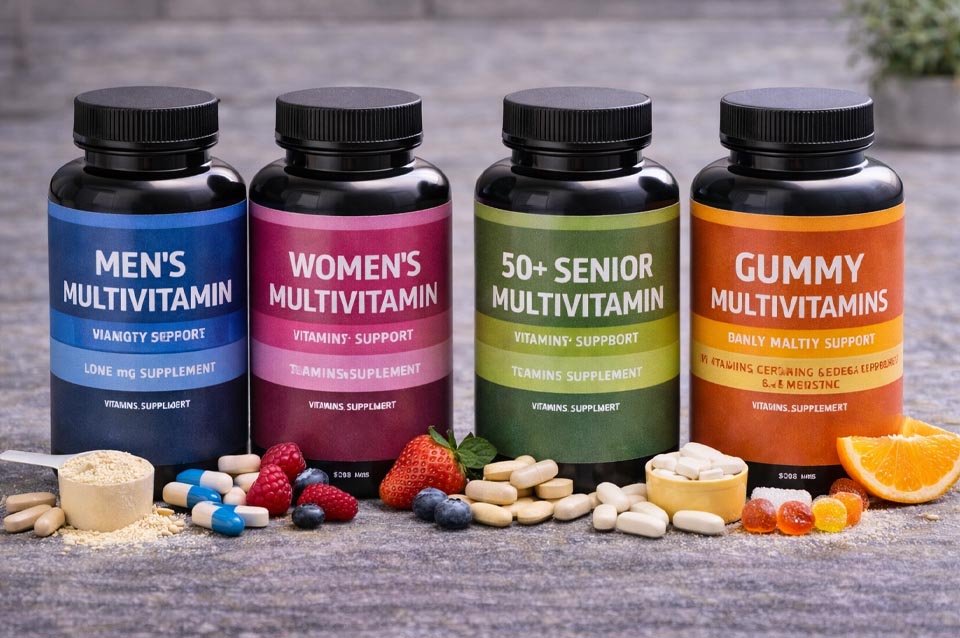
This guide explains how to compare multivitamin products and understand the key differences between formats, formulation breadth and suitability considerations. It is designed to support clear, informed decision making without making health, deficiency or outcome claims. You will learn how to assess multivitamins based on routine fit, transparency and long term practicality.
Quick Product Comparison Framework
| Factor | What It Indicates |
|---|---|
| Supplement Format | Tablet, capsule, chewable or powder |
| Formulation Breadth | Number and range of vitamin ingredients included |
| Serving Style | Single daily serving versus split formats |
| Preparation Level | No preparation versus drink style mixing |
| Ingredient Transparency | Clarity of ingredient and additive listings |
| Routine Fit | Ease of consistent long term use |
Specifications vary — see individual product pages for details.
Key Decision Criteria Explained
Supplement Format
Multivitamins are available as tablets, capsules, chewables and powdered blends. Tablets and capsules prioritise convenience and portability, while powders suit routines where mixing a drink is preferred.
Formulation Breadth
Products differ in how many vitamin ingredients they include and how they are combined. Some focus on broad coverage, while others use more selective groupings.
Serving Style and Frequency
Some multivitamins are designed as single daily servings, while others divide intake across multiple servings. Format and routine preference often matter more than complexity.
Ingredient Transparency
Clear labelling helps you understand what is included beyond vitamins, such as fillers, binders, flavourings or sweeteners.
Routine Integration
Consistency depends on how easily a multivitamin fits into daily habits. Packaging size, portability and preparation effort all influence long term use.
Product Type Differentiation and Variants
Tablets
Compact and easy to store. Often chosen for long term home use.
Capsules and Softgels
Typically smooth to swallow and portable. Common for everyday routines and travel.
Chewables
Offer an alternative to swallowing tablets. Flavour and sugar content may vary.
Specifications vary — see individual product pages for details.
Powdered Blends and Sachets
Mix into liquids for drink style use. Sachets provide portability and measured portions.
Suitability by Reader Type or Need
New Users
Tablets or capsules may feel more straightforward due to simple daily use.
Busy Adults
Single serving formats and portable packaging often support consistency.
Athletes
Ingredient transparency and compatibility with drug tested sport requirements are commonly prioritised.
Older Adults
Ease of use, clear labelling and routine fit often matter more than formulation complexity.
Long Term Users
Container size, storage practicality and consistent formulation become more important over time.
Common Mistakes and Misunderstandings
Assuming All Multivitamins Are the Same
Formulation breadth, format and added ingredients can vary significantly.
Confusing Multivitamins With Single Vitamins
Single Vitamins focus on one nutrient, while multivitamins combine several.
Ignoring Additives or Sweeteners
Chewables and powders may include sugars or flavourings that affect preference.
Choosing Format Without Considering Routine
A format that does not fit daily habits may reduce long term consistency.
Safety and Suitability Caveats
Multivitamins combine multiple biologically active nutrients, and suitability varies between individuals. Avoid assuming universal compatibility or benefit.
If you have medical conditions, are pregnant, or are taking medication, professional advice should be sought before introducing multivitamins. Always rely on product specific ingredient information.
Maintenance Expectations and Lifespan Considerations
Storage
Store multivitamins in cool, dry places and reseal containers after opening to maintain quality.
Long Term Practicality
Taste fatigue, swallowing preference or routine changes may affect continued use. Smaller packs can help assess suitability before long term commitment.
How to Compare Models Efficiently
- Clarify Your Routine
Decide whether use is daily, seasonal or travel focused. - Select a Preferred Format
Match tablets, capsules or powders to preparation preference. - Review Ingredient Listings
Check formulation breadth, additives and transparency. - Confirm Compatibility
Consider dietary needs and sport testing requirements. - Assess Long Term Fit
Evaluate storage, portability and consistency.
Summary Buyer Decision Checklist
- Choose a format that fits your routine
- Review formulation breadth
- Check ingredient transparency and additives
- Decide between tablets, capsules, chewables or powders
- Confirm dietary and sport compatibility
- Consider storage and portability
- Assess long term suitability
Frequently Asked Questions
What are multivitamins
They are supplements that combine multiple vitamin ingredients into tablets, capsules or powders.
How do multivitamins differ from single vitamins
Single vitamins focus on one nutrient, while multivitamins include varied combinations.
Do multivitamins require preparation
Tablets and capsules do not. Powders require mixing with liquids.
Are multivitamins suitable for long term use
Suitability depends on formulation, tolerance and individual circumstances.
Are multivitamins suitable for athletes
Some may be, depending on formulation and certification. Product details should always be checked.
For products in this category, visit:
https://www.ypc.co.uk/product-category/diet-fitness-and-exercise-equipment/diet-and-nutrition/supplements-and-vitamins/multivitamins/

