
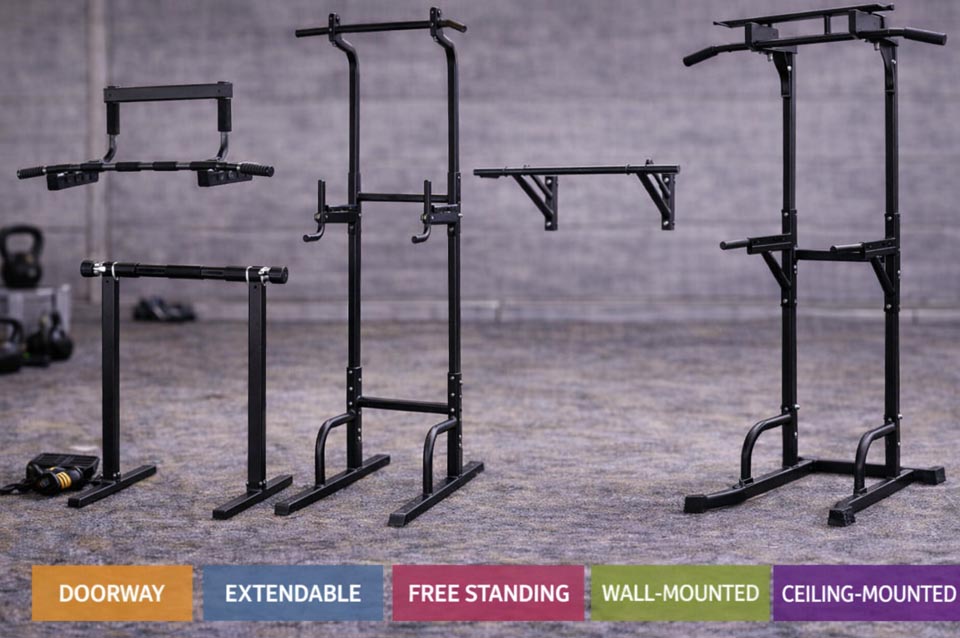
Pull up doorway and gym bars are overhead bodyweight training tools designed for use in home environments. This Buyers Guide explains how different bar types vary in mounting method, stability, space requirements, and overall build quality. It is intended to help you compare options clearly and choose a suitable format for your home setup without covering installation or usage instructions.
Quick Product Comparison Framework
| Feature area | How options differ |
|---|---|
| Mounting style | Doorway mounted, wall mounted, ceiling mounted, freestanding |
| Structural support | Door frame reliance, wall fixings, floor supported frames |
| Footprint | Minimal doorway presence versus larger floor frames |
| Grip options | Single straight bar or multiple grip positions |
| Bar width | Narrow, standard, or extended widths |
| Portability | Fixed installations versus removable or freestanding designs |
| Storage impact | Permanent placement versus temporary removal |
Key Decision Criteria Explained
Mounting compatibility
Doorway bars depend on door frame dimensions and structure, while wall and ceiling bars depend on suitable mounting surfaces. Freestanding frames avoid mounting constraints but require floor space.
Stability and build quality
Perceived quality is influenced by material thickness, frame rigidity, and how load is distributed across the mounting or base structure.
Space and clearance
Ceiling height and surrounding clearance affect suitability, especially in shared homes or lower ceiling environments.
Grip comfort and layout
Grip spacing and surface finish influence comfort, particularly for mixed ability households.
Removability and storage
Some users prefer bars that can be removed or repositioned easily, especially in rental properties.
Product Type Differentiation and Variants
Doorway pull up bars
Designed to rest within or against door frames. Favoured for compact spaces and temporary setups.
Wall mounted bars
Fixed to structural walls and typically offer a rigid, permanent feel when compatible with the space.
Ceiling mounted bars
Mounted overhead where ceiling structure allows, often used in dedicated training rooms.
Freestanding pull up frames
Self supporting structures that do not rely on walls or doorways, but require more floor space.
Specifications vary — see individual product pages for details.
Suitability by Reader Type or Need
- Beginners or returning users often prioritise confidence in stability and comfortable grip layouts.
- Mixed ability households may prefer bars with multiple grip options.
- Rental property users often look for removable doorway or freestanding designs.
- Dedicated home gym users may favour wall or ceiling mounted systems where structure allows.
- Space limited homes typically prioritise doorway compatibility and minimal footprint.
Common Mistakes and Misunderstandings
- Assuming all doorway bars fit all door frames.
- Overlooking ceiling height and head clearance.
- Treating build quality as identical across bar types.
- Expecting removable bars to feel the same as fixed installations.
- Ignoring storage considerations in shared living spaces.
Safety and Suitability Caveats
Pull up doorway and gym bars are load bearing fitness equipment. Suitability depends on user strength, environment compatibility, and mounting confidence. Not all designs are appropriate for all homes or structures. Manufacturer guidance should always be followed.
Maintenance Expectations and Lifespan Considerations
These bars generally require minimal ongoing maintenance once installed or positioned. Lifespan depends on material quality, frequency of use, and how well mounting points or frames are supported. Grip coverings and fixings may show wear over time. Durability varies between products.
How to Compare Models Efficiently
Start by identifying where the bar will be used and what mounting options are available. Next compare stability expectations and space requirements. Then assess grip layout and comfort. Finally consider removability, storage impact, and long term placement suitability.
Summary Buyer Decision Checklist
- Available mounting location or floor space
- Doorway width or structural compatibility
- Stability and build quality expectations
- Grip layout and comfort
- Removability or permanence preference
- Storage impact
- Budget alignment
Frequently Asked Questions
Are doorway pull up bars suitable for beginners?
Many beginners use doorway bars, but suitability depends on confidence, strength level, and doorway compatibility.
Do all doorway bars fit standard doors?
No. Doorway width and frame structure vary. Always check compatibility details.
Are wall mounted bars more stable than doorway bars?
They can be, depending on wall structure and installation quality. Suitability varies by environment.
Can pull up bars be used in rental properties?
Removable or freestanding designs are often preferred, but suitability depends on the property.
Do freestanding pull up frames take up much space?
They generally require more floor area than doorway bars. Space requirements vary by design.
For products in this category, visit:
https://www.ypc.co.uk/product-category/diet-fitness-and-exercise-equipment/exercise-equipment/bodyweight-training-equipment/pull-up-doorway-and-gym-bars/

