
Reciprocating Saw Blades
Reciprocating Saw Blades are cutting blades designed for use with reciprocating saws across demolition, renovation, pruning, and general DIY tasks.
This category is mainly for you if you need to make fast, practical cuts in materials that vary from job to job. Reciprocating saw blades are commonly chosen when access is awkward, surfaces are uneven, or the work is more about progress and control than a neat finished edge. The main differences usually come down to what you are cutting, how aggressive the cut needs to be, and how much reach or flexibility suits the task. Below, you will find guidance to help you understand those differences more clearly before you compare individual listings.
- Reciprocating Saw Blades
JOEJONI Reciprocating Saw Blade, Universal Carbide, 305mm
Original price was: £5.99.£3.99Current price is: £3.99. *View On Amazon* - Reciprocating Saw Blades
Bosch Professional 20 Piece Recip Saw Blades Tough Box for Wood and Metal Set
Original price was: £32.39.£29.99Current price is: £29.99. *View On Amazon* - Reciprocating Saw Blades
2Pcs Reciprocating Saw Blades for Concrete, Masonry and Brick Cutting, 10in 15TPI
£11.99 *View On Amazon* - Reciprocating Saw Blades
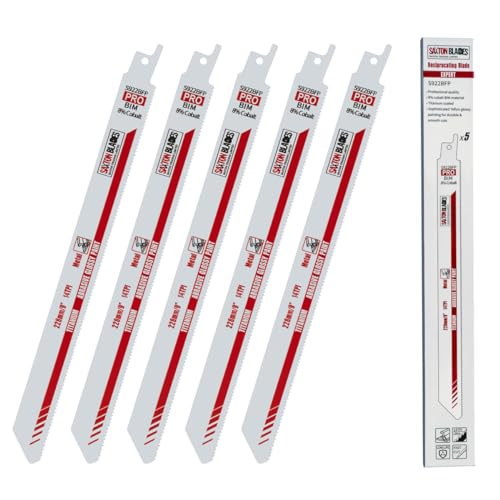
Saxton Professional Range Bi Metal 8% Cobalt Reciprocating Saw Blade S922BFP Pack of 5
£13.49 *View On Amazon* - Reciprocating Saw Blades
Starrett Bi Metal King Cut Heavy Duty Reciprocating Saw Blade 200mm Pack of 5
Original price was: £13.99.£11.59Current price is: £11.59. *View On Amazon* - Reciprocating Saw Blades
EZARC Reciprocating Saw Blade Bi Metal Cobalt Sabre Saw Blades 225mm 14TPI R926PM+ 5 Pack
£14.97 *View On Amazon* - Reciprocating Saw Blades
EZARC Reciprocating Saw Blade Bi Metal Cobalt Sabre Saw Blades 225mm 8 10TPI R930DM 5 Pack
£13.97 *View On Amazon* - Reciprocating Saw Blades
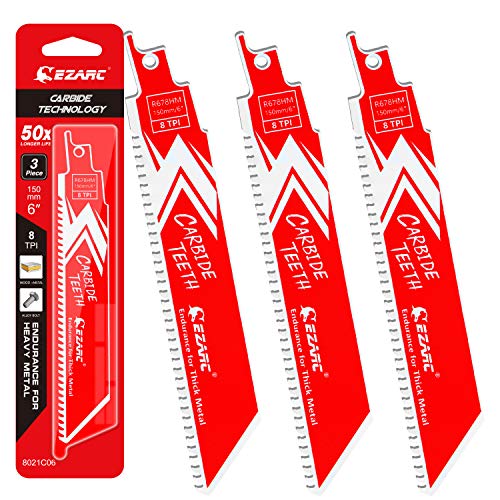
EZARC Carbide Reciprocating Saw Blade R678HM Endurance
£24.97 *View On Amazon* - Reciprocating Saw Blades
Saxton R305BC Heavy Duty Brick Concrete Cement Board Cutting Reciprocating Sabre Saw Blade
£13.99 *View On Amazon* - Reciprocating Saw Blades
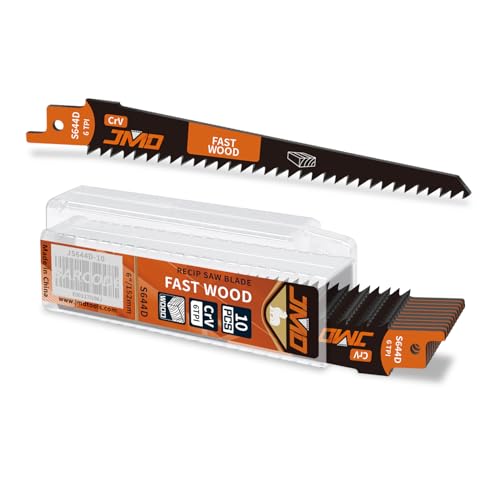
JMD 10 Piece S644D Reciprocating Saw Blade Set for Wood
£12.59 *View On Amazon* - Reciprocating Saw Blades
Saxton Professional Range Bi Metal 8% Cobalt Reciprocating Saw Blade S622BFP Pack of 5
£10.49 *View On Amazon* - Reciprocating Saw Blades
Presch Reciprocating Saw Blades Universal 210mm 10 pcs
£39.99 *View On Amazon* - Reciprocating Saw Blades
EffektWerk Reciprocating Saw Blades for Wood, 5 Pieces, 9 inch / 230mm, 6 TPI
£5.99 *View On Amazon* - Reciprocating Saw Blades
EZARC Carbide Reciprocating Saw Blade R956HM 225mm 6TPI 3 Pack
£26.97 *View On Amazon* - Reciprocating Saw Blades
Makita B-44432 Pack A Recip Blade
Original price was: £23.42.£21.30Current price is: £21.30. *View On Amazon* - Reciprocating Saw Blades
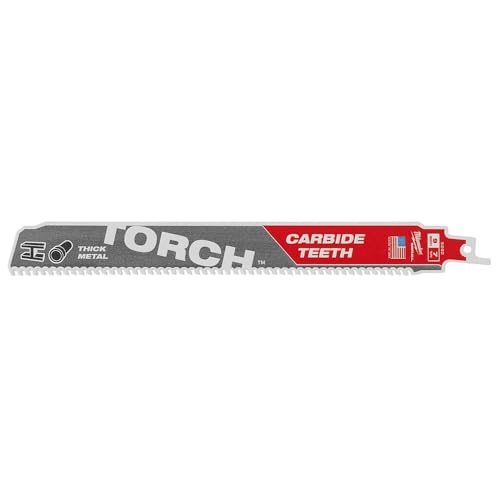
MILWAUKEE ELEC Tool 48 00 5202 9 inch 7 TPI Torch Sawzall Reciprocating Saw Blade White
£27.06 *View On Amazon* - Reciprocating Saw Blades
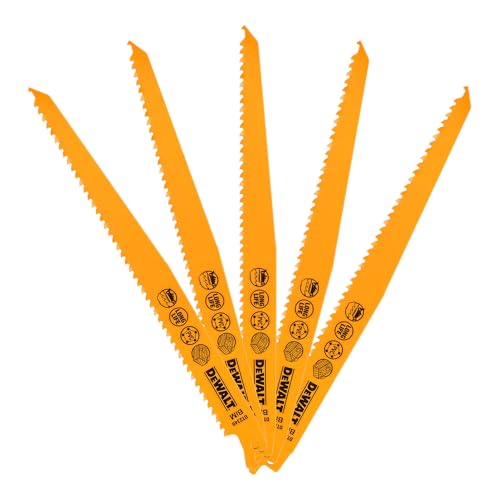
DEWALT DT2349QZ 228mm Reciprocating Blade for Fast Cuts
£22.92 *View On Amazon* - Reciprocating Saw Blades
Dewalt DT2407LQZ Metal Reciprocating Blades Pack of 5
£19.98 *View On Amazon* - Reciprocating Saw Blades
RHAIQBVC Universal Carbide Reciprocating Saw Blade 10in
£6.99 *View On Amazon* - Reciprocating Saw Blades
BRSCHNITT Japanese Teeth Reciprocating Saw Blades 230mm 4PCS
£20.99 *View On Amazon*













What This Category Includes
This category includes blades made for reciprocating saws in a range of lengths, tooth patterns, and cutting purposes. Some are intended for rough wood cutting, some for metal, and some for more mixed site work where materials may vary within the same job.
You may also find blades shaped for cleaner cutting, faster demolition style work, pruning, or tighter access areas. Specifications vary — see individual product listings for details.
Key Functional Roles
Reciprocating saw blades turn the saw into a practical cutting tool for jobs where speed, reach, and adaptability matter. Their role is to help you cut through material in places where larger bench tools or more rigid cutting setups are less convenient.
Different blade patterns suit different cutting styles. Some focus on quicker material removal, while others are better suited to steadier, more controlled cutting in specific materials.
Typical Use Scenarios
These blades are often used during renovation, strip out work, garden clearance, and general property maintenance. They are also common when cutting old timber, branches, sheet material, pipe, or mixed materials found during repair work.
You might choose a reciprocating saw blade when working in a confined space, cutting flush to a surface, or dealing with material that is fixed in place. They are especially relevant when the job is practical and site based rather than bench based.
Buyer Considerations
The first thing to consider is the material you expect to cut most often. Wood, green timber, metal, and mixed site materials usually call for different tooth styles, so it helps to check whether the blade is aimed at fast rough cuts, finer cutting, or broader demolition work.
Blade length also matters because it affects reach and how the blade handles deeper or more awkward cuts. A shorter blade may suit tighter control in smaller jobs, while a longer blade may suit larger sections or harder to reach areas. It is also worth checking whether you want a blade for repeated general use or a more specific cutting task.
Safety, Suitability and Best Practices
It is good practice to choose blades that match the intended material rather than treating every job the same. This helps keep your setup more appropriate to the task and makes product selection more straightforward.
Check individual product details before choosing, especially if the work varies from one project to another. For general care, keeping blades dry, organised, and separated from loose tool clutter can help them stay in better condition between jobs.
Category Boundaries
This category is specifically for blades used with reciprocating saws. It covers the cutting accessories rather than the powered tool itself.
It does not include Reciprocating Saws, which are the machines that drive these blades. It also differs from Jigsaw Blades, Circular Saw Blades, and Angle Grinder Discs because those categories are designed for different tools, cutting motions, and job types.
FAQs
Can reciprocating saw blades cut different materials? Some blades are aimed at one material type, while others are intended for more mixed cutting tasks. The best approach is to check the product listing to see what the blade is designed for.
How do I know which reciprocating saw blade is right for my job?
Start with the material, then look at blade length and the type of cut you need. If the work is rough and practical, your priorities may differ from a job where access and control matter more.
Are longer reciprocating saw blades always better?
Not always. Longer blades can give you more reach, but that does not automatically make them the better choice for every task. The right length depends on the size of the material and the kind of access you need.
Are these blades only for demolition work?
No. Many are used for demolition and strip out work, but reciprocating saw blades are also common in pruning, maintenance, renovation, and general DIY cutting tasks. The category covers a broad working role rather than one narrow use.
Can I use this category for garden cutting as well as DIY work?
Yes, in many cases reciprocating saw blades are used in both settings. Some are relevant to timber and branch cutting, while others are more suited to workshop or site materials, so the intended use still matters.
What should I check first when comparing product listings?
Check the intended material, blade length, and general cutting purpose first. Those details usually give you the clearest starting point when narrowing down suitable options.
Practical Insights and Real World Context
In real world use, people usually think about reciprocating saw blades less as a single product type and more as a job specific consumable. The blade that feels suitable for cutting old timber is not always the one you would want near metal fixings, awkward access points, or garden clearance work.
More experienced buyers often narrow the choice by asking what kind of material will dominate the job and how controlled the cut needs to feel. That mindset usually leads to better selection than looking only at appearance or assuming one blade style will cover every task equally well.
How This Category Fits Into Your Gear and Equipment
Within the wider Garden Construction and DIY structure, this category sits as one of the specialised cutting accessory areas in the broader tool range.
 Getting ready for Summer? View our Home and Garden Products

Heading outdoors this winter? Take a look at our Outdoor Clothing.