
Fish Grippers
Fish grippers are fishing tools designed to help anglers hold certain fish more securely during landing, unhooking, weighing or photography where suitable. They are useful for predator anglers, lure anglers, sea anglers, boat anglers, kayak anglers and anyone who needs extra control when handling lively, slippery or toothy fish.
The right fish gripper depends on the species you target, fish size, jaw type, grip design, handle comfort, wrist strap, material, corrosion resistance where listed, weighing features where included, storage size and whether the tool suits freshwater or saltwater use where listed.
- Fish Grippers
Annyswit 2 Pcs 2 Types Portable Fish Hook Remover Tool 30.5cm and 16.5cm Magnetic Release Fishing Unhooking Tool Stainless Steel Dehooker Disgorger Unhook Extractor for Disconnecting Fishhook
Original price was: £6.99.£5.99Current price is: £5.99. *View On Amazon* - Fish Grippers
supregear Fishing Pliers Set, Stainless Steel Fish Hook Remover Multi Function Fishing Line Cutters with Sheath and Coiled Lanyard, Black
Original price was: £14.99.£7.98Current price is: £7.98. *View On Amazon* - Fish Grippers
J&D Fishing Pliers and Fish Lip Gripper Set, Stainless Steel, Black
£13.99 *View On Amazon* - Fish Grippers
Crazy Shark Portable Stainless Steel Fish Lip Grabber Gripper Grip Tool Fish Holder Tackle EVA Handle 40lbs Gun Metal
Original price was: £20.99.£13.59Current price is: £13.59. *View On Amazon*
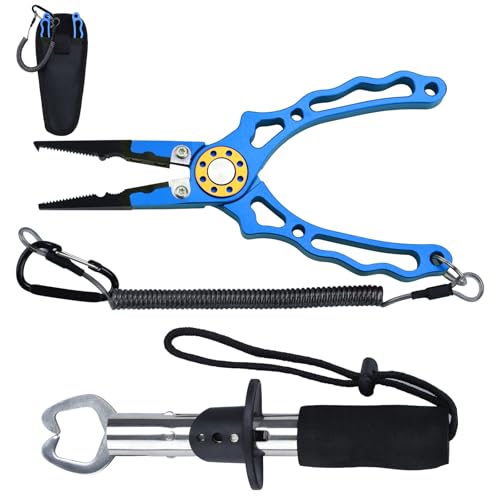


What Are Fish Grippers?
Fish grippers are handheld tools that grip a fish, usually around the lower jaw or mouth area, to help the angler control the fish for a short time. They are often used when fish are slippery, lively or difficult to hold safely by hand.
Some fish grippers are simple manual tools. Others may include scales, rotating heads, locking mechanisms, wrist straps or floating designs where listed.
A fish gripper should be used carefully. It is not a replacement for a landing net, unhooking mat, wet hands, forceps, pliers or good fish care. It is one tool within a responsible handling setup.
What Are Fish Grippers Used For?
Fish grippers are used to help control fish during unhooking, weighing, measuring, photography or release where suitable. They can help reduce the risk of the fish slipping from the angler’s hands.
They are commonly used for predator and sea fish, especially where teeth, spines, strong jaws or slippery bodies make handling more difficult. They can also be useful from boats, kayaks, rocks, piers and banks where safe control matters.
Fish grippers should only be used on fish and species where the tool is appropriate. Some fish should be supported by the body rather than held only by the jaw.
How To Choose The Right Fish Gripper
Start by thinking about the fish you expect to handle. Small freshwater predators, larger pike, bass, wrasse, pollack, perch, zander and other species can all need different handling approaches.
Next, check the gripper design. The jaws should close securely without feeling rough or unsuitable for the fish. The handle should give good control, even with wet hands.
If fishing near saltwater, check whether the gripper is suitable for coastal use where listed. Salt, sand and spray can affect metal parts, springs, scales and moving mechanisms.
Key Features To Compare
When comparing fish grippers, look at jaw design, grip strength, handle shape, tool length, wrist strap, locking style, rotating head where listed, scale function where included, material, weight, storage size and freshwater or saltwater suitability where listed.
Jaw design matters because it affects how the tool holds the fish. A secure but controlled grip is important, especially when handling lively fish.
Handle comfort also matters. Wet hands, cold weather, gloves and moving fish can make a poor handle harder to control.
Fish Grippers Compared With Landing Nets
A landing net is used to land and support the fish in the water. It is usually the first tool for bringing a fish safely under control.
A fish gripper is used after the fish is close enough to control, often during unhooking, weighing or release. It should not normally replace a landing net for larger fish.
The best approach is often to use both. Land the fish safely with a suitable net, then use a gripper only if it helps with safe and suitable handling.
Fish Grippers Compared With Forceps And Pliers
Fish grippers help hold the fish. Forceps and pliers help remove hooks, open split rings, cut wire or manage tackle.
They are different tools with different purposes. A gripper can steady the fish, while forceps or pliers deal with the hook.
For predator and lure fishing, anglers often carry both. Good control and the right unhooking tool can reduce handling time and improve safety.
Fish Grippers Compared With Fish Grips On Scales
Some fish grippers include a weighing scale where listed. These can be convenient, but the fish should still be supported properly.
Holding a heavy fish only by the jaw can cause harm, especially if the fish is large, deep bodied or not suited to that handling method. A weigh sling is usually better for careful weighing of larger fish.
A gripper with a scale may be useful for some species and situations, but fish welfare should guide how it is used.
Beginner, Regular Angler And Experienced Angler Guidance
Beginners should choose a simple fish gripper that is easy to hold, easy to open and close, and suitable for the fish they are likely to catch. They should also learn when not to use one.
Regular anglers may want a stronger gripper with better grip, wrist strap and corrosion resistance where listed. This can be useful for predator, lure or sea fishing.
Experienced anglers often compare jaw pressure, handle control, rotating head action, weight capacity where listed, saltwater suitability, scale accuracy where listed and how the tool works with their landing net and unhooking setup.
Fish Grippers For Predator Fishing
Predator fishing often involves fish with teeth, strong jaws or lively movement. Fish grippers can help control some predator species while hooks are removed.
For pike, zander and perch, handling should always be careful and species appropriate. Pike in particular need proper unhooking tools, a suitable landing net and confident handling.
A fish gripper should not be used roughly or as the only handling method. Support the fish properly and keep handling time sensible.
Fish Grippers For Pike Fishing
Pike have sharp teeth and powerful bodies, so safe handling is important. A fish gripper may help in some situations, but pike should usually be supported properly and handled with suitable tools.
Long forceps, strong pliers, cutters, a suitable landing net and an unhooking mat are important parts of pike fishing equipment.
Do not hang large pike vertically by the jaw using a gripper. Support the body and return the fish carefully.
Fish Grippers For Perch And Zander
Perch and zander can be slippery and lively, and zander have sharp teeth. A fish gripper may help with control where suitable, but care is needed because smaller fish can be delicate.
Use the gripper only if it suits the fish size and jaw structure. For small fish, wet hands and careful support may be more appropriate.
Unhooking tools should be ready before the fish is handled. This reduces time out of the water and helps make release smoother.
Fish Grippers For Sea Fishing
Fish grippers are popular in sea fishing because some sea fish are slippery, spiky, strong or difficult to hold safely. They may be useful for bass, pollack, wrasse, codling, mackerel and other suitable species depending on size and handling needs.
Saltwater can be hard on tools, so corrosion resistance where listed is important. After coastal use, clean and dry the gripper properly.
Sea fishing often involves rocks, piers, boats and moving water. A wrist strap or secure grip can help reduce the chance of dropping the tool or fish.
Fish Grippers For Boat And Kayak Fishing
Boat and kayak anglers may use fish grippers because space is limited and fish can be difficult to control beside the craft.
A fish gripper can help steady a fish while it is unhooked, photographed or released. This can be useful when the fish is still partly in the water.
The tool should be attached or stored securely. Dropping a gripper in deep water or losing control of a fish beside a kayak can create problems.
Fish Grippers For Lure Fishing
Lure fishing often uses hooks that can be difficult to manage when a fish is lively. A fish gripper can help keep the fish controlled while forceps or pliers are used.
This can be especially useful with treble hooks, larger plugs, spoons or predator lures where fingers need to stay away from hook points.
The gripper should be used gently and only when it suits the fish. A landing net, unhooking mat and proper tools remain important.
Fish Grippers For Catch And Release
Catch and release fishing needs careful fish handling. Fish grippers can help reduce handling difficulty, but they must be used correctly.
Keep the fish in or close to the water where possible, support the body when needed and avoid holding large fish only by the jaw.
Prepare tools before lifting the fish. The faster and calmer the handling process, the better it is for the fish.
Jaw Grip, Handle Comfort And Control
Jaw grip should be secure enough to hold the fish, but not so aggressive that it causes unnecessary damage. The gripper should feel controlled rather than harsh.
Handle comfort affects safety. Wet hands, bait residue, fish slime and cold weather can make tools slippery, so grip shape and texture can matter.
A wrist strap can be useful where listed. It helps reduce the chance of dropping the tool when handling fish near water.
Rotating Head And Locking Mechanisms
Some fish grippers have a rotating head where listed. This can help if the fish turns or twists, reducing pressure on the jaw and making control smoother.
Locking mechanisms can help keep the gripper closed during handling, but they should still allow quick release when needed.
Any moving part should be checked regularly. Sand, salt, grit and bait residue can affect springs, locks and rotating sections.
Fish Grippers With Built In Scales
Some fish grippers may include built in scales where listed. These can be convenient for quick weighing of suitable fish.
For larger or more delicate fish, a weigh sling and proper support are usually more appropriate. A gripper scale should not encourage poor handling.
If weighing matters, check the scale range, readability, battery needs where relevant and whether the design suits the fish you expect to catch.
Freshwater And Saltwater Suitability
Freshwater use can expose fish grippers to mud, weed, bait residue and fish slime. Tools should be cleaned and dried after use.
Saltwater use adds salt, sand and corrosion risk. If fishing at the coast, choose a gripper with saltwater suitability where listed and maintain it carefully.
Do not assume every fish gripper is suitable for sea fishing. Check product details before using one in harsh coastal conditions.
Fish Care And Responsible Handling
Fish care should guide every use of a fish gripper. The tool should help control the fish briefly, not be used to drag, swing, drop or hang fish unnecessarily.
Support larger fish with the other hand under the body. Avoid holding heavy fish vertically by the jaw unless the species and situation make that safe and accepted.
Keep handling time sensible, especially in warm weather, cold air or when fish are tired after a fight. Return fish calmly according to venue rules.
Venue Rules And Species Suitability
Always check venue rules before using fish grippers. Some fisheries may have guidance on fish handling, unhooking mats, landing nets, weigh slings or specific tools.
Species suitability also matters. A tool that works for one fish may not be suitable for another. Fish with delicate mouths, small jaws or deep bodies may need different handling.
If in doubt, use a landing net, wet hands, a mat and suitable unhooking tools rather than relying on a gripper.
Safety When Using Fish Grippers
Fish grippers can help keep hands away from teeth, spines and hooks, but they do not remove all risk. Fish can still twist, jump or shake hooks.
Keep fingers clear of lure hooks, treble hooks, teeth and moving jaws. Use forceps, pliers or cutters where needed rather than placing hands near danger.
Do not hold fish over hard ground or high drops. If the fish slips, it can be injured. Handle fish close to water, mats or safe surfaces where possible.
Care, Cleaning And Storage
Fish grippers should be cleaned and dried after use. Fish slime, bait, mud, salt, sand and grit can affect jaws, springs, handles and moving parts.
Check for rust, sticking mechanisms, cracked handles, weak straps or rough edges before each session. A faulty gripper can make fish handling less safe.
Store the gripper in a tackle box, tool pouch or secure pocket where it will not damage line, lures, clothing or other equipment.
Useful Accessories To Consider
Useful accessories for fish grippers include landing nets, unhooking mats, weigh slings, forceps, pliers, hook removers, line cutters, lure boxes, traces, leader wallets, tool pouches and cleaning cloths.
For sea fishing, corrosion aware tools, waterproof storage and suitable gloves may be useful. For predator fishing, long forceps, strong pliers and cutters are especially important.
The best handling setup is one where the gripper, net, tools, fish care equipment and fishing method all work together responsibly.
Why Buy Fish Grippers From YPC?
At YPC, we understand active lifestyles and the need for practical products that work in real use. Fish grippers should be chosen carefully because jaw design, handle control, fish size, saltwater suitability, tool strength and fish care all affect how useful they are.
Browse the Fish Grippers category at YPC to compare available options, check the details that suit your fishing style and choose handling tools that help make landing, unhooking and release more controlled and responsible.
Fish Grippers FAQs
What is a fish gripper?
A fish gripper is a handheld tool used to grip and control a fish, usually around the mouth or lower jaw. It can help during landing, unhooking, weighing or release where suitable.
It should be used carefully and only on fish where the tool is appropriate.
What are fish grippers used for?
Fish grippers are used to help control slippery, lively, toothy or difficult to handle fish for a short time. They can make unhooking and release easier when used correctly.
They should be used with proper fish care equipment.
Are fish grippers suitable for beginners?
Yes, fish grippers can be suitable for beginners if they are simple to use and matched to the fish being caught. Beginners should also learn correct fish handling.
A gripper should not replace a landing net or unhooking tools.
Are fish grippers safe for fish?
Fish grippers can be safe when used correctly on suitable fish, but they can harm fish if used roughly or on unsuitable species.
Large fish should usually be supported by the body rather than held only by the jaw.
Can fish grippers hurt a fish’s mouth?
Yes, they can if used incorrectly, if the gripper is too strong, or if the fish is too heavy to be held by the jaw alone.
Use gentle control, support the fish properly and keep handling time short.
Can I use fish grippers for pike?
Fish grippers may be useful in some pike handling situations, but pike need careful handling and proper support. Do not hang large pike vertically by the jaw.
Use a suitable landing net, unhooking mat, long forceps and pliers.
Can I use fish grippers for perch?
A fish gripper may be used for perch where suitable, but smaller perch can be delicate. Wet hands and careful support may be better for small fish.
Choose the handling method that causes the least stress.
Can I use fish grippers for zander?
Fish grippers may be useful for zander where suitable because zander have sharp teeth and can be lively. Use care and support the fish properly.
Unhooking tools should be ready before handling.
Can I use fish grippers for sea fish?
Yes, fish grippers are often used for suitable sea fish. They can help control slippery or spiky fish during unhooking and release.
Check saltwater suitability where listed and clean the tool after coastal use.
Can I use fish grippers for carp?
Fish grippers are not usually the best tool for carp. Carp are deep bodied and should normally be supported with a landing net, unhooking mat and hands.
For carp weighing, a weigh sling is usually more appropriate.
Are fish grippers better than landing nets?
No, they do different jobs. A landing net helps land and support the fish, while a gripper helps control some fish during handling.
For many fish, a landing net is still essential.
Do fish grippers replace forceps or pliers?
No, fish grippers do not replace forceps or pliers. A gripper holds the fish, while forceps and pliers remove hooks or manage tackle.
Predator and lure anglers often need both.
What size fish gripper do I need?
Choose a size that suits the fish you expect to catch. Larger fish may need a stronger tool, while smaller fish need careful handling and may not suit heavy grippers.
Check product details and species suitability before use.
Are fish grippers with scales useful?
Fish grippers with scales can be useful for some suitable fish, but larger or delicate fish should be supported properly. A weigh sling is often better for careful weighing.
Do not hang heavy fish by the jaw if it may cause harm.
What is a rotating fish gripper?
A rotating fish gripper has a head that can turn where listed. This can help reduce twisting pressure if the fish moves.
It can be useful for lively fish, but correct handling is still important.
Do I need a wrist strap on a fish gripper?
A wrist strap can be useful because it reduces the chance of dropping the tool near water. This is especially helpful from boats, kayaks, rocks or piers.
Check that the strap is comfortable and secure where listed.
Are fish grippers suitable for kayak fishing?
Yes, fish grippers can be useful for kayak fishing because space is limited and fish can be difficult to control beside the kayak.
Keep the tool secured and use it carefully to avoid losing balance or harming the fish.
Are fish grippers suitable for catch and release?
Fish grippers can be suitable for catch and release when used correctly on appropriate fish. Handling should be quick, calm and supportive.
Keep the fish close to the water or over a safe mat where possible.
How do I clean fish grippers?
Wipe or rinse away fish slime, bait, mud, salt and sand where suitable, then dry the tool before storage.
Check jaws, springs, handles, straps and moving parts for wear.
What should I check before buying fish grippers?
Check jaw design, grip strength, handle comfort, tool length, wrist strap, rotating head where listed, scale feature where included, material, storage size and freshwater or saltwater suitability where listed.
The right fish gripper should suit your target species, handling style, venue and fish care needs.
 Getting ready for Summer? View our Home and Garden Products

Heading outdoors this winter? Take a look at our Outdoor Clothing.