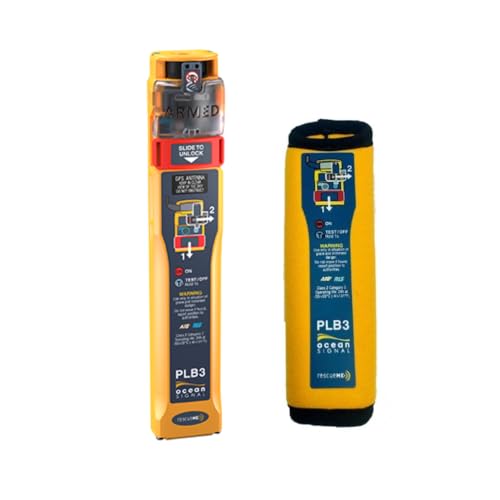
What This Product Is Used For
This personal locator beacon is designed to transmit a distress signal with precise GPS coordinates in a genuine emergency, offering a far more direct and dedicated rescue alert system than relying on a mobile phone or standard handheld GPS alone.
It is intended for marine users, boaters, outdoor explorers and field operators who need an emergency signalling device that works independently of local mobile coverage. With built in GPS positioning and manual distress activation, it helps search and rescue teams identify your location quickly and accurately.
The clear LCD display shows coordinate status, making it easier to confirm the unit is operating correctly. The floatable design makes it particularly suited to use on boats, kayaks and other watercraft, reducing the risk of permanent loss if dropped overboard.
Who This Product Is Best Suited To
This beacon is best suited to people who venture beyond reliable mobile signal and want a dedicated emergency backup device. It is ideal for boat owners, anglers, coastal sailors, offshore workers and serious outdoor enthusiasts who understand the importance of having a standalone distress alert system.
It also suits users who prefer a simple manual activation process rather than complex smart device integration.
Pros and Cons
Pros
Provides dedicated emergency distress transmission separate from your phone
Built in GPS helps improve rescue accuracy and speed
Floatable design adds reassurance for marine use
LCD screen gives clear operational feedback which reduces uncertainty
Lightweight and compact for easier packing in a grab bag
Cons
Designed specifically for emergency use so it is not a general navigation device
Requires manual activation in an emergency situation
Real World Performance and Day to Day Use
In day to day use, this device is typically stored in a life jacket pocket, grab bag or dry storage compartment on board. The compact and lightweight form means it does not feel intrusive or heavy.
The LCD display allows you to check coordinate status and operational state without guesswork. In an emergency, manually activating the beacon transmits a distress signal along with GPS positioning data, helping rescue services pinpoint your location more efficiently than voice calls alone.
The floatable construction is particularly valuable in real marine conditions where wet hands and unstable footing are common. If dropped in water, the unit remains retrievable rather than immediately lost.
Why We Like This Product
From the YPC Team perspective, we like the simplicity. In a real emergency, you do not want layers of menus or app pairing. You want a clear screen, a clear function and confidence that the signal will transmit when needed.
One common mistake we see is people relying entirely on a smartphone for offshore safety. Mobile signal can drop unexpectedly and batteries can fail. A dedicated locator beacon reduces that risk and gives a separate line of defence.
Comparisons With Similar Systems
Compared with a standard handheld GPS unit
A handheld GPS helps you navigate but does not automatically transmit a distress signal. Choose this beacon if emergency signalling is your priority. Choose a handheld GPS if route planning and navigation are your main needs.
Compared with a satellite phone
A satellite phone allows two way voice communication, which can provide more detailed information. However, it requires active communication and can be more complex to operate. This beacon makes more sense if you want a single purpose emergency device that is quick to activate.
Compared with mobile phone emergency calls
Mobile phones rely on network coverage. This beacon is designed for scenarios where coverage may not be available or reliable. If you stay within strong signal areas, a phone may be sufficient. For remote marine or field use, this beacon offers stronger reassurance.
Alternatives Worth Considering
If you prioritise full two way communication, a satellite communication device may be worth considering. If your main need is route tracking and navigation rather than distress signalling, a dedicated GPS navigator may be more suitable.
Tips for Getting the Best Performance
Store the beacon in an easily accessible location, not buried deep in equipment bags.
Familiarise yourself with the manual activation process before heading out.
Keep the unit secured to your person when operating on deck or near open water.
Regularly check the LCD display status before trips to confirm readiness.
Include it in your standard pre departure safety checklist.
Full Technical Specification
Product type Personal locator beacon
Positioning Built in GPS
Display LCD screen showing coordinate status
Functions Distress signal transmission, alarm, code writer, LED flashlight, fault diagnosis
Design Portable and floatable
Application Marine use, outdoor exploration, field operations
Box contents
Personal locator beacon unit
Buyer’s Guide
Buy this if you spend time offshore or in remote areas and want a dedicated emergency distress device that does not rely on mobile networks.
Do not buy this if you only need a standard navigation GPS or if you expect everyday communication features such as messaging or voice calls.
Frequently Asked Questions
Does this personal locator beacon require a mobile phone signal to work?
No. It is designed as a standalone emergency device and does not rely on standard mobile phone coverage.
Can I use this as a normal GPS navigation device?
It is primarily intended for distress signalling with GPS positioning rather than full navigation and mapping.
Is it suitable for use on boats and kayaks?
Yes. The floatable design makes it suitable for marine environments.
What happens when I activate the distress function?
When manually activated, the unit transmits a distress signal along with GPS position data to assist rescue efforts.
Does it show my coordinates on the screen?
Yes. The LCD display shows coordinate status information.
Is this device lightweight enough to carry on my person?
Yes. It is designed to be compact and portable for field and marine use.
Can it help rescuers find me more quickly?
The built in GPS allows more accurate positioning, which can support faster location during a rescue operation.
Is it complicated to operate?
It is designed for straightforward manual activation with a clear LCD display to reduce confusion.
Can it be used for general outdoor exploration?
Yes. It is suitable for outdoor exploration and field operations where emergency backup is required.
Does it include any additional functions besides distress signalling?
Yes. It includes alarm, code writer, LED flashlight and fault diagnosis functions.
Looking for more options?
Browse our full range of Personal Location Beacons for other great choices to suit your space, goals, and budget.