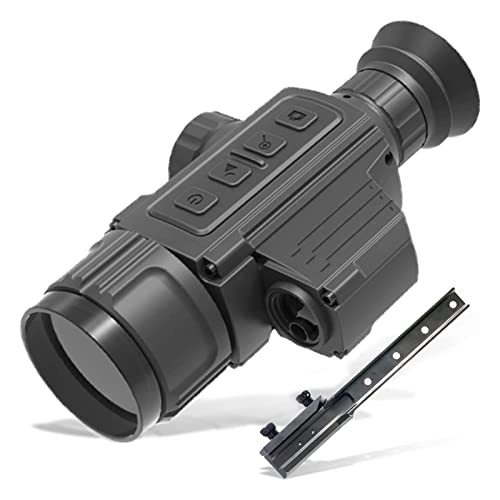


What This Product Is Used For
This handheld thermal monocular is designed for detecting heat signatures in darkness or poor visibility and is more effective than standard night vision devices that depend on ambient light. It is suited to observation tasks such as wildlife spotting, patrol scanning, or search work where identifying heat sources matters more than seeing fine visual detail.
Who This Product Is Best Suited To
This device suits users who prioritise reliable detection over visual realism. It works best for outdoor observers, land survey users, security patrol operators, and anyone who needs confidence spotting movement or presence in low visibility conditions.
Pros and Cons
Pros
Thermal detection improves confidence when scanning dark environments
Handheld design keeps operation simple and easy to manage
Reliable performance reduces frustration in changing conditions
Cons
Thermal viewing shows heat outlines rather than detailed imagery
Higher capability devices can require practice to interpret properly
Real World Performance and Day to Day Use
Thermal monoculars of the LH15 class typically use a high sensitivity sensor paired with a short focal length lens to balance portability and detection range. Comparable LH15 models with a 15 mm lens can detect heat signatures up to about 750 metres in ideal conditions, making them suitable for woodland and mid range observation.
Many devices in this category also feature compact lightweight bodies, allowing them to be carried easily during extended outings.
Why We Like This Product
The YPC Team appreciates gear that works when conditions are unpredictable. Devices in the LH15 class strike a practical balance between portability and detection performance. A common buyer mistake is choosing optics that rely on light when they actually need heat detection. Thermal units solve that instantly.
Comparisons With Similar Systems
Compared with traditional night vision optics, thermal monoculars detect heat rather than reflected light, so they work even in total darkness.
Compared with higher specification thermal units that use larger lenses, smaller lens LH15 style devices prioritise portability over extreme distance detection. Larger lens systems can detect further but are bulkier.
Compared with entry level thermal viewers, LH15 class devices often deliver stronger contrast and clarity thanks to more sensitive sensors.
Alternatives Worth Considering
Users needing maximum detection range may prefer larger lens thermal models. Those prioritising compact carry may prefer smaller pocket thermal viewers.
Tips for Getting the Best Performance
Allow the unit to stabilise to ambient temperature before extended observation.
Use contrast or colour palettes to highlight targets in cluttered environments.
Scan slowly rather than sweeping quickly to avoid missing heat signatures.
Full Technical Specification
Product type handheld thermal monocular
Lens class 15 mm category
Typical detection range up to about 750 m for comparable LH15 units
Typical sensor class high sensitivity thermal detector
Typical refresh rate class around 50 Hz in comparable devices
Buyer’s Guide
Buy this if you want reliable heat detection for scanning areas in darkness or low visibility.
Do not buy this if you need detailed daylight style viewing or long range identification clarity.
Frequently Asked Questions
Can this work in total darkness?
Yes. Thermal devices detect heat rather than light so they work even without illumination.
Is it better than night vision?
It depends on your goal. Thermal is better for detection while night vision is better for visual detail.
How far can it detect objects?
Comparable LH15 class units can detect heat signatures up to roughly 750 metres in ideal conditions.
Is it suitable for wildlife observation?
Yes. Thermal imaging is commonly used for spotting animals in low visibility environments.
Does it need an infrared light source?
No. Thermal imaging detects heat directly and does not need external illumination.
Is it difficult to learn to use?
Most users adapt quickly, though interpreting heat patterns takes a little practice.
Can it be used during the day?
Yes. Thermal devices work in daylight as well as darkness.
Is it portable?
Yes. Devices in this category are compact and lightweight for easy carrying.
Does it show colour images?
Thermal viewers usually show contrast palettes rather than natural colours.
What makes LH15 models popular?
They balance portability, detection range, and image clarity, making them versatile for general field use.
Looking for more options?
Browse our full range of Night Vision Goggles for other great choices to suit your space, goals, and budget.