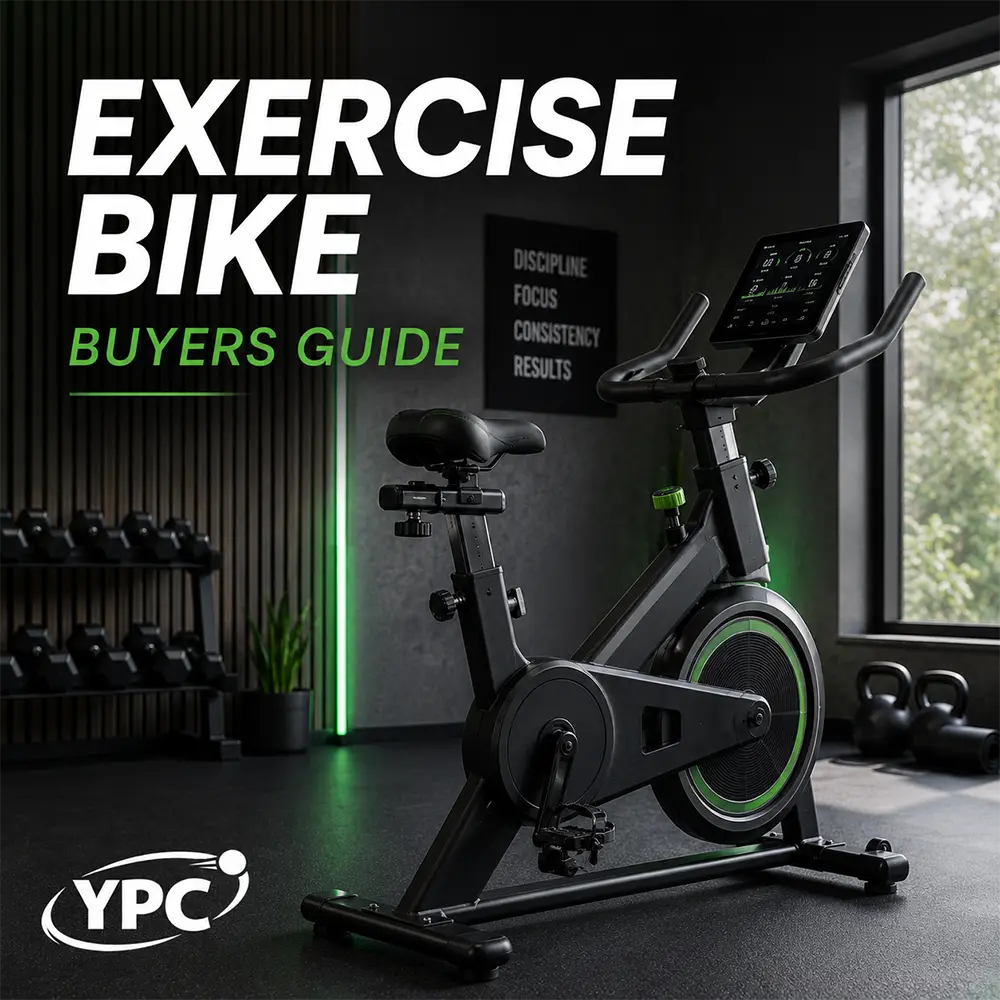
This guide explains how to choose an exercise bike for home use based on space, comfort, noise, and training needs. Exercise bikes vary in layout, resistance style, and features, which can affect how suitable they are for different users. This guide focuses on decision clarity rather than product promotion. It is intended to help you understand the differences so you can compare options confidently.
Quick Product Comparison Framework
| Feature area | What varies between exercise bikes |
|---|---|
| Bike style | Upright, indoor cycling, or recumbent |
| Seating position | Vertical or reclined |
| Resistance system | Mechanical or magnetic |
| Frame size | Compact to full size |
| Noise level | Low to moderate depending on resistance and build |
| User weight limits | Varies by frame design |
| Adjustability | Seat, handlebars, and reach ranges differ |
| Console features | Basic displays to app connected systems |
| Storage | Fixed frames or space saving designs |
Specifications vary — see individual product pages for details.
Key Decision Criteria Explained
Available space
Exercise bikes differ in footprint and height. Compact designs suit smaller rooms, while larger frames require more clearance.
Seating and joint comfort
Upright and indoor cycling bikes place the rider in a traditional cycling position. Recumbent bikes use a reclined seat that may reduce strain for some users.
Resistance type
Mechanical resistance often uses direct contact systems. Magnetic resistance typically operates more quietly and with smoother transitions. Specifications vary — see individual product pages for details.
Noise sensitivity
Noise levels depend on resistance systems, flywheel design, and frame stability. This can matter in shared households.
User weight limits and adjustability
Weight ratings, seat range, and handlebar adjustment affect who can use the bike comfortably.
Feature complexity
Some bikes focus on simplicity, while others include digital displays or app connectivity. Feature preference varies by user.
Product Type Differentiation and Variants
Upright exercise bikes
These resemble traditional bicycles with a vertical seating position. They are often used where space is limited.
Indoor cycling bikes
These typically use heavier frames and flywheels and are designed for structured cycling style sessions.
Recumbent exercise bikes
These place the rider in a reclined position with back support. They are larger and may suit users prioritising seated comfort.
Specifications vary, see individual product pages for details.
Suitability by Reader Type or Need
- Complete beginners may prefer stable frames with simple controls and clear displays.
- Shared households often benefit from adjustable seating and wider user weight ranges.
- People returning to fitness may prioritise comfort, smooth resistance, and ease of access.
- Regular exercisers may value resistance range and frame stability for longer sessions.
- Small spaces suit compact upright designs.
- Noise sensitive environments may suit bikes with quieter resistance systems.
Suitability depends on individual needs and available space.
Common Mistakes and Misunderstandings
- Assuming all exercise bikes have the same footprint.
- Overlooking user weight limits when multiple people will use the bike.
- Choosing advanced digital features when simplicity would be easier to use.
- Underestimating noise impact in shared living spaces.
- Expecting one bike style to suit all body types equally.
Safety and Suitability Caveats
Exercise bikes are designed for indoor use on stable surfaces. Suitability varies depending on user size, comfort needs, and room layout. Always ensure the selected bike aligns with household space, user requirements, and manufacturer guidance. Specifications vary — see individual product pages for details.
Maintenance Expectations and Lifespan Considerations
Exercise bikes are built for repeated use over time, but longevity depends on build quality, usage frequency, and environment. Moving parts and resistance systems experience wear at different rates. General care expectations vary by model and design. Specifications vary — see individual product pages for details.
How to Compare Models Efficiently
Compare models by first confirming space availability. Then review seating style and adjustability against user needs. Check resistance type and noise expectations. Confirm user weight limits and frame stability. Finally, decide whether feature simplicity or digital integration better matches how the bike will be used.
Summary Buyer Decision Checklist
- Confirm available floor space
- Choose a suitable seating position
- Check resistance type preferences
- Consider noise sensitivity
- Review user weight limits
- Assess adjustability for shared use
- Decide on simplicity versus digital features
Frequently Asked Questions
Are exercise bikes suitable for small homes?
Many exercise bikes are designed for compact spaces. Frame size varies, so dimensions should always be checked before choosing.
Do all exercise bikes make noise when used?
Noise levels vary depending on resistance systems and construction. Some designs operate more quietly than others.
Can multiple people use the same exercise bike?
Many bikes support shared use through adjustable seats and handlebars. User weight limits and adjustment ranges vary by model.
Are recumbent bikes easier to use than upright bikes?
Recumbent bikes offer a different seating position that some users find more comfortable. Suitability depends on individual preference and space.
Do all exercise bikes include digital displays?
Some include basic displays, while others offer more advanced connectivity. Specifications vary, see individual product pages for details.
For products in this category, visit:
https://www.ypc.co.uk/product-category/diet-fitness-and-exercise-equipment/exercise-equipment/cardio-machines/exercise-bikes/