
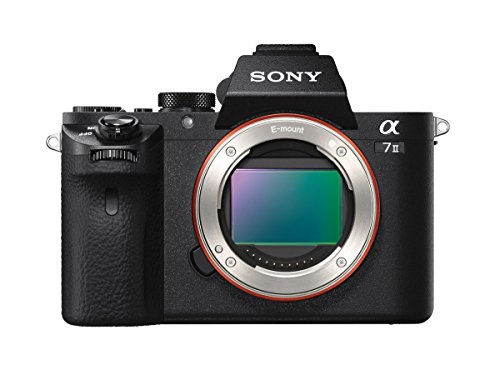
What This Product Is Used For
The Sony Alpha 7 II is a full frame mirrorless camera designed for photographers who want strong image quality, stabilisation and lens flexibility in a compact system. It is a clear step up from APS C mirrorless cameras and older DSLR bodies, particularly for handheld shooting and low light work. As a body only option it is intended to be paired with Sony E mount lenses for portraits, travel, events and everyday photography.
Who This Product Is Best Suited To
This camera is best suited to enthusiasts who want to move into full frame photography without carrying a large DSLR. It suits users who shoot handheld, enjoy using prime lenses and want stabilisation built into the camera body. It also works well for photographers adapting older lenses who still want stable results.
Pros and Cons
Pros
• In body stabilisation improves confidence and enjoyment when shooting handheld
• Full frame sensor delivers pleasing depth and strong image quality
• Wide lens compatibility supports creative growth over time
Cons
• Autofocus is reliable but less advanced than newer generations
• Video features are practical rather than creator focused
Real World Performance and Day to Day Use
In everyday use the Alpha 7 II feels solid and balanced. The 24.3 megapixel full frame sensor produces detailed images with good colour and tonal range. Five axis in body image stabilisation reduces blur from camera movement, especially useful with unstabilised lenses. Hybrid autofocus is responsive for portraits and general subjects. The electronic viewfinder provides a clear view for composition in bright conditions.
Why We Like This Product
From the YPC Team perspective, this camera remains a milestone for handheld full frame shooting. A common mistake buyers make is underestimating how much stabilisation improves everyday photography. The Alpha 7 II shows how valuable in body stabilisation is for real world use.
Comparisons With Similar Systems
Compared with APS C mirrorless cameras, this makes more sense if you want better low light performance and full frame depth. APS C bodies suit users prioritising size and cost.
Compared with newer full frame mirrorless models, this offers strong value if stabilisation and image quality matter more than the latest autofocus features. Newer bodies suit fast action and advanced tracking.
Compared with DSLRs, this provides stabilisation with all lenses in a smaller mirrorless body.
Alternatives Worth Considering
If you need faster autofocus and modern video tools, a newer full frame mirrorless camera may suit better. If portability is critical, an APS C system could be easier to carry. If you want higher resolution for large prints, a higher megapixel body may be worth considering.
Tips for Getting the Best Performance
Keep in body stabilisation enabled for handheld shooting. Use fast prime lenses to maximise low light performance. Take advantage of the electronic viewfinder for precise composition.
Full Technical Specification
• Full frame mirrorless interchangeable lens camera
• 24.3 megapixel full frame image sensor
• Five axis in body image stabilisation
• Hybrid autofocus system with phase detection
• Electronic colour viewfinder
• Compatible with Sony E mount lenses and adapted lenses
Buyer’s Guide
Buy this if you want an affordable full frame mirrorless camera with in body stabilisation and strong image quality for everyday photography.
Do not buy this if you need the latest autofocus tracking or advanced video features.
Frequently Asked Questions
Is the Sony Alpha 7 II a full frame camera?
Yes it uses a full frame image sensor.
Does it have in body image stabilisation?
Yes it features five axis in body image stabilisation.
Is this camera good for handheld photography?
Yes stabilisation helps reduce blur from camera movement.
Can I use different lenses with this camera?
Yes it supports Sony E mount lenses and many adapted lenses.
Is the autofocus fast enough for portraits?
Yes it performs well for portraits and everyday subjects.
Does it have a viewfinder?
Yes it includes an electronic colour viewfinder.
Is this camera suitable for beginners?
It is better suited to enthusiasts than absolute beginners.
Is this good in low light?
Yes the full frame sensor and stabilisation help in darker conditions.
Is this mainly a photo or video camera?
It is primarily designed for photography.
Is this still a good camera today?
Yes it remains a solid option for full frame photography with stabilisation.
Looking for more options?
Browse our full range of Mirrorless Cameras for other great choices to suit your space, goals, and budget.


