


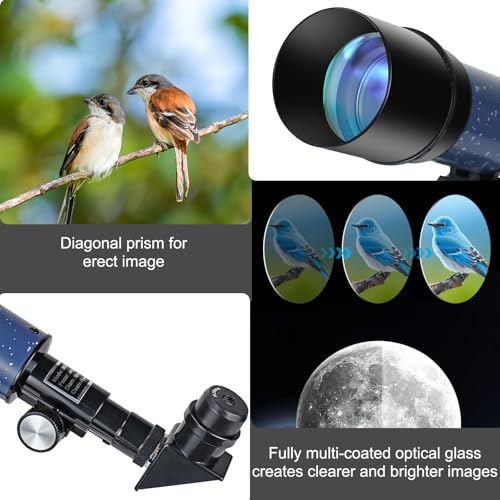


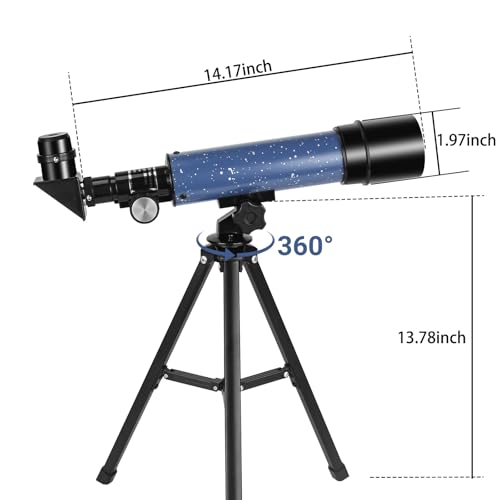
What This Product Is Used For
This refractor telescope is designed for beginners who want a simple introduction to viewing distant objects without the complexity of larger telescopes. It uses standard eyepieces and comes with essential accessories so you can start observing immediately. In real use it is suited to viewing the Moon, distant scenery, birds, and landscapes, making it a practical starter telescope for casual astronomy and daytime exploration.
Who This Product Is Best Suited To
This model suits first time users and young learners who want an easy to understand telescope that is quick to set up and simple to use. It is especially suitable for users who prefer lightweight equipment that can be carried easily and used spontaneously.
Pros and Cons
Pros
Lightweight compact design makes observing easy and enjoyable
Simple setup helps beginners feel confident quickly
Portable kit encourages outdoor exploration and frequent use
Cons
Smaller aperture gathers less light than larger telescopes
Limited magnification range compared with advanced models
Real World Performance and Day to Day Use
The 50mm aperture gathers enough light for basic lunar viewing and distant scenery observation. The 360mm focal length provides a wider field of view which makes it easier for beginners to locate objects. The included H20mm and H12.5mm eyepieces provide magnifications of 18x and 28.8x, allowing simple switching between wider and closer views. The tabletop tripod helps keep the telescope steady while remaining compact and easy to position.
Why We Like This Product
The YPC Team likes how approachable and portable this telescope feels. In real use we noticed that beginners can set it up within minutes and begin viewing without confusion. A common mistake new buyers make is choosing equipment that is too complex to use regularly, and this model avoids that by keeping operation straightforward and intuitive.
Comparisons With Similar Systems
Compared with larger beginner telescopes, this model is lighter and easier to carry, making it better for travel. Larger telescopes make more sense if brightness and detail are your top priority.
Compared with toy telescopes, this offers real optical viewing capability. Toy models make more sense if realism is not important.
Compared with long focal length telescopes, this provides wider views and easier object locating. Longer focal designs make more sense for stronger magnification.
Alternatives Worth Considering
If you want brighter views of the Moon or planets, a telescope with a larger aperture would be a better option. If you want higher magnification for closer inspection, a longer focal length telescope could suit you better.
Tips for Getting the Best Performance
Start with the lowest magnification eyepiece to locate objects easily.
Use the tripod on a stable surface for clearer images.
Observe from darker areas to improve sky visibility.
Allow the telescope to adjust to outdoor temperature before viewing.
Full Technical Specification
Optical design refractor
Aperture 50mm
Focal length 360mm
Magnifications with supplied eyepieces 18x and 28.8x
Eyepieces included H20mm and H12.5mm
Tripod tabletop design
Included accessories carrying bag
Buyer’s Guide
Buy this if you want a simple lightweight telescope for casual viewing and beginner exploration.
Do not buy this if you want high magnification astronomy performance or detailed planetary observation.
Frequently Asked Questions
Is this telescope suitable for beginners?
Yes. It is designed specifically for first time users and simple operation.
Can I see the Moon with it?
Yes. It can show basic lunar detail under good conditions.
Does it include eyepieces?
Yes. It comes with two eyepieces for different magnification levels.
Is it portable?
Yes. Its compact size and carry bag make it easy to transport.
Does it need electricity?
No. It works optically and does not require power.
Is it difficult to set up?
No. It is designed for quick assembly without tools.
Is the tripod adjustable?
It is a tabletop tripod designed for stable placement on flat surfaces.
Can it be used during the day?
Yes. It can be used for viewing landscapes, wildlife, and distant scenery.
Is it suitable for children?
Yes. Its simple controls make it suitable for beginners and young users.
What magnification should I use first?
Start with the lowest magnification to locate objects easily.
Looking for more options?
Browse our full range of telescopes for other great choices to suit your space, goals, and budget.


