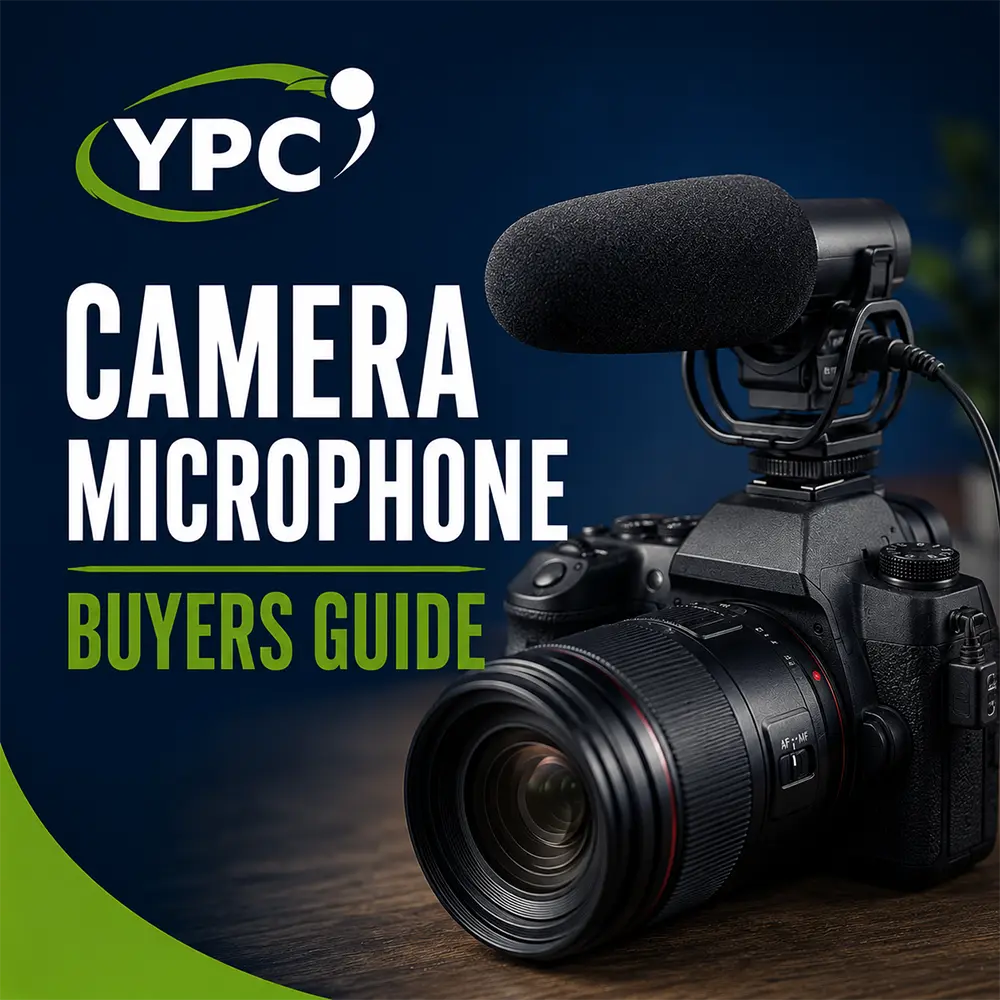
Camera microphones capture sound during video recording with greater clarity than built-in camera audio. This guide explains key differences between mic types, how pickup patterns and mounting styles affect performance, and what matters when comparing options. It aims to support informed decisions across common recording scenarios without recommending specific products.
Quick product comparison framework
| Differentiator | What it represents |
|---|---|
| Microphone type | Shotgun, lavalier, stereo, handheld |
| Pickup pattern | Directionality of sound capture |
| Mounting method | On-camera, off-camera, clip-on |
| Connection type | 3.5 mm, USB, XLR, wireless |
| Power source | Camera powered, battery, phantom power |
| Portability | Size and weight for mobile use |
| Environmental handling | Wind protection or shock mounts |
Specifications vary, see individual product listings for details.
Key decision criteria explained
Microphone type
Different microphones capture sound in different ways. Understanding type helps match the mic to your recording context.
Pickup pattern
Pickup patterns describe how sensitive a microphone is to sound from various directions. This affects how much ambient noise is captured versus direct sound from the subject.
Mounting and connection
Some microphones sit on top of the camera, others clip to clothing or mount off camera. Connection type determines compatibility with your camera’s audio input.
Power and operation
Microphones may draw power from the camera or require their own internal battery or external phantom power. Power handling can impact convenience and runtime.
Portability and handling noise
Travel or run-and-gun shooting may prioritise lightweight options, while interviews or controlled sets may favour more robust setups. External accessories can help reduce handling noise.
Product type differentiation and variants
On-camera shotgun microphones
Shotgun microphones are designed to capture sound in a directional way, reducing off-axis noise. Specifications vary — see individual product listings for details.
Lavalier (clip-on) microphones
Lavalier mics are small and clip to clothing, often preferred for interviews or talking head videos. Specifications vary — see individual product listings for details.
Stereo microphones
Stereo microphones capture sound from two directions, creating a broader sound field. Specifications vary — see individual product listings for details.
Wireless microphone systems
Wireless setups consist of transmitters and receivers for untethered capture. Specifications vary — see individual product listings for details.
Suitability by reader type or need
- Vloggers and travel creators often prioritise compact on-camera microphones with simple mounting.
- Interview scenarios may benefit from lavalier microphones that capture clear spoken audio.
- Run-and-gun setups may balance directional mics with portable mounting and wind protection.
- Mixed environments with ambient sound considerations may suit stereo patterns or external accessories.
Common mistakes and misunderstandings
- Assuming every microphone works with every camera input.
- Overlooking wind and handling noise without planning for mitigation.
- Confusing higher price with guaranteed better performance.
- Not matching pickup pattern to recording context.
Safety and suitability caveats
Camera microphones are electronic accessories. Suitability depends on format and connection matched to the camera and recording environment. No microphone is universally optimal across all situations or devices.
Maintenance expectations and lifespan considerations
Microphones benefit from careful handling, protective storage, and avoiding stress on cables or connectors. Lifespan varies with frequency of use and environment. Expectations for durability should remain general rather than absolute.
How to compare models efficiently
- Confirm your camera’s audio input type first.
- Identify your typical recording environment and primary use.
- Compare pickup patterns relative to how directional you need sound capture.
- Check power requirements and how they fit into your workflow.
Summary buyer decision checklist
- Confirm audio input compatibility
- Choose microphone type based on intended recording context
- Assess pickup pattern fit for subject and environment
- Consider mounting and connection convenience
- Match power handling to workflow
Frequently asked questions
Do all camera microphones work with all cameras
Compatibility varies with input type and connection. Always check camera input specifications.
What pickup pattern should I choose
Directional patterns help isolate the subject, while broader patterns capture ambient sound. Choice depends on context.
Do I need a windscreen or shock mount
Outdoor or movement-heavy situations often benefit from accessories that reduce wind and handling noise.
Are wireless systems better than wired ones
Wireless systems offer mobility but may introduce complexity. Suitability depends on how you work.
Can a lavalier mic replace an on-camera mic
Lavalier mics excel at close-up dialogue but may not offer the same environmental sound capture as other types. Choice depends on content needs.
For products in this category, visit:
https://www.ypc.co.uk/product-category/outdoor-tech/cameras-and-imaging/camera-microphones/