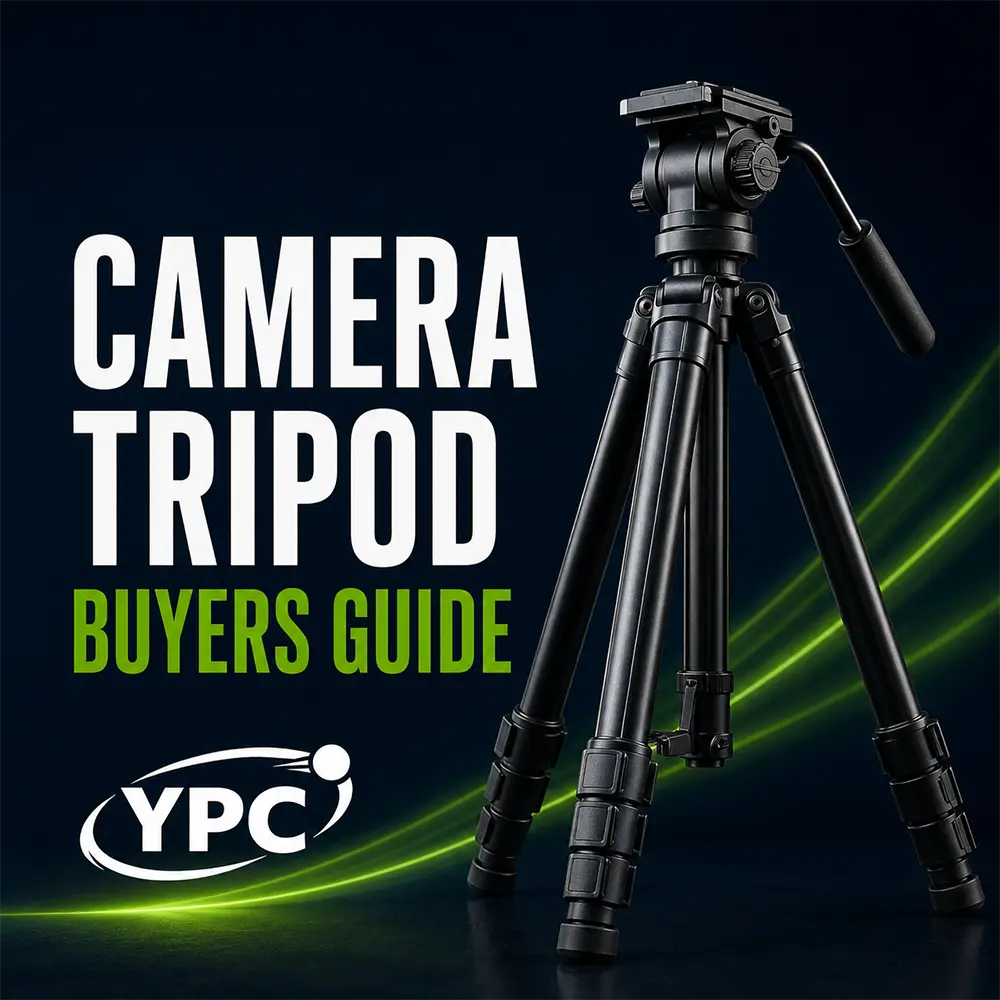
Camera tripods hold your camera steady so you can compose and capture images or video with precision. This guide explains how different tripod features, head types, and design trade-offs affect real-world use. It helps you compare options across common situations without recommending specific products, so you can choose a tripod that fits your workflow and shooting style.
Quick product comparison framework
| Differentiator | What it represents |
|---|---|
| Load capacity | Maximum supported camera and lens weight |
| Height range | Minimum and maximum working height |
| Tripod head type | Ball head, pan-tilt, fluid head, etc |
| Materials | Aluminium, carbon fibre, other materials |
| Weight | How heavy the tripod is to carry |
| Folded size | Portability and travel friendliness |
| Terrain adaptability | Leg locks, feet types, centre column design |
Specifications vary, see individual product pages for details.
Key decision criteria explained
Load capacity
Tripods have rated capacities indicating how much equipment they reliably support. Choose capacity with a margin above your heaviest setup.
Height range
Tripod height determines how low or high you can position the camera without bending or stretching. Minimum and maximum height matter in landscape and video framing.
Tripod head type
Different heads affect how easily you aim and reframe the camera. Ball heads are compact and fast to adjust, pan-tilt heads offer controlled movement in specific axes, and fluid heads suit video panning.
Materials and weight
Aluminium tripods are often more budget friendly but heavier, while carbon fibre options are lighter and can reduce fatigue during travel.
Portability and folded size
Compact tripods are easier to carry for travel but may compromise on stability. Folded size affects how easily the tripod fits into bags or carry-on luggage.
Terrain adaptability
Leg locking mechanisms and foot types influence how stable the tripod is on uneven ground, gravel, sand, or wet conditions.
Product type differentiation and variants
Lightweight travel tripods
Travel-oriented tripods prioritise minimal weight and smaller folded size. Specifications vary — see individual product pages for details.
Standard photography tripods
Mid-range tripods balance load capacity, height range, and price for general photography use. Specifications vary — see individual product pages for details.
Video-oriented tripods
Tripods intended for video often include fluid heads or features that support smooth panned movements. Specifications vary — see individual product pages for details.
Heavy-duty tripods
Designed to support heavier equipment and offer maximum stability in demanding conditions. Specifications vary — see individual product pages for details.
Suitability by reader type or need
- Beginner landscape shooters often benefit from stable, easy-to-set-up tripods with moderate weight.
- Travel photographers may prioritise compact folded size and lightweight materials.
- Videographers typically seek tripods with compatible heads that support smooth movement.
- Outdoor and uneven terrain use benefits from robust leg locks and adaptable feet.
- Mixed use shooters balance load capacity with portability and setup speed.
Common mistakes and misunderstandings
- Choosing a tripod solely based on price rather than stability metrics.
- Overlooking head type compatibility with your intended shooting motions.
- Ignoring folded size when planning to travel with the tripod.
- Assuming lighter tripods always perform well with heavier cameras.
Safety and suitability caveats
Tripod suitability depends on load capacity, head type, and stability features matching your camera setup. No tripod is universally optimal for all shooting styles or equipment weights; always check compatibility before selecting.
Maintenance expectations and lifespan considerations
Tripods benefit from occasional cleaning of leg locks and joints, especially after outdoor use. Durability varies with materials and handling over time; treat load ratings as general guidance, not guarantees.
How to compare models efficiently
- Identify your heaviest intended camera and lens combination.
- Prioritise the load capacity with a safe margin above that weight.
- Choose head types that match how you reframe or pan your shots.
- Compare material and folded size against how often you travel.
- Assess terrain-ready features if you shoot outdoors frequently.
Summary buyer decision checklist
- Confirm required load capacity
- Define height range needed for your workflow
- Choose tripod head type based on movement control
- Balance materials and weight for portability
- Ensure folded size meets travel needs
- Check terrain adaptability for your shooting environments
Frequently asked questions
What load capacity should a tripod have
Choose a tripod with a capacity above your heaviest equipment to maintain stability and reduce stress on joints.
Does the head type matter
Head type influences how you adjust and aim the camera. Choices affect precision and ease in both photo and video formats.
Are carbon fibre tripods worth the price
Carbon fibre materials often offer lower weight with similar strength to aluminium, but cost and handling trade-offs vary by example.
Can a travel tripod replace a full-size tripod
Travel tripods are convenient for portability but may compromise on maximum height or stability compared to larger tripods.
Do tripod legs work on all terrain
Leg locking designs and foot types influence stability on uneven surfaces. Some tripods include features to aid adaptability.
For products in this category, visit:
https://www.ypc.co.uk/product-category/outdoor-tech/cameras-and-imaging/camera-tripods/