
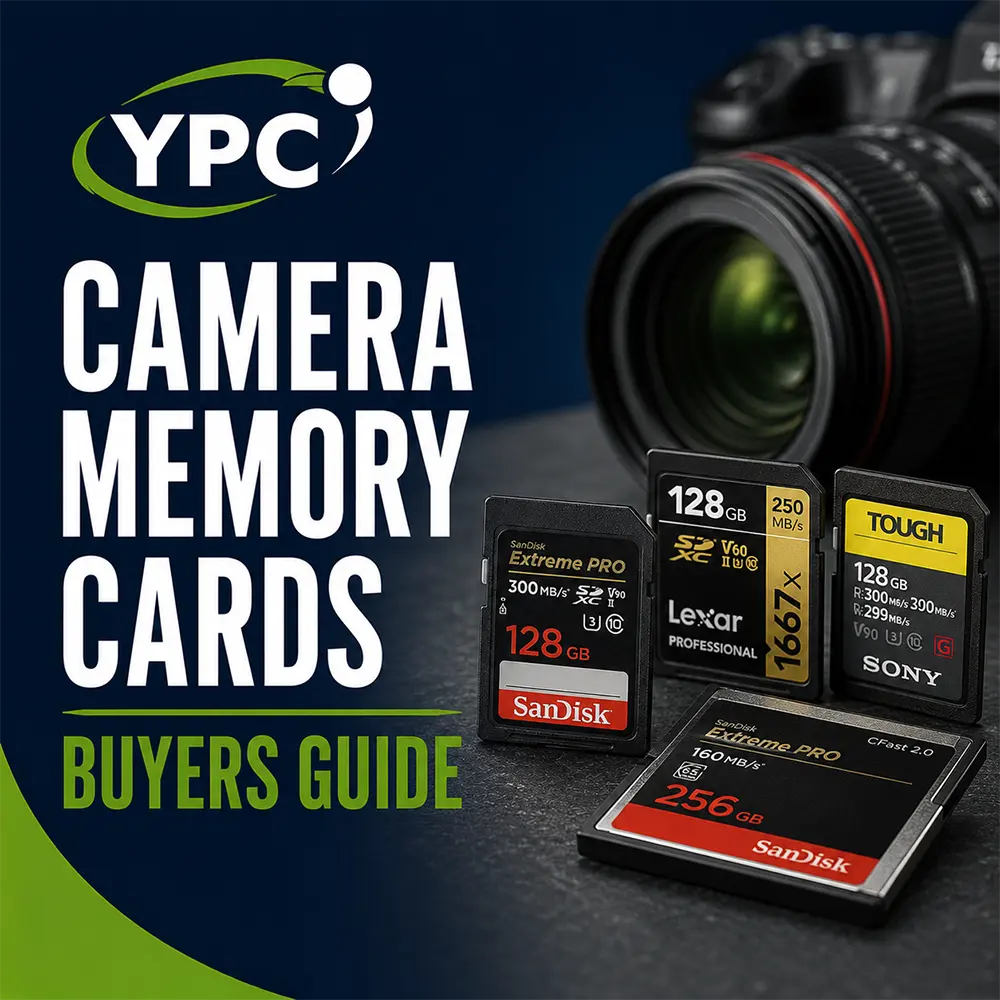
Camera memory cards are removable storage media used in photography and video capture. This guide explains key differences between card types, how speed and capacity affect real world use, and how to choose based on workflow needs. It aims to support clear comparison and decision making rather than recommending specific models.
Quick product comparison framework
| Differentiator | What it represents |
|---|---|
| Card format | Physical size and standard (e.g., SD, microSD, CFexpress, XQD) |
| Capacity | Amount of data the card can hold |
| Write speed | How fast data is recorded to the card |
| Read speed | How fast data can be read during transfer |
| Video class / speed class | Suitability for high bitrate video recording |
| Camera compatibility | Supported formats and interface support |
| Reliability indicators | Durability ratings or endurance classes |
Specifications vary, see individual product pages for details.
Key decision criteria explained
Card format and compatibility
Different cameras support specific card formats. Always check the camera’s supported formats before choosing a card.
Storage capacity
Card capacity determines how much photo and video data you can hold before transferring or offloading. Larger capacities suit prolonged shoots but affect budget and card management.
Write performance
Write speed affects how quickly data is written to the card, which is important for high resolution bursts and high bitrate video.
Read performance
Faster read speeds reduce transfer time when offloading files to a computer or storage server.
Video speed classes
Video recording standards use specific speed class ratings to indicate reliability at sustained write rates required for long clips.
Reliability and endurance
Some cards are rated for repeated rewrites and heavy use; this matters for professional or frequent shooters.
Product type differentiation and variants
Standard SD cards
Widely supported by many cameras. Format and speed classes vary. Specifications vary — see individual product pages for details.
microSD cards
Smaller physical cards that may be supported via adapters. Format support and speed vary depending on device.
High performance cards
Cards with higher write/read performance and suitable for burst shooting or high bitrate video.
Professional workflow formats
Formats such as CFexpress or similar that support very high performance requirements. Specifications vary — see individual product pages for details.
Speed and class variants
Cards are often grouped by speed class (e.g., UHS, V90, Video Speed Class ratings) indicating sustained performance expectations.
Suitability by reader type or need
- Casual stills photography with occasional video is often served well by standard SD formats with moderate speeds.
- High resolution burst shooters and high bitrate video users benefit from cards with higher write speed and sustained performance ratings.
- Travel workflows may prioritise balance of capacity and portability.
- Professional workflows often consider application specific formats and endurance.
Common mistakes and misunderstandings
- Choosing capacity without checking camera format compatibility first.
- Assuming all cards with higher capacity also have higher sustained performance.
- Confusing read speed with sustained write performance for video.
- Overlooking speed class markings and what they signify for video capture.
Safety and suitability caveats
Memory cards operate within cameras and recording devices. Suitability depends on matching format and speed class with device needs. No memory card is universally optimal for every camera — check compatibility information on individual listings.
Maintenance expectations and lifespan considerations
Memory cards are designed for repeated use but can wear over time, especially with heavy rewrite cycles. Longevity varies with use patterns and environmental conditions. Handling with care and organised file routines can support reliable operation.
How to compare models efficiently
- Check the formats supported by your camera first.
- Match card capacity to your typical session size and file demands.
- Prioritise sustained write performance if you record high bitrate video or fast burst sequences.
- Balance budget against performance and capacity needs.
Summary buyer decision checklist
- Confirm camera compatible card formats
- Choose capacity aligned with shooting workflow
- Assess sustained write performance needs
- Consider read speed for transfer workflows
- Weigh reliability or endurance expectations
- Align selection with future camera upgrade plans
Frequently asked questions
What do memory card speed ratings mean
Speed ratings indicate the minimum performance levels for recording data, often tied to video or burst shooting requirements.
Can I use a higher capacity card in any camera
Not all cameras support every capacity; check manufacturer compatibility before choosing.
Does a faster card improve camera performance
Faster cards can support sustained high bitrate recording and faster transfers but do not change the camera’s image quality.
Do all memory cards work for 4K or higher video
Only cards that meet the required sustained write class are suitable for specific high bitrate video recording. Always check the speed class.
Are CFexpress or similar formats necessary for all photography
High performance formats are useful for demanding workflows but are not required for standard stills or moderate video work.
For products in this category, visit:
https://www.ypc.co.uk/product-category/outdoor-tech/cameras-and-imaging/camera-memory-cards/