

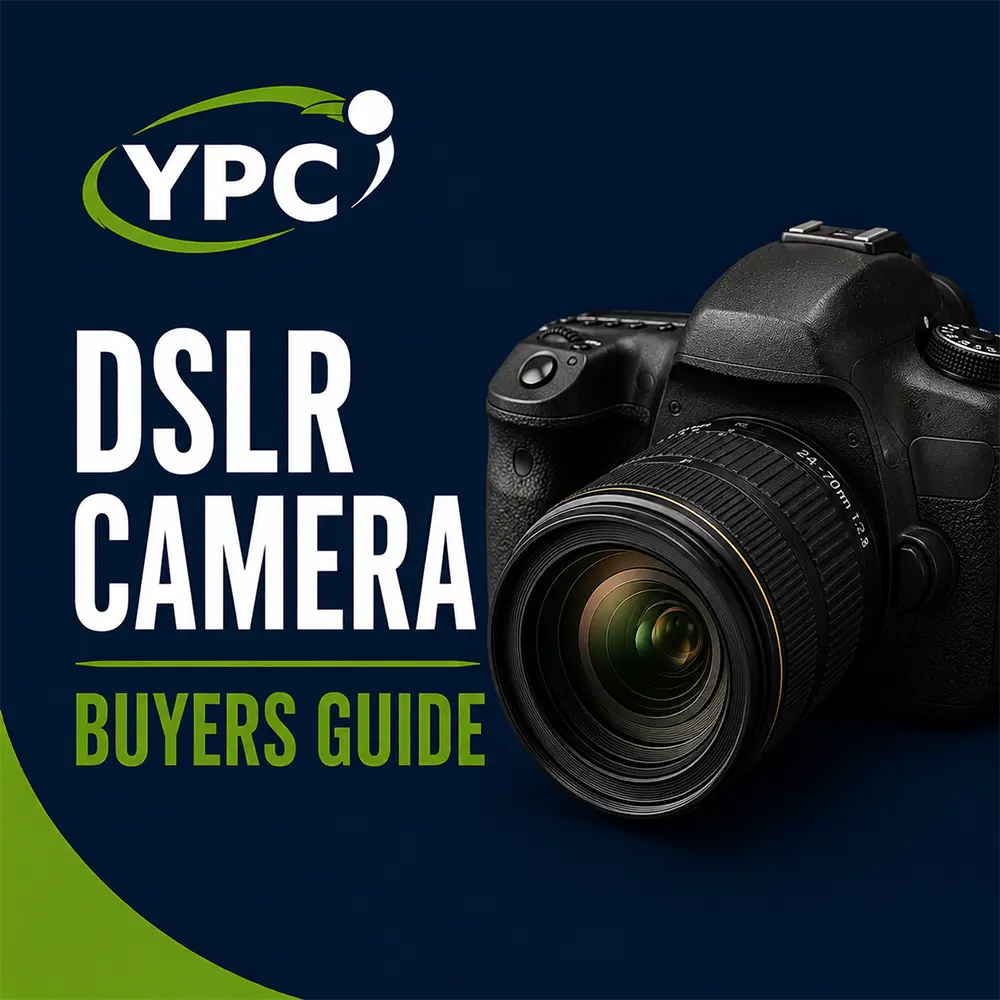
A DSLR camera is a digital interchangeable lens system with an optical viewfinder that gives a direct look through the lens for framing and focus. This guide helps you understand how DSLR specifications and features work together so you can choose a camera suited to your photography goals. It is written for beginners through to enthusiasts who want detailed explanation and confident decision making.
Quick Product Comparison Framework
| Core Factor | What It Means | Why It Matters |
|---|---|---|
| Sensor Size | Physical dimensions of the image sensor | Affects image quality, low-light performance, and lens compatibility |
| Lens Mount System | The specific lens connection standard | Determines which lenses and accessories are compatible |
| Autofocus System | Focus points and tracking capabilities | Influences speed and reliability in different shooting scenarios |
| Viewfinder Type | Optical viewfinder coverage and magnification | Affects how accurately you see and compose a scene |
| Burst Shooting | Frames per second during continuous shooting | Important for sports and action photography |
| Video Capabilities | Resolution and frame rates supported | Relevant if recording video is part of your workflow |
Key Decision Criteria Explained
Sensor Size and Image Quality
Sensor size is a core specification affecting dynamic range, noise performance, and depth of field control. Larger sensors typically offer more light gathering capability and clearer images at higher ISO settings. Common formats include APS-C and full frame.
Lens Mount and System Compatibility
The lens mount determines what lenses you can use now and in the future. A strong native lens ecosystem gives you more options for portrait, landscape, wildlife, and specialised lenses. Third-party support can expand choices further.
Autofocus Performance
Autofocus systems differ in number of focus points, coverage, and tracking algorithms. More sophisticated systems help keep moving subjects sharp, which is especially useful in sports or wildlife photography.
Viewfinder and Handling
The optical viewfinder shows you the scene directly through the lens via mirrors. Consider viewfinder size, magnification, and coverage for comfortable composition over long sessions.
Continuous Shooting and Buffer
For action or sports, cameras vary in how many frames per second they can capture and how long they can sustain that rate before slowing down. This affects your ability to capture decisive moments.
Video Recording Features
DSLRs can record video as well as stills, with varying resolutions and formats. Understanding bitrate, codec support, and autofocus during video helps you match the camera to your multimedia needs.
Product Type Differentiation and Variants
Within DSLR systems, several variants exist. Specifications vary — see individual product pages for details.
Entry Level DSLR Bodies
These are designed for beginners and hobbyists with simplified controls and learning-oriented menus. They balance capability with approachable complexity.
Mid-Range Enthusiast Bodies
Cameras in this tier offer more robust autofocus, better sensor performance, and features that support creative photography styles without professional cost.
Advanced and Semi-Pro Bodies
These models provide faster performance, weather-sealing, enhanced dynamic range, and build quality suited to demanding use. Technical specifications vary — see individual product pages for details.
Specialised Sport and Wildlife Oriented Bodies
Some DSLR bodies prioritise high burst rates and sophisticated tracking systems for fast action. Compatibility with telephoto lenses is typically a focus in this segment.
Suitability by Reader Type or Need
Beginners Learning Photography
Focus on entry level DSLR bodies with intuitive menus and good kit lens options. Prioritise ease of use and sensor performance appropriate for general photography.
Portrait and Studio Photographers
Look for bodies with good dynamic range and colour accuracy. Also consider lens compatibility with portrait focal lengths such as 50mm or 85mm primes.
Sports and Action Enthusiasts
Mid-range to advanced bodies with responsive autofocus and higher continuous shooting rates better suit fast-moving subjects.
Landscape and Travel Shooters
A balance of image quality, weight, and lens choices matters here. Consider a body with good high ISO performance and compatibility with wide angle lenses.
Common Mistakes and Misunderstandings
Thinking Higher Megapixels Always Means Better Photos
Megapixel count is only one part of image quality. Sensor size, lens sharpness, and processing all contribute significantly.
Underestimating Lens System Importance
The camera body is only one part of the system. Lenses often define your creative capability more than the body itself.
Assuming All Accessories Are Compatible
Different DSLRs use different mounts. Always check lens mount and accessory compatibility before purchase.
Safety and Suitability Caveats
While DSLRs are not safety critical devices, they are precision electronics. Careful handling is required when changing lenses to avoid dust ingress. Do not make assumptions about accessory compatibility without verifying mount standards and specifications between bodies and lenses.
Maintenance Expectations and Lifespan Considerations
DSLR cameras are designed for many years of use, but moving parts such as the mirror and shutter mechanism do have lifespan limits. Memory cards, batteries, and lenses also have their own service life. Keeping gear clean, dry, and free from bumps extends reliable operation.
How to Compare Models Efficiently
To compare DSLR cameras:
- Identify the sensor size and how it aligns with your image quality expectations.
- Check the lens mount system and the breadth of lenses you might want.
- Compare autofocus systems and continuous shooting capabilities against your main subjects.
- Review viewfinder performance and physical handling comfort.
- Look at video capabilities only if video capture is part of your workflow.
Summary Buyer Decision Checklist
- Verify sensor size and expected image quality.
- Confirm lens mount compatibility and system ecosystem.
- Assess autofocus capability and burst performance.
- Compare viewfinder clarity and usability.
- Align continuous shooting and video features with your needs.
- Factor in long term upgrade options and budget constraints.
Frequently Asked Questions
What is the difference between APS-C and full frame
Sensor size differs with APS-C being smaller and full frame larger. Larger sensors generally provide improved low-light performance and greater control over depth of field. Check individual model specifications for exact details.
Do DSLRs work with all lenses
Compatibility depends on the lens mount system. A lens designed for one mount will not fit another without an adapter and may lose functionality. Always verify mount standards.
Is DSLR photography hard to learn
DSLRs offer many manual controls. Learning photography concepts such as exposure and focus takes time, but these cameras give you access to tools that allow progression as your skills grow.
Can I use DSLR for video
Many DSLR models record video. Video quality and focus behaviour vary between bodies and lenses. See product pages for supported video specifications.
Will buying a DSLR help me take better photos
A DSLR provides more control and creative tools than a phone camera. Skill development and understanding of photographic principles are key to improving results.
For products in this category, visit:
https://www.ypc.co.uk/product-category/outdoor-tech/cameras-and-imaging/dslr-cameras/