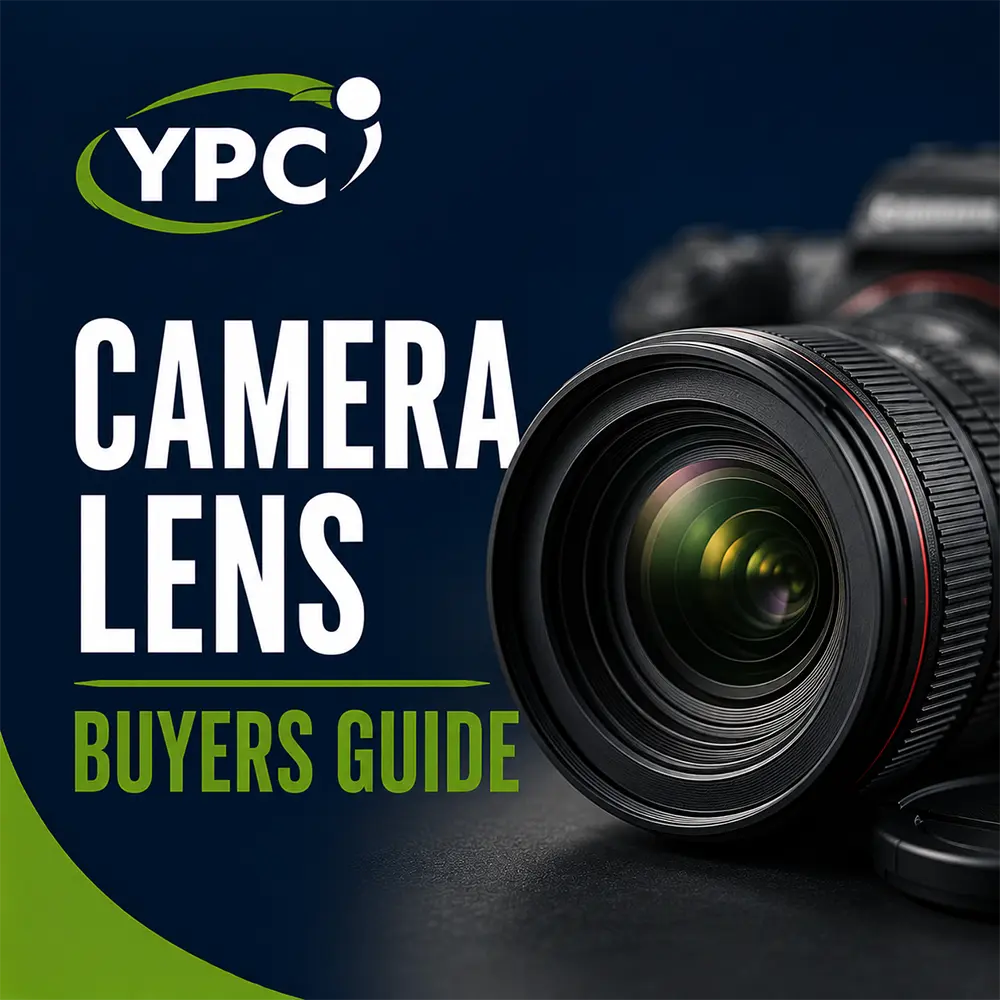
Camera lenses are a central part of how photographic images are created and interpreted. This guide explains how different types of camera lenses behave and how they influence framing, perspective, and visual output. It is designed to help serious photographers understand how to compare lens options logically and make informed buying decisions based on use case and system compatibility.
Quick product comparison framework
The framework below highlights common characteristics used to differentiate camera lenses. Not all lenses include all features.
| Differentiator | What it represents |
|---|---|
| Lens type | Prime, zoom, wide angle, telephoto, macro, standard |
| Focal length range | Fixed or variable field of view |
| Aperture behaviour | Maximum light intake capability |
| Lens mount | Physical and electronic compatibility with camera systems |
| Optical design | Internal elements affecting rendering and correction |
| Size and weight | Handling and portability considerations |
| Intended use | General photography, specialist, or mixed scenarios |
Specifications vary — see individual product pages for details.
Key decision criteria explained
Several core factors shape lens selection.
Lens mount compatibility
Lenses must match the mount used by the camera body. Mount design affects physical fit and electronic communication.
Focal length behaviour
Focal length determines framing and subject distance. Shorter focal lengths capture wider scenes, while longer focal lengths isolate distant subjects.
Aperture characteristics
Maximum aperture influences light intake and depth rendering. Wider apertures allow more flexibility in low light but often increase size and cost.
Optical expectations
Optical design affects sharpness consistency, distortion control, and rendering style. These characteristics vary by lens type and design intent.
Handling and portability
Larger lenses may offer expanded capability but can affect balance and long term usability during extended shooting.
Product type differentiation and variants
Prime lenses
Prime lenses use a fixed focal length. They often prioritise optical consistency and simplicity of design. Specifications vary — see individual product pages for details.
Zoom lenses
Zoom lenses cover a range of focal lengths within a single unit. They are commonly chosen for flexibility across changing scenes.
Wide angle lenses
Wide angle lenses capture broader fields of view. They are often used for landscapes, interiors, and environmental scenes.
Telephoto lenses
Telephoto lenses are designed for distant subjects. They compress perspective and are often used in wildlife and sports photography.
Standard lenses
Standard lenses aim to reflect natural perspective. They are often used for general purpose photography.
Macro lenses
Macro lenses are designed for close focusing distances. They allow detailed capture of small subjects. Specifications vary — see individual product pages for details.
All in one travel zooms
These lenses combine wide and telephoto ranges into a single unit. They prioritise convenience over specialisation.
Suitability by reader type or need
- Generalist photographers often prefer zoom or standard lenses for flexibility.
- Portrait focused users may favour lenses that support controlled framing and subject isolation.
- Wildlife and sports photographers typically rely on telephoto focal lengths.
- Landscape and travel photography often aligns with wide angle or lightweight zoom options.
- Macro work requires lenses designed for close focusing behaviour.
- Mixed discipline photographers often balance versatility against optical specialisation.
Common mistakes and misunderstandings
- Assuming focal length alone defines image quality.
- Overlooking lens mount compatibility when planning future upgrades.
- Expecting one lens to perform equally well across all shooting styles.
- Prioritising maximum aperture without considering size and handling.
- Confusing digital zoom with optical focal length capability.
Safety and suitability caveats
Camera lenses are precision optical components. Suitability depends on compatibility, handling preferences, and intended photographic use. No lens is universally suitable for all cameras or shooting styles.
Maintenance expectations and lifespan considerations
Lenses are designed for long term use but experience wear through regular handling and environmental exposure. Lifespan varies depending on frequency of use, storage conditions, and transport habits. Expectations should remain general rather than absolute.
How to compare models efficiently
- Confirm lens mount compatibility first.
- Identify the primary shooting styles you expect to support.
- Compare focal length ranges against real use needs.
- Weigh optical capability against size and weight.
- Consider long term system investment when evaluating price.
Summary buyer decision checklist
- Confirm camera mount compatibility
- Identify required focal length range
- Decide between prime or zoom flexibility
- Consider aperture needs realistically
- Balance optical expectations with portability
- Align lens choice with future system plans
Frequently asked questions
Do camera lenses affect image quality more than camera bodies
Lenses strongly influence framing, rendering, and visual character. Many photographers find lens choice has a greater impact on results than camera body changes.
Can one lens be used for many photography styles
Some lenses support multiple uses, but most perform best within certain contexts. Suitability depends on focal length behaviour and handling preferences.
Are larger lenses always better
Larger lenses may offer expanded optical capability, but size and weight can affect usability. Balance is important.
Is it better to buy one versatile lens or multiple specialised lenses
This depends on shooting style and workflow. Some photographers prefer simplicity, while others build collections over time.
Do more expensive lenses guarantee better results
Price reflects design choices and materials, not guaranteed outcomes. Suitability and technique remain key factors.
Will lenses remain useful if I upgrade my camera
This depends on mount continuity and system direction. Compatibility should be considered as part of long term planning.
For products in this category, visit:
https://www.ypc.co.uk/product-category/outdoor-tech/cameras-and-imaging/camera-lenses/