
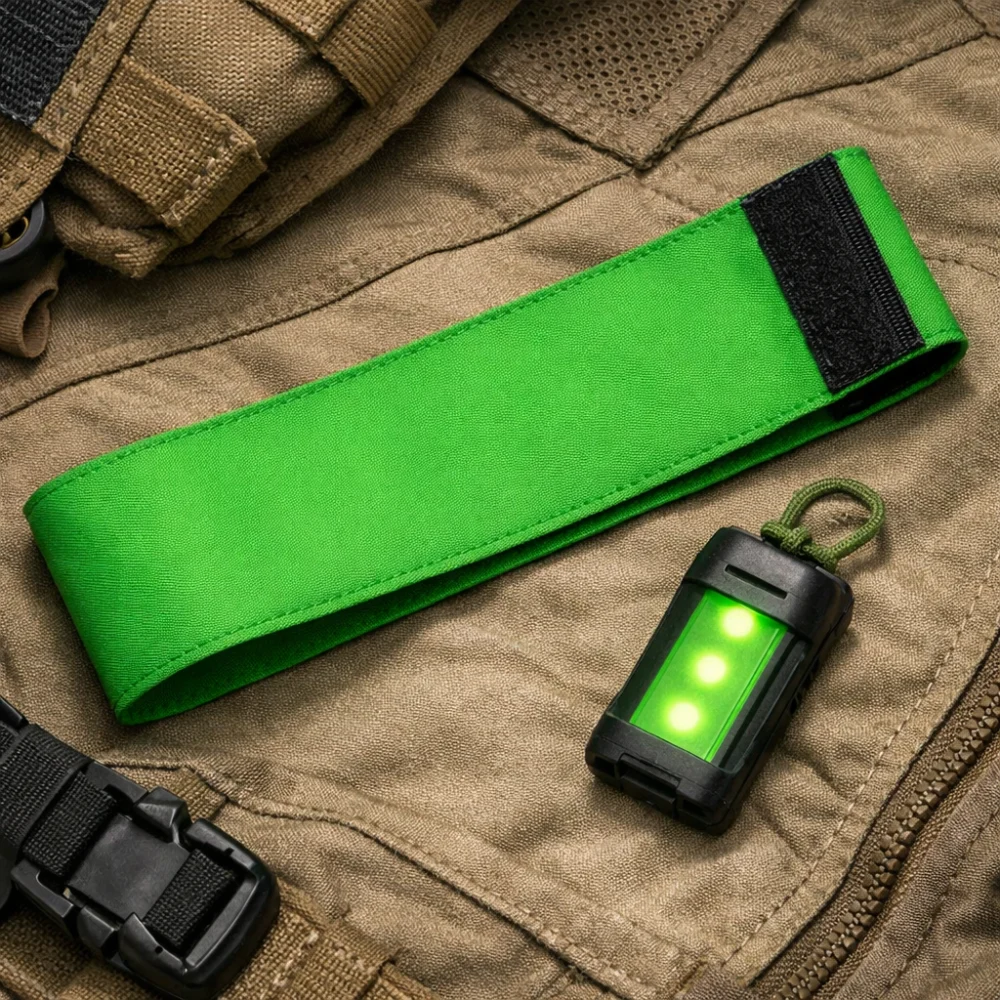
Airsoft armbands and team ID items help players and marshals recognise roles, teams or game states quickly. They are simple accessories, but the right choice still depends on how clearly you need to be seen, how you plan to wear it and whether your site has any colour or format rules.
This guide focuses on buying choices rather than game rules. It can help if you are replacing a lost band, kit-building for regular skirmishes, or choosing something easy to spot and comfortable to wear over outdoor clothing or equipment.
Specifications vary by model, so always check the individual product page before buying.
What should you look for first?
Start with the job the item needs to do: identify a team, show a marshal or referee role, or provide another form of quick visual identification. From there, the main trade-off is usually between visibility and convenience. A brighter or larger identifier may be easier to notice, while a simpler one may be easier to wear without getting in the way. The most useful choice is the one that suits the site, the clothing you wear and how often you will use it.
| Feature | What It Means | Why It Matters | What To Check |
|---|---|---|---|
| Visibility | How easy the armband or ID is to notice at a glance | Helps others identify the wearer quickly during play or briefing | Colour contrast, size and whether the design is clear when worn over your kit |
| Attachment method | How the item stays in place | Comfort and reliability depend on how securely it fits during movement | Elastic, hook-and-loop or another fastening method, plus how it sits over clothing |
| Fit and adjustability | Whether it can be worn comfortably on different arm sizes or over layers | A poor fit can slip, twist or feel restrictive | Adjustable sizing, stretch and whether it suits bare arms, sleeves or outerwear |
| Durability | How well the item should cope with repeated use | Useful for regular players and frequent events | Stitching, edge finish and the general sturdiness of the material |
| Role or team marking | What the item is meant to identify | Prevents confusion if your site uses separate colours, labels or identifiers | That the marking matches your intended use and any site requirements |
| Comfort | How it feels during longer wear | Important if you play for several hours or wear layered clothing | Width, softness, bulk and whether it is likely to rub or snag |
Key decision criteria explained
Visibility and clarity
In a fast-moving game, the main purpose of an armband or team ID item is recognition. Bold contrast and a design that remains visible when worn over sleeves or kit are usually more useful than decorative detail. If you play in changing light or mixed terrain, simple and unmistakable identification often works better than a busy design.
Fit over the clothing you actually wear
Some players wear team ID over a T-shirt, while others need it to fit over thicker layers. That makes fit one of the most practical checks. Look for enough adjustment or stretch to stay secure without being uncomfortably tight. If it only fits one way, it may be less useful across different seasons or loadouts.
Attachment and ease of use
How the item fastens matters because it affects speed, comfort and how often you will use it. A simple design may be easier to put on, while a more secure fastening may stay in place better during movement. Think about whether you want a quick grab-and-go accessory for occasional games or something that stays fixed during longer sessions.
Durability for repeated wear
Airsoft kit often gets packed, unfolded and worn repeatedly. For that reason, seam finish and general construction can matter as much as the visible design. If you use the item regularly, a sturdier build may be worth prioritising over a more elaborate appearance.
Format and intended role
Team ID can take different forms, from a simple armband to a patch-style identifier or another visible marker. The right format depends on whether you need it to show a team colour, a role, or another category of identification. Choose the format that fits your site expectations and your own kit setup rather than assuming one style covers every need.
Common types and variants
Within this category, buyers will usually be comparing a few straightforward variants rather than highly technical products. The main differences are often in colour, fastening style, and whether the item is a simple band, a badge-style identifier or a hook-and-loop panel intended to display an ID marker.
- Elastic or band-style armbands: Often the simplest option and easy to put on, but fit and comfort vary.
- Hook-and-loop or patch-style ID: Useful if you already use compatible kit, though placement depends on what your clothing or vest allows.
- Role-specific identifiers: Suited to marshals or team roles where quick recognition matters more than decoration.
If the category includes items with attached badges, patches or panels, treat those as visual identifiers rather than assuming they are interchangeable with standard armbands. Specifications vary by model, so always check the individual product page before buying.
Which option suits different buyers?
| Buyer need | What usually matters most | Why that choice fits |
|---|---|---|
| Regular skirmish player | Secure fit, comfort and easy visibility | It needs to stay in place during movement and remain easy to recognise |
| Occasional or casual player | Simplicity and straightforward use | A basic, easy-to-wear option is often enough if you only need it from time to time |
| Marshal or game organiser | Clear role identification and consistency | Recognition matters more than style, especially when guiding players |
| Buyer replacing lost kit | Matching the original use and fit | The safest choice is usually the type that worked before, unless site rules have changed |
| Buyer choosing for mixed clothing layers | Adjustability and flexibility | It should work over different garments without slipping or feeling too tight |
Common mistakes and misunderstandings
- Choosing on colour alone: Colour matters, but fit and visibility at a distance matter too.
- Assuming one size fits every loadout: A band that works over a T-shirt may not suit thicker outerwear.
- Overlooking the fastening method: A comfortable item is more likely to stay in use and stay in place.
- Buying a decorative item when a clear identifier is needed: For team ID, clarity usually matters more than style.
- Ignoring site expectations: Some games may use particular colours or role markers, so check before buying.
Safety and suitability caveats
These are identification accessories, so the main concern is suitability rather than technical complexity. Check that the item is appropriate for your site, your role and the clothing you will wear it over. Avoid assuming that a product description alone tells you everything you need to know about fit or visibility.
Do not treat an armband or ID marker as a substitute for following site rules, marshal instructions or other game procedures. The right item should support quick recognition, not create confusion.
Maintenance, storage and lifespan
Most armbands and team ID items are simple to care for, but they still benefit from sensible storage. Keeping them clean, dry and untangled helps them stay ready for the next game. If the item uses hook-and-loop fastening, keep it free from lint and debris so it continues to fasten properly.
Over time, repeated stretching, folding and exposure to dirt can reduce how neat or secure the item feels. If you use one regularly, it is worth checking the fastening, stitching and overall condition before each event.
How to compare options efficiently
- Decide what the item needs to identify: team, marshal role or another marker.
- Check whether your site or event has any colour or format expectations.
- Compare fit, attachment method and how comfortably it will wear over your clothing.
- Look at visibility first, then consider durability and convenience.
- Read the individual product page carefully for the exact details that matter to your setup.
Summary buyer decision checklist
- Does it clearly show the role or team you need it to identify?
- Will it fit over the clothing you usually wear?
- Is the fastening method suitable for how active you will be?
- Will it stay comfortable during a longer session?
- Does it match any site or event expectations?
- Have you checked the individual product page for the exact model details?
Frequently asked questions
What is the main purpose of airsoft armbands and team ID?
The main purpose is quick visual identification. They help players, marshals or organisers recognise teams or roles at a glance. That can make them one of the simplest accessories to get right for organised games.
Should I choose an armband or a patch-style ID item?
That depends on how you wear your kit and what your event expects. An armband is often the simplest option, while a patch-style item may suit clothing or gear that already uses hook-and-loop panels. Choose the format that fits your setup without adding extra hassle.
How important is adjustability?
Usually very important, because you may wear the item over different layers. A small amount of adjustment can make the difference between something that feels secure and something that slips. If you switch between seasons or outerwear, flexibility is especially useful.
Can I use the same ID item for every event?
Sometimes, but not always. Some sites or organisers may use different colours or role markers, so one item may not cover every situation. It is worth checking the expectations for each event before relying on a single choice.
What makes one item easier to wear than another?
Comfort usually comes down to fit, softness and how the fastening sits against your clothing. A less bulky item may be easier to forget about during play, while a tighter or rougher one may be more noticeable. If you play for longer periods, comfort becomes more important.
How should I store it between games?
Keep it dry, clean and free from dirt or debris, especially if it uses hook-and-loop fastening. Folding it neatly helps avoid unnecessary wear. Simple storage can make it last longer and stay easier to use.

