
Washing Up and Sink Accessories
Washing Up and Sink Accessories for Everyday Kitchen Tasks
Washing up and sink accessories help make cleaning dishes, rinsing food containers and organising the area around your kitchen sink easier. Choosing practical accessories can help keep washing-up liquid, brushes, sponges and draining crockery organised while reducing clutter around the worktop.
Browse washing-up bowls, dish drainers, sink caddies, soap dispensers, plug strainers, draining mats, bottle brushes and other useful sink accessories. Compare products by their dimensions, materials, drainage design, storage capacity and suitability for your sink and available worktop space.
Explore Washing Up and Sink Accessories at YPC to find practical options for compact kitchens, family homes, utility sinks and everyday household cleaning.
-

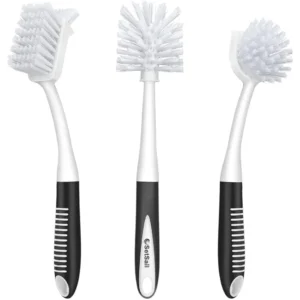
Dish Brushes and Bottle Brushes90 Products
-
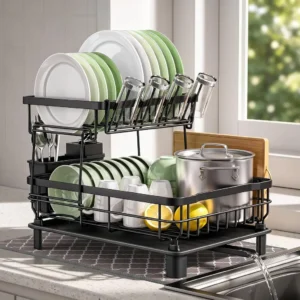
Dish Racks and Drainers90 Products
-
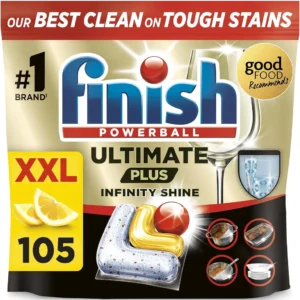
Dishwasher Tablets58 Products
-
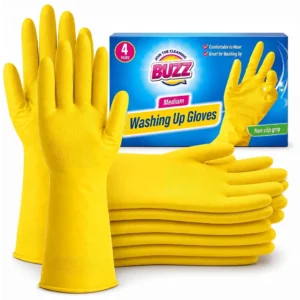
Rubber Gloves95 Products
-
Sink Caddies and Organisers93 Products
-
Sink Strainers and Drain Protectors91 Products
-
Washing Up Bowls74 Products
-
Washing Up Liquids73 Products

How to Choose Washing Up and Sink Accessories
Washing up and sink accessories include the products used to wash, rinse, drain, dry and organise dishes and cleaning tools around a kitchen sink. They can help make everyday jobs easier while keeping wet brushes, cloths and sponges away from food-preparation areas.
The right accessories depend on your sink dimensions, household size, available draining space and the types of dishes, cookware and bottles you wash regularly.
Measure the sink, draining board and surrounding worktop before ordering. Check the full width, depth and height of each accessory, including handles, feet, drainage spouts and sections that extend over the sink.
Types of Washing Up and Sink Accessories
Washing-Up Bowls
Washing-up bowls sit inside compatible sinks and hold water for cleaning dishes, soaking cookware or carrying small household items.
They can reduce the amount of water needed to fill a large sink and leave part of the sink available for rinsing or disposing of liquids. A removable bowl can also make it easier to empty water in a controlled way.
Check the external dimensions carefully. The bowl should fit inside the sink without blocking the waste outlet, taps or overflow.
Collapsible Washing-Up Bowls
Collapsible bowls fold down when not in use, helping reduce storage requirements in compact kitchens, caravans and utility rooms.
They may use flexible silicone or plastic sections combined with a rigid rim and base. Check that the bowl locks securely into its open position before filling it with water.
Inspect folding sections regularly for splits, trapped residue and signs of wear.
Washing-Up Bowls with Drains
Some bowls include a removable plug or drainage outlet in the base.
This can allow water to be released without lifting and tipping a full bowl. Check that the plug closes securely and remains easy to remove when the bowl contains dirty water.
Clean around the plug and seal regularly because food residue and detergent can collect in the mechanism.
Dish Drainers
Dish drainers hold washed plates, bowls, mugs and cutlery while water drains away.
Options may include wire racks, plastic drainers, folding designs and multi-level systems. Check the spacing between sections to make sure your crockery will remain upright and stable.
A large drainer can suit family washing but requires more worktop space. Compact models may need to be emptied more frequently.
Two-Tier Dish Drainers
Two-tier drainers use vertical space to hold more crockery within a smaller worktop footprint.
They can be useful in compact kitchens, although the upper level must remain stable and high enough not to interfere with items below.
Place heavier plates and cookware on the lower tier and follow any stated weight limits.
Over-Sink Dish Racks
Over-sink racks extend across a compatible sink so water drains directly into the bowl below.
They can help free worktop space and may be used for dishes, rinsed food containers or suitable utensils. Designs may be rigid, roll-up or adjustable.
Measure the sink width and rim carefully. The rack needs secure support on both sides and should not obstruct the taps.
Roll-Up Sink Racks
Roll-up racks use metal bars joined by flexible silicone or another connecting material.
They can be placed across compatible sinks for draining dishes, rinsing produce or supporting lightweight items where listed as suitable. After use, they roll into a compact shape for storage.
Check the maximum span, load capacity and temperature limitations. Do not use one as a chopping surface or support for heavy cookware unless the product specifically permits it.
Dish Draining Mats
Draining mats provide an absorbent or channelled surface for drying dishes beside the sink.
Fabric and microfibre mats absorb water, while silicone or plastic designs direct liquid towards grooves or a drainage edge. Check whether the mat can be machine washed, wiped or placed in a dishwasher.
Allow the mat to dry completely between uses to reduce odours and moisture build-up.
Dish Drainers with Drainage Spouts
Some draining boards include a channel or adjustable spout that directs water back into the sink.
Check the direction and length of the spout and make sure the drainer can be positioned close enough to the sink edge.
Clean the drainage channel regularly so residue does not restrict the flow of water.
Cutlery Drainers
Cutlery drainers hold knives, forks, spoons and utensils upright while they dry.
Separate compartments can help prevent smaller items gathering at the bottom. Drainage holes should allow water to escape rather than collect inside the container.
Place sharp knives in a safe position where blades cannot injure anyone reaching into the drainer.
Sink Caddies
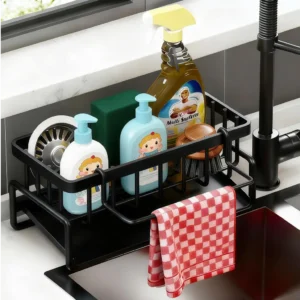
Sink caddies organise sponges, brushes, cloths, soap and washing-up liquid close to the sink.
They may sit on the worktop, attach with suction cups, hang over the sink divider or fit around a tap. Check the compartment sizes and whether the caddy includes drainage holes or a removable drip tray.
Do not allow used cloths and sponges to remain constantly wet inside a crowded caddy.
Suction Sink Caddies
Suction caddies attach to compatible smooth, non-porous sink or tile surfaces.
They can keep cleaning tools off the worktop, but suction performance depends on the surface, moisture and correct installation.
They are generally unsuitable for textured tiles, grout lines, porous stone and uneven finishes. Check the attachment regularly and avoid storing heavy bottles unless the product is designed for them.
Over-Sink Caddies
Over-sink caddies may rest on the sink edge, hang from a divider or extend across part of the bowl.
They can provide drainage directly into the sink and reduce water collecting on the worktop. Measure the sink rim, divider and tap clearance before buying.
The caddy should not make it difficult to wash large pans or access the plug.
Soap Dispensers
Soap dispensers provide a reusable container for compatible washing-up liquid or hand soap.
They may use pump, squeeze or sensor mechanisms. Check the capacity, opening size and whether the dispenser is intended for thick liquids, foaming soap or a particular dilution.
Do not mix different products inside the same dispenser unless the manufacturer confirms that they are compatible.
Built-In Sink Soap Dispensers
Built-in dispensers fit through a suitable opening in the sink or worktop and connect to a refill bottle underneath.
They can reduce bottle clutter around the sink but require compatible installation and enough cupboard space below.
Check the mounting-hole diameter, worktop thickness and access needed for refilling. Professional installation may be appropriate where drilling is required.
Washing-Up Liquid Dispensers with Sponge Holders
Some dispensers include a pump plate or integrated sponge compartment.
They can help dispense a measured amount of liquid directly onto a sponge. Check whether the product remains stable when pressed and whether the sponge area drains properly.
Clean the pump plate regularly so dried detergent does not affect its movement.
Sink Strainers
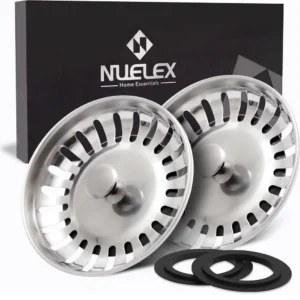
Sink strainers sit over or inside the waste outlet to collect food scraps and larger debris before it enters the drain.
They can help reduce the amount of material reaching the waste pipe, although they do not replace correct food-waste disposal.
Check the drain diameter, basket depth and whether the strainer sits flat without obstructing water flow.
Plug-Hole Strainers
Plug-hole strainers may use mesh, perforated metal, silicone or plastic to catch food particles.
Fine mesh can collect smaller debris but may need more frequent cleaning. Larger openings allow faster drainage but may let more residue pass through.
Empty the strainer into the appropriate waste container rather than washing collected food down the drain.
Sink Plugs
Replacement sink plugs close the waste outlet so the basin or washing-up bowl can hold water.
Check the plug diameter, shape and connection method. Traditional rubber plugs, pop-up systems and basket wastes are not interchangeable.
Measure the waste opening carefully and inspect any chain or fitting for compatibility.
Sink Plug Chains
Plug chains connect compatible traditional plugs to the sink.
Check the chain length, link material and attachment points. The chain should reach the waste comfortably without becoming trapped beneath dishes or around taps.
Replace chains that become rusted, sharp or partially detached.
Sink Protectors
Sink protectors sit on the base of a compatible sink to reduce direct contact between crockery and the sink surface.
They may be made from silicone, rubber, plastic or metal. Check the shape, dimensions and position of the waste opening.
A protector can trap food and water underneath, so lift and clean it regularly.
Sink Mats
Sink mats cushion plates, glasses and cookware during washing.
Soft designs may help reduce noise and accidental impact, depending on the material. They should include enough drainage to prevent water pooling.
Check compatibility with stainless steel, ceramic, composite and other sink finishes.
Sink Grids
Sink grids are raised metal racks designed to sit above the base of a compatible sink.
They can keep crockery away from the sink surface and allow water to move underneath. Model-specific grids provide the closest fit, while universal products require careful measurement.
Inspect feet and coatings so exposed metal does not scratch the sink.
Tap-Mounted Draining Mats
Tap-mounted mats fit around the base of a compatible tap and provide a draining area for soap, sponges or small accessories.
They may help direct splashes back towards the sink. Check the tap-base dimensions and make sure the mat does not block controls or trap moisture against the worktop.
Remove and clean beneath the mat regularly.
Splash Guards
Sink splash guards are designed to reduce water reaching the worktop, wall or floor.
They may fit around taps, across sink edges or beside washing-up areas. Check the dimensions and attachment method carefully.
A splash guard cannot prevent every spill and should not obstruct normal drainage or tap operation.
Bottle Brushes
Bottle brushes use long handles and narrow heads to clean inside bottles, flasks, jars and reusable drink containers.
Compare the brush-head diameter and total length with the opening and depth of the item. Some designs include smaller brushes for straws, lids and narrow components.
Choose bristles suited to the material and avoid forcing an oversized brush into glass or delicate containers.
Dish Brushes
Dish brushes help remove food residue from compatible plates, pans and utensils.
They may include long handles, replaceable heads, soap reservoirs or built-in scrapers. Check whether the bristles and scraper are suitable for non-stick cookware, glass and coated surfaces.
Keep dish brushes separate from tools used for floors, bins and household cleaning.
Washing-Up Sponges
Washing-up sponges combine an absorbent surface with optional textured areas for removing food residue.
Check the abrasiveness carefully. Rough scourers can damage non-stick coatings, acrylic, glass hobs, enamel and polished metal.
Rinse sponges thoroughly and allow them to dry between uses.
Dishcloths
Dishcloths can be used for wiping sinks, crockery and suitable kitchen surfaces.
Reusable cloths need regular washing and complete drying. Use separate cloths for washing dishes, cleaning worktops, floors and bins to reduce cross-contamination.
Check the care instructions and replace cloths that retain persistent odours or become difficult to clean.
Sink Brushes
Sink-cleaning brushes are designed for the basin, waste area, plug and surrounding edges.
Choose a brush suited to the sink material. Stiff bristles and abrasive tools can scratch stainless steel, composite, ceramic and coated finishes.
Do not use the same brush for dishes and the sink waste area.
Drain-Cleaning Tools
Simple drain tools may help remove accessible hair, food residue and debris close to the plug hole.
They are not suitable for every blockage or plumbing system. Avoid using a mechanical tool after adding chemical drain cleaner because hazardous liquid may remain inside the pipe.
Persistent or complete blockages may require professional assistance.
Washing-Up Gloves
Washing-up gloves help keep hands dry and reduce direct contact with compatible detergents and dirty water.
Choose a suitable size and check the material where latex sensitivity or chemical resistance matters. Textured palms can help improve grip on wet dishes.
Gloves offer limited protection against knives, broken glass and sharp tins.
Sink Tidy Trays
Tidy trays sit beneath dispensers, brushes and sponges to collect drips.
They can help keep worktops cleaner but need regular emptying and washing. A tray that remains full of water can cause odours and keep cleaning tools damp.
Choose a size that fits the accessories without overcrowding the sink area.
Drying Racks for Bottles and Cups
Specialist drying racks hold baby bottles, reusable bottles, cups, lids and smaller components upright.
Check the spacing, height and stated uses. Products for baby-feeding equipment may have particular cleaning and sterilisation instructions.
Do not place heavy glass items on lightweight pegs unless the rack is designed for them.
Sink-Side Organiser Sets
Organiser sets may combine a dispenser, brush holder, caddy, cloth rail or drip tray.
They can create a coordinated sink area, but each section still needs to suit the products you use.
Check the overall footprint and make sure the set does not reduce the available food-preparation or draining space unnecessarily.
Important Buying Considerations
Sink Dimensions
Measure the internal width, depth and length of the sink.
For accessories that sit across or inside the bowl, check:
- Sink opening
- Rim width
- Divider thickness
- Waste position
- Tap location
- Overflow position
- Internal curves
- Depth below the tap
- Space required for large cookware
- Clearance around accessories
Do not assume products described as universal will fit every sink.
Draining-Board Space
Measure the usable flat area beside the sink.
A large dish rack may block food-preparation space, cupboard doors or access to taps. Consider where water will drain and whether the rack needs to sit in a particular direction.
Leave enough room to lift plates and pans safely.
Household Size
A small drainer may suit one or two people and frequent washing-up sessions.
Larger households may need greater capacity for plates, bowls, cups and utensils. A two-tier design can offer more space without using the full width of the worktop.
Avoid overloading a compact rack simply because more crockery can be balanced on it.
Crockery and Cookware
Consider the items you wash most frequently.
Large dinner plates need wide, stable slots. Deep bowls, frying pans and saucepans need open sections rather than narrow plate dividers.
Delicate glasses may require separate, stable positions away from heavy cookware.
Materials
Common materials include:
- Plastic
- Stainless steel
- Coated metal
- Silicone
- Rubber
- Microfibre
- Bamboo
- Wood
- Mixed materials
Plastic and silicone are generally easy to rinse. Metal provides a rigid structure but needs suitable corrosion-resistant finishes.
Wood and bamboo can add a decorative appearance but require careful drying and may be unsuitable for prolonged contact with standing water.
Drainage Design
Accessories used around a sink should allow water to drain rather than collect.
Look for:
- Drainage holes
- Sloped bases
- Removable drip trays
- Drainage spouts
- Raised feet
- Open wire construction
- Ventilated compartments
- Channels towards the sink
Drainage features still need regular cleaning to prevent residue and limescale build-up.
Stability
Dish racks, soap dispensers and caddies should remain stable when used with wet hands.
Check for non-slip feet, broad bases and secure attachments. A top-heavy caddy can tip when a bottle or brush is removed.
Place heavier items in lower sections and avoid loading one side of a rack more heavily than the other.
Ease of Cleaning
Sink accessories are exposed to detergent, food residue, grease and standing water.
Smooth removable components are easier to wash than narrow fixed compartments. Check whether the item can be placed in a dishwasher or must be hand washed.
Allow every part to dry before reassembly.
Storage Requirements
Collapsible bowls, roll-up racks and folding drainers can reduce storage needs when they are not in use.
Check the folded dimensions as well as the open size. Accessories should be stored where they can dry and remain free from dust and food contamination.
Replacement Parts
Some dispensers, brushes and drainers use replacement pump heads, brush heads, filters or drip trays.
Check whether compatible parts can be identified easily. A replaceable component may extend the useful life of the main product.
Do not assume standard-looking pump or brush fittings are universal.
Dish Rack or Draining Mat
A dish rack holds plates, bowls and utensils upright so air can circulate around them.
A draining mat provides a flexible surface for cups, cookware and irregularly shaped items. It takes up less storage space but may not keep plates separated.
Many kitchens use a rack for everyday crockery and a mat for larger pans or additional washing.
One-Tier or Two-Tier Dish Drainer
A single-tier drainer keeps all items within easy reach and can be simpler to load.
A two-tier design provides greater capacity within a smaller footprint. It is taller and may not fit beneath wall cupboards.
Check that water from the upper level will not drip onto dry crockery stored below in an unsuitable way.
Plastic or Metal Dish Drainer
Plastic drainers are lightweight and generally easy to wash. They can become scratched or stained over time.
Metal drainers provide a rigid structure and may use thinner rails, leaving more open space. Damaged coatings can expose metal and lead to rust.
Choose according to the weight of your crockery, cleaning preferences and kitchen conditions.
Sink Caddy or Tidy Tray
A sink caddy groups brushes, sponges and cloths into separate upright compartments.
A tidy tray provides a simple flat area that collects drips beneath bottles and accessories.
Use a caddy where organisation and drainage matter. Choose a tray where you want flexible positioning and easy removal for cleaning.
Washing-Up Bowl or Filling the Sink
A washing-up bowl may use less water than filling a large sink and can leave the surrounding basin available for rinsing.
Filling the sink provides more space for large cookware and removes the need to store a separate bowl.
The better option depends on your sink size, washing routine and the items being cleaned.
Sink Strainer or Standard Plug
A sink strainer collects food residue while allowing water to drain.
A standard plug closes the waste so the sink can hold water. Some basket-waste systems combine both functions through a removable stopper.
Choose a product designed for the exact waste fitting.
Washing-Up Accessories for Small Kitchens
Compact kitchens benefit from accessories that can fold, roll or fit over the sink.
Consider:
- Collapsible bowls
- Roll-up draining racks
- Compact sink caddies
- Narrow dish drainers
- Foldable drying mats
- Tap-mounted holders
- Wall-mounted soap dispensers
- Over-sink cutlery holders
Avoid filling the available worktop with accessories that are rarely used.
Washing-Up Accessories for Family Kitchens
Larger households may need more drying capacity and clearly separated spaces for cutlery, glasses and cookware.
A two-tier drainer, large bowl and divided sink caddy can make the area easier to manage.
Choose stable products that can support heavier daily use and remain easy to clean.
Accessories for Double Sinks
Double sinks can support accessories that sit on the divider, span one bowl or leave one side free for rinsing.
Measure each bowl separately because the dimensions may differ. Check the divider width and tap position.
Avoid choosing an accessory that prevents both sinks being used normally.
Accessories for Belfast and Ceramic Sinks
Deep ceramic sinks can have thick walls and curved interiors.
Over-sink accessories must span the opening securely, while internal mats and protectors need to follow the basin shape.
Use non-abrasive accessories and follow the sink manufacturer’s care guidance to reduce scratching and impact damage.
Accessories for Stainless-Steel Sinks
Stainless-steel sinks can be scratched by trapped grit, damaged metal racks and rough scourers.
Choose accessories with smooth feet and suitable protective coatings. Lift rather than drag sink grids and strainers across the surface.
Clean in the direction of the grain where appropriate.
Accessories for Composite Sinks
Composite sinks can have specific care requirements depending on the material and finish.
Avoid abrasive brushes, harsh chemicals and metal accessories with exposed edges unless the sink manufacturer confirms suitability.
Check that mats and caddies do not trap discolouring residue against the surface.
Accessories for Utility Sinks
Utility sinks may be used for cleaning tools, muddy footwear and larger household tasks.
Choose robust bowls, strainers and brushes suited to the intended dirt and sink material. Keep accessories used for heavily soiled jobs separate from kitchen washing-up equipment.
Do not wash hazardous chemicals or contaminated equipment in a household sink without following the relevant disposal guidance.
Organising the Sink Area
Keep the most frequently used products within easy reach without blocking food-preparation space.
A practical arrangement may include:
- Washing-up liquid
- Dish brush
- Sponge
- Separate worktop cloth
- Plug or strainer
- Hand soap
- Draining rack
- Cutlery holder
- Bottle brush
- Cleaning gloves
Remove duplicate or worn accessories that make the sink area difficult to clean.
Preventing Cross-Contamination
Use separate tools for:
- Washing dishes
- Wiping worktops
- Cleaning the sink
- Cleaning floors
- Bins
- Pet bowls
- Raw-food spills
- Bathrooms
Colour coding or labelled caddies can make different tools easier to identify.
Do not place a sponge used around a drain or bin back into a dishwashing caddy.
Washing Pet Bowls
Use separate washing tools for pet bowls where practical.
Follow suitable hygiene guidance and rinse bowls thoroughly after cleaning. Keep pet dishes away from clean household crockery during drying if cross-contamination is a concern.
Replace damaged bowls and brushes that are difficult to clean.
Washing Baby Feeding Equipment
Baby bottles, teats and feeding equipment may require specific washing and sterilisation steps.
Use products and brushes designed for the individual items and follow the manufacturer’s instructions. Allow components to drain in a clean area away from dirty dishes and cleaning cloths.
A normal dish rack does not replace sterilisation where this is advised.
Washing Reusable Bottles
Use a bottle brush long and narrow enough to reach the base and shoulders of the container.
Clean lids, seals, straws and valves separately where the product can be dismantled. Check for trapped residue and allow every part to dry fully before reassembly.
Follow the bottle manufacturer’s dishwasher and temperature guidance.
Washing Non-Stick Cookware
Use soft sponges and brushes specifically suitable for non-stick surfaces.
Avoid metal scourers, abrasive powders and sharp scrapers that can damage the coating.
Allow cookware to cool before washing unless the manufacturer instructs otherwise.
Washing Knives and Sharp Utensils
Do not leave sharp knives hidden beneath soapy water where someone could reach into the bowl without seeing them.
Wash each item carefully using a suitable brush or cloth and dry it promptly.
Store knives in an appropriate block, rack or drawer organiser rather than leaving them inside a cutlery drainer for extended periods.
Preventing Drain Blockages
Scrape food scraps into a suitable waste or food caddy before washing plates.
Use a sink strainer to catch remaining debris and empty it regularly. Do not pour cooking fat, oil, coffee grounds or food pieces into the drain.
Persistent slow drainage may require appropriate mechanical cleaning or professional attention.
Disposing of Cooking Fat and Oil
Allow suitable fat to cool and follow local disposal guidance.
Do not pour cooking oil or grease into the sink because it can cool and solidify inside pipes.
Wipe greasy pans with kitchen paper before washing where practical, then dispose of the paper appropriately.
Caring for Sink Strainers
Empty the strainer before debris blocks water flow.
Rinse and clean it using a suitable brush, paying attention to mesh, perforations and the rim.
Allow it to dry and replace it if it becomes bent, rusted or difficult to clean.
Caring for Dish Drainers
Remove crockery and wash the drainer regularly.
Clean:
- Plate slots
- Cutlery sections
- Drainage channels
- Feet
- Drip trays
- Spouts
- Upper racks
- Hinges
- Folding joints
- Areas beneath removable sections
Dry the drainer before reassembling it.
Preventing Rust on Dish Racks
Inspect coated metal regularly for chips and exposed areas.
Do not leave the rack sitting in standing water. Dry it after cleaning and replace components that become rough or rusted.
Rust can stain worktops, sinks and crockery.
Caring for Draining Mats
Fabric mats should be washed according to their care label and dried completely before reuse.
Silicone and plastic mats can often be rinsed or washed, but check the temperature and dishwasher guidance.
Do not leave a damp mat permanently beneath a dish rack because moisture may affect both the mat and worktop.
Caring for Sink Caddies
Empty the caddy and remove all brushes, cloths and bottles.
Clean the compartments, drainage holes, suction fittings and drip tray. Allow the caddy to dry before replacing clean accessories.
Check suction cups and hooks for damage or loss of grip.
Cleaning Soap Dispensers
Empty and rinse the dispenser according to its instructions before changing products.
Dried liquid can block pumps and create residue around the nozzle. Operate the pump with clean water where the manufacturer permits it.
Do not combine leftover soaps that may have different formulations or dilution requirements.
Cleaning Sink Mats and Protectors
Lift the mat or protector after use and clean both sides.
Food, grease and limescale can collect underneath even when the upper surface appears clean.
Dry the sink base and accessory before returning it to position.
Preventing Limescale Around Sink Accessories
Hard-water marks can form on drainers, caddies, taps and soap dispensers.
Wipe water away and clean components regularly using a product suitable for their material.
Acidic limescale cleaners may damage natural stone, metal finishes, grout and certain plastics, so check compatibility before use.
Preventing Odours
Sink-area odours can come from drains, wet cloths, sponges, caddies and trapped food residue.
To reduce smells:
- Empty strainers
- Rinse brushes
- Wash cloths
- Dry sponges
- Clean caddy drip trays
- Remove standing water
- Clean beneath sink mats
- Keep the waste outlet clear
- Allow accessories to ventilate
- Replace worn products
Fragrance products do not replace cleaning and drying.
Drying Sponges and Cloths
Squeeze out excess water after use and place items where air can circulate.
Do not leave cloths folded inside a wet sink or sponges submerged in detergent water.
Wash reusable cloths regularly and replace products that remain slimy, damaged or persistently odorous.
Replacing Washing-Up Accessories
Replace accessories when they become:
- Cracked
- Rusted
- Torn
- Permanently stained
- Difficult to clean
- Slimy
- Unstable
- Damaged around handles
- Unable to drain
- Sharp around edges
- Affected by persistent mould
- Unable to perform their intended task
A damaged rack or bowl can leak, scratch surfaces or fail under the weight of dishes.
Sink Accessories Around Children
Keep sharp utensils, cleaning products and small removable parts away from children.
Do not allow young children to play with washing-up water, sink plugs, dispenser pumps or drain tools.
Store detergent securely and supervise age-appropriate household tasks.
Sink Accessories Around Pets
Pets may lick sponges, drink dirty washing-up water or chew brushes and silicone accessories.
Keep cleaning tools and detergents out of reach. Empty washing-up bowls promptly and avoid leaving pet-accessible food residue around the sink.
Small detachable parts should be stored securely.
Washing-Up Liquid Safety
Keep washing-up liquid in its original labelled bottle or a clearly identified compatible dispenser.
Do not transfer it into drinks containers or leave it where children may mistake it for another product.
Follow the product instructions and seek appropriate advice if it is swallowed or enters the eyes.
Mixing Cleaning Products
Do not mix washing-up liquid with bleach, drain cleaner, disinfectant or other household chemicals unless the manufacturer explicitly confirms it is safe.
Residue left inside a dispenser, bowl or sponge can react with another product.
Rinse accessories thoroughly before changing their intended use.
Sink-Area Electrical Safety
Keep water and wet accessories away from sockets, appliance plugs and electrical equipment.
Do not position draining racks where water can drip onto kettles, toasters, charging cables or extension leads.
Dry hands before operating electrical appliances.
Protecting Worktops
Draining water, soap and trapped grit can stain or scratch worktops.
Clean beneath drainers, trays and caddies regularly. Use accessories suitable for the worktop material and avoid allowing water to remain around joins or edges.
Natural stone, wood and laminate can require particular care.
Protecting Sink Finishes
Avoid dragging metal racks, pans and strainers across the sink.
Remove grit before placing a protective mat or grid in position. Check rubber and silicone feet for trapped debris.
Follow the sink manufacturer’s cleaning and accessory guidance.
Cleaning Plastic Accessories
Wash or wipe plastic using a compatible cleaner.
Avoid very hot water, strong solvents and rough scourers unless the manufacturer confirms suitability.
Allow hollow handles, rims and compartments to drain and dry fully.
Cleaning Stainless-Steel Accessories
Use a soft cloth and a cleaner suitable for stainless steel.
Wipe in the direction of the grain where appropriate and dry the surface to reduce water marks.
Do not use products that damage coatings, seals or surrounding sink materials.
Cleaning Silicone Accessories
Silicone products may be washable by hand or in a dishwasher where listed.
Check creases, folds and drainage holes for trapped residue. Avoid cutting or piercing the silicone during cleaning.
Replace products that become split, sticky or permanently misshapen.
Cleaning Wooden and Bamboo Accessories
Wipe wooden products sparingly and dry them promptly.
Do not leave them soaking in water or sitting in a wet drip tray. Excess moisture can cause swelling, splitting, staining and mould.
Follow any oiling or maintenance guidance supplied by the manufacturer.
Cleaning Microfibre Accessories
Wash microfibre mats and cloths according to their care labels.
Avoid fabric conditioner unless specifically permitted because it may reduce absorbency and cleaning performance.
Dry items fully before placing them back beside the sink.
Storing Sink Accessories
Store clean, dry accessories in a ventilated cupboard, caddy or drawer.
Collapsible bowls and roll-up racks should be dried before folding. Avoid trapping moisture inside stacked plastic products.
Keep spare sponges and brushes separate from household chemicals.
Useful Washing Up and Sink Accessories
Depending on your kitchen and routine, useful additions may include:
- Washing-up bowls
- Dish drainers
- Draining mats
- Sink caddies
- Soap dispensers
- Plug strainers
- Sink protectors
- Bottle brushes
- Dish brushes
- Washing-up gloves
- Cutlery drainers
- Roll-up racks
Choose accessories that solve a practical problem rather than overcrowding the sink area.
Why Buy Washing Up and Sink Accessories from YPC?
At YPC, we understand active lifestyles and the need for practical products that work in real use. Our Washing Up and Sink Accessories category makes it easier to compare bowls, drainers, caddies, strainers, brushes and sink-side organisers for different kitchens.
Browse the available options and compare dimensions, materials, drainage, storage capacity and cleaning requirements to find accessories suited to your sink, dishes and available worktop space.
Frequently Asked Questions
How do I choose a washing-up bowl that fits my sink?
Measure the sink’s internal width, depth and length. Allow clearance around the waste outlet, taps and overflow and compare these measurements with the bowl’s full external dimensions.
Is a dish drainer or draining mat better?
A dish drainer holds plates and crockery upright, while a draining mat suits cups, pans and irregularly shaped items. Many kitchens benefit from using both.
How can I keep sponges and brushes hygienic?
Rinse them after use, remove trapped food and allow them to dry with good airflow. Wash reusable items as directed and replace them when damaged or persistently odorous.
Do sink strainers prevent blocked drains?
They can catch larger food particles and reduce debris entering the waste pipe, but fats, oils and small residue can still cause problems. Empty the strainer regularly.
Are over-sink drying racks suitable for every sink?
No. Measure the sink opening and rim and check the product’s supported span and load. The rack must rest securely without obstructing the taps.
 Getting ready for Summer? View our Home and Garden Products

Heading outdoors this winter? Take a look at our Outdoor Clothing.