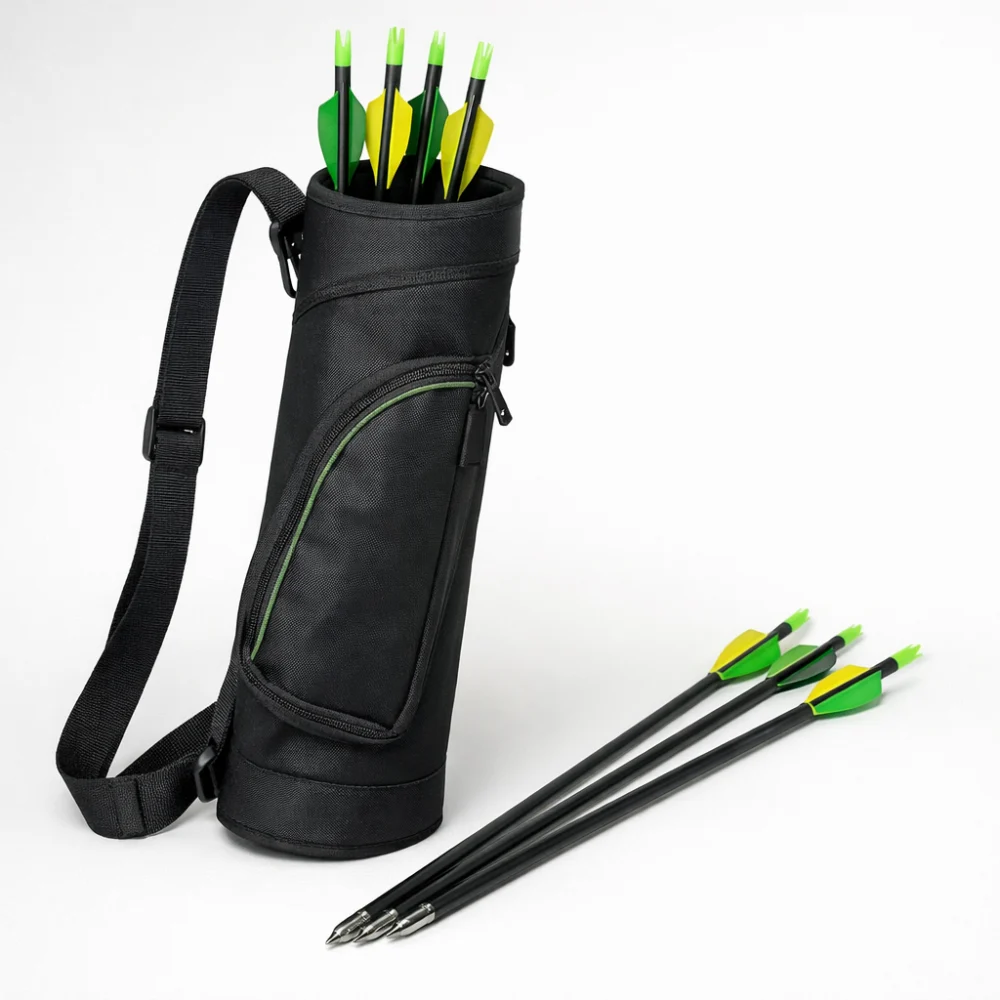
Archery quivers help you carry arrows in a way that suits how and where you shoot. The right choice depends on whether you want quick access on the range, a traditional look, or a carry system that keeps arrows organised during practice or travel.
Because quivers vary in how they attach, how many arrows they hold and how they sit on the body or bow, it is worth comparing the practical details rather than choosing on appearance alone. Specifications vary by model, so always check the individual product page before buying.
Some quivers are built for easy access during target practice, while others focus on holding arrows securely and comfortably while you move. Thinking about your shooting style first makes the rest of the decision much easier.
What should you look for in an archery quiver?
The most useful starting point is how you want to carry your arrows: on the body, on the bow, or in a more traditional style. After that, check arrow capacity, attachment method and how easy it is to draw and replace arrows without getting in the way. Comfort matters too, especially if you expect to wear the quiver for a full session.
A good quiver is not just a container for arrows. It should suit the way you shoot, stay secure while you move and make arrows easy to reach when needed.
| Feature | What it means | Why it matters | What to check |
|---|---|---|---|
| Quiver style | How and where the quiver is worn or mounted | Affects access, comfort and how natural it feels to use | Look for a style that matches your shooting setup and preference |
| Arrow capacity | How many arrows the quiver is designed to hold | Changes how often you need to refill and how bulky it feels | Check whether the holding space suits your usual number of arrows |
| Attachment method | Belt, back strap, hip carry or bow attachment | Determines stability and ease of use | Confirm how it is secured and whether that fits your clothing or bow setup |
| Accessibility | How quickly arrows can be removed and replaced | Important for practice rhythm and comfort | Consider tube layout, pocket shape and opening design |
| Storage extras | Pockets or compartments for small accessories | Helpful if you want to carry finger tabs, tools or spare items | Check whether extra storage is included and if it is useful to you |
| Material and finish | The outer construction and general look | Can affect durability, weight and style | Look for a finish that suits your use, care routine and preference |
Key decision criteria
Carry style
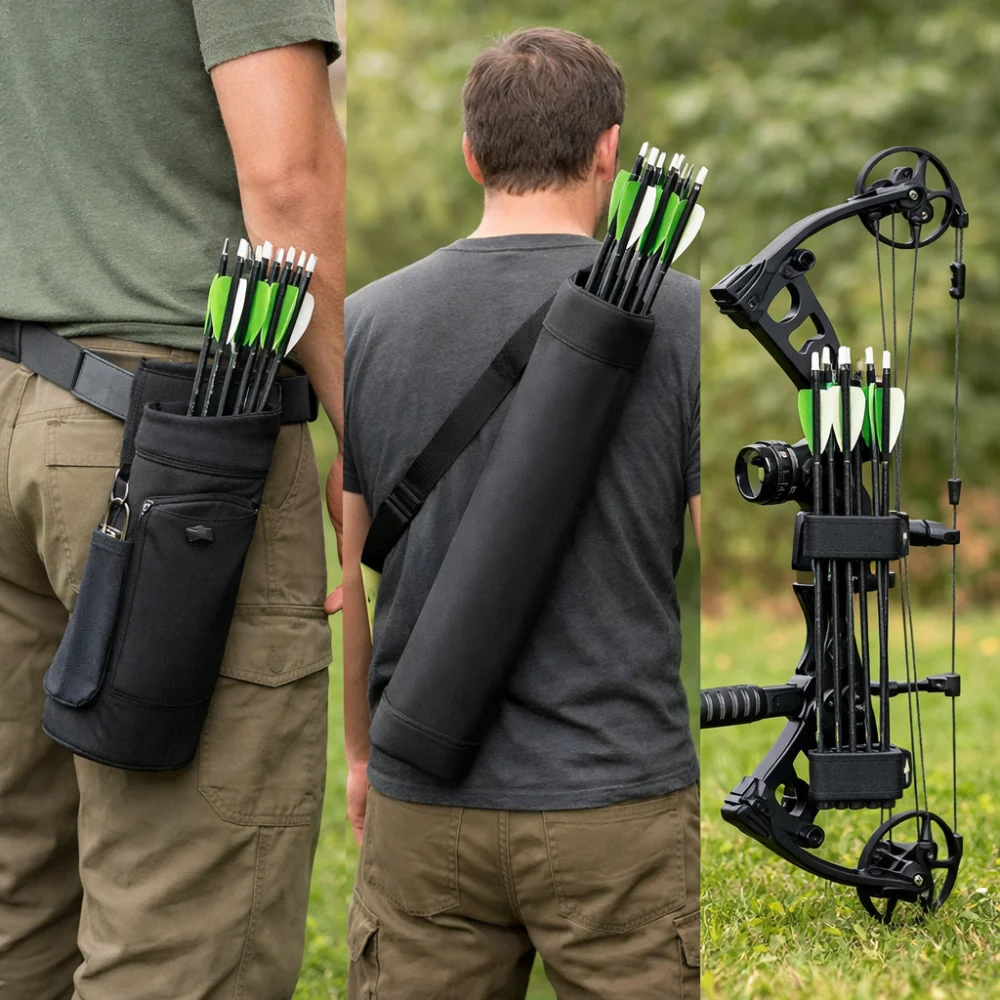
Quivers are commonly chosen by how they are carried. Some hang at the hip for easy reach, some sit on the back for a different draw feel, and some mount on or near the bow. The best option is the one that feels natural for your shooting style and does not get in the way of your movement.
Arrow access
If you shoot often, access can matter more than looks. A quiver that keeps arrows separated and easy to grasp can be more convenient than one that simply carries a larger number. Think about how smoothly you want to draw arrows and how quickly you want to stow them again.
Comfort and stability
A quiver should stay comfortable while you walk, stand or shoot. Look at how it fastens, how much it may move during use and whether the shape seems likely to sit well against your body or bow. A secure fit can matter more than a decorative design.
Extra pockets and organisation
Some quivers include pockets or small holders for accessories. That can be useful if you like to keep a compact kit together, but it can also add bulk. Choose extras that support your routine rather than paying for features you will not use.
Product types and variants
Within this category, the main differences are usually about carry position and style rather than complicated technical features.
- Hip quivers sit at the waist or hip and are often chosen for easy access during target practice.
- Back quivers carry arrows over the shoulder and can suit archers who prefer a different feel or a more traditional look.
- Belt-clip or side quivers aim for simple attachment and quick use, but they may be better suited to lighter carry needs.
- Traditional-style quivers may appeal to archers who want a more classic appearance and a simpler setup.
The right type depends less on brand and more on how you want the quiver to sit, move and feel during use.
Which quiver suits which buyer?
| Buyer need | What to prioritise | Why |
|---|---|---|
| Beginner target archer | Simple attachment, easy arrow access, comfortable fit | Helps keep the setup straightforward while you learn |
| Regular practice shooter | Stable carry, sensible capacity, useful organisation | Makes repeated sessions easier and less fiddly |
| Traditional archery fan | Style, carry position and a design that suits the bow setup | Helps the quiver feel consistent with the rest of the kit |
| Buyer replacing an older quiver | Same carry style or a clear reason to change | Reduces the risk of buying something that feels unfamiliar or awkward |
| Gift buyer | General comfort, adjustable fit and broadly useful features | These are easier to choose when you do not know every detail of the recipient’s setup |
Common mistakes to avoid
- Choosing by appearance only: a stylish quiver may not suit the way you actually shoot.
- Ignoring carry position: hip, back and bow-mounted options feel very different in use.
- Overlooking fit and security: a quiver that shifts around can be frustrating during practice.
- Assuming all quivers hold arrows the same way: the layout and access can vary quite a lot.
- Buying extra features you do not need: added pockets or storage can be useful, but they also add bulk.
Safety and suitability notes
Choose a quiver that suits your arrow type, shooting style and the way you carry your equipment. If you are unsure about fit or attachment, check the individual product details carefully before buying. For younger or less experienced archers, a simpler and more secure design is often easier to manage.
Care, storage and everyday use
Most quivers benefit from basic care and sensible storage. Keep them clean and dry, avoid packing them so tightly that they lose shape, and check straps, clips or fastenings from time to time. If a quiver includes pockets or compartments, make sure they are kept free of items that could interfere with arrow access.
Materials and finishes can vary, so the best care routine depends on the model. A little attention usually helps the quiver keep its shape and stay comfortable over time.
How to compare archery quivers efficiently
- Decide how you want to carry arrows: on the hip, on the back or attached in another way.
- Check how many arrows you usually carry and whether the capacity feels appropriate.
- Compare how securely the quiver fastens and how easy it is to reach your arrows.
- Look at any extra pockets or compartments and decide whether they add real value.
- Review the individual product page for fit details and any model-specific information.
Summary buyer decision checklist
- Does the quiver style suit how you shoot?
- Is the arrow capacity appropriate for your usual session?
- Will the attachment method work with your clothing or equipment?
- Is arrow access easy enough for your needs?
- Do you actually need extra pockets or a simpler design?
- Have you checked the individual product page for model-specific details?
Frequently asked questions
What is the main purpose of an archery quiver?
An archery quiver holds arrows so they are easier to carry, organise and access during shooting. Different quivers do that in different ways, so the main job is not just storage but also convenience and fit.
Should I choose a hip quiver or a back quiver?
That depends on how you want the arrows to sit and how you prefer to draw them. Hip quivers are often chosen for quick access, while back quivers create a different carry feel and may suit some traditional setups better.
Do all quivers fit every arrow?
No, not automatically. Arrow size, shaft style and how the quiver holds them can vary, so it is sensible to check the product details carefully before buying.
Are extra pockets worth having?
They can be useful if you like to keep small accessories together, but they are not essential for everyone. If you prefer a lighter, simpler quiver, fewer extras may be the better choice.
What should a beginner prioritise?
A beginner usually benefits from a straightforward quiver that is secure, comfortable and easy to use. Simplicity often matters more than style features at the start.
How do I know if a quiver will feel comfortable?
Look at the carry position, fastening method and overall shape. Comfort is usually about whether the quiver stays in place and feels natural during movement, not just about how it looks.
Do I need a quiver with high capacity?
Not necessarily. A higher capacity can be useful if you like to carry more arrows, but it may also make the quiver bulkier. Many buyers are better served by a capacity that matches their normal practice routine.
Why do some quivers look very different from others?
Because they are designed for different carry styles and different shooting preferences. The visible shape often reflects whether the quiver is meant for hip carry, back carry, bow attachment or a traditional appearance.