
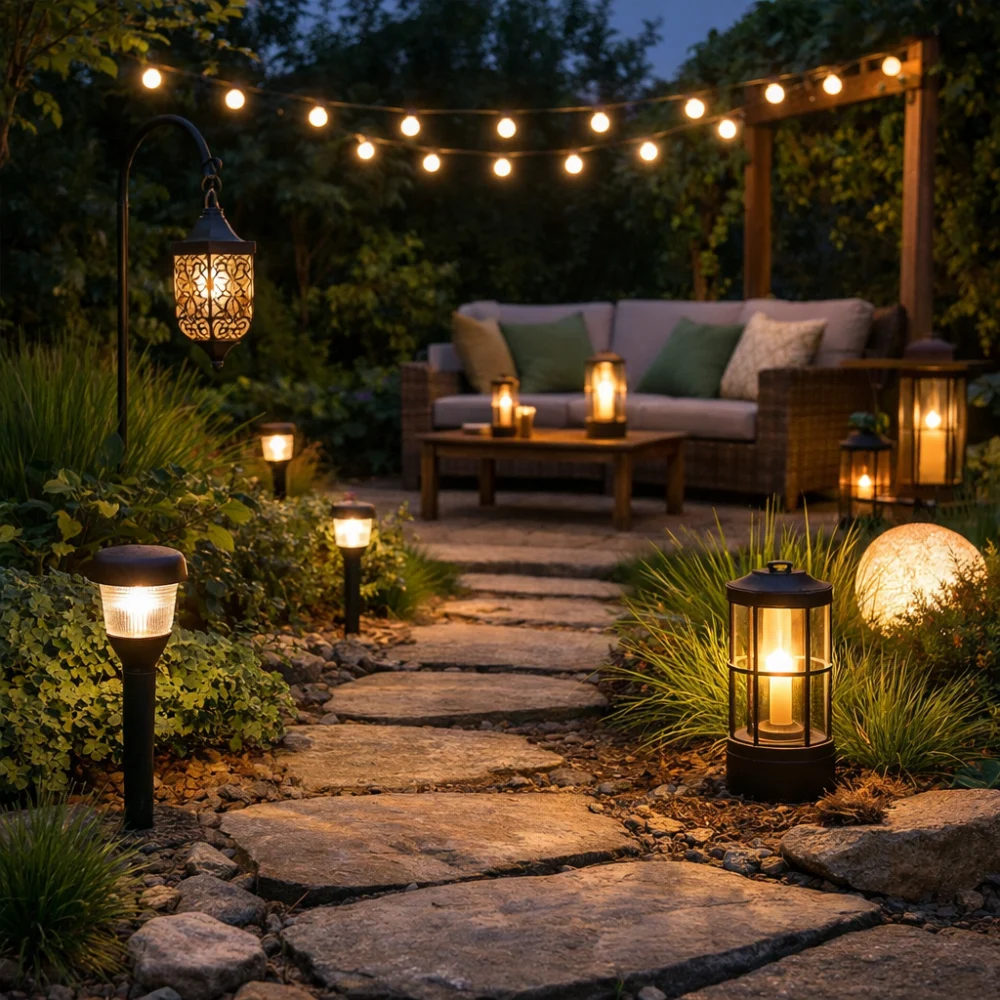
Garden lights can do several different jobs: they can help mark a path, highlight planting or features, add atmosphere to seating areas, or make outdoor spaces feel easier to use after dark. The right choice depends less on a single “best” type and more on where the lights will go, how much maintenance you want, and whether you prefer a decorative effect or more practical illumination.
Because this category covers a wide mix of styles and power types, it helps to compare options by use rather than by appearance alone. A light that looks attractive on a product page may not be the most suitable for a dark driveway, a sheltered patio, or a border that gets limited sun.
Specifications vary by model, so always check the individual product page before buying.
What should I look for when buying garden lights?
Start with the job you want the lights to do. If you mainly want ambience, decorative strings, stakes or feature lights may suit you better than a brighter security-style light. If you need clearer illumination for paths or entrances, focus on placement, power source and the amount of light the design is intended to give.
The main trade-off is usually convenience versus consistency. Solar lights are often easier to place and maintain, while mains-powered options may offer more reliable lighting where power is available. Battery-powered models can be useful in some situations, but it is worth checking how often they will need attention.
| Feature | What it means | Why it matters | What to check |
|---|---|---|---|
| Power source | How the light is powered, such as solar, mains or battery | Affects placement, running cost and day-to-day convenience | Where the light will be installed and how much maintenance you are willing to do |
| Lighting purpose | Whether the light is mainly decorative, directional or practical | Prevents buying a style that does not suit the space | Product photos, description and intended use |
| Placement style | Stake, wall, string, lantern or feature form | Changes how the light looks and where it can be used | Mounting method, surface type and available space |
| Light effect | Warm, cool, colour-changing or flickering style | Shapes the atmosphere and visual impact | Whether you want subtle lighting or a more decorative display |
| Weather exposure | How exposed the fitting will be outdoors | Important for sheltered corners, open borders and entrances | Suitability for the intended location and any product guidance |
Key decision criteria
Power source
Solar lights are popular for simple outdoor placement because they do not need a nearby socket, but they rely on enough daylight to recharge. Mains-powered lights are usually better when you want more dependable operation and already have a suitable outdoor supply. Battery-powered options can work well in smaller or less permanent setups, but they add the job of replacing or recharging batteries.
Brightness and light spread
Not every garden light is meant to light an area in the same way. Some are designed to create an accent, some to mark a route, and some to cast a wider pool of light. Think about whether you need visibility, atmosphere or both, and compare the product description carefully rather than assuming that a larger-looking fitting will automatically light more space.
Form and installation
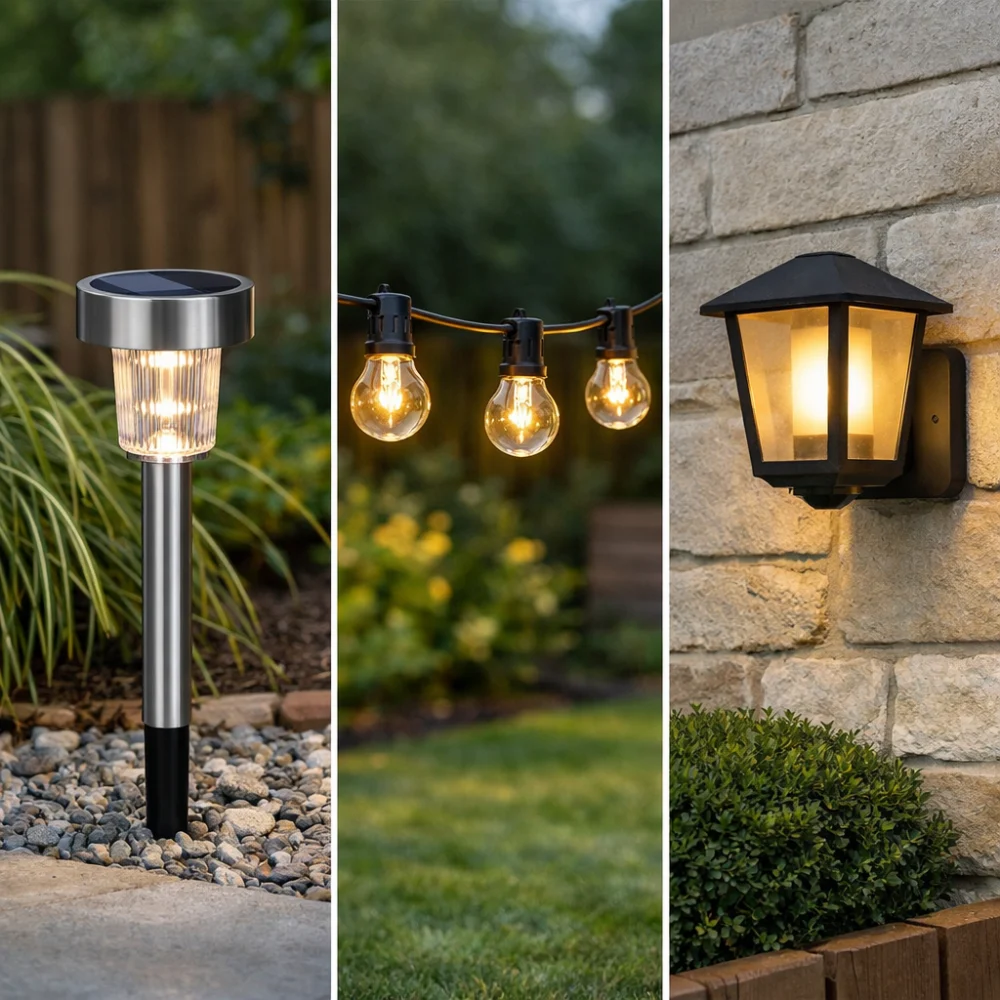
Garden lights are available in several forms, and each suits a different setting. Stake lights are often chosen for borders, lawns and paths. String lights suit pergolas, fences and seating areas. Wall lights or fixed fittings may be better where you want a more defined pool of light near a building or entrance.
Finish and visual style
Shape, colour and effect matter in a garden because lights are visible in both daylight and after dark. A decorative lantern or feature light may be a focal point even when switched off, while a simpler design can blend in more easily. Choose a style that suits the garden layout you already have rather than trying to make the light do all the decorative work.
Types and variants you are likely to see
Garden lights in this category are often grouped by how they are used rather than by a strict technical standard.
- Stake or path lights: useful for borders, driveways and walkways where you want repeated points of light.
- String or festoon lights: suitable for patios, fences, pergolas and social spaces where atmosphere matters.
- Feature or novelty lights: chosen more for decoration than for general illumination.
- Wall or fixed lights: helpful near entrances, sheds or building edges where a more permanent position makes sense.
Each type has a limitation. Decorative lights may look attractive but provide less practical light, while more functional lights may be less subtle in the garden. Choosing the right type is usually about matching the space, not buying the most elaborate option.
Which garden lights suit different buyers?
| Buyer need | What to prioritise | Why |
|---|---|---|
| Easy installation | Simple placement and minimal wiring | Reduces setup effort and makes repositioning easier |
| Atmosphere for seating areas | Gentler light effect and decorative style | Creates a more relaxed outdoor setting |
| Paths and entrances | Clear placement and dependable illumination | Helps define routes and practical outdoor use |
| Low-maintenance choice | Power source and access for upkeep | Some options need less day-to-day attention than others |
| Seasonal decorating | Flexible layout and easy storage | Useful if the lights will only be used at certain times |
Common mistakes to avoid
- Choosing by looks alone: a decorative light may suit a garden feature but not a path or entrance.
- Ignoring the power setup: solar, mains and battery models each suit different locations and maintenance preferences.
- Overestimating brightness from photos: product images can show atmosphere, not necessarily how much usable light you will get.
- Forgetting the environment: a sheltered patio and an exposed border place different demands on a light.
Safety and suitability checks
Think about the intended location before buying. A garden light that works well in a covered seating area may be less suitable in a fully exposed position, and a fitting near steps or entrances may need a different level of practicality from one used purely for decoration. If the light is being installed near water, on a route people walk through, or in a place that is difficult to reach, it is worth checking the product information especially carefully.
Maintenance, storage and lifespan considerations
General care affects whether a garden light feels convenient over time. Solar lights may need a clearer position for charging, while other types may need more direct upkeep, such as battery replacement or access to a power source. Outdoor lights can also benefit from occasional cleaning so surfaces and light covers stay clear.
If you plan to use lights seasonally, think about whether they are easy to remove, store and reinstall. Compact designs are often simpler to pack away, while fixed fittings may be better for permanent use.
How to compare options efficiently
- Decide where the light will be used and what job it needs to do.
- Choose the most suitable power type for that location.
- Compare the style, form and light effect against the space.
- Check how much maintenance and storage the option is likely to need.
- Read the individual product page for the details that matter most.
Summary buyer decision checklist
- Have I matched the light to the space: path, border, patio, wall or feature?
- Does the power source suit the installation and upkeep I want?
- Is the light mainly decorative, practical or a mix of both?
- Will the style fit the garden when it is switched on and off?
- Have I checked the product page for the details that affect suitability?
Frequently asked questions
Are solar garden lights worth choosing?
They can be a convenient option when you want flexible placement and less wiring. They are most useful in spots that get enough daylight and where you do not need the light to perform the same way every night. If consistency matters most, compare them with mains-powered alternatives.
What is the difference between decorative and practical garden lights?
Decorative lights are chosen mainly for atmosphere and visual effect, while practical lights are intended to improve visibility or help define a route. Some products do a little of both, but it helps to be honest about which job matters most in your garden.
Can garden lights be used in any outdoor area?
Not necessarily. Some are better suited to sheltered spaces, while others are intended for more open areas, so the location matters. Check the product information and think about how exposed the fitting will be to weather and regular use.
What should I compare first when choosing between similar lights?
Start with power source, intended use and installation style. Those three factors usually have a bigger impact on satisfaction than small differences in appearance. After that, check the effect, finish and maintenance needs.
How do I choose a garden light for a seating area?
Look for a gentler effect that supports the mood of the space rather than overpowering it. String lights, lantern-style designs and softer feature lights are often chosen for this kind of setting. Think about whether the light should create ambience, improve visibility or both.
Should I buy one light or several?
That depends on the space and the effect you want. A single feature light may suit a focal point, while a path or border often works better with repeated lights. Compare the layout first, then decide whether a set or individual piece makes more sense.

