
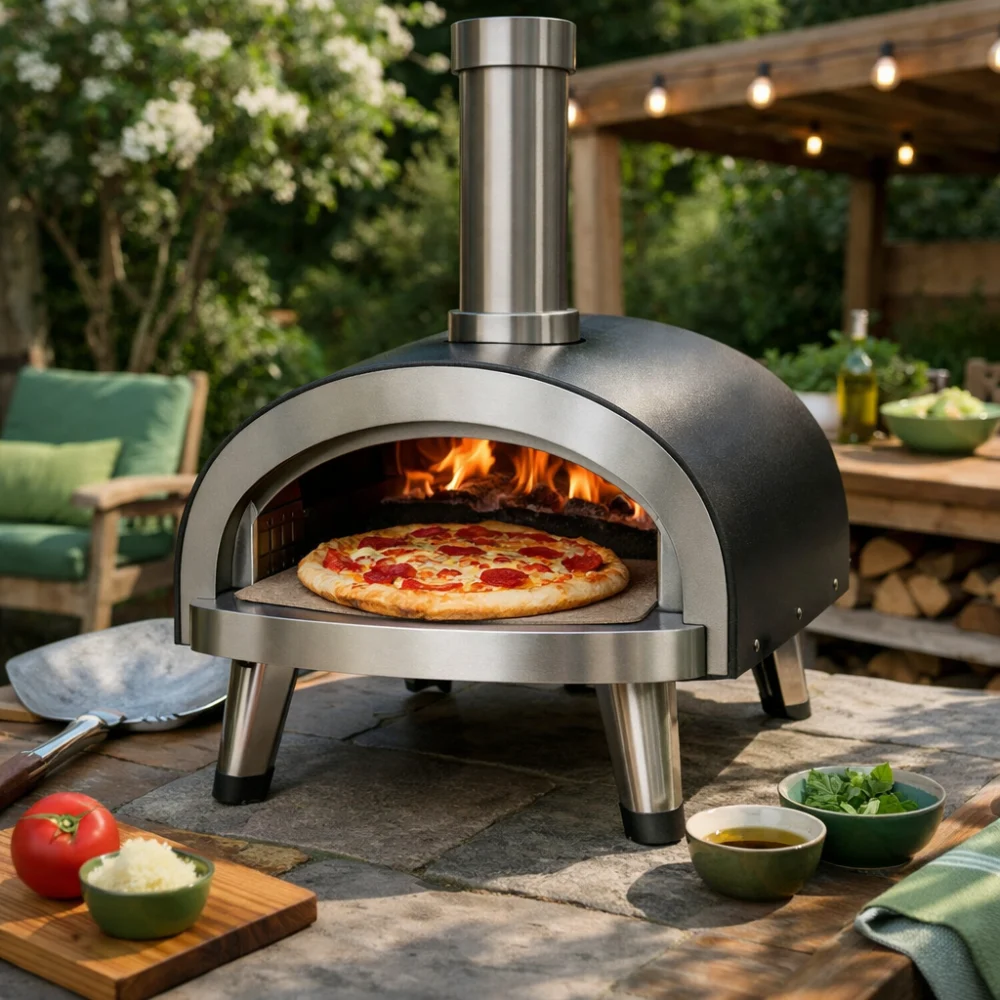
Outdoor pizza ovens are a popular way to cook pizza at home, but the right choice depends on how you plan to use it. Some buyers want a portable oven for occasional weekend cooking, while others want a larger setup for regular meals, bigger pizzas or entertaining.
This guide helps you compare the main buying factors without getting lost in model details. It focuses on the practical questions that matter before purchase: fuel type, size, heat-up expectations, portability, and how easy the oven is to live with.
Specifications vary by model, so always check the individual product page before buying.
What is the best starting point when choosing an outdoor pizza oven?
The best starting point is to decide where and how often you will use it. If you want occasional cooking on a patio or for days out, portability and simple setup may matter most. If you plan to cook for a group more often, capacity, build size and ease of temperature control become more important. The main trade-off is usually between convenience and cooking flexibility.
| Feature | What It Means | Why It Matters | What To Check |
|---|---|---|---|
| Fuel type | The energy source used to heat the oven | It affects convenience, flavour preference and how much control you want | Check whether the model is gas, wood-fired, multi-fuel or another type |
| Cooking space | The usable area inside the oven | It influences pizza size, how many pizzas you can handle and ease of use | Check the internal size and whether it suits the pizzas you usually make |
| Portability | How easy the oven is to move or store | Important if you have limited space or want to take it elsewhere | Look at overall size, weight and whether it is designed for transport |
| Heat management | How the oven reaches and holds cooking temperature | Affects consistency, especially if you want repeatable results | Check whether temperature control is manual, fuel-led or more adjustable |
| Ease of cleaning | How simple it is to clear ash, crumbs or residue | Helps with regular use and day-to-day ownership | Check access to the cooking chamber and any cleaning guidance on the product page |
| Build and materials | The construction of the oven body and cooking chamber | Influences durability, heat retention and handling | Look for the materials described by the manufacturer and any care notes |
Key decision criteria explained
Fuel type
Fuel type is often the first big choice. Gas models are usually appealing for convenience and straightforward heat control, while wood-fired options may suit buyers who enjoy a more traditional cooking experience. Multi-fuel ovens can offer flexibility, but they may ask more of the user in terms of setup and management.
The right choice depends on whether you value ease, flavour style or versatility most. If you are comparing options, look closely at what fuel or fuels the oven actually supports and what is included with the model.
Size and cooking capacity
Outdoor pizza ovens vary in how much room they offer inside. A compact oven may suit a smaller patio or occasional use, but it may feel limiting if you want to make larger pizzas or cook more than one in a session. A bigger oven can be more versatile, though it may need more space and planning.
Check the usable internal size rather than assuming all ovens in the category are similar. Think about the pizzas you usually make, the number of people you cook for and how much room you have for the oven itself.
Portability and storage
Some buyers want an oven that can be moved easily, while others will keep it in one place. Portability matters if you have limited outdoor storage, need to lift the oven between uses or want to take it to different locations. More substantial ovens can feel steadier in use, but they are usually less flexible to move.
If storage space is tight, check whether the oven is compact enough to keep safely when not in use and whether any stand, legs or accessories affect the overall footprint.
Temperature control and cooking style
Good pizza cooking depends on heat management, not just raw heat. Some ovens are designed to reach cooking temperature quickly, while others may take more attention to maintain a steady level of heat. If you are new to outdoor pizza ovens, simpler control can be easier to learn. If you enjoy experimenting, more adjustable ovens may suit you better.
Specifications vary by model, so always check the individual product page before buying.
Types and variants to consider
Within this category, the most useful distinction is usually by fuel and form factor rather than by cosmetic design.
- Gas pizza ovens may suit buyers who want convenience and more direct heat control, with less attention to fuel handling.
- Wood-fired ovens may appeal to people who enjoy a more traditional approach and are comfortable managing fuel and heat.
- Multi-fuel ovens can suit buyers who want flexibility, but they may involve a little more setup and learning.
- Portable or compact ovens are useful where storage or outdoor space is limited, though they may offer less cooking room.
- Larger ovens can be a better fit for entertaining or frequent use, but they need more space and are less easy to move.
Which oven suits which kind of buyer?
| Buyer need | What to prioritise | Why it helps |
|---|---|---|
| Occasional family cooking | Simple setup, manageable size, easy storage | Makes the oven easier to use when you do not cook with it every day |
| Frequent entertaining | Good capacity, steady heat management, practical access | Helps keep cooking smoother when serving several people |
| Limited outdoor space | Compact footprint, portability, straightforward storage | Reduces the challenge of keeping the oven in a small area |
| Hands-on cooking enthusiast | Flexible fuel options, responsive control, larger cooking chamber | Leaves more room to experiment with style and technique |
| Convenience-first buyer | Simple fuel choice, quick setup, easy cleaning | Helps the oven fit into regular use without much fuss |
Common mistakes and misunderstandings
- Choosing by appearance alone: an attractive oven is not necessarily the most practical. Check the size, fuel type and storage needs first.
- Underestimating space needs: the oven may fit in the garden, but you also need working room around it and a suitable place to keep it when not in use.
- Assuming all models work the same way: gas, wood-fired and multi-fuel ovens can feel very different in everyday use.
- Ignoring cooking habits: an oven that is fine for one or two pizzas may feel restrictive if you regularly cook for a larger group.
- Not checking cleaning and upkeep: some ovens need more regular attention than others, especially if they burn solid fuel.
Safety and suitability caveats
Outdoor pizza ovens are intended for outdoor use, so make sure the product is suitable for your intended location and setup. Check any guidance from the manufacturer about safe placement, clearance, ventilation and what accessories or fuel are appropriate for the model.
If children, pets or crowded entertaining spaces are part of the picture, think carefully about where the oven will sit and how much room you will need around it. This is a buying decision as much as a cooking one, because the most suitable oven is the one that fits your space and your routine.
Maintenance, storage and ownership considerations
Outdoor pizza ovens usually need some level of cleaning and dry storage to stay in good condition. Solid-fuel models may create ash or residue, while all types benefit from being protected from weather when not in use. If the oven will live outdoors, check whether the manufacturer recommends a cover or other protection.
It is also worth thinking about consumables and ongoing care. Depending on the model, you may need to consider fuel access, cleaning tools or spare accessories, so the purchase does not become more demanding than you expected.
How to compare options efficiently
- Decide whether convenience, traditional cooking style or flexibility matters most.
- Check the oven size and whether it suits the pizzas and portion sizes you usually make.
- Compare how portable the oven is and where you will store it.
- Review the fuel type and how much involvement you want from day to day.
- Read the individual product page carefully for the exact setup, included parts and any care guidance.
Summary buyer decision checklist
- Have you chosen the fuel type that suits how you like to cook?
- Does the cooking space match the pizza size and volume you need?
- Is the oven suitable for the outdoor space you actually have?
- Will it be easy enough to move, store or leave in place?
- Have you checked how much cleaning and upkeep the model is likely to need?
- Does the product page confirm the details that matter most to you?
Frequently asked questions
Are outdoor pizza ovens hard to use?
That depends on the model and on how much control you want. Some ovens are designed for simpler use, while others reward a bit more practice. If you are new to them, look for a model that matches the level of involvement you want.
Is a larger oven always better?
Not necessarily. A larger oven can be helpful if you cook for more people, but it may take up more room and be less convenient to store. The right size is the one that suits your space and usual cooking habits.
What is the main difference between gas and wood-fired ovens?
Gas ovens are often chosen for convenience and easier heat control, while wood-fired ovens suit people who enjoy a more traditional cooking style. The better choice depends on how much control, simplicity and hands-on cooking you want.
Do I need a lot of garden space?
Not always, but you should think beyond the oven itself. Allow room for use, loading and safe placement, plus storage space if the oven will not stay outside all year. A compact oven may be easier to accommodate in a smaller garden or patio.
How important is portability?
Very important if you plan to move the oven often or store it after use. If it will stay in one place, portability matters less than stability, capacity and ease of cooking. Choose based on your actual routine rather than a feature you may not use.
What should I check on the product page before buying?
Check the fuel type, cooking space, size, cleaning expectations and any notes about setup or use. It is also sensible to read the exact wording around what is included with the oven, as that can vary between models.

