
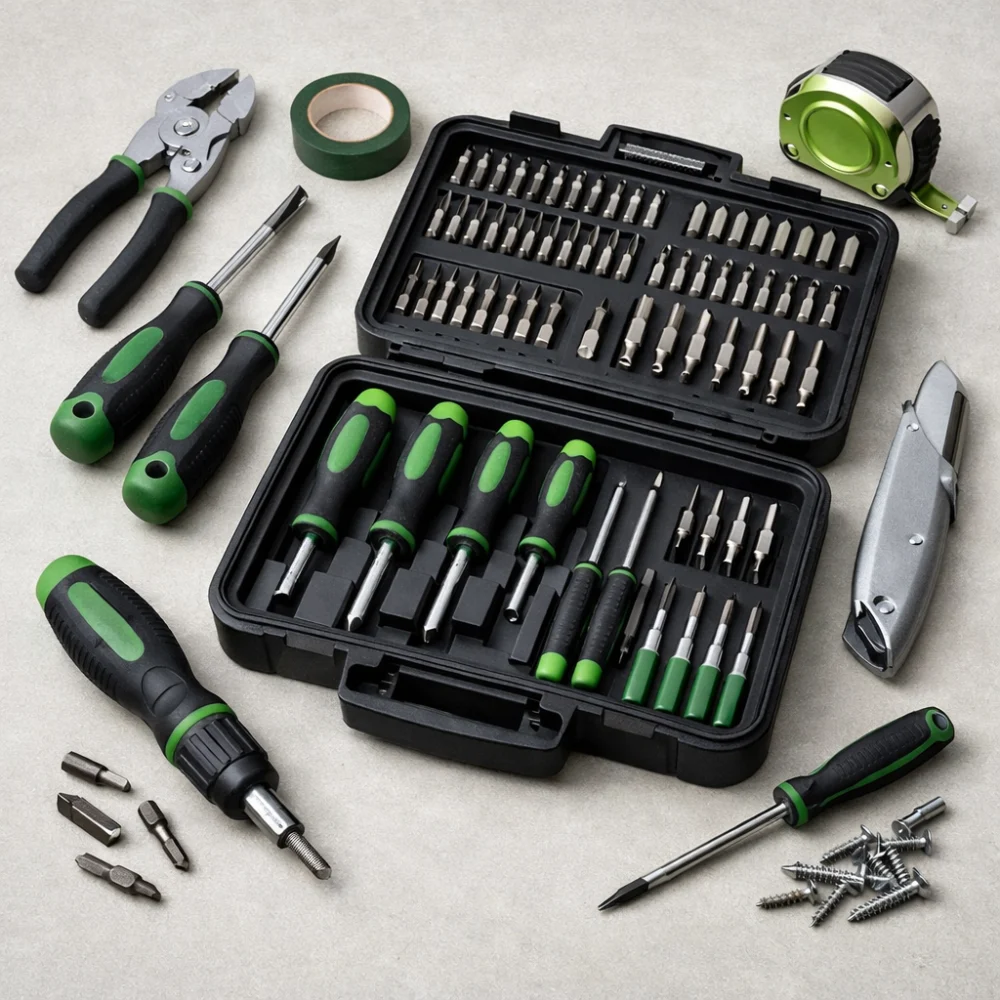
Screwdriver sets are a practical buy when you want the right tip shapes and sizes in one place rather than reaching for a loose driver that only partly fits the job. The main decision is not simply how many pieces are included, but whether the set matches the screws, tasks and level of accuracy you need.
If you are replacing an old set, building a basic home toolkit or choosing a more specialist option for electrical, precision or general DIY work, it helps to compare the tip types, handle comfort and storage format carefully. Specifications vary by model, so always check the individual product page before buying.
What should you look for in a screwdriver set?
The best starting point is to match the set to the screws you use most often. A general home set may cover common slotted and cross-head screws, while a more specialist set may suit electronics, fittings or other detailed work. The other big questions are comfort, durability and how neatly the pieces are stored.
| Feature | What It Means | Why It Matters | What To Check |
|---|---|---|---|
| Tip types | The shapes of the screwdriver ends included in the set | Different screws need different tips for a secure fit | Make sure the set includes the tip shapes you actually use |
| Size range | How many sizes are included for each tip type | Too few sizes can limit the set’s usefulness | Look for coverage that suits both small and general-purpose jobs |
| Handle design | The shape and grip feel of each screwdriver handle | Comfort and control matter during longer tasks | Check whether the handles are designed for better grip or fine control |
| Magnetic tips | Tips that help hold screws in place | Can make it easier to start and position screws | Confirm whether the set includes magnetic tips and where that would help |
| Precision focus | Smaller drivers or bits for detailed work | Useful for electronics, spectacles or other delicate items | Check that the set is intended for precision tasks if that is your main need |
| Storage | Case, rack or box for keeping the pieces together | Good storage helps prevent loss and makes the set quicker to use | Look at how the set is organised and whether it suits your tool storage |
Key decision criteria
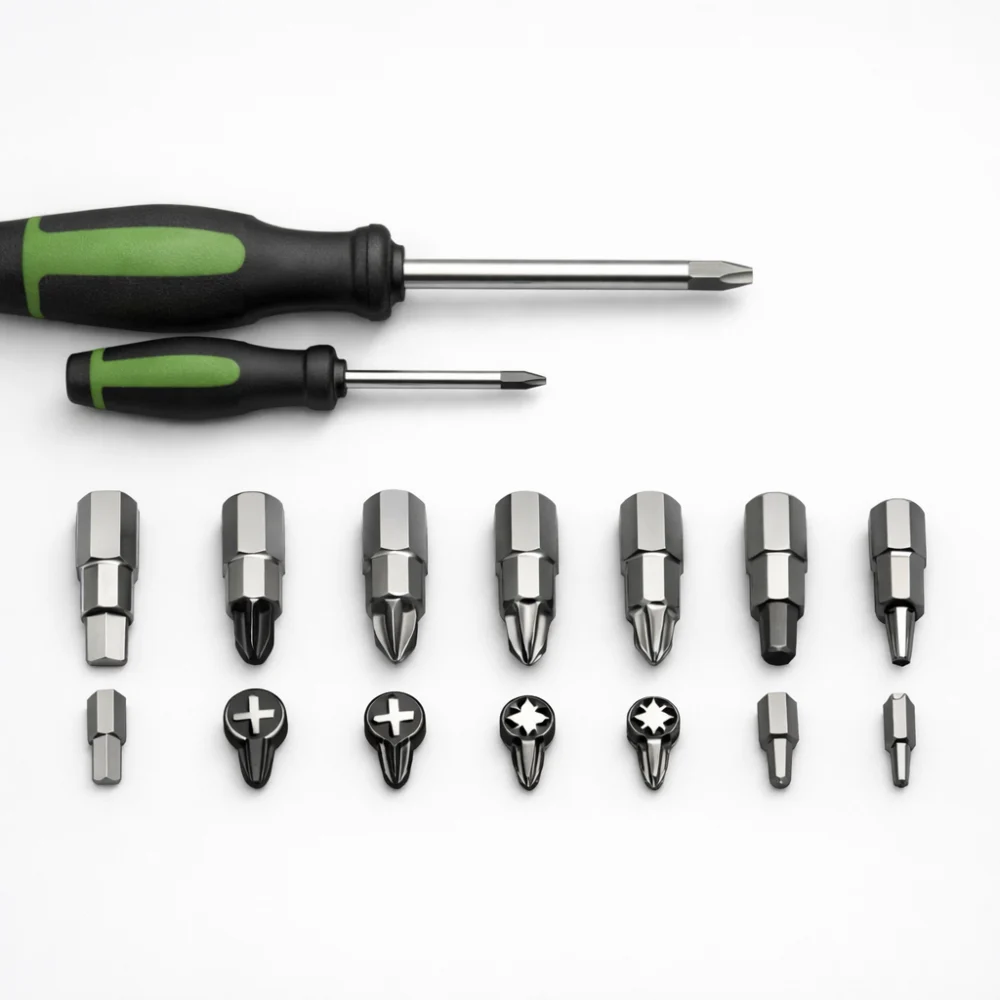
Tip type and screw compatibility
The most important factor is whether the screwdriver tips match the screws you need to turn. A set with the wrong tip shape can slip, round the screw head or simply be awkward to use. For mixed household jobs, a broad set can be useful, but for a specialist task it may be better to buy a narrower set that better matches the fixings.
Handle comfort and control
Comfort matters more than many buyers expect, especially if you will use the set regularly. A more comfortable grip can make controlled turning easier, while a simple handle may be fine for occasional work. If you expect longer sessions or repeated use, look closely at handle shape and grip style.
Magnetic versus non-magnetic tips
Magnetic tips can help hold screws in place, which is useful in awkward positions or when starting small screws. They are not essential for every job, and some buyers prefer non-magnetic drivers for certain tasks. The useful question is where the feature will save time or reduce frustration for your own projects.
General-purpose or specialist use
Some screwdriver sets are aimed at everyday household repairs, while others are better suited to precision work or a narrower type of fixing. A broad set can offer convenience, but a specialist set may be the better fit if your tasks are more specific. Choosing the right balance avoids paying for pieces you are unlikely to use.
Types of screwdriver sets
Although screwdriver sets can look similar at first glance, they often differ in purpose more than appearance.
- General household sets: Suitable for common DIY tasks and routine repairs around the home.
- Precision screwdriver sets: Better for smaller screws and more detailed work where control matters.
- Specialist sets: May suit a particular trade, fixing type or task where specific tips are needed.
- Bit and handle sets: Useful if you want variety in one compact kit, though they may feel different in use from fixed-blade screwdrivers.
The right type depends on whether you value breadth, portability, fine control or task-specific coverage.
Which set suits which buyer?
| Buyer need | What to prioritise | Why it helps |
|---|---|---|
| Occasional home repairs | Basic tip coverage, simple storage and comfortable handles | Enough variety for common jobs without unnecessary complexity |
| Frequent DIY use | Durability, good grip and a sensible spread of sizes | More pleasant to use over time and less likely to feel limiting |
| Precision tasks | Smaller sizes, fine control and clear organisation | Makes delicate work easier and reduces the risk of slipping |
| Gift or first toolkit purchase | Clear layout, useful common sizes and compact storage | Helps ensure the set feels practical rather than confusing |
Common mistakes to avoid
- Buying by piece count alone: More pieces do not automatically mean a better match for your needs.
- Ignoring screw type: The set should suit the fasteners you actually see most often.
- Overlooking storage: A well-organised case can make the set easier to keep complete and easier to find.
- Choosing precision tools for general work: Smaller drivers are useful, but they are not always the best everyday option.
Safety and suitability considerations
Choose screwdriver sets for the task they are intended to handle, and check whether any specialist use is suggested on the product page. For electrical or other sensitive work, make sure the set is appropriate for that purpose rather than assuming any screwdriver will do. If a task involves safety-critical fixing, it is worth being more cautious about fit, control and suitability.
Maintenance, storage and everyday care
Screwdriver sets usually stay usable for longer when they are kept clean, dry and returned to their case or rack after use. Good storage reduces the chance of losing smaller pieces and makes it easier to keep the set sorted by size or tip type. If a set includes magnetic tips or small precision drivers, tidy storage can be especially helpful.
How to compare options efficiently
- Decide what tasks you want the set to cover most often.
- Check the tip shapes and sizes against those tasks.
- Compare handle comfort, grip and storage layout.
- Think about whether you need general-purpose or precision-focused tools.
- Read the individual product page carefully before choosing.
Frequently asked questions
Are screwdriver sets better than buying individual screwdrivers?
That depends on how varied your tasks are. A set is usually more convenient if you want several common sizes and tip shapes in one purchase, while individual screwdrivers can make sense if you only need a couple of specific tools.
What is the advantage of magnetic tips?
Magnetic tips can help hold screws in place, which is useful when starting screws or working in awkward positions. They are a convenience feature rather than a requirement, so their value depends on how you use the tools.
Do precision screwdriver sets replace general screwdriver sets?
Not usually. Precision sets are better for smaller, more detailed work, while general sets are more practical for routine household and DIY jobs.
How many screwdrivers do I actually need?
There is no fixed number that suits everyone. A smaller set may cover routine tasks well, while a larger or more specialist set is only worth it if you genuinely need the extra tip types or sizes.
Should I choose a kit with a case?
A case or organiser can make the set easier to store and quicker to use, especially if it contains smaller pieces. It is particularly helpful if you want to keep every part together in a toolbox or drawer.
What matters more: the handle or the tip?
The tip matters most for fit, because the wrong tip can make a job difficult or messy. The handle then becomes important for comfort and control, especially if you use the set regularly.
Can one screwdriver set cover both home repairs and precision work?
Sometimes, but not always well. A mixed set can be convenient, yet very small precision drivers and larger general screwdrivers serve different purposes, so many buyers prefer a set that matches their main tasks.

