
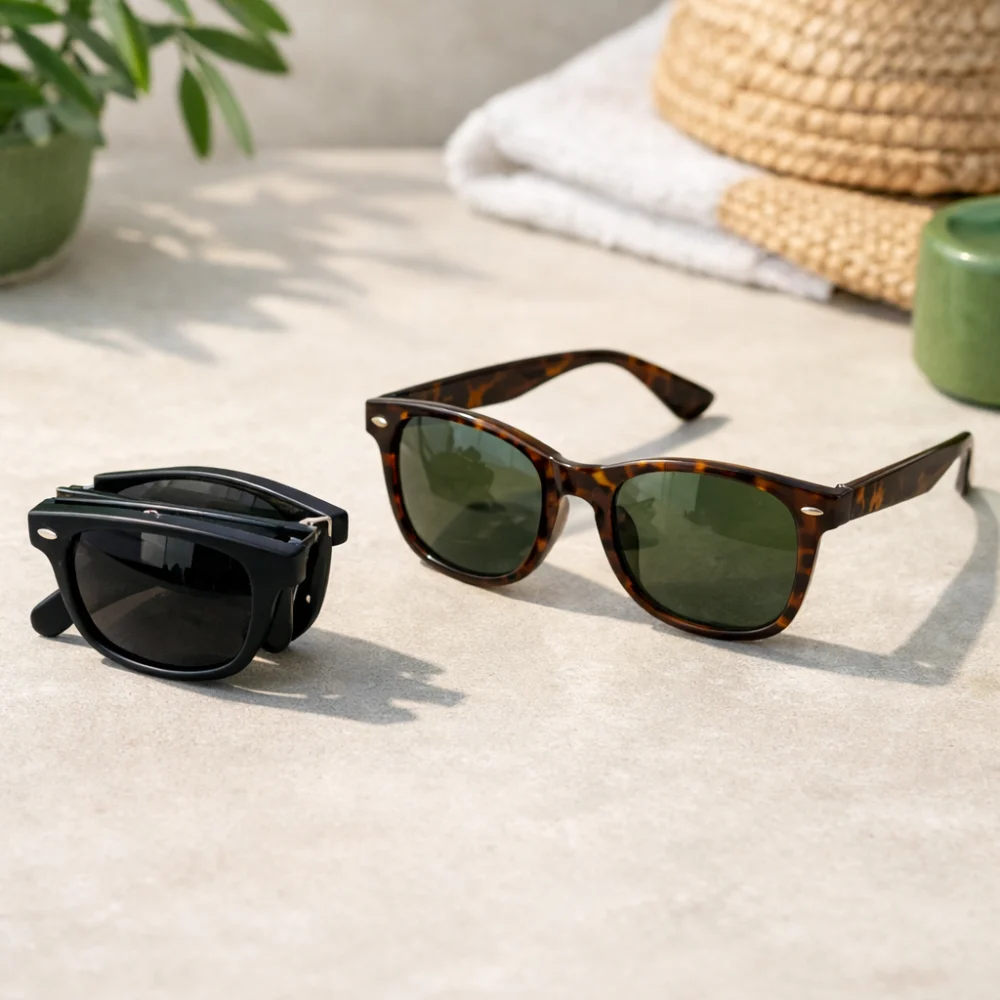
Sunglasses under £20 can be a sensible choice for everyday use, travel spares, festival bags or a second pair kept in the car. The main challenge is not finding something cheap; it is knowing which details matter most for comfort, fit and intended use.
At this price level, the best choice usually depends on where and how you plan to wear them. A pair that feels fine for short, casual wear may not suit long days outdoors, so it helps to focus on the practical features rather than the styling alone.
What should you look for first?
Start with fit, lens coverage and the kind of use you expect. If the sunglasses sit poorly or feel awkward, the rest of the details matter less. For casual daily wear, simple comfort and a shape that suits your face are often more useful than decorative extras. If you plan to use them outdoors for longer periods, pay closer attention to the lens description and the frame build. Specifications vary by model, so always check the individual product page before buying.
| Feature | What it means | Why it matters | What to check |
|---|---|---|---|
| Fit | How the frame sits on your face, nose and ears | A poor fit can make sunglasses uncomfortable or easy to slip | Frame shape, bridge fit and whether the arms look likely to sit securely |
| Lens coverage | How much of the eye area the lenses cover | More coverage can feel more practical for brighter conditions | Lens size, shape and how well the frame sits around the eyes |
| Lens description | What the lenses are claimed to do | It helps you decide whether the pair matches your intended use | The product page wording for tint, polarisation or other listed lens features |
| Frame material | The main material used for the frame | It affects comfort, feel and how robust the sunglasses may seem in everyday handling | Product description and any notes about flexibility or finish |
| Style and shape | The overall look and outline of the frame | Style affects how wearable the sunglasses feel day to day | Rectangle, round, square, aviator-style or similar shapes shown on the page |
| Intended use | The situation the pair is most suited to | Casual wear, travel, driving or a spare pair can each call for different priorities | Any use guidance given by the product listing |
Key decision criteria
Fit and comfort
Comfort is often the biggest difference between a bargain pair you keep reaching for and one that stays in a drawer. Look at the bridge shape, the width of the frame and whether the arms appear balanced. If you already know you prefer a lighter or looser fit, choose accordingly rather than judging only by the look.
Lens coverage and tint
Larger lenses or a wraparound shape can offer more coverage around the eyes, while smaller frames may feel lighter and less noticeable. The tint can also affect how the sunglasses feel in different light conditions. If you want a pair mainly for bright outdoor use, choose a style that gives enough coverage for your face rather than only selecting by colour.
Polarised and non-polarised options
Some budget sunglasses are described as polarised, while others are not. Polarisation can be useful in certain glare-heavy situations, but it is not the only thing that makes a pair worthwhile. If the listing does not clearly explain the lens type, avoid assuming it will perform like a more expensive model.
Frame durability versus lightweight feel
At this price point, some frames are chosen for lightness and easy everyday wear, while others may feel a little firmer or more structured. A very lightweight pair can be comfortable, but it may also feel less substantial in the hand. Think about where the sunglasses will live most of the time: a handbag, glovebox, coat pocket or desk drawer.
Common styles and variants
Within sunglasses under £20, the most useful differences are usually the shape and the intended wearer rather than specialist performance features.
- Classic everyday shapes: Simple square, round or aviator-style frames suit buyers who want an uncomplicated look for regular wear.
- Smaller or narrow frames: These can suit people who prefer a slimmer profile, but they may provide less coverage.
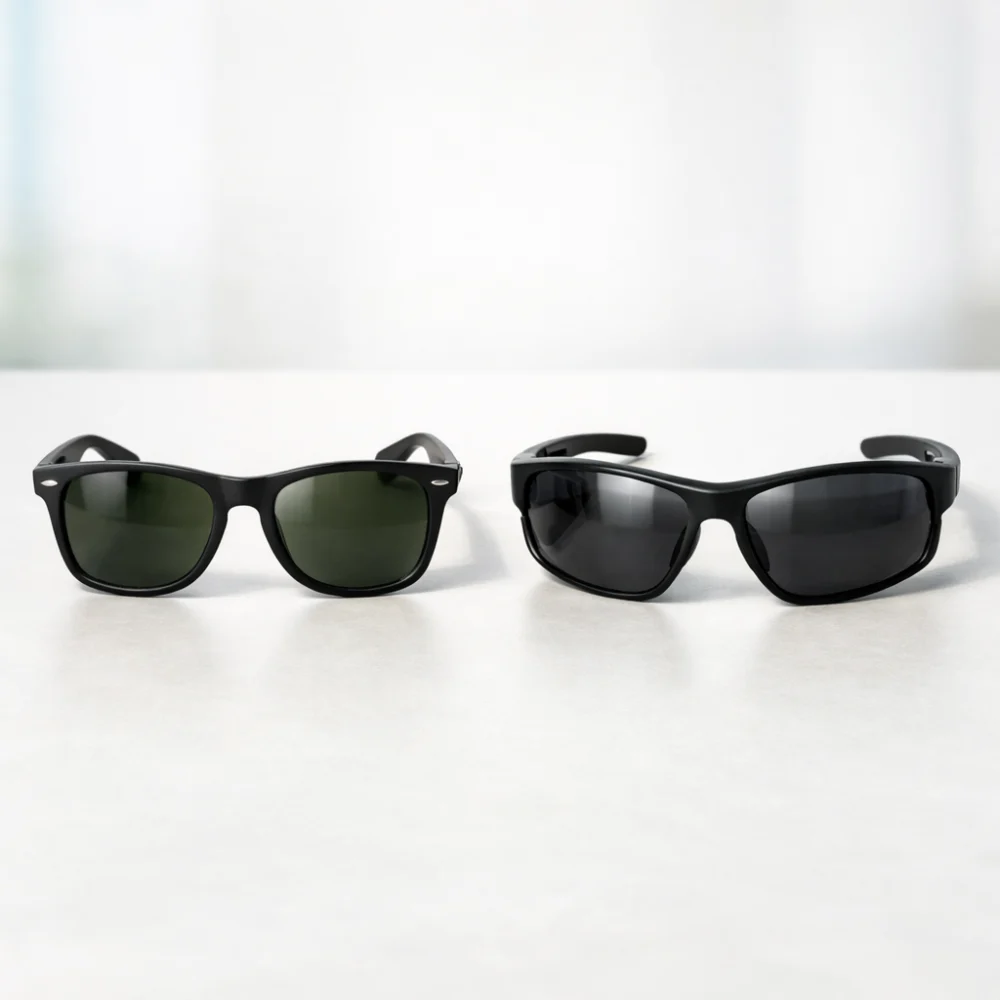
- Oversized or more wrapped styles: These can feel more enclosing and may better suit brighter conditions, though they are not for everyone.
- Clip-on or over-glasses styles: These are aimed at people who wear prescription glasses and want a convenient outer layer.
The main limitation of budget sunglasses is that the range of finishing touches can be narrower than at higher prices, so it is worth focusing on the features you will actually notice every day.
Which type suits which buyer?
| Buyer need | What to prioritise | Why |
|---|---|---|
| Everyday casual wear | Comfort, easy shape and a frame you will actually wear | You are more likely to use them if they feel natural and simple |
| Spare pair for travel or the car | Durability, compact shape and practical coverage | A backup pair should be easy to store and quick to grab |
| Wearers with prescription glasses | Clip-on or over-glasses style | These are designed around existing eyewear rather than replacing it |
| Style-led buyer | Frame shape, colour and overall look | When the main goal is appearance, comfort still matters but style may lead the choice |
| Longer outdoor use | Fit, lens coverage and clear product description | More extended wear makes small comfort issues more noticeable |
Common mistakes to avoid
- Choosing only by appearance: A frame can look good but still sit awkwardly. Check fit and coverage as well as style.
- Assuming all dark lenses offer the same experience: Lens tint alone does not tell you everything about comfort or suitability.
- Buying the cheapest option without checking the details: The lowest price may still be fine, but only if the shape and listing match your needs.
- Ignoring intended use: A casual fashion pair and a pair for long outdoor wear are not always interchangeable.
Safety and suitability caveats
Sunglasses under £20 can be perfectly adequate for many casual uses, but buyers should still read the product details carefully. If you need sunglasses for a specific activity, check the listing rather than assuming every pair offers the same level of protection, coverage or comfort. For children, prescription wearers or people with a strong preference for a particular fit, the product page details matter even more.
Maintenance, storage and lifespan
Simple care can help budget sunglasses last longer. Keep them in a case or separate pocket when possible, wipe lenses gently with a suitable cloth and avoid tossing them loose with keys or coins. If you expect to use them often, think about how easy they will be to store safely when not in use.
How to compare options efficiently
- Decide whether you want a casual fashion pair, a spare pair or something for longer outdoor wear.
- Shortlist the shapes that are likely to fit your face comfortably.
- Check the lens description and any listed features that matter to you.
- Compare the frame style, coverage and overall practicality, not just the price.
- Open the individual product page to confirm the details before buying.
Frequently asked questions
Are sunglasses under £20 worth buying?
They can be, especially if you want an everyday spare pair or something for occasional use. The key is to choose a frame and lens description that suit your needs rather than treating all low-cost options as identical.
What matters most at this price?
Fit usually matters more than any single styling detail. A comfortable pair that stays in place and gives enough coverage is often better value than a more decorative pair that you do not enjoy wearing.
Should I choose polarised lenses?
Only if that feature suits your intended use and is clearly listed on the product page. Polarised lenses can be useful in some glare-prone situations, but they are not automatically necessary for everyone.
Are smaller frames better than larger ones?
Not necessarily. Smaller frames can feel lighter and look more discreet, while larger frames may give more coverage. The better choice depends on comfort, face shape and how much coverage you want.
Can I use a budget pair for everyday wear?
Yes, if the fit is comfortable and the product details match your expectations. Many buyers simply want a reliable, easy-to-wear pair for routine use rather than a specialist product.
What if I wear prescription glasses?
Look for clip-on or over-glasses styles rather than standard frames. These are intended to work with existing eyewear, so the shape and sizing need to suit that purpose.

