
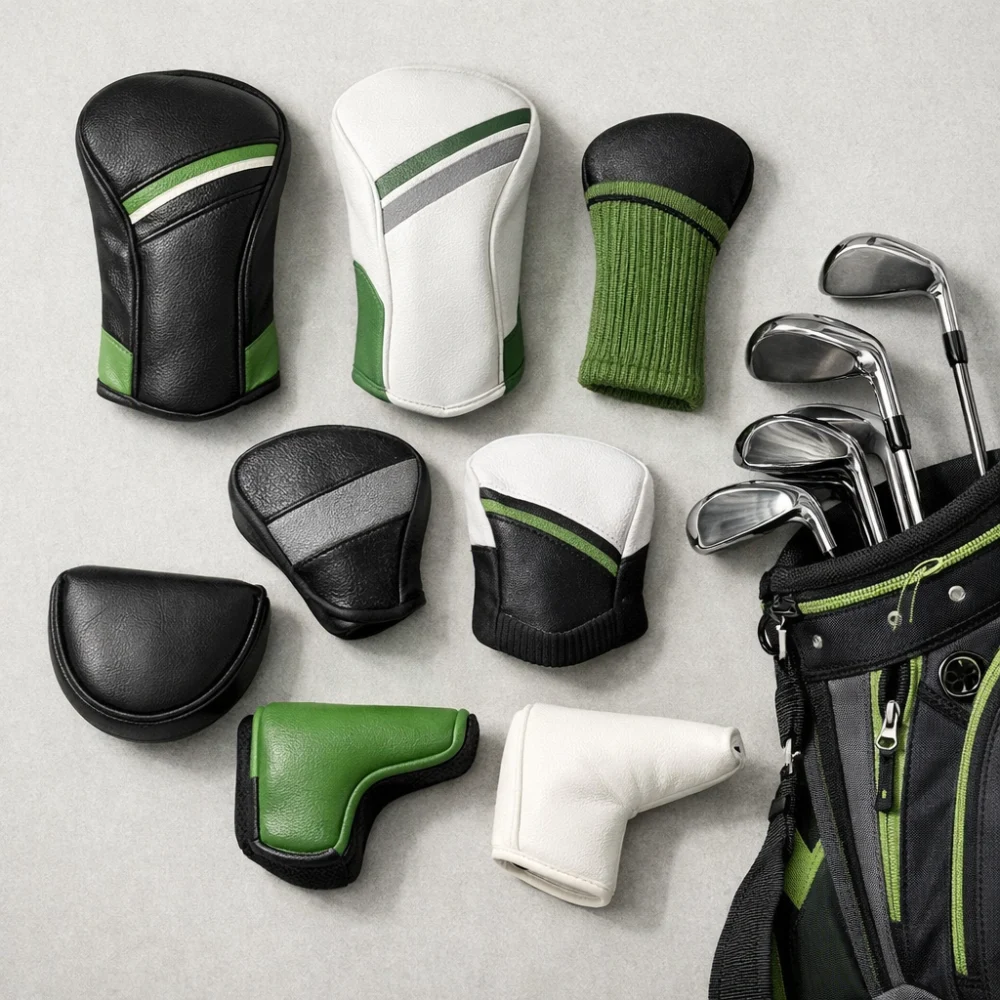
Golf club head covers are a simple accessory, but the right choice depends on the clubs you carry, how often you travel with them and how much convenience you want when taking covers on and off. Some buyers want straightforward protection for a driver or fairway wood, while others are looking for a full set that keeps the whole bag tidier.
This guide focuses on the practical differences that matter before you buy: fit, coverage, material, ease of use and how the covers will work with your current clubs and bag.
What should you look for in golf club head covers?
The best starting point is to match the cover to the club and to the way you play. A cover that is easy to remove and replace is useful if you move clubs in and out often, while a more secure fit may be better if your bag gets carried, transported or stored frequently. Materials and closures also affect how well the cover stays in place and how much protection it offers from knocks and scuffs.
Specifications vary by model, so always check the individual product page before buying.
| Feature | What it means | Why it matters | What to check |
|---|---|---|---|
| Club fit | Whether the cover is shaped for a driver, fairway wood, hybrid or putter | A cover that fits the wrong club may be awkward to use or less secure | Look for the intended club type and any fit notes on the product page |
| Protection level | How much coverage the cover provides over the club head and neck area | More coverage can help reduce scuffs and contact in the bag | Check the shape, length and any design details that affect coverage |
| Ease of use | How simple it is to remove and replace the cover | Useful if you change clubs often during a round or practise session | Consider the opening, stretch, closure style and overall shape |
| Security on the club | How firmly the cover stays in place | A looser cover may slip off more easily during transport | Look for a snug fit and any retention features described by the seller |
| Material and finish | The outer material and internal feel of the cover | These affect handling, appearance and how the cover may wear over time | Check the product description for the material and care guidance |
| Set or individual purchase | Whether you are buying one cover or matching covers for several clubs | A full set can give a consistent look, while a single cover may solve one specific need | Confirm which clubs are included or supported |
Key decision criteria
Club type and shape
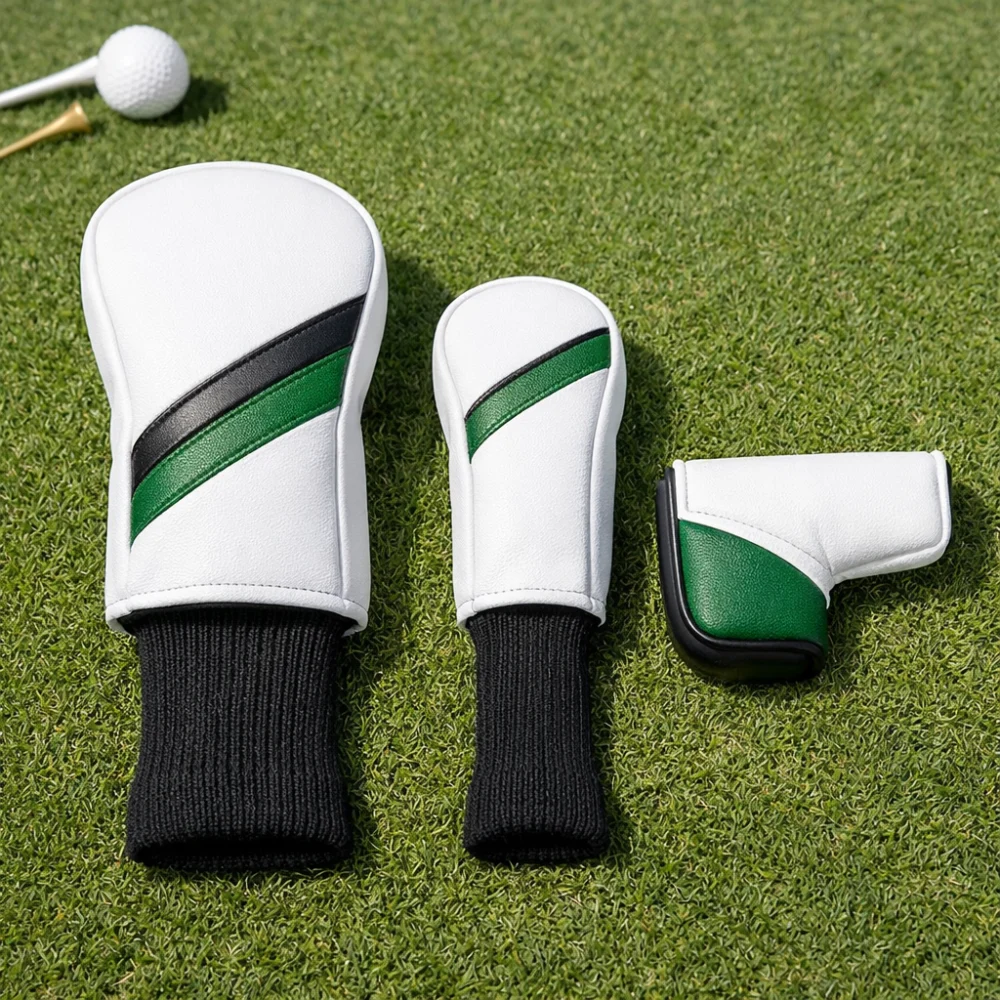
The most important decision is usually which club the cover is for. Driver covers are often larger, fairway wood covers are smaller, hybrid covers sit somewhere in between, and putter covers may be shaped differently depending on the putter head. The useful question is not just whether a cover looks right, but whether it is meant for that club shape and will be easy to live with in your bag.
Fit versus convenience
A tighter cover can feel more secure, but it may take more effort to remove and replace. A looser or softer design can be quicker to use, but it may not stay put as confidently when the bag is moved around. Think about whether you want maximum convenience, a more secure hold, or a middle ground.
Material and finish
Golf club head covers come in different finishes, and the material can affect both durability and handling. Some buyers prefer a simple, low-maintenance look, while others want a softer or more decorative finish. Check how the cover is described, especially if you want something that is easier to wipe clean or that matches the rest of your bag.
Protection for transport and storage
If your clubs spend a lot of time in a car boot, locker or travel case, protection may matter more than looks. In that case, look for a cover that gives enough coverage for the club head and sits securely enough to reduce rubbing against other clubs. If your clubs stay in one bag most of the time, you may prioritise quicker access instead.
Types and variants
Within this category, the main differences are usually between covers for specific club types rather than radically different product classes. The most common distinctions are:
- Driver head covers for larger club heads and maximum top-of-bag visibility.
- Fairway wood covers for smaller wood heads that still need a secure fit.
- Hybrid covers for clubs that sit between woods and irons in shape and size.
- Putter covers for putter heads, which may have different shapes depending on the putter style.
Some buyers want matching covers across several clubs, while others only need to replace one lost or worn cover. The main limitation is that a cover designed for one club type may not be a sensible substitute for another.
Who needs what?
| Buyer need | What to prioritise | Why |
|---|---|---|
| Replacing a lost cover | Exact club type and secure fit | The main aim is compatibility with the club you already own |
| Protecting clubs in regular transport | Coverage, retention and durability | The cover needs to stay in place and help reduce bag contact |
| Keeping a matching set | Consistent style across several covers | A coordinated set can make the bag easier to organise visually |
| Fast club changes during play | Ease of removal and replacement | Convenience matters if you use and switch clubs often |
| Buying a gift | Clear club type and general style | A gift is safer when the intended club is obvious and the design is broadly suitable |
Common mistakes to avoid
- Buying by appearance alone. A cover can look suitable but still be wrong for the club shape.
- Assuming one size fits all. Golf club head covers vary by club type, so check the intended use carefully.
- Focusing only on looks. Style matters, but so do fit, retention and ease of use.
- Ignoring how the bag is used. If clubs are moved or transported often, a more secure fit may be worth prioritising.
Suitability and care considerations
Golf club head covers are generally straightforward products, but it still helps to think about how they will be used. If a cover is decorative, confirm that you are happy with the practical side as well as the appearance. If you want low effort ownership, choose a style that suits your normal routine and check any cleaning guidance on the product page.
Storage also matters: covers that are kept damp or compressed for long periods may not age as well, so a simple dry-down and proper storage routine can help them stay presentable for longer.
How to compare options efficiently
- Decide which club or clubs need covers.
- Choose between a single replacement and a matching set.
- Check fit, coverage and how secure the cover is likely to feel.
- Compare ease of use against the level of protection you want.
- Read the individual product page for any model-specific details before you buy.
Summary buyer decision checklist
- Is the cover made for the right club type?
- Will the fit feel secure enough for how you transport your clubs?
- Is it easy enough to remove and replace during normal use?
- Does the material and finish suit your preference and upkeep expectations?
- Are you buying one replacement or a matching set?
Frequently asked questions
Do I need head covers for every club?
Not necessarily. Many golfers prioritise woods, hybrids and putters because those club heads can be more exposed in the bag, but the right answer depends on your setup and preference. If you like a tidier bag or transport your clubs often, more covers may make sense.
How do I know if a head cover will fit?
Check which club type the cover is designed for and read the product details carefully. Fit can vary between driver, fairway wood, hybrid and putter covers, so the intended use is more important than the general style. If the listing gives model-specific notes, use those to guide your choice.
Are matching sets better than buying one at a time?
Matching sets are useful if you want a consistent look and a simpler way to organise your bag. Buying one at a time can be more practical if you only need to replace a single missing or worn cover. The better option depends on whether appearance or replacement convenience matters more.
What matters more: protection or convenience?
That depends on how you use your clubs. If your bag is moved frequently or packed tightly, protection and secure fit may be the priority. If you swap clubs a lot, you may prefer a cover that is quicker to remove and replace.
Can one cover work for different club types?
Sometimes a cover may seem flexible, but it is usually better to choose one designed for the specific club type. That gives you a better chance of a sensible fit and less hassle in daily use. If a listing suggests broad compatibility, still check the details carefully.

