
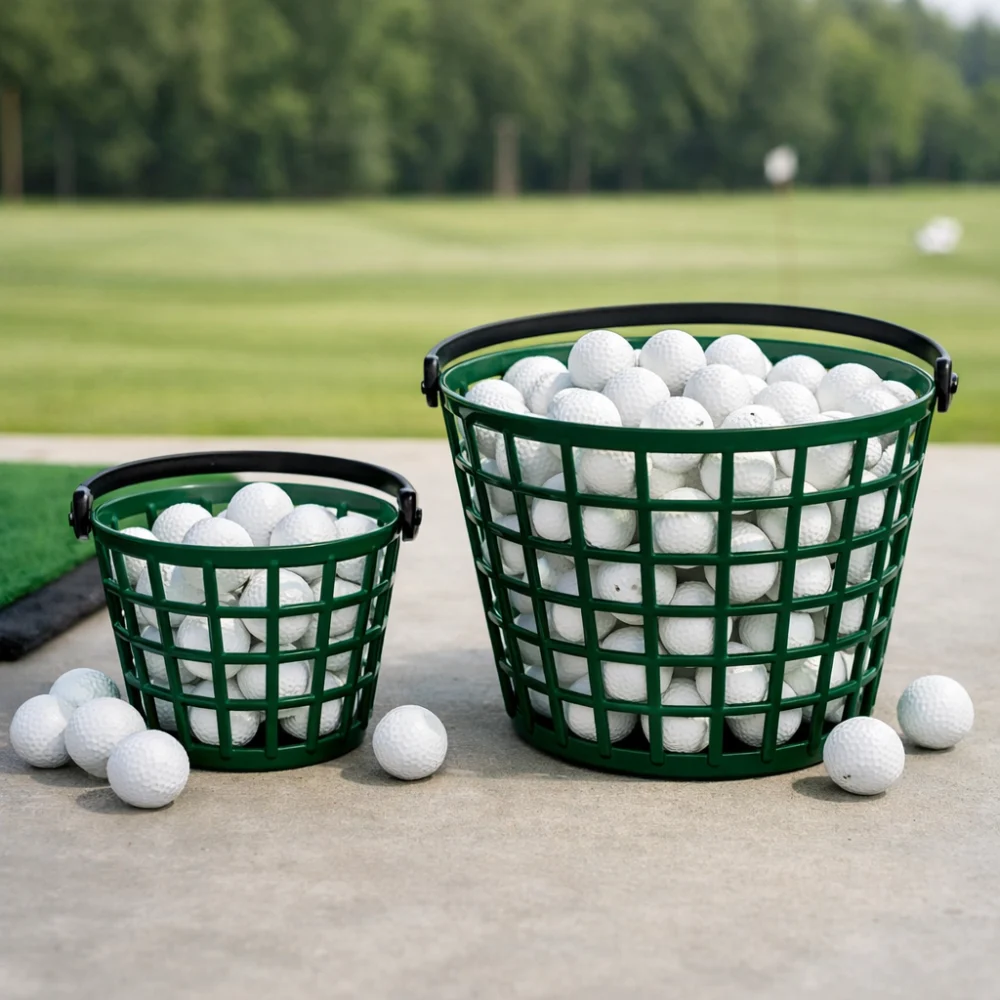
Golf range baskets are simple carrying and storage containers for golf balls, used by driving ranges, practice facilities and golfers who want a tidier way to move balls between sessions. The main buying decision is usually not about appearance, but about capacity, handling and how the basket will be used day to day.
If you are comparing options, it helps to think first about where the basket will live and how often it will be carried. A basket that is fine for occasional practice may feel awkward if it is moved frequently, while a more robust design can be worth it if you handle balls in larger volumes.
This guide focuses on choosing the right type of golf range basket rather than on accessories or other driving range equipment. Specifications vary by model, so always check the individual product page before buying.
What should you look for in a golf range basket?
The best starting point is to match the basket to how you will use it: light storage, regular transport or repeated range use. After that, compare capacity, handle design, material and overall ease of carrying. The main trade-off is usually between convenience and sturdiness, so choose the balance that fits your routine rather than assuming a larger or heavier basket is automatically better.
| Feature | What it means | Why it matters | What to check |
|---|---|---|---|
| Capacity | How many golf balls the basket is intended to hold | Affects how much you can move or store at once | Check the stated capacity and whether it matches your practice volume |
| Handle design | The way the basket is carried or lifted | Changes comfort, grip and ease of movement | Look for a handle style that seems practical for your hands and usage |
| Material and build | The construction of the basket itself | Influences durability and how confidently it handles regular use | Review the product description for material and construction details |
| Shape and stackability | How the basket sits, stores or nests when not in use | Can matter if you have limited storage space | Check whether the shape suits your storage area and transport method |
| Intended use | Whether it is mainly for storage, carrying or range operations | Some baskets suit occasional use better than frequent handling | Match the basket to the setting it will be used in most often |
Key decision criteria
Capacity
Capacity is one of the most important differences between baskets. A smaller basket may be easier to handle and store, while a larger one can reduce the number of trips during practice or collection. The right choice depends on whether you want a personal practice basket or something closer to a range-working container.
Handle and carrying comfort
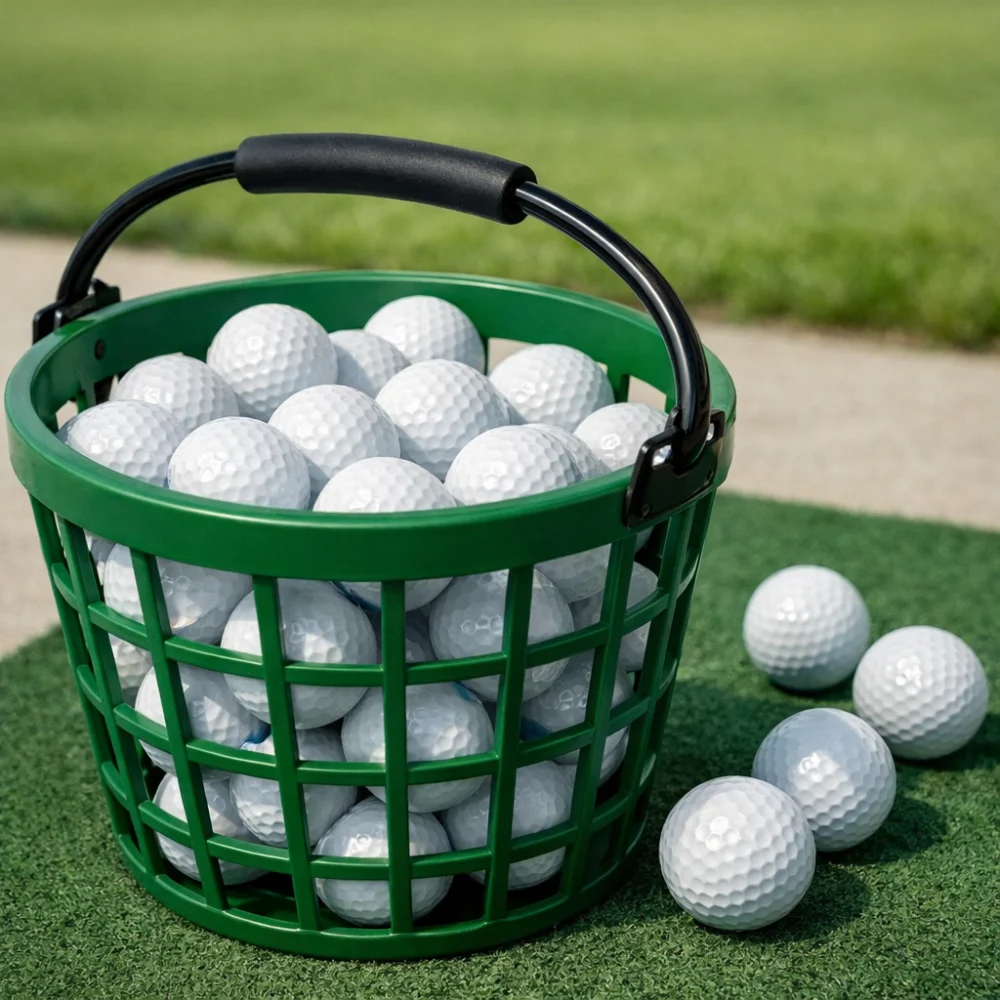
The handle is worth checking carefully because it affects how easy the basket is to lift when full. A comfortable grip matters more if you will carry the basket repeatedly or move it over a longer distance. If you mainly keep balls in one place, the handle may be less important than the basket’s overall stability.
Material and durability
Golf range baskets are often used in environments where they may be lifted, set down and stored frequently. A more durable construction can be useful if you expect regular use, but it may also mean more weight or a firmer feel in the hand. If the basket will stay indoors or be used only occasionally, a lighter option may be perfectly adequate.
Storage and organisation
Some buyers need a basket that is easy to stack, tuck away or keep beside a hitting area. Others care more about quick access than compact storage. Think about whether the basket needs to fit a shelf, a cupboard, a vehicle boot or a busy practice area.
Product types and variants
Within this category, the main differences are usually size, material and handling style rather than radically different product formats. That means the choice is less about finding a completely different type and more about selecting the right balance of capacity and portability.
Smaller baskets can suit light personal use or limited storage space. Larger baskets are more practical where balls are gathered or transported in bigger quantities. Metal baskets or heavier-duty styles may suit demanding use, while simpler containers can be enough for occasional practice or organisation.
Which basket suits which buyer?
| Buyer need | Features to prioritise | Main trade-off |
|---|---|---|
| Occasional home practice | Simple handling, manageable size, straightforward storage | May offer less capacity than range-focused options |
| Frequent practice sessions | Capacity, comfortable handle, durable construction | May take up more space and be less convenient to store |
| Range or facility use | Robust build, practical carrying, easy emptying and moving | Often less concerned with compactness |
| Limited storage space | Compact shape, easy stacking or nesting | Smaller baskets may need more frequent refilling |
Common mistakes and misunderstandings
- Choosing only by size: a large basket is not automatically the most practical if it becomes awkward to lift when full.
- Ignoring the handle: the basket may look simple, but the handle design can make a big difference in everyday use.
- Assuming all baskets are interchangeable: some are better for storage, others for transport and repeated handling.
- Overlooking storage space: check where the basket will sit when not in use, especially if you plan to keep several together.
Safety and suitability caveats
Golf range baskets are straightforward items, but it still makes sense to check that the size and handling style suit the people who will use them. If a basket will be carried often, ease of grip and a sensible weight for the task matter more than appearance. For shared or facility use, it is also worth considering whether the basket is robust enough for repeated handling.
Maintenance, storage and lifespan considerations
General care is usually simple: keep the basket clean, store it where it will not be crushed or bent out of shape, and avoid unnecessary rough handling. If a basket is made for repeated use, its lifespan will depend heavily on how often it is lifted, loaded and stored. When comparing products, it helps to think about whether you want a low-maintenance basket for occasional use or a more hard-wearing option for regular practice.
How to compare options efficiently
- Decide whether the basket is for personal practice, storage or range use.
- Choose a capacity that matches how many balls you usually handle.
- Compare handle design, build and ease of carrying.
- Check whether the basket fits your storage space and routine.
- Read the individual product page for the exact specifications before buying.
Summary buyer decision checklist
- Does the capacity match how many balls you handle at once?
- Is the handle comfortable enough for the way you will carry it?
- Does the material and build suit frequent or occasional use?
- Will it fit your storage space when not in use?
- Is the basket intended for the kind of use you actually have in mind?
Frequently asked questions
Are golf range baskets only for driving ranges?
No. They are also useful for home practice, keeping balls organised and moving them between storage and hitting areas. The right choice depends on how often you will carry them and how many balls you want to hold.
What matters more: capacity or handle design?
Both matter, but in different ways. Capacity affects how much the basket holds, while handle design affects how easy it is to carry when full. If you expect frequent movement, handle comfort can matter just as much as size.
Should I choose a metal basket?
Metal can suit buyers who want a sturdier feel and expect regular use, but the right choice depends on the individual design and how you plan to use it. Some lighter or simpler baskets may be enough for occasional practice or storage.
How do I know what size basket to buy?
Think about how many balls you normally use in one session and how much weight or bulk you are comfortable carrying. A bigger basket reduces refills, but it can also be less convenient to move or store.
Do golf range baskets need special care?
Usually not. Basic cleaning and sensible storage are typically enough, although the amount of wear they experience will affect how long they stay in good condition. If you use one often, it is worth choosing a basket that feels appropriate for repeated handling.
Can one basket suit both storage and carrying?
Sometimes, yes, but not every basket does both equally well. A design that is compact for storage may be less comfortable to carry, while a more substantial basket may be better in use but harder to tuck away. It helps to decide which task matters most.

