
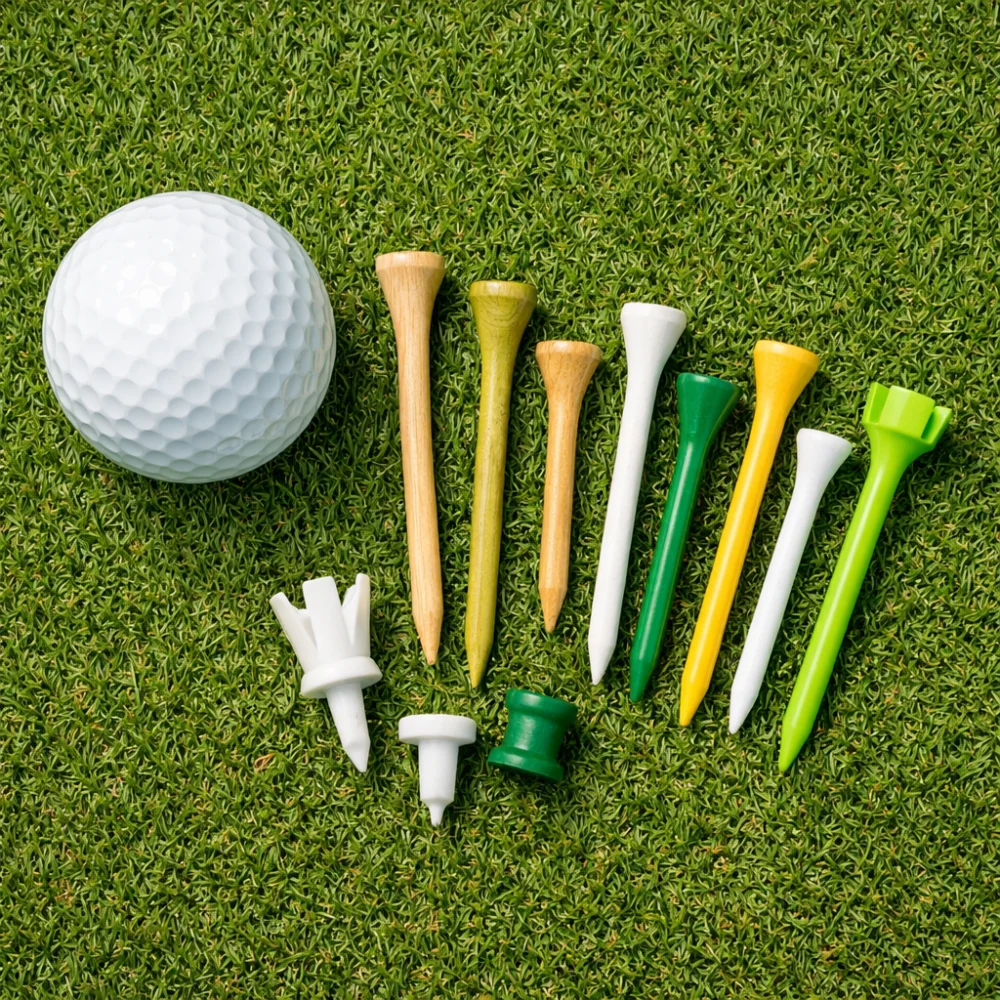
Golf tees are small, simple accessories, but they still affect how easy it is to set up a shot and how consistent that setup feels. The right choice depends on the clubs you use, the tee height you prefer and whether you value convenience, durability or a more traditional feel.
This guide keeps the choice practical. It explains the main tee types, the features that are worth checking and the trade-offs that matter when comparing options.
What should I look for when buying golf tees?
Start with the tee style, the height you need and the material. For many buyers, the main choice is between a more traditional wooden tee, a reusable plastic tee or a bamboo option that sits somewhere between the two in feel and practicality. The best starting point is the tee that suits your usual clubs and the height you most often set up.
Specifications vary by model, so always check the individual product page before buying.
| Feature | What it means | Why it matters | What to check |
|---|---|---|---|
| Material | Wood, bamboo or plastic are the most common choices. | It affects feel, durability and how disposable or reusable the tee feels in use. | Choose the material that matches your preference for tradition, convenience or reuse. |
| Height | The usable tee length and the amount of height it presents above the ground. | Different clubs and playing preferences call for different setup heights. | Check the listed length and think about the clubs you tee off with most often. |
| Head design | Standard pointed tees and shaped or “castle” styles. | The shape can influence how quickly you set up and how the ball sits on the tee. | Look at the top shape and decide whether you want a classic or more guided setup. |
| Pack size | How many tees are included. | Useful if you lose tees regularly or want fewer repeat purchases. | Compare pack quantity against how often you play and replace tees. |
| Intended use | General play, practice or a specific preference such as easier visibility. | Helps narrow the choice to the tee style that fits your routine. | Check the product description for the intended use or design emphasis. |
Key decision criteria
Material and feel
Material is usually the first practical choice. Wooden tees are familiar and straightforward, while bamboo tees may appeal to buyers who want a natural feel with a slightly different balance of sturdiness and flexibility. Plastic tees are often chosen for reuse and convenience. The trade-off is simple: a more traditional tee may feel familiar, while a more durable or reusable option may suit frequent play better.
Height and length
Tee length matters because it affects the setup you can achieve before the shot. Some players prefer a longer tee for more height, while others want a shorter option for certain clubs or a lower presentation. If you are unsure, compare the stated length with how you usually tee up, rather than assuming all golf tees serve the same purpose.
Shape and top style
Some tees have a plain pointed design, while others use a shaped top that helps position the ball. This is often a matter of preference rather than a dramatic performance difference. A simpler shape may suit golfers who like a familiar routine, while a shaped design can appeal to those who want a more consistent setup feel.
Pack quantity
Pack size is worth checking if you play often, practise regularly or tend to lose tees. A larger pack can be convenient, but only if you will use it before the tees get damaged or misplaced. For occasional players, a smaller pack may be easier to keep track of.
Product types and variants
Within this category, the main variants are straightforward:
- Wooden tees for a classic, familiar option.
- Bamboo tees for buyers who want a natural material with a similar overall role.
- Plastic tees for golfers who prefer a reusable or more durable-feeling option.
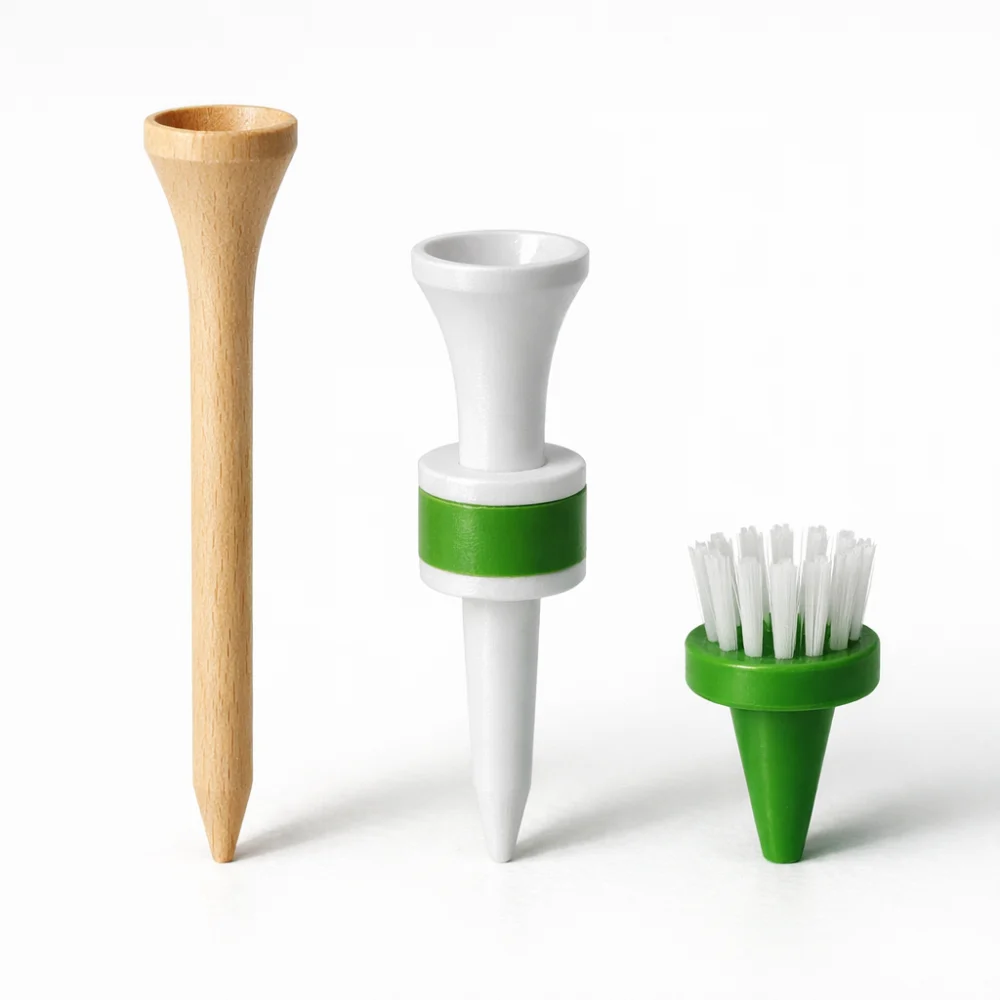
- Shaped or castle-style tees for a different ball-resting design and simpler repeat setup.
Each type can suit a different routine, but none is automatically better for everyone. The right choice depends on how you like to tee up, how often you play and whether you prefer disposable or reusable accessories.
Who each type may suit
| Buyer need | What to prioritise | Why it helps |
|---|---|---|
| Beginner | Straightforward shape, clear length and easy pack size. | Makes it simpler to repeat the same setup while learning. |
| Frequent player | Durability, pack quantity and a style that suits regular use. | Helps reduce how often you need replacements. |
| Traditional feel | Wood or bamboo and a simple tee profile. | Offers a familiar setup without extra design features. |
| Convenience-led buyer | Reusable plastic or a larger pack. | Useful if you want fewer replacements or less worry about running out. |
| Gift buyer | A broadly useful pack in a popular style and size. | More likely to suit a range of golfers without being overly specific. |
Common mistakes and misunderstandings
- Choosing by appearance alone: colour or packaging can be appealing, but the real difference is usually material, length and shape.
- Assuming all tees are interchangeable: tee height and style can matter more than expected, especially if you want a repeatable setup.
- Ignoring pack size: a tee that looks inexpensive may be less convenient if it comes in a very small quantity.
- Overlooking the club you use most: if you usually tee off with the same type of club, that should guide the length you compare.
Safety and suitability caveats
Golf tees are low-risk accessories, but suitability still matters. Check that the tee style and length suit how you play, and avoid assuming a product is right for every club or surface. If you want a very specific tee height or a reusable design, confirm that the product page states it clearly before buying.
Maintenance, storage and lifespan considerations
Most golf tees need very little care, but they can still be lost, bent or broken through normal use. Wooden and bamboo tees are often treated as consumable items, while plastic tees may last longer if they are not damaged. Keeping them in a small pouch or pocket compartment can make it easier to carry them and avoid unnecessary replacements.
How to compare options efficiently
- Decide whether you want wooden, bamboo or plastic tees.
- Check the length or style against the clubs and setup you use most often.
- Compare pack quantity if you play regularly or lose tees often.
- Look at the top shape if you want a classic or more guided feel.
- Read the individual product page for any model-specific details before you choose.
Frequently asked questions
Are wooden, bamboo and plastic golf tees very different?
They serve the same basic purpose, but they can feel different in use. Wooden tees are the most familiar to many golfers, bamboo offers a similar natural feel, and plastic may appeal if you want something more reusable. The right one usually comes down to preference and how often you play.
How do I know what length of golf tee to buy?
Think about the height you usually like the ball to sit at when you tee off. If you are unsure, compare the listed length with your current tees or the type of club you use most often. That is usually more reliable than choosing by appearance alone.
What is a castle-style golf tee?
A castle-style tee has a shaped top that helps present the ball in a consistent way. Some golfers like the more repeatable setup, while others prefer a plain tee. It is mainly a matter of preference, not a universal upgrade.
Should I buy golf tees in a large pack?
If you play often or regularly misplace tees, a larger pack can be convenient. For occasional players, a smaller pack may be easier to manage and store. The practical question is how quickly you are likely to use them.
Do golf tees wear out?
Yes, especially wooden and bamboo tees, which can break or splinter with use. Plastic tees may last longer, but they are not indestructible. How long they last depends on how often you play and the conditions you use them in.
Are golf tees interchangeable across different clubs?
They are broadly interchangeable as accessories, but the most suitable length and style can vary with the club and your preferred setup. A tee that works well for one shot may not feel ideal for another. Check the product details and think about your usual routine.

