
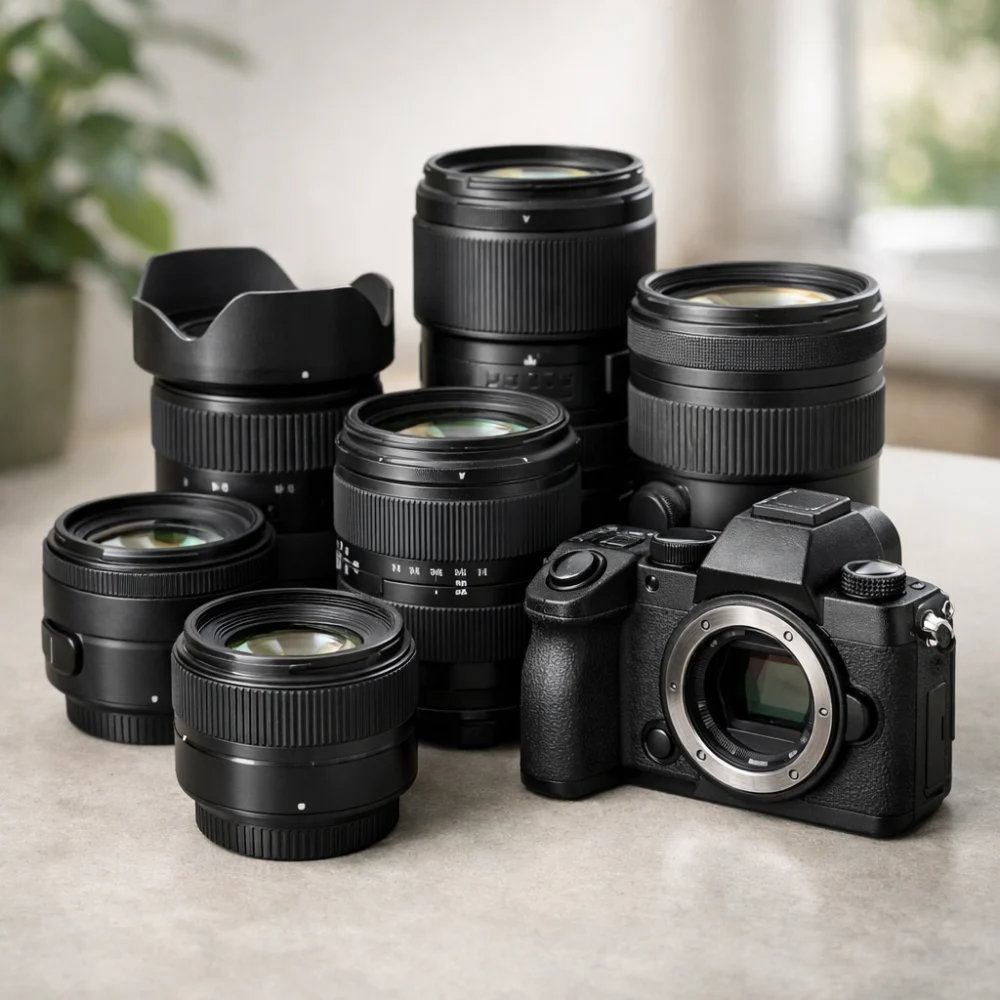
If you are choosing a Nikon camera lens, the first question is usually not which lens is “best”, but which lens matches your camera and the way you shoot. Nikon lenses cover different mounts, focal lengths and aperture ranges, so the right choice depends on whether you want a general-purpose zoom, a portrait prime, a wide-angle option or a telephoto lens for distant subjects.
This guide focuses on the buying decisions that matter most before you compare individual product pages. It is designed to help you avoid compatibility mistakes, understand the practical trade-offs and shortlist the lens type that fits your camera and your photography habits.
What should you look for first in a Nikon lens?
Start with compatibility, then move to the kind of shooting you do most often. The most important trade-off is usually between flexibility and image quality preferences, with zoom lenses offering range and prime lenses often giving a simpler, lighter choice for a fixed perspective. Aperture, focal length and stabilisation can all influence how a lens feels to use, but they only matter once the lens is suitable for your camera mount. Specifications vary by model, so always check the individual product page before buying.
| Feature | What it means | Why it matters | What to check |
|---|---|---|---|
| Mount compatibility | Whether the lens fits your Nikon camera body | The lens must suit the camera mount before anything else | Check the mount type and whether an adapter is needed |
| Focal length | The angle of view and how close subjects appear | It affects framing, working distance and subject choice | Compare whether you need wide, standard, portrait or telephoto reach |
| Maximum aperture | How wide the lens can open | It influences low-light use and depth of field control | Look at the aperture range and whether it is fixed or variable |
| Zoom or prime | Flexible framing versus a single fixed focal length | It changes convenience, size and shooting style | Decide whether adaptability or a simpler, more focused setup suits you |
| Stabilisation | Lens-based shake reduction, where included | It may help with hand-held shooting in some situations | Check whether the specific lens includes stabilisation and whether your camera body already does |
| Size and weight | How large and heavy the lens is to carry and handle | It affects everyday use, balance and travel comfort | Consider whether you will carry it often or use it mainly on a tripod |
Key decision criteria explained
1. Lens mount and camera compatibility
This is the first filter because a lens that does not fit your camera is not a practical option. Nikon lenses may be made for different camera mounts, and some buyers also consider adapters where appropriate. The key point is to confirm that the lens is intended for your camera body rather than assuming all Nikon-branded lenses will behave the same way.
If you are unsure, compare the lens mount mentioned on the product page with your camera model. When an adapter is involved, it is especially important to read the individual listing carefully because not every feature or function is guaranteed to work in the same way across combinations.
2. Focal length and shooting distance
Focal length shapes the subject framing more than many first-time buyers expect. A shorter focal length gives a wider view, which can suit landscapes, interiors and general use, while a longer focal length brings distant subjects closer and is often chosen for wildlife, sport or tighter portraits.
Think about where you usually stand, how much of the scene you want to include and whether you need reach or flexibility. A lens that seems versatile on paper may still feel awkward if its focal-length range does not match your typical subject matter.
3. Aperture and low-light use
A lens with a wider maximum aperture can be useful where light is limited or where you want stronger background blur control. This does not automatically make every wide-aperture lens the right choice, because those lenses can also be larger, heavier or more expensive.
For some buyers, a variable-aperture zoom is a sensible compromise because it offers range in a more manageable package. For others, a faster prime lens may be a better fit if a particular look or low-light handling matters more than zoom convenience.
4. Zoom versus prime
Zoom lenses give you more framing flexibility without changing lenses, which is helpful for travel, events and general use. Prime lenses have one focal length, so they ask you to move more, but they can suit buyers who want a simpler setup and a more deliberate way of shooting.
The better choice depends on whether you value convenience or a more focused shooting style. Neither is automatically superior; the right answer is the one that fits how you work.
5. Stabilisation and handling
Some lenses include stabilisation to help reduce the effect of camera shake in certain situations. That can be useful for hand-held shooting, but it is only one part of the decision and it is not a substitute for choosing the right focal length or learning stable hand-holding technique.
Also consider how the lens feels on the camera. A lens that is technically suitable can still be less appealing if it is too heavy for regular use or unbalanced for your body and shooting style.
Common Nikon lens types and how they are used
Nikon lens ranges often include a mix of everyday zooms, wide-angle choices, portrait-friendly primes and telephoto options. The main question is not simply what the lens is called, but what role it is meant to play in your kit.
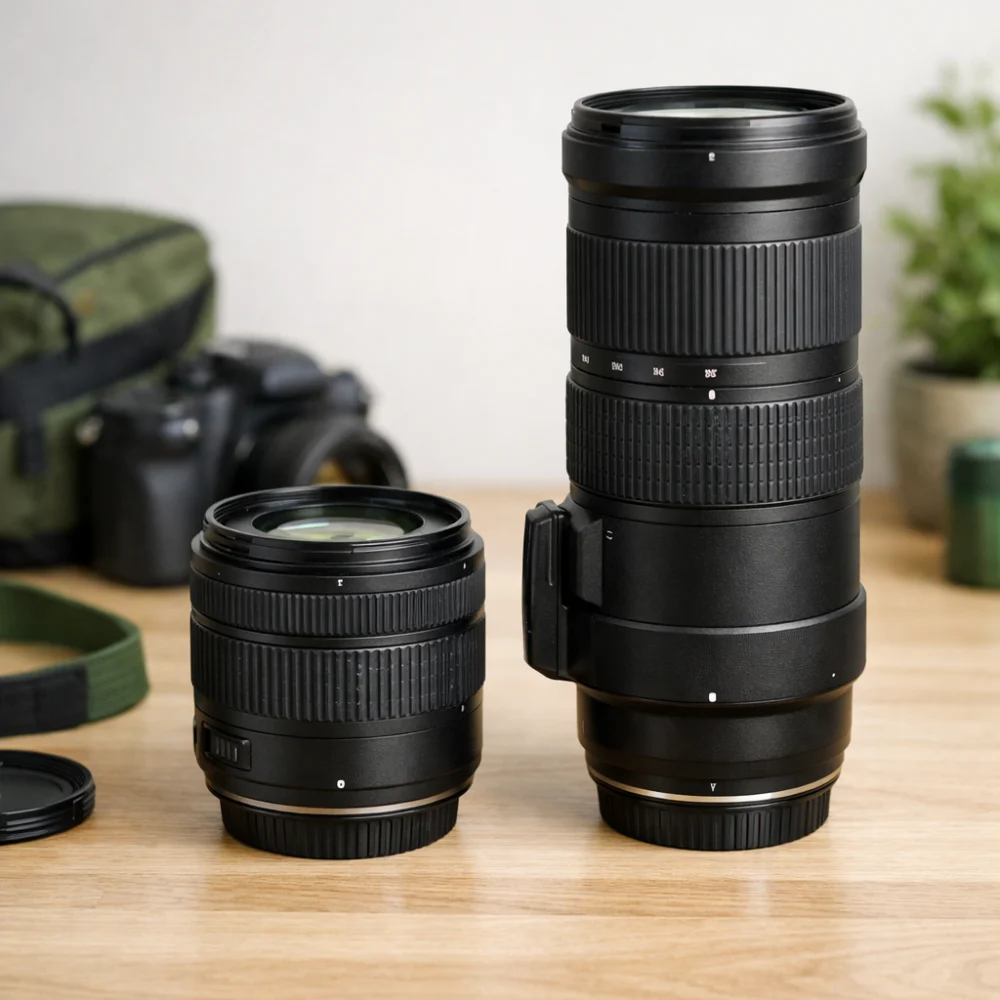
- General-purpose zooms: Useful if you want one lens to cover several everyday situations. The trade-off is that they may not be as specialised as a fixed-focal-length lens.
- Wide-angle lenses: Suited to landscapes, architecture and tighter spaces. The main limitation is that they are less suitable when you need reach.
- Standard or normal lenses: Often chosen for natural-looking framing and everyday shooting. They may be a good all-round starting point if you are building a kit slowly.
- Telephoto lenses: Helpful when subjects are far away or when you want stronger subject isolation. They are usually less convenient to carry and may need more care with support and framing.
- Prime lenses: A fixed focal length can be attractive for portraits, low-light use and a lighter kit. The limitation is reduced framing flexibility.
Which lens suits different buyers?
| Buyer need | Lens characteristics to prioritise | Why this matters |
|---|---|---|
| First lens for everyday use | Compatibility, versatile focal length, manageable size | A practical all-round option is usually easier than a highly specialised lens |
| Portrait shooting | Suitable focal length, aperture that supports subject separation | Framing and background control are often more important than zoom range |
| Travel and family use | Flexible zoom range, moderate weight, straightforward handling | You may need one lens to cover changing situations quickly |
| Wildlife or sport | Longer focal length, handling that suits hand-held or supported use | Reach matters more than wide-angle flexibility |
| Low-light indoor use | Wider aperture, suitable focal length, comfortable balance | Light gathering and ease of use become more important |
Common mistakes to avoid
- Checking the lens type before checking the mount: A lens can look suitable on paper but still be the wrong fit for your camera.
- Assuming zoom range is the only thing that matters: Aperture, weight and handling can change how useful a lens feels day to day.
- Choosing too much reach too early: Very long lenses can be harder to use if you mainly photograph nearby subjects.
- Overlooking size and weight: A lens that stays at home because it feels cumbersome is rarely a good value choice.
- Buying for a single feature without checking the whole listing: Useful extras vary by model, so always read the individual product page carefully.
Safety and suitability caveats
Lens choice is mainly about compatibility and practical use, but it is still worth checking how you plan to carry and use the lens. A larger or heavier lens may be less convenient for casual outings, and an adapter-based setup may need more careful checking than a direct fit. If you are buying for a child, a gift or a beginner, a simpler lens can be easier to live with than one that only suits a narrow use case.
Maintenance, storage and lifespan considerations
Most camera lenses benefit from careful storage, clean handling and protection from dust and knocks. Some lenses may use accessories such as front and rear caps, filters or cases, and those practical additions can affect how easy the lens is to keep ready for use. If you are comparing options, think about whether the lens seems convenient enough to look after properly, not just whether it offers the right focal length.
How to compare options efficiently
- Confirm the lens fits your Nikon camera body or intended adapter setup.
- Decide the main job it needs to do, such as everyday use, portraits, wide scenes or distant subjects.
- Compare focal length, aperture and whether a zoom or prime makes more sense for that job.
- Check size, weight and any stabilisation or handling features that affect real-world use.
- Read the individual product page carefully before deciding, because model details can vary.
Summary buyer decision checklist
- Does the lens fit your camera mount?
- Does the focal length suit your main subjects?
- Is the aperture appropriate for your light levels and look?
- Would a zoom or prime suit your shooting style better?
- Is the lens size and weight comfortable for how you plan to use it?
- Have you checked the individual product page for model-specific details?
Frequently asked questions
How do I know if a Nikon lens will fit my camera?
Check the mount information on the lens product page and compare it with your camera body. Do not assume that every Nikon lens fits every Nikon camera in the same way, especially where adapters are involved.
Is a zoom lens better than a prime lens?
It depends on how you shoot. A zoom is more flexible, while a prime can be simpler and may suit buyers who want a fixed focal length for a particular kind of photography.
What does aperture change in real use?
A wider maximum aperture can help in lower light and can give you more control over background blur. It can also affect lens size, weight and cost, so it is a trade-off rather than a free upgrade.
Do I need stabilisation in a lens?
Not always. It can be useful for some hand-held shooting, but the value depends on the focal length, your camera body and how you normally use the lens.
What kind of lens is best for beginners?
Many beginners do well with a versatile lens that matches their camera and covers a useful range of everyday subjects. The most important thing is that it feels straightforward enough to use regularly.
Should I choose a lighter lens if I travel a lot?
Often, yes. A lens that is comfortable to carry is more likely to be used, which can matter more than having the broadest specification on paper.
Can I rely on product titles alone when comparing lenses?
No. Product titles are useful as a starting point, but the full product page is where you should check the mount, focal length, aperture and any model-specific details.

