
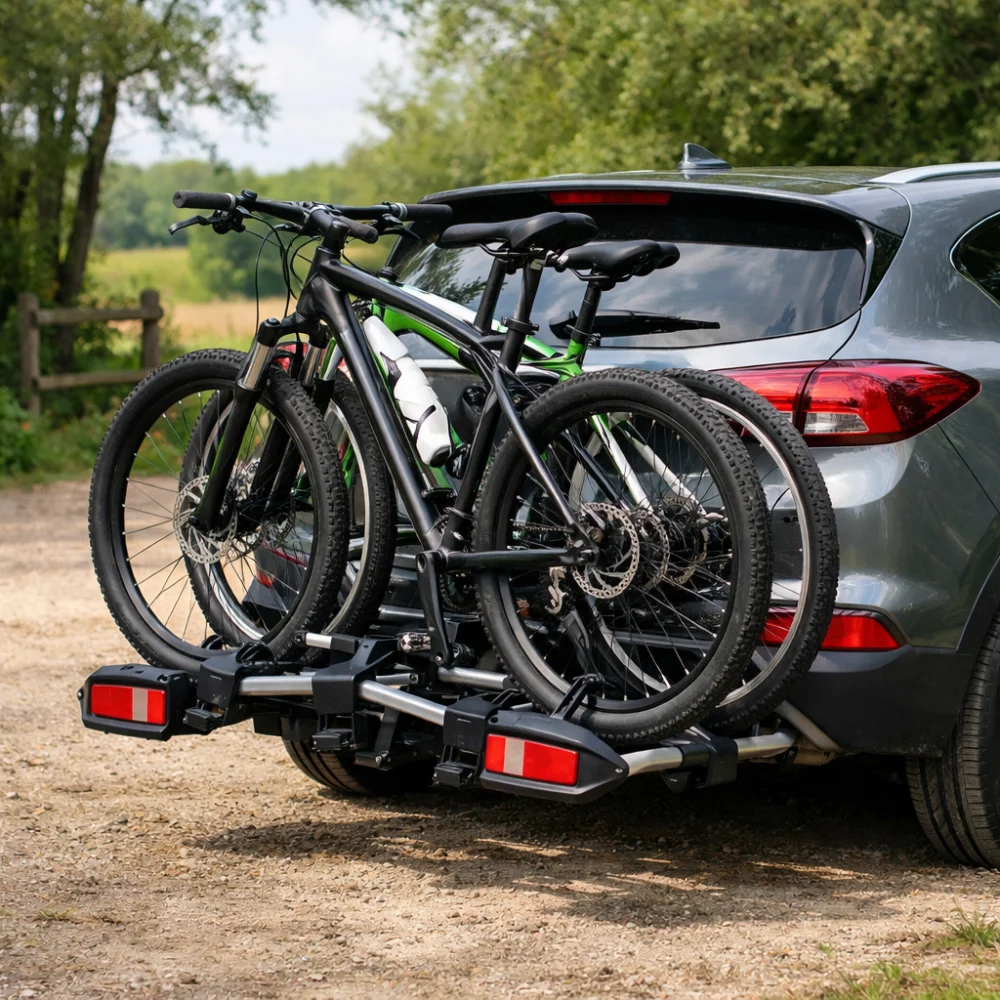
Car bike racks are a practical way to carry bicycles when you do not want them inside the vehicle or you need more boot space for luggage. The right choice depends less on style and more on how your car is set up, how many bikes you want to carry and how often you expect to load and unload them.
Because fitting and use vary between rack types, it helps to compare the main features before you buy rather than focusing only on how many bikes a rack claims to carry. A careful check of compatibility, access and bike security will usually make the decision much easier.
What should I look for in a car bike rack?
The best starting point is your vehicle and your bike. A towbar-mounted rack, roof rack or boot-mounted carrier can each work well, but they suit different cars and different levels of convenience. The main trade-off is usually between ease of use, access to the boot and the amount of fitting required.
Specifications vary by model, so always check the individual product page before buying.
| Feature | What It Means | Why It Matters | What To Check |
|---|---|---|---|
| Rack type | The mounting style, such as towbar, roof or boot. | Determines whether it suits your vehicle and how easy it is to use. | Vehicle fit, mounting points and whether the car already has the required equipment. |
| Bike capacity | How many bicycles the rack is designed to carry. | Affects family use, group trips and overall convenience. | Number of bikes, spacing between bikes and whether the rack still feels manageable when fully loaded. |
| Bike style compatibility | How well the rack suits different frame shapes and wheel sizes. | Some bikes are easier to secure than others. | How the bikes are held in place and whether additional adapters are needed. |
| Access to the car | Whether the boot or tailgate can still be opened with the rack fitted. | Important for luggage, day-to-day use and longer trips. | Whether the rack tilts, folds or blocks access. |
| Security features | Locks or other features that help deter theft of the rack or bikes. | Useful if the car is left parked in public places. | What is lockable, what is included and whether you need extra security for the bikes themselves. |
| Loading height | How high you need to lift the bikes to fit them. | Matters for heavier bikes and regular use. | Whether you are comfortable lifting bikes onto the car roof or prefer a lower loading position. |
Key decision criteria explained
Vehicle fit
The first question is simple: does the rack work with your car? Roof-mounted options depend on roof bars or roof-rack hardware, while towbar-mounted racks need a suitable towbar. Boot-mounted carriers can be more flexible, but they rely on the shape of the tailgate and the car body.
Check the product page carefully for stated fit guidance and any vehicle restrictions. If your car has spoilers, an unusual boot shape or fitted accessories at the rear, those details may affect what is suitable.
How many bikes you carry
Think about normal use rather than the occasional maximum. A larger-capacity rack can be helpful for families or mixed-use trips, but more bikes can also mean more weight, more contact points and more time spent loading.
If you only carry one bike most of the time, a compact rack may be easier to live with than a larger model that you rarely fill.
Ease of loading and unloading
Roof racks usually mean lifting the bike higher, which can be awkward with heavier bikes. Towbar racks are often easier at ground level, while boot-mounted systems can sit somewhere in between. The best option is the one you can use confidently without making every trip more complicated than necessary.
Consider how often you will remove the bikes, whether you park in tight spaces and whether you want a rack that can stay on the car between trips.
Access to the boot or tailgate
For many buyers this is a deciding factor. If you need regular access to luggage, shopping or camping gear, a rack that keeps the rear of the vehicle usable can be more practical. Some towbar-mounted carriers are designed to tilt or fold, while other styles may block access more often.
That convenience can be worth prioritising if the car is used for more than cycling trips.
Security and peace of mind
Look at what can be locked and what can be removed. Some buyers want simple deterrence for short stops, while others prefer stronger built-in security for longer parking periods. It is also sensible to consider how easy it is to remove the rack when not in use.
Do not assume a locking feature covers every part of the system. Check exactly what is secured by the lock and what is not.
Common rack types and who they suit
Towbar-mounted racks
These are often chosen by buyers who want easier loading and a lower carry height. They can suit regular cyclists, family use and heavier bikes, depending on the model. The main limitation is that your vehicle needs the right towbar setup.
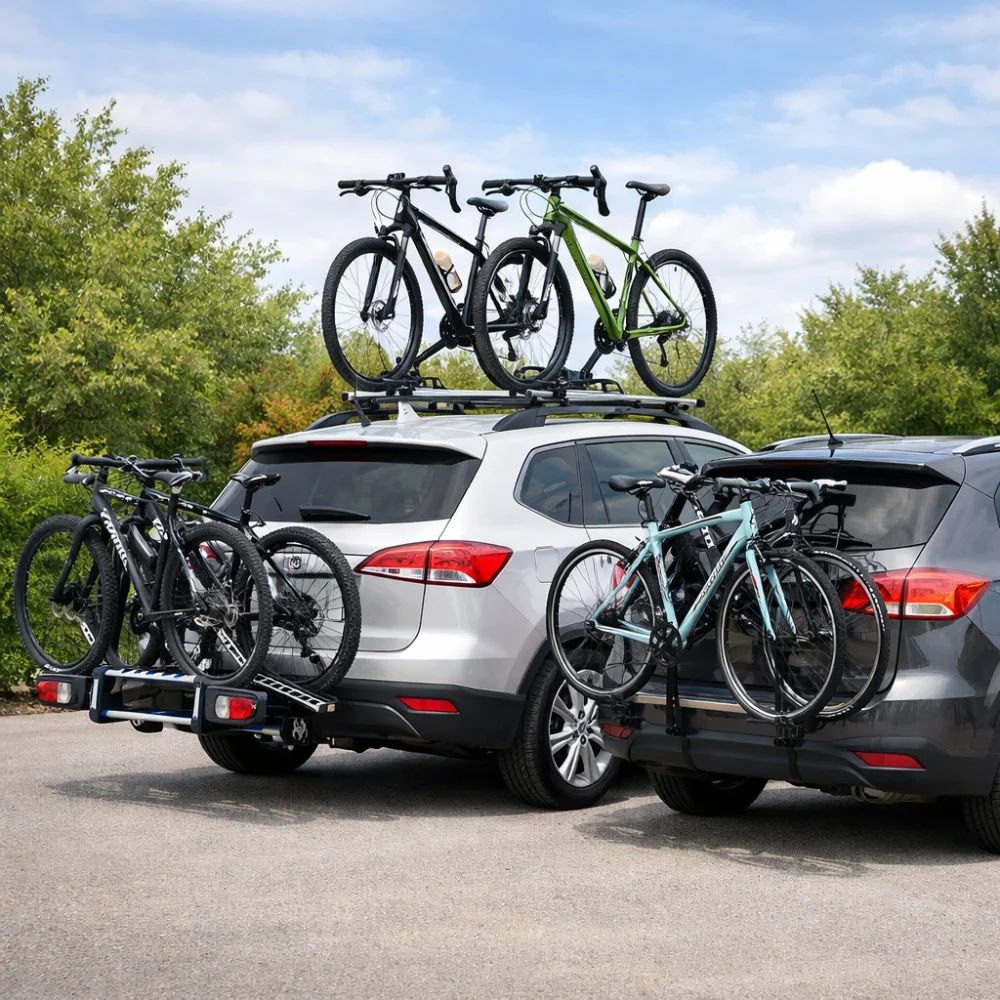
Roof-mounted racks
Roof systems keep the rear of the car more accessible and can leave the boot clear. They may suit buyers who already have roof bars and do not mind lifting the bike higher. The main drawback is the extra lifting and the increased overall vehicle height.
Boot-mounted racks
These can be appealing if you want a more flexible option and do not have a towbar. They may suit occasional use, but they depend heavily on vehicle shape and fitting method. They are worth checking carefully for compatibility before purchase.
Which rack suits different buyers?
| Buyer need | What usually matters most | Why |
|---|---|---|
| Family trips | Bike count, stability and easy loading | More than one bike needs secure spacing and manageable fitting. |
| Occasional leisure use | Simple fitting and storage | A rack that is easy to remove and store may be more convenient than a more permanent setup. |
| Regular cycling days out | Quick access and practical handling | Frequent use makes loading height and rear access more important. |
| Smaller cars | Fit, clearance and rear access | Space around the vehicle can be more limited, so compatibility matters more. |
| Heavier bikes | Loading height and secure support | It is usually easier to manage a lower-loading system. |
Common mistakes to avoid
- Buying by bike count alone: a rack that carries enough bikes still needs to suit your vehicle and your loading routine.
- Overlooking boot access: if you often need the rear of the car, this can be more important than a small difference in capacity.
- Assuming all bikes fit equally well: frame shape and wheel arrangement can affect how easy a bike is to secure.
- Ignoring roof height or lifting effort: what seems manageable in a shop can become inconvenient on a wet roadside or in a car park.
- Not checking what is included: some useful items may be part of the rack, while others may need to be added separately.
Safety and suitability caveats
A car bike rack should always be chosen with the vehicle, the bikes and the journey in mind. Check the individual product information for fit guidance, load limits where stated and any notes about bike style or vehicle restrictions. Do not rely on a visual guess, especially if the car has a spoiler, unusual rear shape or additional accessories fitted.
It is also sensible to think about road use and parking conditions. A secure fit, clear rear visibility where relevant and sensible loading are all part of a better buying decision.
Maintenance, storage and ownership considerations
Bike racks are often straightforward to own, but they still benefit from occasional checks. Keep an eye on moving parts, fixings and contact points, especially if the rack is used frequently or stored outdoors. Dirt, road grime and weather exposure can all affect how easy the rack is to handle.
If you plan to remove the rack between trips, consider how easy it is to store and lift. A bulky rack that is awkward to move may be less convenient than a simpler design, even if both would carry the bikes you need.
How to compare options efficiently
- Start with your vehicle: confirm whether you need a towbar, roof bars or a boot-mounted design.
- Work out how many bikes you normally carry and whether you need to access the boot at the same time.
- Compare how the bikes are loaded, supported and secured.
- Check the product page for fit notes, restrictions and any included security features.
- Choose the rack that balances convenience, compatibility and how often you will really use it.
Summary buyer decision checklist
- Does the rack suit your vehicle type and any existing fittings?
- Will it carry the number of bikes you normally transport?
- Can you load and unload it comfortably?
- Do you need boot or tailgate access while it is fitted?
- Does the security level feel appropriate for where you park?
- Have you checked the individual product page for any model-specific restrictions?
Frequently asked questions
Do I need a towbar for a car bike rack?
Not always. Towbar-mounted racks need a towbar, but roof-mounted and boot-mounted options may suit different cars. The key is to match the rack type to the equipment already fitted to your vehicle.
Is a roof bike rack harder to use than other types?
It can be, mainly because you need to lift the bike higher. That is not a problem for everyone, but it is worth considering if you carry bikes often or if the bikes are heavy. Many buyers choose roof racks for the access they leave at the rear of the car, not because they are the easiest to load.
Can one rack fit every car?
No single rack suits every car, so compatibility is one of the most important checks. Vehicle shape, fittings and rear features all matter. Always follow the product page guidance rather than assuming a general fit.
What matters more, bike capacity or rack type?
Both matter, but rack type usually comes first because it determines whether the rack suits your car. After that, choose the capacity that matches how many bikes you normally carry. A rack that is easy to fit and use may be a better everyday choice than a larger one that is awkward.
Are towbar racks always better?
Not necessarily. They are often convenient and easier to load, but they only make sense if your car already has the right towbar setup. Roof and boot-mounted racks can be the more practical choice for some vehicles and some budgets.
Should I choose a rack for one trip or for regular use?
Regular use usually justifies a more convenient and easier-to-handle design. If you only travel with bikes occasionally, you may prefer something simpler to store and fit. Thinking about how often you will use it is often the quickest way to narrow the options.

