
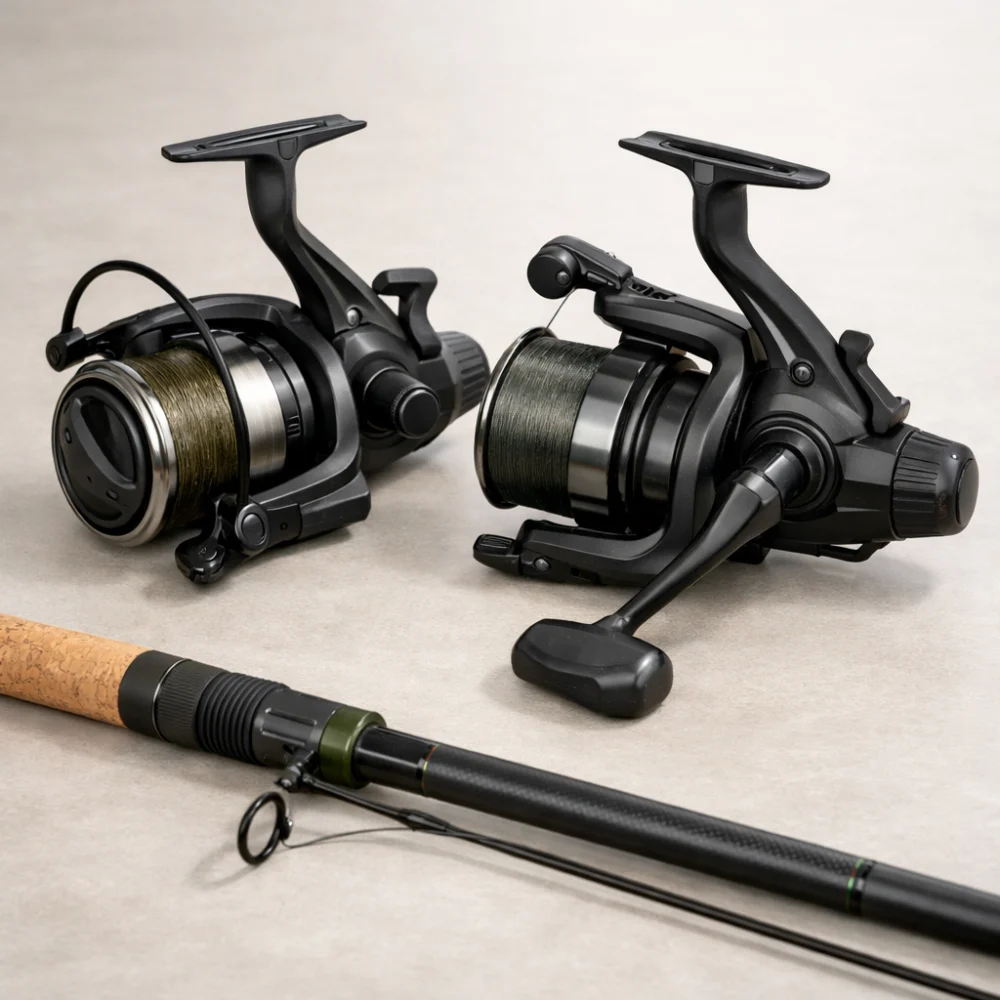
Carp fishing reels are chosen as much for control and comfort as for capacity. The right reel should suit the way you fish, the line you plan to use and the size of the venues you fish most often.
If you are replacing a worn reel or buying your first one, the main challenge is separating useful features from marketing language. This guide focuses on the decisions that usually matter most, so you can compare options with more confidence.
Specifications vary by model, so always check the individual product page before buying.
What should you look for in a carp fishing reel?
The best starting point is how the reel will feel and function with your rod, line and usual fishing approach. For many carp anglers, a smooth drag, sensible line lay and a spool style that matches the way they cast or bait-run are more important than extra extras. A reel that is too large, too small or awkward to use can make the whole setup feel less balanced.
Think about the type of fishing you do most often, then compare the reel’s spool design, retrieve feel and line management features. If you fish a range of venues, it can help to choose a reel with enough versatility to cover your normal situations without being overcomplicated.
| Feature | What it means | Why it matters | What to check |
|---|---|---|---|
| Spool design | The shape and style of the spool used for line storage and release | Influences casting feel, line control and how much line the reel can manage comfortably | Look for a spool style that suits your casting distance and the line you use |
| Drag or free-running system | The mechanism that controls tension when a fish takes line | Affects bite response and how much resistance the fish feels | Check whether the reel is front drag, rear drag or a baitrunner-style design |
| Line capacity | How much line the spool can hold | Important if you fish long range or use thicker line | Compare the capacity information against your preferred line type and diameter |
| Retrieve feel | The smoothness and resistance you feel when winding in | Can affect comfort during long sessions and the sense of control | Look for product details that mention handle style, bearings or smooth operation, if provided |
| Weight and balance | How heavy the reel is and how it balances on the rod | Helps determine all-day comfort and handling | Check whether the reel is likely to suit the rod length and class you use most |
Key decision criteria
Spool style and line management
In carp fishing, spool style affects more than appearance. A reel that lays line neatly and releases it predictably can make casting and fish playing feel more controlled. If you fish at distance, or use line that needs tidier management, spool design becomes more important than many buyers first realise.
Look for the spool description on the product page and think about whether you want a design aimed at easy casting, more compact use or a specific bait-running style. Do not assume a more dramatic-looking spool is automatically better; it still needs to match your fishing.
Drag type and adjustment
The drag system controls how the reel gives line under pressure. Some anglers prefer a firmer, more direct feeling, while others want a system that allows a smoother take. The right choice depends on how you like to set the reel up and how much adjustment you want during a session.
If a reel is described as baitrunner, free-spool or similar, check exactly what that means on the individual listing. Different models may use the term in different ways, so it is worth confirming the details rather than assuming they work the same way.
Size and balance with the rod
Carp reels are often selected to feel balanced with the rod rather than judged on reel size alone. A reel that suits one rod may feel too bulky or too light on another. This matters for comfort, especially if you spend longer sessions holding the rod or moving swims.
Think about the whole setup. A reel should complement the rod length and the type of fishing you actually do, rather than simply being the largest or most feature-rich option available.
Build quality and practical handling
It is sensible to look beyond headline features and consider how the reel is likely to handle in everyday use. A comfortable handle, a smooth adjustment system and sensible controls can matter more than a long list of minor extras. Specifications vary by model, so always check the individual product page before buying.
Common carp reel types and variants
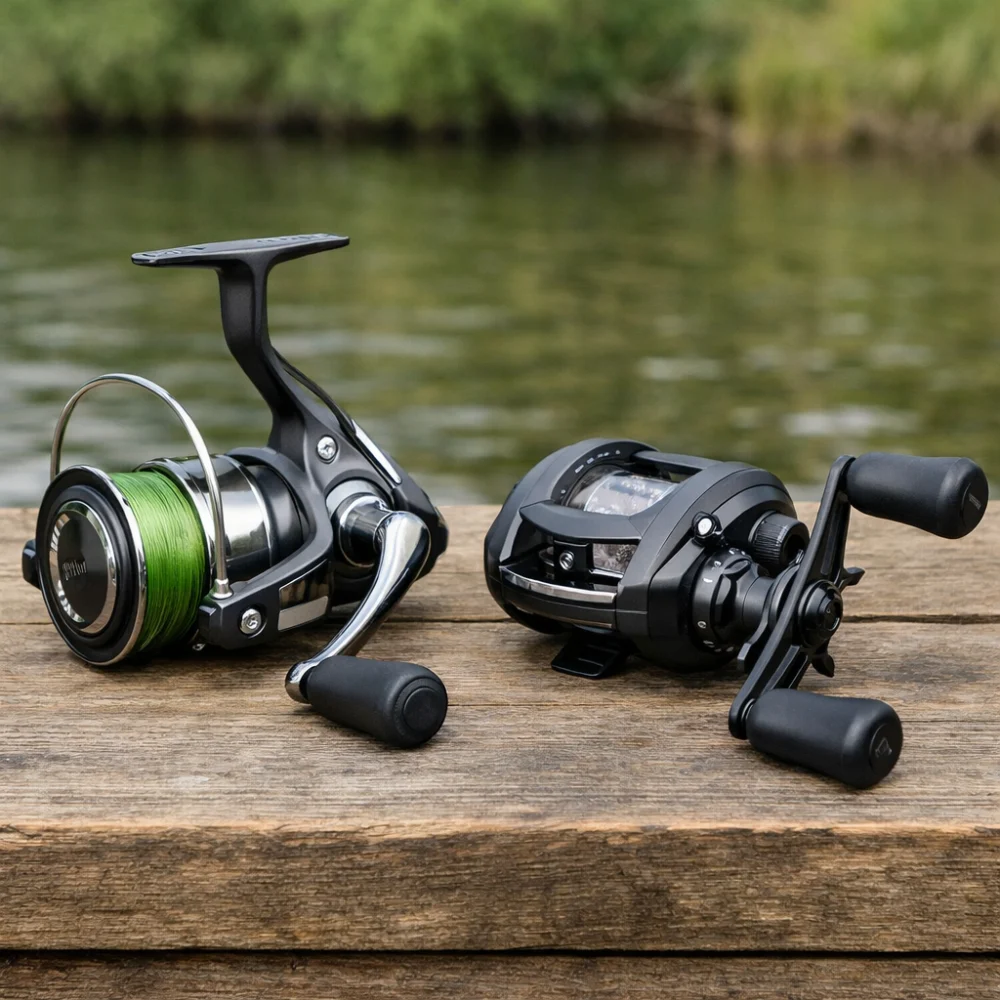
Within carp fishing reels, the main differences usually come down to how the spool and line control are arranged. Some reels are aimed at baitrunner or free-running use, while others are more straightforward fixed-spool designs. The practical benefit is usually in how they feel to fish with, not just the name on the listing.
- Baitrunner-style reels: Useful if you want line to run freely before tightening into the main drag system. They can suit anglers who like that style of bite indication and take control, but they may feel more involved than a simpler reel.
- Fixed-spool carp reels: Straightforward and familiar for many anglers. They suit a wide range of setups, though the exact feel depends on spool size, drag and overall balance.
- Compact or smaller-capacity carp reels: Often chosen where a lighter feel or shorter-range fishing is more important. The trade-off is reduced line capacity or less emphasis on long-range use.
- Larger spool designs: Can be a good fit for anglers who value long casting or managing more line. The trade-off is that they may feel bigger and heavier on the rod.
Which reel suits which buyer?
| Buyer need | Likely priority | What to favour | Trade-off to accept |
|---|---|---|---|
| Beginner buying a first carp reel | Ease of use and sensible value | Simple controls, a familiar spool style and clear product information | May not have every specialist feature |
| Angler replacing an older reel | Better comfort or smoother handling | Improved balance, drag feel and line management | May need to spend more for noticeable refinement |
| Long-session carp angler | Comfort and consistency | Balanced weight, smooth winding and easy adjustment | Bulkier reels can be less compact to carry |
| Angler fishing varied venues | Versatility | A reel that is not too specialised for one situation | May not excel in one very specific style |
Common mistakes and misunderstandings
- Choosing by reel size alone: Bigger is not always better. Balance, spool design and handling can matter more than simply picking the largest model.
- Assuming all baitrunner-style reels work the same way: The terms can be used differently. Check the product page carefully so you know how the system is intended to operate.
- Ignoring line capacity: A reel may look suitable but still be a poor fit if it does not suit the line you intend to use.
- Overlooking comfort: A reel that feels fine on paper may be tiring in use if it does not balance well with your rod.
Safety and suitability caveats
Carp reels are generally straightforward to choose, but suitability still depends on the rest of your setup. Check that the reel is appropriate for the rod you plan to use, the line you prefer and the style of carp fishing you do most often. If you fish in a way that depends on a specific drag or free-running system, confirm that the reel description matches your expectations rather than relying on the category name alone.
Maintenance, storage and lifespan considerations
General care can influence how long a reel feels smooth and reliable. After use, store it somewhere dry and protect it from knocks, grit and damp conditions where possible. If the model has a moving drag or free-spool mechanism, keeping it clean and handled sensibly matters even more.
It is also worth thinking about how easy the reel will be to live with over time. A design that is simple to use and maintain may suit regular anglers better than one with more complexity, especially if you want a reel that stays pleasant to use across many sessions.
How to compare carp fishing reels efficiently
- Start with your main fishing style and decide whether you need a simple fixed-spool reel or a baitrunner-style option.
- Check the spool design and line capacity against the line and distances you usually fish.
- Compare drag feel, handling and balance rather than looking at feature lists in isolation.
- Think about comfort over a full session, not just how the reel appears in photos.
- Read the individual product page carefully for the exact specification before buying.
Summary buyer decision checklist
- Does the reel suit the way you actually fish for carp?
- Is the spool style appropriate for your casting and line needs?
- Does the drag or free-running system match your preference?
- Will the reel balance well with your rod?
- Is the line capacity suitable for your chosen line?
- Have you checked the individual product page for the exact specification?
Frequently asked questions
What is the main difference between a carp reel and a general spinning reel?
Carp reels are usually chosen with carp fishing tasks in mind, such as line control, bite indication and comfort with carp rods. A general spinning reel may still work, but the details of spool design and drag feel can be less suited to the way carp anglers typically fish.
Do I need a baitrunner-style reel for carp fishing?
Not necessarily. Some anglers like the extra control and feel of a baitrunner-style system, while others prefer a simpler fixed-spool reel. The right choice depends on how you like to set up your rods and how you respond to takes.
How important is reel size?
Size matters, but only as part of the full setup. A reel that is too large or too small can affect comfort and balance, yet the spool design and line capacity may be just as important. Think about the rod and the fishing style first.
Should I prioritise smoothness or line capacity?
For most buyers, both matter, but not equally in every case. If you fish close to medium range, comfort and smooth handling may matter more. If you fish further out or use heavier line, capacity becomes more important.
Are more bearings always better?
Not always. Bearing count alone does not guarantee a better reel feel, and it is not a substitute for overall build quality or the way the reel is set up. It is better to treat bearing claims as just one detail among many.
Can I use the same carp reel on different rods?
Often yes, but balance may change from one rod to another. A reel that feels right on one rod may feel less comfortable on another, especially if the rod length or action is different. It is worth checking the whole setup rather than the reel in isolation.
What should I check before buying online?
Check the spool style, drag description, line capacity and any notes about how the reel is intended to be used. Specifications vary by model, so always check the individual product page before buying.

