
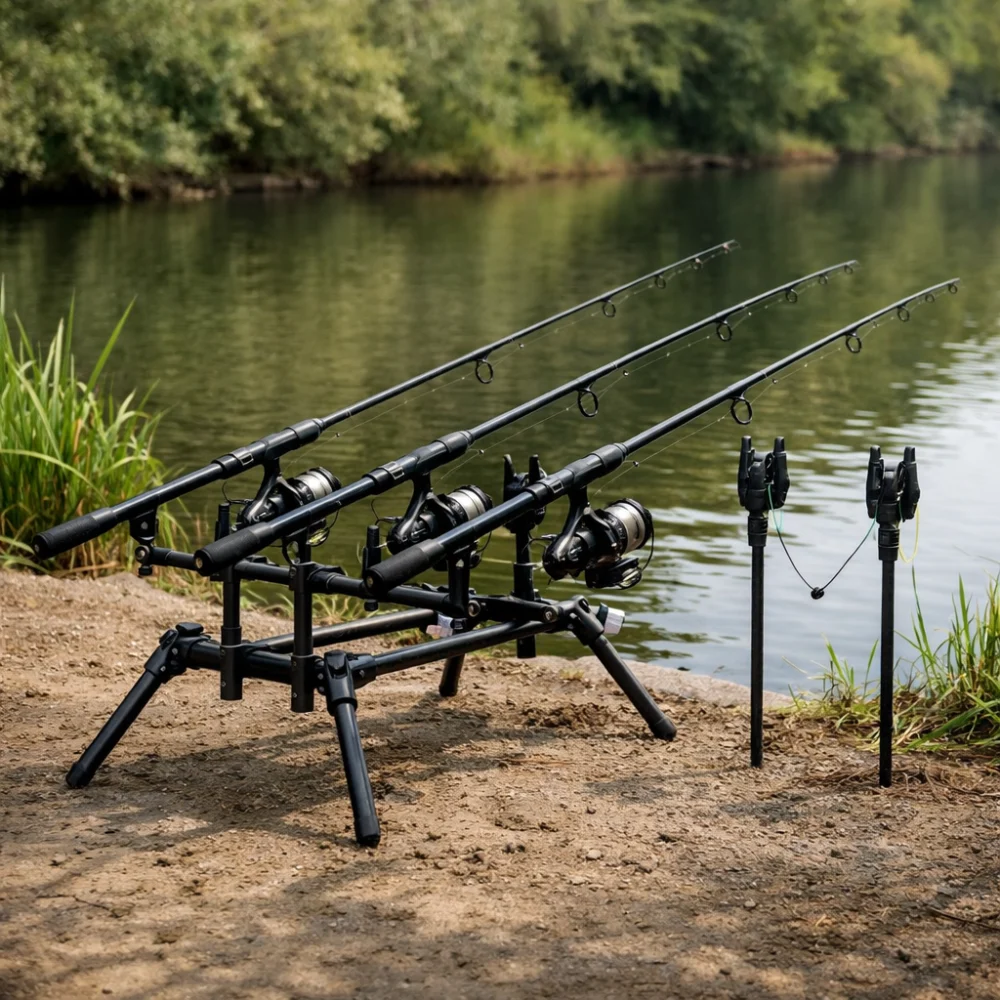
Rod pods and banksticks help keep rods positioned neatly while you wait for a bite, but they suit different fishing situations. Some setups focus on portability and a minimal footprint, while others aim for a more structured, adjustable platform for multiple rods.
If you are comparing them for the first time, the main question is not which one is “better” overall, but which one matches your water, your rod count and how often you move swims. The right choice is usually the one that is easiest to carry, quickest to set up and stable enough for the ground conditions you fish most often.
Because the category covers a wide range of designs, it helps to look at adjustability, ground grip, carry size and whether you want a stand-alone pod or individual banksticks with buzz bars or rests. Specifications vary by model, so always check the individual product page before buying.
What should I choose: a rod pod or banksticks?
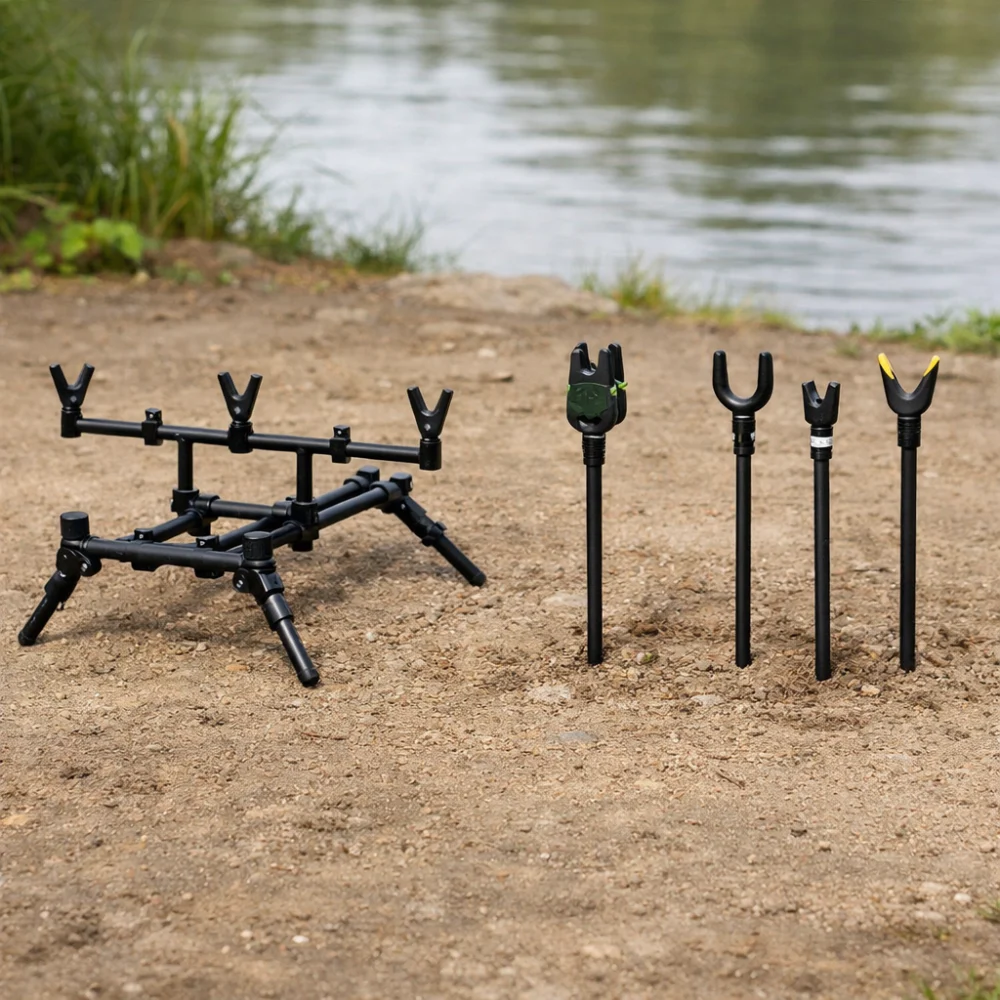
Start with your usual fishing style. Banksticks are often the simpler choice if you want a light, adaptable setup and the ground allows secure placement, while rod pods are useful when the ground is hard, uneven or awkward for pushing sticks in. The trade-off is that pods can be bulkier, whereas banksticks may depend more on soil conditions and how many individual parts you want to carry.
Quick comparison framework
| Feature | What it means | Why it matters | What to check |
|---|---|---|---|
| Setup style | Rod pod system or individual banksticks | Affects portability, packing and how quickly you can set up | Whether you want a one-piece pod or a modular stick-based setup |
| Stability | How securely the rods are supported | Important on uneven ground or when fishing with multiple rods | Leg design, ground contact and how the rests or bars are arranged |
| Adjustability | How much you can change height, width and angle | Helps match different swims and rod positions | Adjustment range and whether it suits your preferred rod spacing |
| Portability | How easy it is to carry and store | Matters if you walk to swims or travel light | Packed size, weight and whether a carry case is included |
| Rod capacity | How many rods the setup can support | Needs to match how you actually fish | Number of rods the pod, bar or rest arrangement is designed for |
| Ground compatibility | How well it works on soft, hard or uneven ground | Affects how dependable the setup feels on the bank | Whether banksticks can be secured easily, or whether a pod is more suitable |
Key decision criteria explained
Stability and ground conditions
Stability is the first thing to think about because it affects how securely your rods sit while you wait. On soft ground, banksticks can be straightforward, but on hard or mixed ground they may be harder to place exactly where you want them. A pod can give a more controlled setup when the ground is less predictable, though it may take up more room.
Adjustability and rod positioning
Some anglers want a low, compact presentation, while others prefer more height or a wider stance between rods. The useful question is whether the product lets you position the rods comfortably for your swim and bite alarm layout. If you fish with different rod lengths or in varied conditions, extra adjustability can be helpful, but only if you will actually use it.
Portability and pack size
If you carry your tackle a long way or like to keep your kit compact, the size of the folded or packed setup matters. Banksticks are often easier to split into smaller parts, while pods can be convenient because the main structure stays together. Think about whether you prefer fewer items to assemble or a lighter, more modular carry.
Rod count and spacing
Choose a setup that suits the number of rods you normally use rather than a larger arrangement that feels impressive but unnecessary. Some anglers only need a simple two-rod arrangement, while others want more spacing and a steadier platform for three rods or more. The important point is that the rests, bars or supports should leave enough room for your reels and alarms without feeling cramped.
Types and variants within the category
This category usually includes a few practical variations rather than entirely different products.
- Compact pods: Suited to anglers who want a smaller, easier-to-carry setup and do not need a large footprint.
- Fully adjustable pods: Useful if you want to fine-tune height, width and stance for different swims.
- Banksticks and stick-based setups: Better for buyers who want a simpler, more modular arrangement and can secure the sticks into the ground.
- Tripod-style supports: Can help where extra balance is useful, though the best choice still depends on the ground and how much kit you want to carry.
The main limitation is that no single type is ideal in every place you fish. A compact design may be easier to carry but less flexible in awkward ground, while a larger pod may be steadier but less convenient to transport.
Which setup suits which buyer?
| Buyer need | Likely better fit | Why |
|---|---|---|
| Walk-and-fish sessions | Light banksticks or a compact pod | Easy to carry and less bulky at the water’s edge |
| Hard or uneven ground | Rod pod | More useful when sticks are difficult to place securely |
| Simple, modular setup | Banksticks with rests or bars | Lets you build the arrangement you need without extra bulk |
| Multiple rods with neat alignment | Adjustable pod | Helps keep the rods arranged consistently |
| Minimal kit and quick packing | Compact banksticks | Usually easier to store with fewer large components |
Common mistakes and misunderstandings
- Choosing on rod count alone: The number of rods supported matters, but so do stability, spacing and how the setup handles the ground.
- Ignoring packed size: A product can look simple in use but still be awkward to carry if you walk far to your swim.
- Assuming all banksticks work the same way: Ground conditions change the experience a lot, so check whether the design suits the places you fish.
- Overlooking adjustability: A setup that looks neat may still be frustrating if it does not adjust to your preferred height or angle.
Safety and suitability caveats
These are practical fishing accessories, but suitability still depends on where and how you fish. Check that the design is appropriate for the bank conditions you expect, and make sure any rests, bars or alarm mounting points suit your own setup. If you fish in exposed or uneven areas, consider whether the product will stay stable enough for your normal use.
Maintenance, storage and lifespan considerations
Rod pods and banksticks are generally easier to manage when kept clean and dry after use. Mud and grit can make adjustment parts less smooth over time, so storage matters as much as the initial choice. If a product includes a carry case or separate parts, that can help keep components together and reduce wear in transit.
How to compare options efficiently
- Decide whether you need a pod, banksticks or a stick-based hybrid for your usual swims.
- Check how many rods you normally fish and whether the spacing will feel comfortable.
- Compare adjustability, packed size and how secure the setup looks on different ground types.
- Think about carrying convenience versus in-use stability.
- Read the individual product page carefully before buying so the details match your setup.
Summary buyer decision checklist
- Does it suit the ground conditions you usually fish?
- Is the rod capacity right for your normal setup?
- Will it pack down to a size you are happy to carry?
- Does it offer enough adjustability for your preferred rod position?
- Are the rests, bars or alarm mounting points compatible with your way of fishing?
- Does the overall design feel stable enough for your needs?
Frequently asked questions
What is the main difference between a rod pod and banksticks?
A rod pod is a connected support system, while banksticks are individual sticks that you place into the ground. A pod can be more helpful on awkward or hard ground, whereas banksticks are often the simpler and lighter option when the bank allows secure placement.
Are rod pods better for beginners?
Not always. Beginners often find a simple bankstick setup easier to understand and carry, but a pod may be the better buy if they fish on hard ground or want a more structured arrangement. The right choice depends more on the venues you fish than on experience level alone.
Do I need a pod if I only fish with two rods?
No, not necessarily. Many two-rod anglers are well served by banksticks or a compact stick-based setup. A pod becomes more attractive if the ground is difficult, you want very consistent alignment, or you prefer one self-contained unit.
What should I check before buying banksticks?
Check whether the length, adjustability and fixing method suit the banks you fish most often. It also helps to see whether you will use them on their own or alongside buzz bars, rests or alarms. The important point is whether the whole arrangement will work as a practical system, not just whether the sticks themselves look suitable.
Can I use a rod pod on uneven ground?
Often yes, but the real question is how easily it can be positioned securely. Some designs are better suited to awkward swims than others, so look at how the legs, bars and support points are arranged. Specifications vary by model, so always check the individual product page before buying.
How important is portability?
Very important if you walk to your swims or keep a compact tackle bag. A bulky setup can be fine if you fish close to the car park, but it becomes more noticeable when you carry everything by hand. Portability is one of the easiest ways to narrow the choice quickly.
Should I buy the largest setup I can find?
Not usually. A larger setup is only useful if you need the extra size, stability or spacing. For many buyers, a compact model is easier to transport and simpler to use while still covering the fishing they actually do.

