
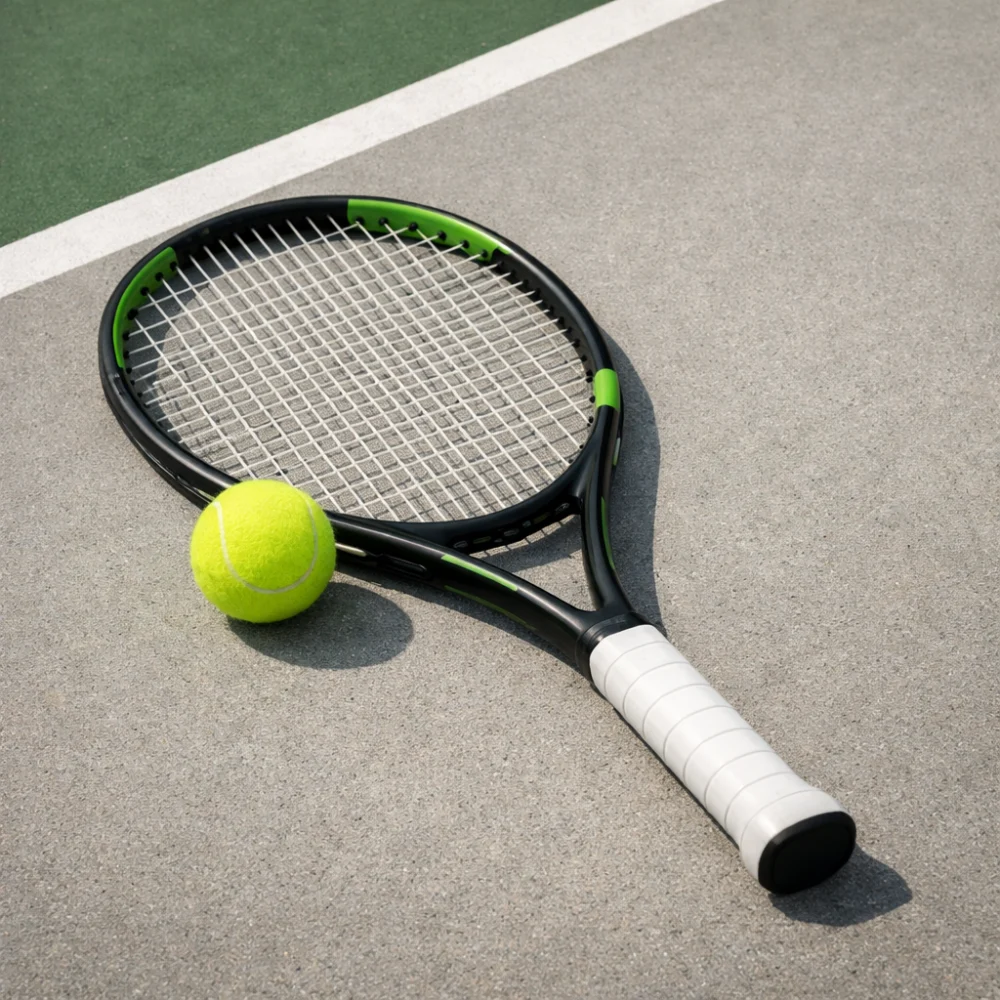
Buying a tennis racket is less about finding a single “best” option and more about matching the racket to your swing, your experience and how you like the ball to feel off the strings. A beginner may want easier power and forgiveness, while a more experienced player may care more about control, feel and precision.
This guide focuses on the choices that matter when comparing tennis rackets, not on every possible specification. It will help you narrow the options, understand common trade-offs and check whether a racket is likely to suit your game.
If you are replacing an old racket, upgrading from a starter model or buying for someone else, the most useful question is usually not how advanced the racket sounds, but how it is likely to handle in real play.
What should you look for first in a tennis racket?
Start with the balance between power, control and comfort. A lighter, larger or more forgiving racket can be easier to use and more reassuring for newer players, while a more precise frame may suit someone who already generates their own pace and wants greater accuracy. The main trade-off is simple: rackets that help you easily with power often give up some control, and rackets built for control can feel less forgiving.
| Feature | What It Means | Why It Matters | What To Check |
|---|---|---|---|
| Head size | The size of the string bed. | A larger head is usually more forgiving, while a smaller head tends to reward cleaner contact. | Look for whether the racket is aimed at forgiveness, control or a more advanced feel. |
| Weight | How heavy the racket feels in the hand and through the swing. | Weight affects stability, power transfer and how easy the racket is to move quickly. | Consider whether you want easier handling or a steadier feel on contact. |
| Balance | Where the weight is distributed along the frame. | Balance can influence manoeuvrability, swing speed and the sense of power. | Check whether the racket is described as head-light, head-heavy or evenly balanced if that detail is provided. |
| String pattern | The spacing and layout of the strings. | It can affect spin potential, feel and control. | Use the product page to see whether the racket is built more for control, spin or a general all-round response. |
| Grip size | The circumference of the handle. | A suitable grip helps comfort and confidence, especially during longer sessions. | Check the stated grip size and match it to the player’s hand where possible. |
| Frame stiffness and feel | How much the frame flexes at contact. | This changes comfort, response and the way feedback travels through the racket. | Look for descriptions that suggest a softer, firmer or more responsive feel, if supplied. |
Key decision criteria explained
Power versus control
Power-oriented rackets are often easier for casual or developing players because they help the ball travel well without demanding a very fast swing. Control-oriented rackets usually suit players who already create pace themselves and want a more predictable response. If you are unsure, think about whether you need help generating depth or whether your main concern is keeping the ball inside the lines.
Comfort and forgiveness
Comfort matters if you play regularly, are returning after time away or want a racket that feels less demanding on off-centre hits. A more forgiving racket can reduce the harshness of mis-hits and make rallies feel more manageable. Specifications vary by model, so always check the individual product page before buying.
Handling and manoeuvrability
Some rackets feel easier to swing, react faster at the net and are simpler to use for defensive shots. Others feel more planted and stable but can ask more from your arm and timing. If you prefer quick reactions and easier movement, give extra weight to how manageable the racket is, not just its overall specification.
Grip size and comfort
A grip that feels too small or too large can make the racket uncomfortable and harder to control confidently. Buyers often overlook this when focusing on frame shape or brand names. If the size is stated, treat it as an important fit check rather than a minor detail.
Common racket types and what they suit
Tennis rackets are often grouped by the kind of player they are meant to support rather than by one fixed technical rule. That means two rackets with similar overall dimensions can still feel very different.
- Beginner-friendly rackets: Usually chosen for easier playability, a more forgiving response and a simpler learning curve. The trade-off is that they may offer less precision for experienced ball strikers.
- All-round rackets: A sensible middle ground for recreational players who want a balanced feel. They can suit players who are still developing their style or who want one racket for varied sessions.
- Control-focused rackets: Better suited to players who value accuracy, touch and a more direct response. They may be less forgiving if contact is inconsistent.
- Power-oriented rackets: Helpful for players who want more easy depth and a lively response. The compromise is that they may feel less controlled on full swings.
Which racket suits which buyer?
| Buyer need | What usually matters most | Likely direction | Watch out for |
|---|---|---|---|
| New or returning player | Ease of use and forgiveness | A racket that is comfortable, manageable and not overly demanding | Very control-heavy frames that may feel difficult at first |
| Casual recreational player | Simple all-round performance | A balanced racket that is easy to pick up and play with | Choosing on appearance alone rather than feel |
| More experienced player | Precision and response | A racket that matches swing style and preferred shot shape | Overlooking comfort and grip fit in favour of specification |
| Gift buyer | Broad suitability | An accessible, general-purpose racket if the recipient’s preferences are not known | Buying a highly specialised frame without knowing their playing level |
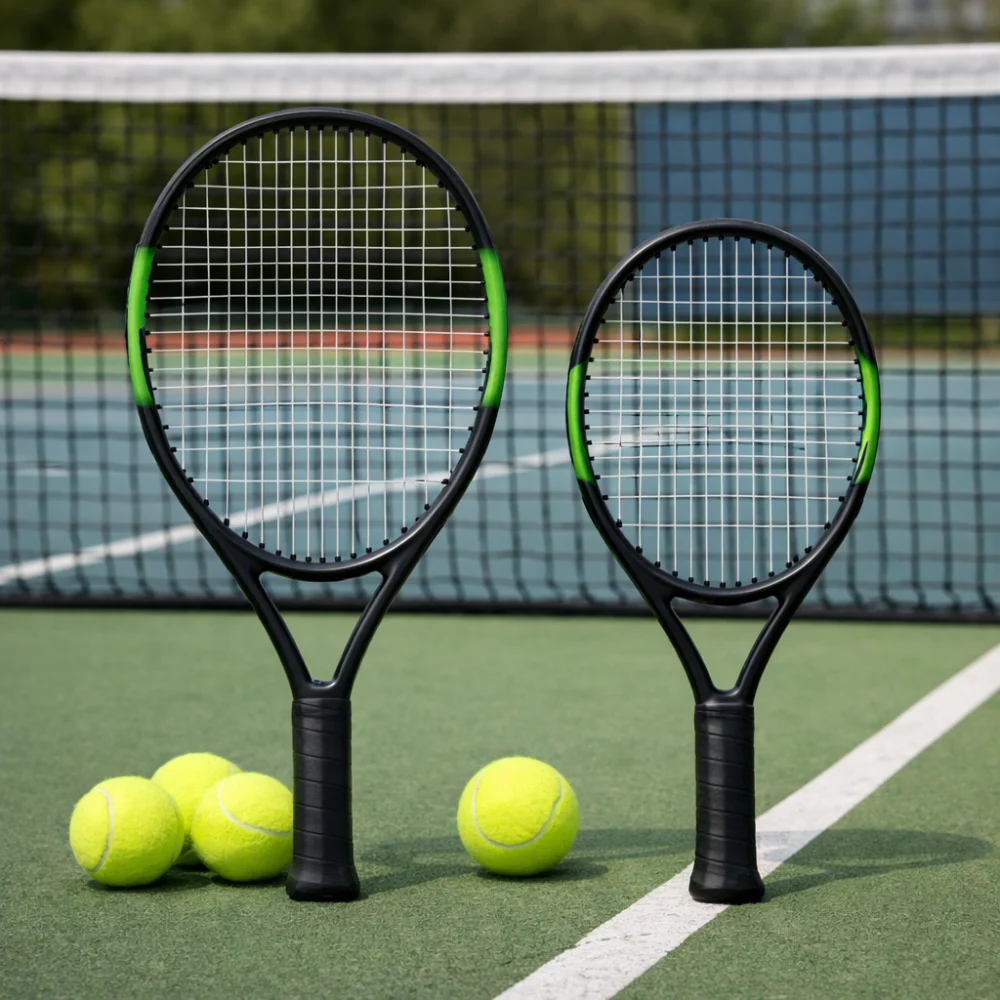
Common mistakes and misunderstandings
- Choosing only by brand or looks: A racket should be judged by how it is likely to feel and perform for the player, not just by the name on the frame.
- Assuming a more advanced racket is better: A demanding racket can be a poor fit if the player does not need that level of precision.
- Ignoring grip size: Comfort and control can suffer if the handle size is not appropriate.
- Focusing on one feature in isolation: Weight, balance, head size and feel work together, so it is better to compare them as a set.
Safety and suitability notes
A tennis racket is not a one-size-fits-all purchase, especially if it is for a younger player, a beginner or someone with a specific comfort preference. It is sensible to check the intended player, the stated size information and the overall feel of the racket rather than assuming any adult-sized frame will do. If a listing gives model-specific details, use those rather than general assumptions.
Maintenance, storage and lifespan considerations
Even when a racket itself is durable, the strings and grip are usually the parts that change the feel most over time. If you play regularly, you may want to consider how easy it will be to refresh the grip or restring the racket, depending on the model. Store the racket in a sensible place and avoid treating it as a throwaway item, because keeping it in good condition can help preserve the playing feel you bought it for.
How to compare tennis racket options efficiently
- Decide who the racket is for and how often it will be used.
- Choose the broad type first: forgiving, all-round, control-focused or power-oriented.
- Check the practical details that affect comfort, especially weight, head size and grip size.
- Compare the likely trade-offs rather than trying to find every feature in one frame.
- Read the individual product page carefully before buying, because details can vary by model.
Summary buyer decision checklist
- Is the racket for a beginner, casual player or more experienced player?
- Does it lean more towards power, control or a balanced feel?
- Will the weight and handling suit the intended player?
- Is the grip size appropriate?
- Does the racket sound comfortable and forgiving enough for the way it will be used?
- Have you checked the individual product page for model-specific details?
Frequently asked questions
What is the easiest tennis racket type to start with?
A beginner usually benefits from a racket that feels forgiving and straightforward to swing. That often means prioritising comfort and easy handling over precision-focused performance. A simple all-round option can also be a sensible starting point if the player is unsure what style suits them yet.
Does a heavier racket always play better?
Not necessarily. A heavier racket may feel more stable, but it can also be harder to swing quickly and may be less comfortable for some players. The right choice depends on the player’s strength, technique and how much manoeuvrability they want.
How important is grip size?
It is one of the most practical things to get right because it affects comfort, control and confidence. A poor grip fit can make even a good racket feel awkward. If the size is listed, treat it as a key selection point rather than an afterthought.
Can one racket suit both beginners and experienced players?
Sometimes, yes, if it is a balanced all-round model. That said, beginners often value forgiveness more, while experienced players may want more precise feedback. A shared racket is usually a compromise rather than a perfect fit for both users.
Should I choose a racket for power or control?
Choose power if the player wants easier depth and less effort to get the ball moving. Choose control if the player already has a confident swing and wants more exact placement. If you are unsure, an all-round racket is often the safer middle ground.
What should I check if I am buying a racket as a gift?
Try to confirm the recipient’s playing level, preferred feel and any size details if possible. If you do not know those things, a broad, accessible racket is usually a safer choice than a specialised one. The most useful gift purchases are the ones that avoid over-specialising.

