
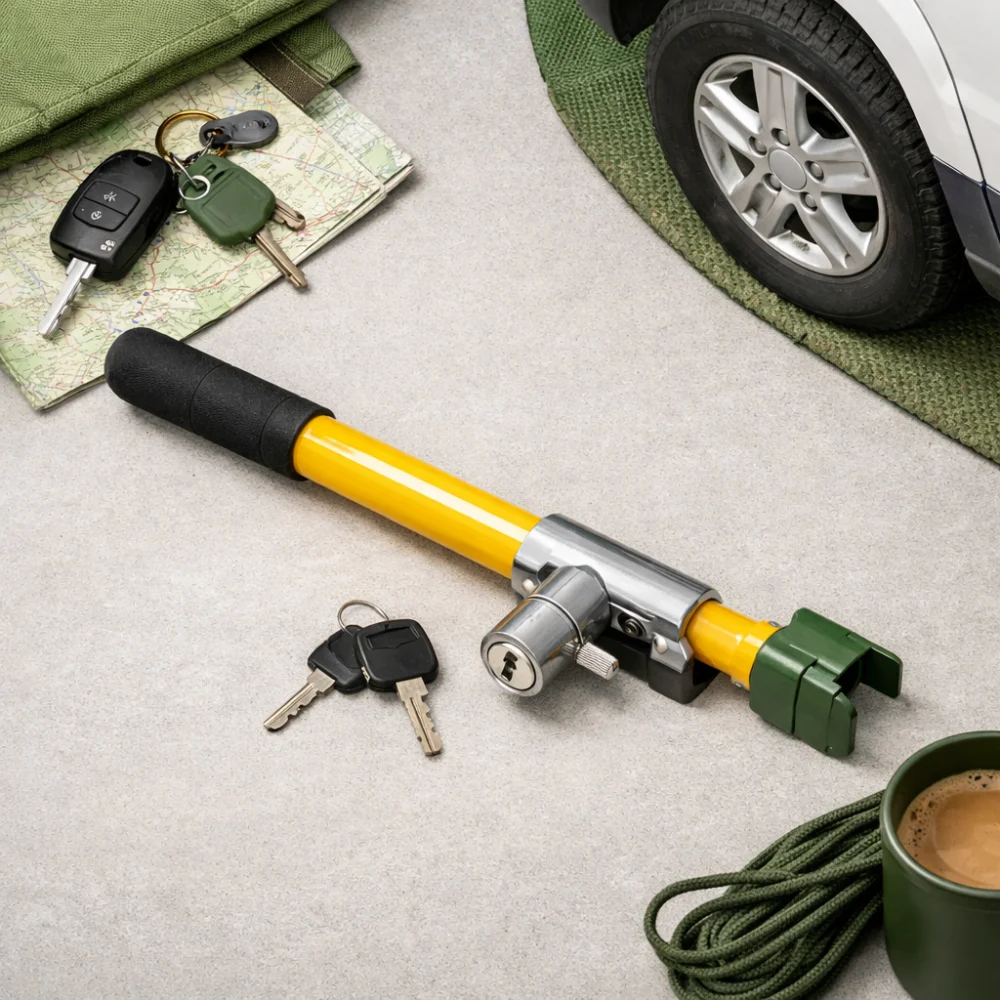
Vehicle security accessories are bought for peace of mind as much as convenience. For campers, caravanners and van owners, the main task is usually to add a visible deterrent and a practical layer of protection when a vehicle is parked, stored or left unattended.
The right choice depends on the vehicle, the wheel or hitch it needs to secure, how often you will fit and remove it, and how visible you want the deterrent to be. This guide helps you compare the main buying factors without turning the decision into guesswork.
What should you look for in vehicle security?
The starting point is simple: choose a security product that fits the part of the vehicle you want to protect and is practical enough to use regularly. A heavy-duty device may sound reassuring, but if it is awkward to fit, it may be left off more often than intended.
For many buyers, the best balance is between visibility, fit and day-to-day ease of use. Specifications vary by model, so always check the individual product page before buying.
| Feature | What it means | Why it matters | What to check |
|---|---|---|---|
| Fit | Whether the product suits the wheel, tyre or hitch it is designed to secure | A poor fit can make the product unsuitable for your vehicle | Wheel size, tyre width, hitch type or stated compatibility details on the product page |
| Type of deterrent | How the product is intended to discourage theft or tampering | Some buyers want a highly visible device, while others prefer a simpler restraint | Where it fits, how visible it is and whether it is intended for parked or stored vehicles |
| Ease of fitting | How quickly it can be installed and removed | If it is awkward, you may be less likely to use it consistently | Locking method, access to fixing points and whether one person can handle it easily |
| Storage and handling | How much space it takes up when not in use | Camping vehicles often have limited storage space | Packed size, weight and where you plan to keep it in the vehicle |
| Finish and visibility | How easy it is to see and how it is finished | A visible deterrent may be part of the appeal, especially for roadside or storage use | Colour, profile and whether the design is meant to stand out |
Key decision criteria
Compatibility with your vehicle
Vehicle security products are often specific to certain wheel sizes, tyre widths or hitch styles. That makes compatibility the first thing to verify, especially if you are buying for a caravan, trailer, motorhome or van rather than a standard car.
Do not assume that a device described as universal will suit every vehicle equally well. Check the listed measurements and the way the item secures itself before you compare anything else.
How visible the security measure is
Some buyers want a device that is obviously there because the visual deterrent is part of the value. Others prefer a lower-profile option that is easier to store or less noticeable when parked.
The right choice depends on where the vehicle will be left and how exposed it is. A clearly visible clamp may suit a vehicle stored in a shared area, while a more compact option may suit regular travel use.
How often you will use it
If the security accessory will be fitted only occasionally, convenience may matter less than maximum deterrence. If you plan to use it every time you park, ease of fitting becomes much more important.
Think about whether you are protecting a vehicle at home, on a campsite or during longer storage periods. The more often you use it, the more important it is that the product is practical enough to handle without frustration.
Where it will be stored
Camping and travel vehicles often have constrained storage, so bulk matters. A product that is secure but hard to stow can become inconvenient on the road.
Look for a sensible balance between size and the level of deterrence you want. If space is tight, it may be worth prioritising a compact design that still suits your vehicle.
Common vehicle security types and variants
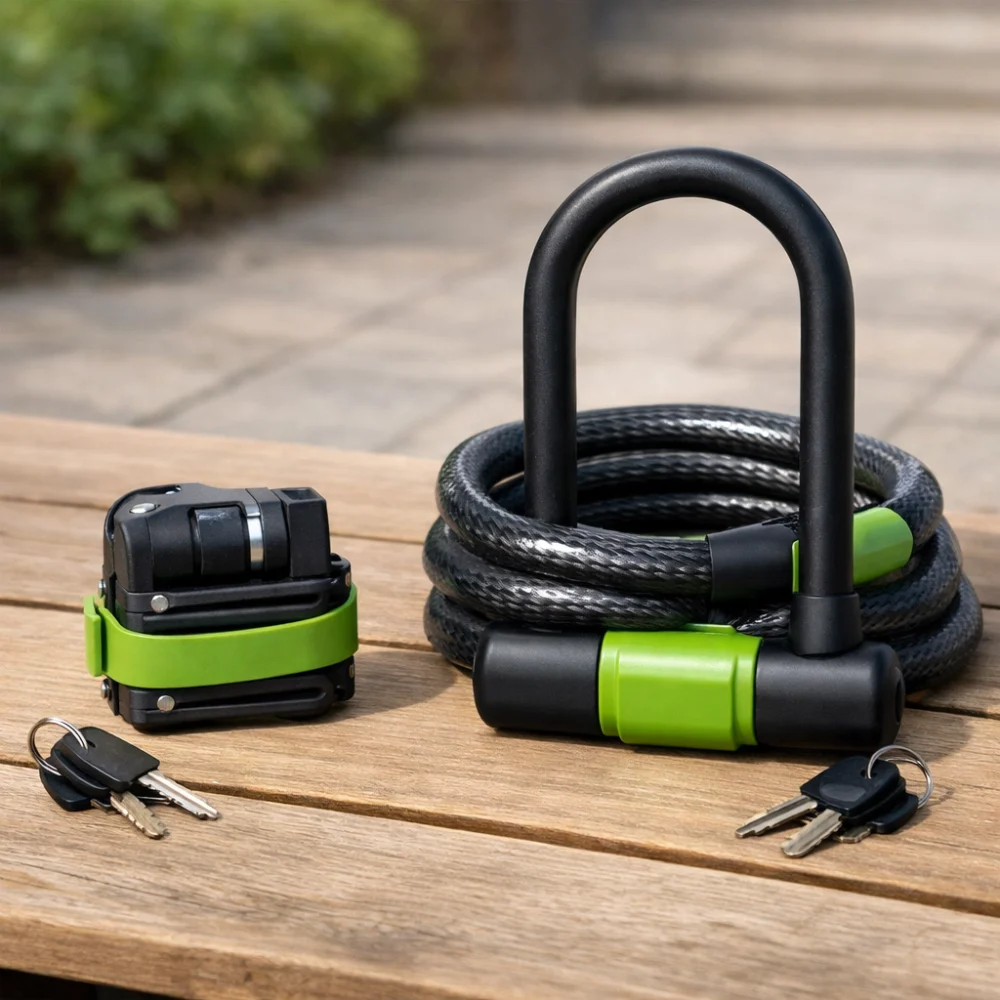
The main variations in this category are usually about where the product fits and how it secures the vehicle. Wheel-based devices are common when the aim is to stop the vehicle from being driven away. Hitch-focused products are relevant where a trailer or caravan coupling needs attention.
There are also differences in shape and adjustment. Some products are designed for a wider range of wheel sizes or vehicle types, while others are more specific. A more adjustable design can be helpful, but only if the adjustment range truly matches your vehicle.
Which option suits which buyer?
| Buyer need | What to prioritise | Why |
|---|---|---|
| Frequent traveller | Quick fitting and easy storage | You are more likely to use a product that does not slow you down |
| Long-term storage | High visibility and a secure fit | The product may stay on the vehicle for longer periods |
| Caravan or trailer owner | Compatibility with the wheel or hitch arrangement | These vehicles often need a more specific fit check |
| Van or motorhome owner | Practical handling and storage space | Larger vehicles can still have limited room for accessories |
| Buyer wanting a deterrent | Obvious, visible design | A visible device can help signal that the vehicle is protected |
Common mistakes and misunderstandings
- Buying by appearance alone. A product can look substantial but still be the wrong fit for your wheel or hitch.
- Assuming “universal” means guaranteed. Check the stated size range and how the product attaches before you rely on the description.
- Ignoring storage needs. A bulky security item may be awkward if your vehicle already carries camping gear.
- Choosing a difficult product for everyday use. If it is too slow to fit, it may not be used as often as intended.
- Overlooking the vehicle type. What works for a car may not be the best match for a caravan, trailer, van or motorhome.
Safety and suitability caveats
Vehicle security products are buying choices, not guarantees. They may deter opportunistic theft, but they do not remove risk completely, so it is sensible to match the product to the situation rather than assuming one device covers every scenario.
Check that the item suits your vehicle and that you are comfortable handling it. If the product is intended for a specific use case, such as a wheel or hitch, make sure that use case matches your vehicle before ordering.
Maintenance, storage and lifespan considerations
Good vehicle security is easier to live with when it stores neatly and is simple to keep clean. Outdoors use can expose accessories to dirt, moisture and road grime, so a design that is easy to wipe down may be more convenient.
Also think about where you will keep it when not in use. A product that is simple to store and retrieve is more likely to be used consistently, which is often more important than choosing the most cumbersome option.
How to compare options efficiently
- Decide what you are protecting: wheel, tyre, hitch or another part of the vehicle.
- Check the vehicle type and any stated size or fit information.
- Compare how easy each option is to fit, remove and store.
- Balance visibility against convenience for your usual parking situation.
- Read the individual product page carefully before buying.
Summary buyer decision checklist
- Does the product suit your vehicle type and the part you want to secure?
- Have you checked the stated size or fit details carefully?
- Will it be easy enough to fit and remove when you need to use it?
- Is the storage size practical for your vehicle?
- Does the design offer the level of visibility you want?
- Have you checked the individual product page for model-specific details?
Frequently asked questions
What is the main purpose of vehicle security accessories?
They are designed to make a vehicle harder to move or tamper with and to act as a visible deterrent. For many buyers, that means choosing a product that adds reassurance when the vehicle is parked or stored.
How do I know if a wheel-based product will fit?
Check the size details listed on the product page, including any stated wheel or tyre ranges. Do not rely on the headline description alone, as the fit can vary by model.
Are universal products a safe choice?
They can be useful, but “universal” still has limits. It is still important to check the measurements and the stated vehicle types so you know whether the product is actually suitable.
Should I choose the most visible option?
Visibility is helpful for deterrence, but it is not the only factor. The right balance depends on whether you want something obvious for parking or something easier to store and handle regularly.
Is this category mainly for cars?
No. It can also be relevant for caravans, trailers, vans and motorhomes, depending on the type of security product. The important thing is matching the product to the vehicle and the point you want to secure.
What matters most for a first-time buyer?
Fit is usually the first thing to confirm, followed by ease of use. A product that suits your vehicle and is simple enough to use consistently is often a better practical choice than one that only looks robust.

