
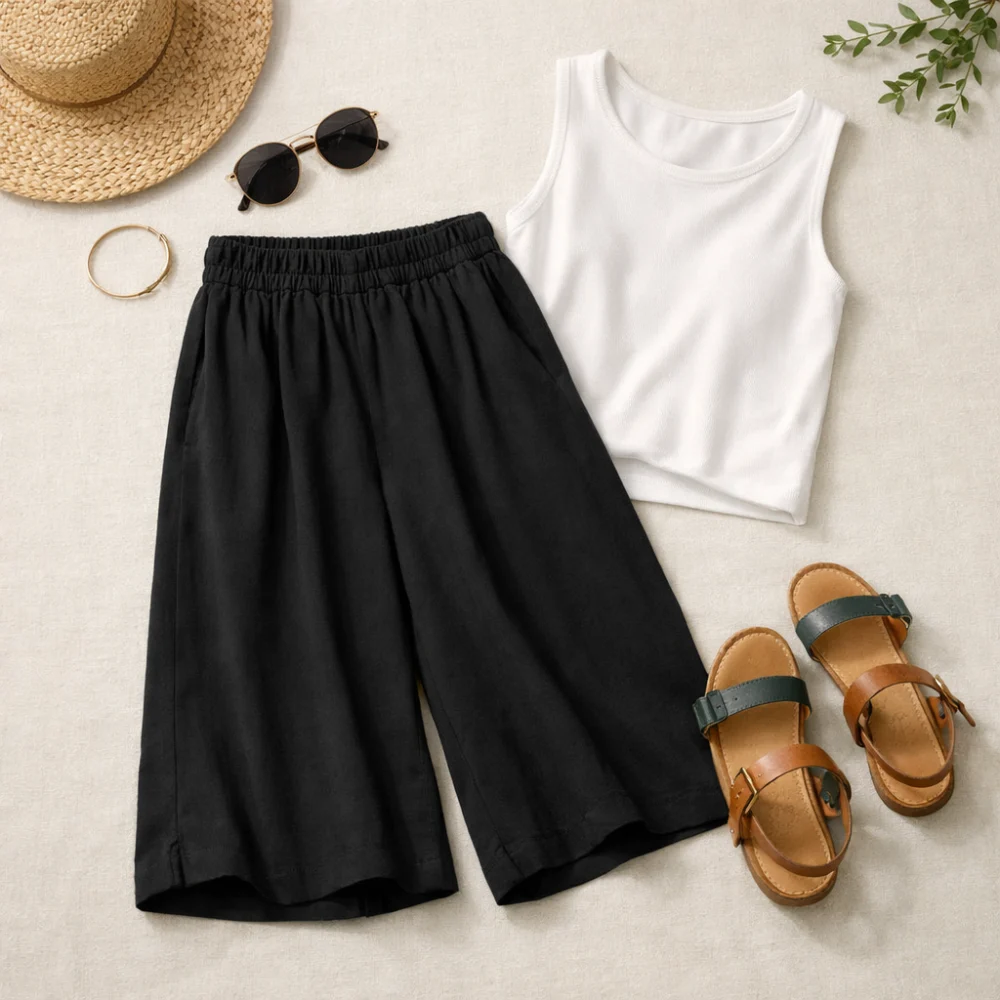
Women’s culottes can be a useful middle ground between trousers and skirts: loose enough for ease of movement, but neater and more covered than many shorts. They are often chosen for warm-weather wear, travel and everyday outfits where comfort matters as much as appearance.
Because styles vary widely, the main buying challenge is not simply deciding whether you want culottes, but which cut, rise, fabric and length will suit your body shape and intended use. A good choice depends on how you plan to wear them, what you like to pair them with and how much structure or drape you prefer.
If you are comparing different women’s summer bottoms, think about where culottes sit in your wardrobe: they usually offer more airflow than trousers and more coverage than shorts, while still feeling relaxed. The most useful features to check are fit at the waist, leg width, length and the fabric’s weight.
What should you look for in women’s culottes?
Start with the shape and fabric rather than the print or colour. The most suitable pair is usually the one that balances comfort, coverage and movement for your regular use. A fuller cut can feel breezier, while a more tailored shape may be easier to dress up.
Specifications vary by model, so always check the individual product page before buying.
| Feature | What It Means | Why It Matters | What To Check |
|---|---|---|---|
| Length | Where the hem sits on the leg | Affects coverage, airflow and how the garment reads visually | Look for the inseam or stated length and consider where it will fall on your height |
| Leg width | How full or narrow the silhouette is | Changes comfort, drape and ease of movement | Check whether the cut is wide, flared or more tapered |
| Waist style | How the waist is finished | Influences comfort and how secure the fit feels | Check whether it is elasticated, fixed or pull-on |
| Fabric | The material and its weight | Determines breathability, drape and how structured the culottes feel | Read the fabric content and note whether it is lightweight, woven or stretch-based |
| Rise | How high the waistband sits | Can affect comfort, styling and torso balance | Check whether the fit is high rise, mid rise or unspecified |
| Pockets and details | Extra design features | Useful for practicality, but they can change the shape | Look for pocket placement, pleats or trims if these matter to you |
Key decision criteria
Fit at the waist
For culottes, the waist is often the most important comfort point. If you want something easy to pull on and wear all day, an elasticated or drawstring style may feel more forgiving. If you prefer a cleaner outline, a fixed waistband may sit neater but can feel less flexible.
Length and proportion
Culottes can finish at very different points on the leg, and that changes both comfort and appearance. Shorter versions can feel lighter and more relaxed, while longer cropped styles may offer more coverage. When comparing options, think about how the hem will sit with trainers, sandals or the shoes you wear most often.
Fabric and drape
The fabric determines how breathable and structured the garment feels. Lighter fabrics usually move more freely and suit hot weather, while denser fabrics can hang more neatly and may feel less airy. If you prefer a softer, floatier look, focus on drape; if you want a sharper outline, look for more structure.
Ease of movement
Culottes are chosen partly because they allow movement, but not all cuts feel the same in use. A wider leg may feel easier for walking or sitting, while a narrower cropped shape can feel tidier but slightly less relaxed. Think about whether you want all-day comfort, a smarter look or a balance of both.
Practical details
Pockets, pleats and side seams may sound minor, but they can affect how the garment sits and how useful it feels. Pockets are convenient, but they can add bulk. Pleats can create extra shape, but they may also change the line at the waist and hips.
Common culottes styles and what they suit
The category covers a few broad looks rather than a single fixed design. That is useful, because it lets you choose the amount of structure and coverage you want.
- Wide-leg culottes: usually suit buyers who want maximum ease and a breezier feel. The main limitation is that they can look more relaxed than tailored styles.
- Cropped culottes: can work well for warm weather and casual wear. Their shorter length may not suit everyone’s preferred level of coverage.
- Smarter, more tailored culottes: are useful if you want something that can pass for a polished trouser alternative. They may feel less forgiving than looser designs.
- Relaxed pull-on styles: often suit everyday wear and travel because they are simple to put on. The trade-off is that they may look less structured.
Which style suits different buyers?
| Buyer need | What to prioritise | Why that helps |
|---|---|---|
| Everyday comfort | Elasticated waist, soft fabric, easy drape | Makes the garment more comfortable for long wear |
| Smart-casual outfits | Cleaner waistband, neater drape, less volume | Helps the outfit look more polished |
| Warm-weather wear | Lightweight fabric, airy cut, suitable length | Supports breathability and comfort in hotter conditions |
| Travel or packing | Crease tolerance, versatile colour, easy fit | Makes the item easier to wear in more than one setting |
| Coverage preference | Longer hem, wider cut, opaque fabric | Provides more confidence and comfort for the wearer |
Common mistakes to avoid
- Choosing by image alone: a culotte can look very different depending on height and proportions, so check the stated length and rise where available.
- Ignoring the waistband: a style that looks neat may still feel restrictive if the waist does not suit your shape.
- Overlooking fabric weight: a fabric that is too light may cling or show less structure, while a heavier one may feel less airy.
- Assuming all culottes are equally formal: some are clearly casual, while others are closer to tailored trousers in appearance.
- Forgetting footwear: the hemline can look very different with flats, sandals or wedges, so think about the full outfit.
Safety and suitability caveats
For clothing, the main buying concerns are fit, comfort and intended setting rather than technical performance. If you prefer extra coverage, check opacity, leg opening and hem length carefully. If you are buying for a specific setting such as work, travel or relaxed everyday wear, make sure the style matches that setting rather than relying on the general category name.
Care, storage and lifespan considerations
General care can influence which culottes are easiest to live with. Some fabrics are more prone to creasing, while others may need gentler washing or careful drying to keep their shape. If convenience matters, check whether the garment looks easy to wash, store and re-wear without much fuss.
Also think about how the material may behave over time. Stretch waistbands, lighter weaves and decorative details can all affect how the garment holds up in regular use, so it is worth checking the product page for any care notes that matter to you.
How to compare options efficiently
- Decide the main use: everyday wear, warm weather, travel or smarter outfits.
- Choose the shape you prefer: wider, cropped, more tailored or more relaxed.
- Check the waist and length first, because they have the biggest effect on fit.
- Look at the fabric content and think about drape, breathability and ease of care.
- Compare the small details only after the basics feel right.
- Read the individual product page carefully before you buy.
Summary buyer decision checklist
- Does the length suit your height and preferred coverage?
- Is the waist style comfortable for your intended use?
- Do you want a wide, relaxed shape or a neater silhouette?
- Will the fabric feel breathable enough for the season?
- Are pockets, pleats or other details helpful, or just decorative?
- Will the culottes work with the shoes and tops you already own?
Frequently asked questions
Are culottes and wide-leg trousers the same thing?
Not always. Culottes are usually designed with a cropped or shortened length, whereas wide-leg trousers may be full length. The exact difference can vary by product, so check the stated length rather than relying on the name alone.
Are culottes suitable for hot weather?
They can be, especially if the fabric is lightweight and the cut is airy. Breathability depends more on the material and construction than the category name. If heat comfort matters, look closely at the fabric content and overall fullness.
Will culottes suit shorter or taller wearers?
They can suit both, but the proportion changes with height. A length that looks cropped on one person may fall differently on another, so checking the product measurements is helpful. The rise and hem position matter more than the label.
Are culottes a smart or casual option?
They can be either. A cleaner waistband, smoother fabric and more tailored shape usually look smarter, while relaxed pull-on styles lean casual. Think about the full outfit and the setting you plan to wear them in.
What matters more: fabric or fit?
Both matter, but fit usually comes first because it affects comfort and how the garment sits on the body. Fabric then determines how it drapes, feels and wears over time. If you are unsure, prioritise the waist, rise and length before focusing on colour or detailing.
Do pockets make culottes better?
They can add convenience, but they are not automatically better. Pockets may be useful for carrying small items, yet they can also change the shape at the hips. If a smooth silhouette matters most, you may prefer a simpler design.

