
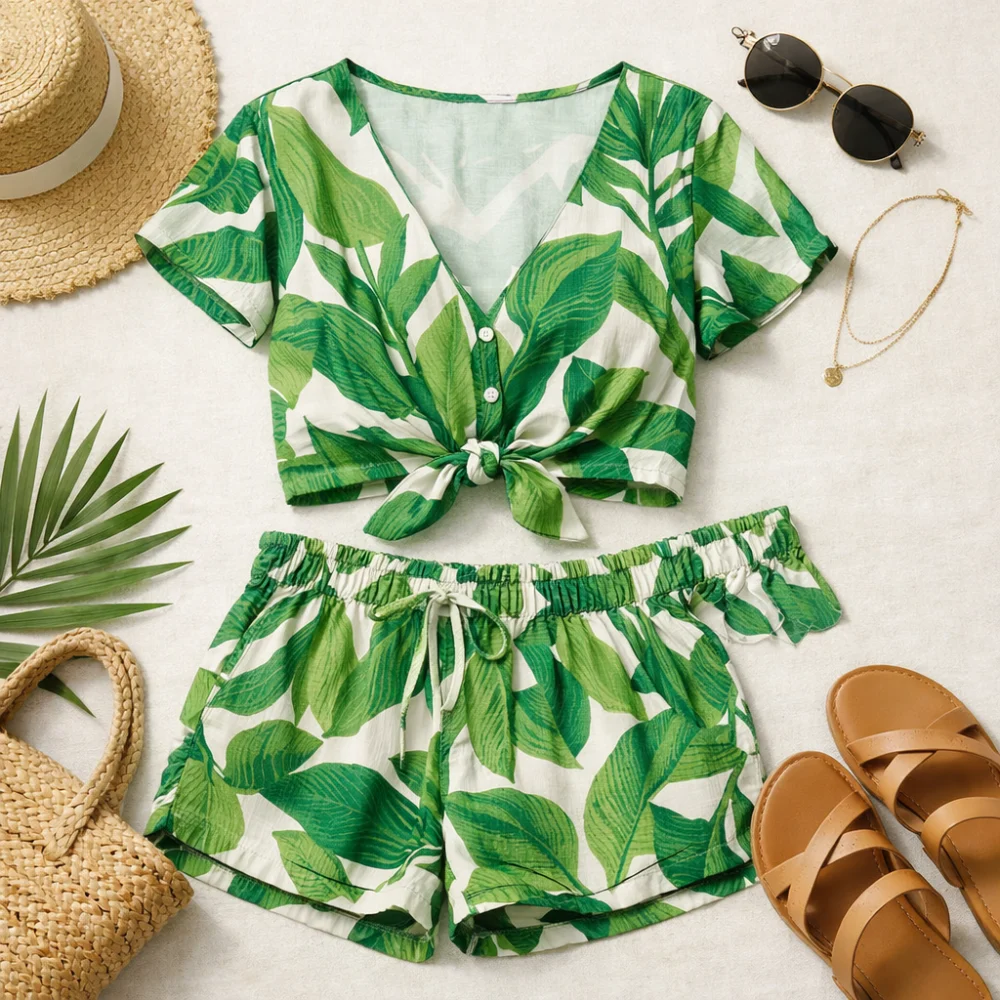
Women’s summer co-ords are an easy way to build a matching outfit without having to piece everything together separately. They can be a relaxed everyday choice, a holiday option or a smarter casual set, depending on the fabric, cut and finish.
The main decision is not just how a set looks, but how it fits your plans. Some co-ords lean towards comfort and ease, while others are more structured or more occasion-friendly. Thinking about where and how you will wear it makes the choice much simpler.
Because co-ords can vary a lot in neckline, sleeve length, trouser or short shape and overall fit, it helps to compare the details carefully. Specifications vary by model, so always check the individual product page before buying.
What should you look for in a women’s summer co-ord?
Start with fabric, fit and how the pieces work together. A good co-ord should suit the weather, feel comfortable for the amount of time you will wear it and match the level of smartness you need. The biggest trade-off is usually between a relaxed, breathable feel and a more polished look.
| Feature | What It Means | Why It Matters | What To Check |
|---|---|---|---|
| Fabric | The material used for the top and bottom | Affects comfort, drape and how suitable the set feels in warmer weather | Look for the fabric description and consider whether you want something lighter, softer or more structured |
| Fit | How closely the set sits to the body | Changes comfort, movement and the overall silhouette | Check the cut of both pieces and whether the style is relaxed, regular or more fitted |
| Top style | The shape of the matching top | Influences coverage, comfort and how dressy the set appears | Review neckline, strap style, sleeve length and length of the top |
| Bottom style | Shorts, trousers or another matching bottom | Determines practicality and how the outfit works in different settings | Check rise, length and whether the leg shape feels suitable for your plans |
| Versatility | How easily the pieces can be worn separately | Improves value if you want more than one outfit from the set | Consider whether the colours and cut will work with items you already own |
Key decision criteria
Fabric and feel
Fabric is often the first thing that changes how a summer co-ord feels to wear. Lighter, softer materials usually feel easier in warm weather, while thicker or more structured fabrics can hold their shape better. If you want all-day comfort, think about whether the set is likely to feel breathable, smooth or heavy.
Fit and silhouette
Co-ords can be relaxed, tailored or somewhere in between. A looser fit can be more forgiving and comfortable, while a neater cut can look more polished. The key is to decide whether you want ease of movement or a sharper outline, then check the fit details for both pieces rather than assuming they match your usual size perfectly.
Coverage and occasion
The right amount of coverage depends on where you plan to wear the set. A shorts co-ord may suit casual days and holidays, while trousers or a longer top may feel more versatile for mixed settings. Think about how much skin you want to show, how easy the outfit is to move in and whether you need something that feels more dressed up.
Colour and pattern
Colour can change how easy the set is to style with other items. Neutral shades tend to be simpler to reuse, while brighter colours and patterns can make the outfit feel more distinctive. If you want maximum flexibility, compare the co-ord with the shoes, bag and outer layers you already wear most often.
Common types and variants
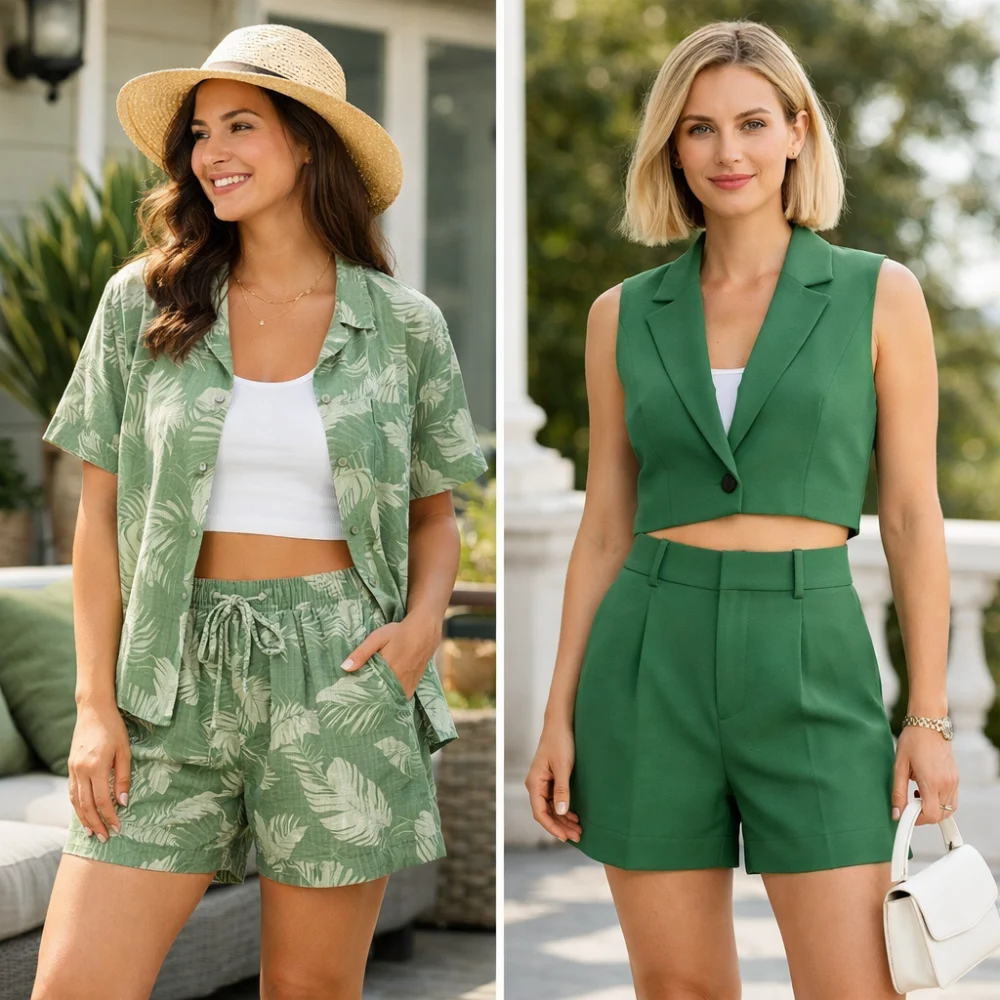
Women’s summer co-ords are usually grouped more by style than by a fixed technical difference. You may see shorts sets, trouser sets, lounge-style sets and shirt-and-short combinations. Each offers a different balance of comfort, coverage and smartness.
- Shorts co-ords: Good for warm weather and easy movement, but less suitable if you want more coverage.
- Trouser co-ords: Often feel a little more versatile and may work better for mixed casual settings, though they can feel warmer.
- Lounge-style sets: Prioritise comfort and ease, but may look more casual than structured outfit sets.
- Shirt-based sets: Can feel a touch smarter and more put together, depending on the fabric and cut.
Which co-ord suits which buyer?
| Buyer need | What to prioritise | What to avoid |
|---|---|---|
| Everyday comfort | Relaxed fit, easy fabric and simple styling | Overly fitted cuts or fabrics that feel restrictive |
| Holiday wear | Light feel, easy packing and pieces that work in more than one outfit | Styles that only suit one specific occasion |
| Wanting a neater look | Cleaner lines, more structured fabric and a balanced silhouette | Very loose shapes if you want a sharper finish |
| More wardrobe flexibility | Colours and cuts that can be worn separately with other items | Sets that only work when worn together |
Common mistakes and misunderstandings
- Choosing by look alone: A co-ord may look right in a photo but feel wrong in wear. Check fabric and fit details as carefully as the style.
- Assuming both pieces will fit the same way: Tops and bottoms can fit differently, so compare the measurements and cut of each piece.
- Overlooking where it will be worn: A set that works for a relaxed day may not suit a smarter setting. Match the style to the main use.
- Ignoring styling flexibility: Some co-ords are easy to wear separately, while others are much more limited. If you want value, think beyond the full set.
Safety and suitability notes
For clothing, the main suitability checks are comfort, coverage and whether the outfit suits the setting you have in mind. If you are buying for travel, lounging or everyday wear, think about ease of movement and whether the set will still feel comfortable after longer wear. If you are unsure between sizes or shapes, the individual product details are more useful than the category name on its own.
Maintenance, storage and lifespan
How easy a co-ord is to care for can be just as important as the style. Check whether the fabric is likely to need gentle washing, careful drying or extra attention when storing, especially if you want the set to keep its shape and finish. Sets worn often will usually benefit from simple care and neat storage so the pieces stay ready to wear together or separately.
How to compare options efficiently
- Decide where you will wear the set most often.
- Choose the type that suits that use, such as shorts, trousers or a lounge-style set.
- Compare fabric, fit and coverage before focusing on colour or pattern.
- Check whether the pieces can work separately with your existing clothes.
- Read the individual product page carefully before deciding.
Summary buyer decision checklist
- Does the fabric suit the weather and the way you want to wear it?
- Is the fit relaxed, regular or more structured in the way you want?
- Do the top and bottom offer the right level of coverage?
- Will the set suit your main occasion, from casual wear to a neater outfit?
- Can the pieces be worn separately for more flexibility?
- Have you checked the product page for the specific details of that set?
Frequently asked questions
Are women’s summer co-ords only for casual wear?
No. Some are clearly casual, while others feel neater and more put together. The fabric, cut and finishing details make the biggest difference, so it is worth looking beyond the simple label.
What is the main advantage of buying a co-ord instead of separate pieces?
A co-ord gives you a ready-made outfit with matching pieces, which can make dressing easier. It can also be useful if you want a coordinated look without spending time pairing items yourself.
Should I choose shorts or trousers?
That depends on comfort, coverage and where you expect to wear it. Shorts usually feel more seasonal and relaxed, while trousers can offer a bit more coverage and sometimes a more versatile look.
How important is fabric for a summer co-ord?
Very important, because it affects comfort, drape and how suitable the set feels in warm weather. If you are unsure, start with the fabric description before looking at colour or styling details.
Can I wear the pieces separately?
Often yes, but not every set is equally versatile. If that matters to you, check whether the top and bottom will work with other items in your wardrobe rather than assuming they will.
What if I am between sizes?
Check the individual product page and look carefully at the cut of both pieces. Co-ords can fit differently at the top and bottom, so the style and shape matter as much as the size label.

