
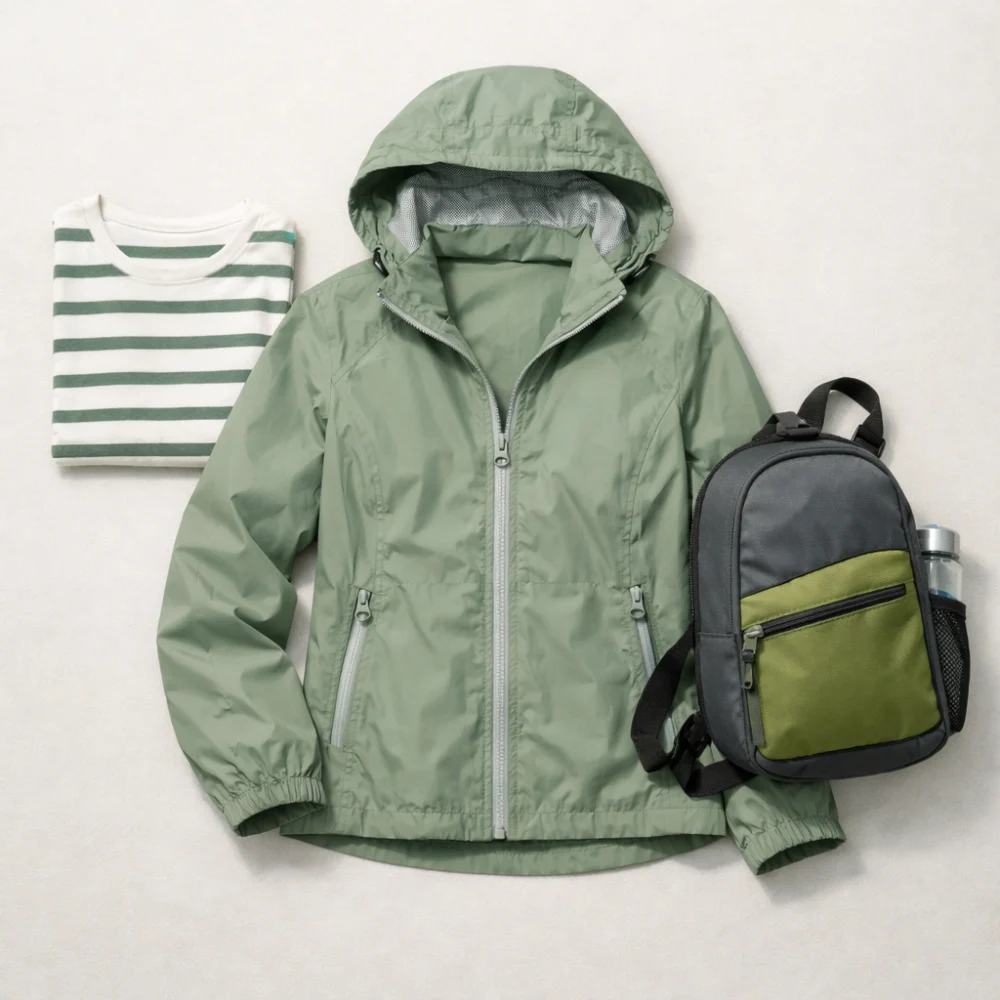
Women’s summer lightweight jackets are a practical layer for days when a T-shirt is not quite enough, but a full coat would feel too warm. They are often chosen for cooler evenings, breezy walks, travel and everyday wear between warmer spells.
The right choice depends less on fashion alone and more on how you plan to wear it. Some buyers want something easy to throw on over casual clothes, while others want a neater layer for commuting, holidays or outdoor time. The main decision is usually between breathability, coverage, packability and weather protection.
Because styles in this category vary widely, it helps to compare the jacket’s intended use, fabric feel and level of protection before focusing on appearance. Specifications vary by model, so always check the individual product page before buying.
What should you look for in a women’s summer lightweight jacket?
Start with the conditions you want the jacket to handle. A lightweight summer jacket may be aimed at mild wind, light showers, sun cover or simple layering, and those uses are not all the same. A breathable, easy-to-pack layer is often the most versatile, but a little extra protection can be worth it if your weather is unpredictable. The best starting point is to decide whether you need comfort first, or more coverage first.
| Feature | What it means | Why it matters | What to check |
|---|---|---|---|
| Weight and packability | How easy the jacket is to carry or tuck away | Useful for travel, bags and changeable weather | Whether it folds or packs neatly, and whether that suits your routine |
| Breathability | How well air can move through the fabric | Helps reduce stuffiness in milder weather | Fabric description and whether it is intended for active or casual wear |
| Coverage | How much of the upper body the jacket covers | Changes how much warmth and wind protection it gives | Length, sleeve style, collar height and whether you prefer a close or relaxed fit |
| Weather protection | How much help it gives against wind or light rain | Important if the weather changes during the day | Product wording about water resistance, shower resistance or wind protection |
| Fit and layering room | How the jacket sits over tops or light knitwear | Affects comfort and movement | Fit description, sizing notes and whether you plan to layer underneath |
| Style and finish | The overall look and how formal or casual it feels | Helps the jacket suit your wardrobe | Length, shape, fastening style and whether it works with the clothes you already wear |
Key decision criteria explained
Fabric and feel
Summer jackets are often chosen for their lighter hand feel and easier wear in mild temperatures. A smoother fabric may feel neater for everyday use, while a softer or more relaxed fabric may suit casual wear or holiday packing better. Think about how often you will wear it, and whether you want something that disappears into a bag or something that gives a more structured look.
Breathability versus protection
This is one of the biggest trade-offs in the category. More protective designs can be useful when the weather turns, but they can also feel warmer or less airy. If you run hot, prefer breathable layers or active days out, comfort may matter more than extra coverage. If you are often caught by wind or passing showers, a slightly more protective jacket can be the better compromise.
Fit, length and layering
Fit changes how useful the jacket feels in real life. A closer fit can look streamlined, but may leave less room for a top underneath. A looser fit is easier to layer and may feel more relaxed, though it can look less polished on some outfits. Length also matters because it affects both coverage and styling, especially if you want the jacket to work with dresses, trousers or casual summer layers.
Fastening and detailing
Small design choices often have a big effect on practicality. Open-front styles can feel easy and lightweight, while zipped or buttoned designs may give more secure coverage. Pockets, hoods and cuffs can add convenience, but they also change the jacket’s look and feel. Decide which details you will actually use rather than assuming every extra feature will be helpful.
Common types and style variants
This category covers a wide mix of lightweight outer layers, so it helps to think in broad style groups rather than expecting one uniform product type.
- Casual everyday jackets: Suitable for regular wear with jeans, dresses or casual trousers. Their main strength is versatility, although they may not offer much weather protection.
- Packable travel-friendly layers: Useful when you want something easy to carry for unpredictable conditions. Their main limitation is that they may prioritise convenience over structure or extra warmth.
- More weather-focused lightweight jackets: Helpful when wind or light rain is a concern. They can be the most practical choice for changeable conditions, but may feel less airy in warm weather.
- Soft, fashion-led layers: Good when the jacket is mainly part of the outfit rather than a technical layer. They can look relaxed and stylish, but often provide less practical protection.
If you are comparing similar-looking jackets, read the product description carefully. Specifications vary by model, so always check the individual product page before buying.
Which jacket suits which kind of buyer?
| Buyer need | Most useful features | Why this helps | Possible trade-off |
|---|---|---|---|
| Everyday casual wear | Easy fit, simple styling, comfortable fabric | Works with more outfits and is easy to reach for often | May not be the most protective option |
| Travel and days out | Light weight, packable design, quick layering | Easy to carry and useful when the weather changes | May sacrifice structure or extra detailing |
| Unsettled summer weather | Wind protection, light shower resistance, secure fastening | More useful when conditions are mixed | Can feel warmer or less breathable |
| Outfits with a neat finish | Cleaner lines, balanced length, smarter styling | Helps the jacket look intentional rather than purely practical | May be less relaxed for very casual wear |
Common mistakes to avoid
- Choosing by appearance alone: A jacket can look right but still feel too warm, too loose or too light for what you need.
- Assuming all lightweight jackets are weatherproof: Light and packable does not automatically mean suitable for rain or wind.
- Ignoring layering needs: If you plan to wear it over other clothes, check that the fit leaves enough room without feeling bulky.
- Overlooking length and sleeve style: These details change both comfort and coverage more than many buyers expect.
- Expecting one jacket to do everything: A layer that is great for travel may not be the smartest choice for cooler evenings or unsettled weather.
Safety and suitability considerations
Check that the jacket suits the intended use rather than assuming it will work for all summer conditions. A lightweight outer layer can be useful, but it is not the same as a dedicated rain shell or a warm outer coat. If you are buying for unpredictable weather, pay close attention to the product wording about protection, fit and fabric so you understand the limits of the design.
Care, storage and everyday use
Lightweight jackets are often chosen because they are easy to wear and store, but the exact care needs depend on the fabric and construction. Some may be simple to hang, fold or pack away, while others may need a little more care to keep their shape or finish looking good. If you plan to travel with the jacket often, think about how easily it creases, whether it packs neatly and how much room it takes in a bag or drawer.
How to compare options efficiently
- Decide where and when you will wear the jacket most often.
- Choose the broad type that fits that use, such as casual, packable or weather-focused.
- Compare fabric feel, breathability, fit and coverage first.
- Then check practical details such as fastening, pockets and layering room.
- Read the individual product page carefully before you decide.
Summary buyer decision checklist
- Does it suit the weather conditions you actually expect?
- Is the fit right for wearing alone or over layers?
- Do you prefer breathable comfort or more coverage?
- Is the length and style right for your wardrobe?
- Will you use the practical details, such as pockets or a fastening?
- Have you checked the individual product page for the exact model details?
Frequently asked questions
What is the main purpose of a summer lightweight jacket?
It is usually designed as a light outer layer for milder weather, when you want a bit of coverage without the bulk of a heavier coat. Many buyers use one for breezy days, evenings out or travel. The exact balance between comfort and protection varies by model.
Should I choose a breathable jacket or a more protective one?
That depends on how often you expect wind or light rain. If comfort in warmer conditions matters most, breathability may be the better priority. If your weather is more changeable, a little extra protection can be worth the trade-off.
How should a lightweight jacket fit?
It should feel comfortable enough for the way you plan to wear it. If you want to layer it over tops or thin knitwear, leave enough room for movement without it feeling oversized. If you want a neater look, pay close attention to the shape and length described on the product page.
Are lightweight jackets good for travel?
They can be, especially if you want an easy layer for changing temperatures. A packable or simple design is often convenient in a bag or suitcase. If travel convenience matters, check how easy the jacket is to fold, store and wear over other clothes.
Can one summer jacket work for both casual wear and smarter outfits?
Sometimes, yes. A cleaner shape and balanced length can make a lightweight jacket easier to dress up or down. The more fashion-led the style, the more likely it is to suit one kind of outfit better than another.
What details matter most when comparing similar jackets?
Focus on fabric feel, fit, coverage and any protection claims first. Then look at practical details such as fastening, pockets and whether the style suits your usual clothes. Small differences can change comfort more than the headline look suggests.

