
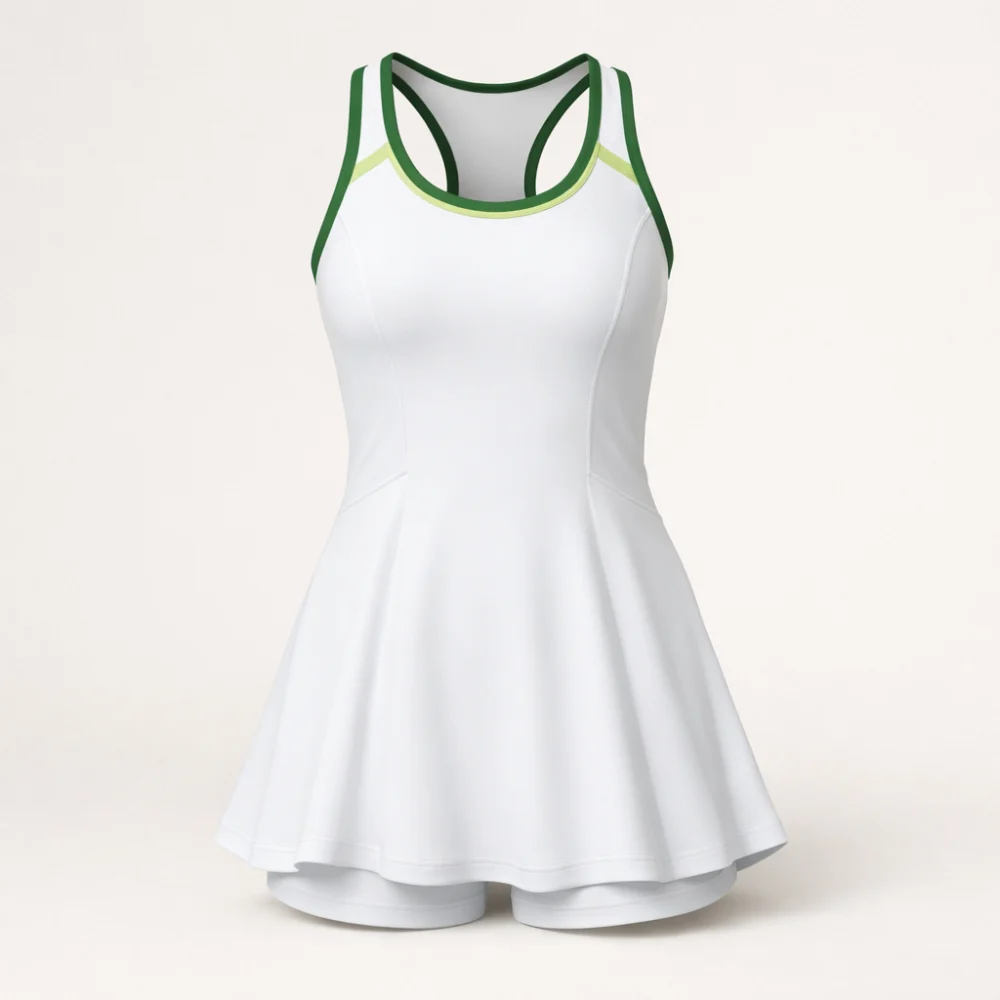
Women’s tennis dresses are designed for players who want one outfit that feels streamlined on court and still gives freedom to move. They can be a practical choice for matches, practice sessions and casual play, but the details matter because styles vary quite a bit.
If you are comparing options, it helps to focus on the features that affect comfort, movement and convenience rather than the look alone. Small differences in fit, support, shorts, pockets and neckline can change how the dress feels during a long session.
This guide explains the main buying points so you can narrow the choice quickly and avoid common mistakes. Specifications vary by model, so always check the individual product page before buying.
What should you look for in a women’s tennis dress?
The best starting point is fit and movement: a tennis dress should feel secure enough to stay in place, but not so tight that it restricts your swing or footwork. After that, look at the built-in support, the type of shorts or lining included, and whether the dress has pockets or other practical details you will actually use. The main trade-off is usually between a cleaner, lighter feel and extra convenience features.
| Feature | What it means | Why it matters | What to check |
|---|---|---|---|
| Fit | How closely the dress follows the body | Affects comfort, confidence and freedom of movement | Check the size guide, cut and whether the style is described as fitted or relaxed |
| Built-in shorts or lining | Inner layer worn under the outer dress | Can improve coverage and reduce the need for separate sports shorts | Look for how the inner layer is described and whether it suits your preference for coverage |
| Support | Whether the dress includes built-in bust support or is meant to be worn with a separate sports bra | Important for comfort and support during play | Check whether support is built in or whether you will need to add your own layer |
| Pockets | Storage space for balls or small items | Useful if you want quick access during drills or play | See where pockets are placed and whether they are described as suitable for tennis balls |
| Neckline and straps | Top-of-dress shape and shoulder coverage | Changes how secure, open or modest the dress feels | Compare sleeveless, racerback, V-neck and zip-front styles |
| Fabric feel | How the material is described in terms of stretch, weight and breathability | Impacts comfort through movement and during warm conditions | Read the product description for stretch, airflow and care notes |
Key decision criteria explained
Fit and mobility
Tennis involves running, reaching and quick changes of direction, so the dress should let you move naturally. A closer fit may feel more streamlined, while a looser cut may feel easier for some players in warmer conditions. The most useful check is how the product is described and whether the brand offers a size guide.
Built-in shorts
Many tennis dresses include shorts underneath, which adds coverage and convenience. This can be especially helpful if you prefer an all-in-one outfit, but the inner layer should still feel comfortable when you bend, lunge and serve. If you prefer to wear your own shorts or compression layer, check whether the dress is designed with that in mind.
Support and layering
Some dresses include support in the bodice, while others are intended to be worn over a separate sports bra. That difference matters because it changes both comfort and the way the dress sits on the body. If support is important to you, look for a clear description rather than assuming the dress includes it.
Pockets and practicality
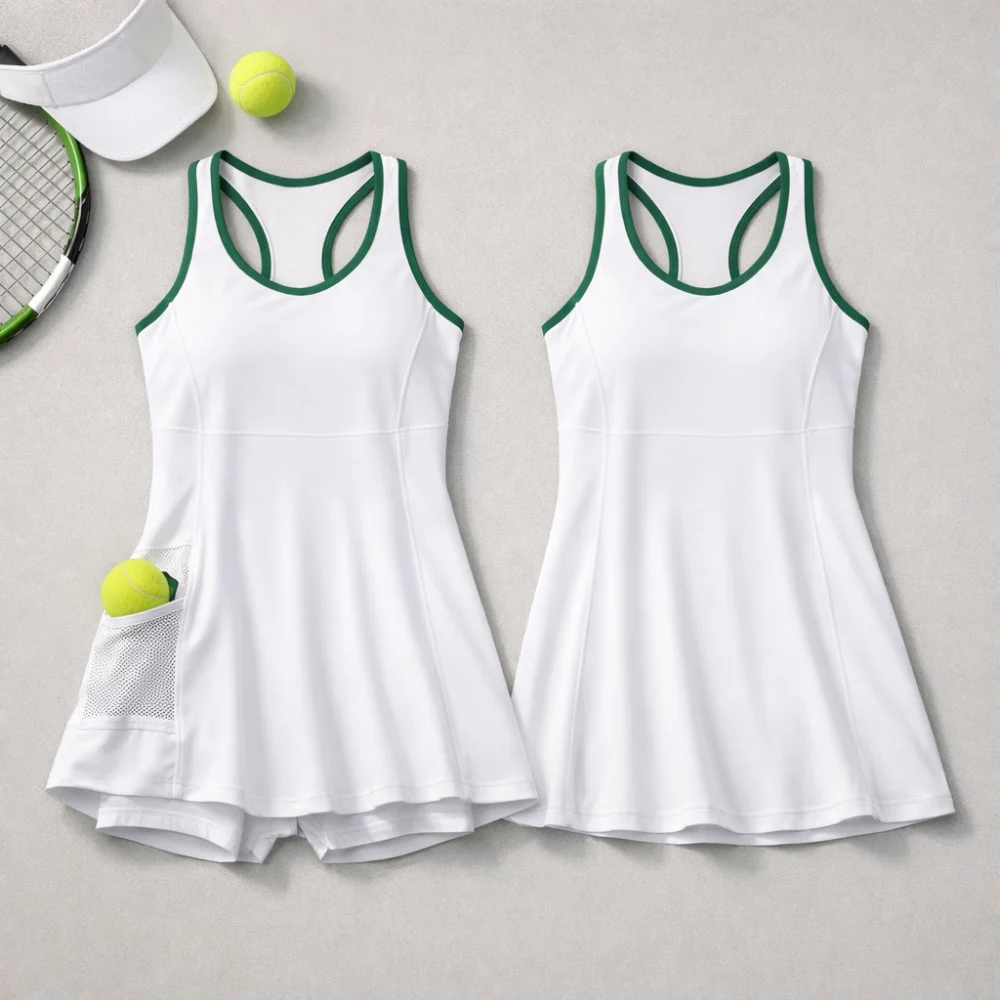
Pockets can be genuinely useful, but not every pocket arrangement works well for tennis. A pocket that is too small or poorly placed may be less helpful than no pocket at all. Check whether the product mentions ball storage, side pockets or other practical details if convenience matters to you.
Fabric and feel
Fabric descriptions can be broad, but they still tell you a lot about likely comfort. Look for terms that suggest stretch, breathability and easy movement, especially if you expect to wear the dress for longer sessions. If you prefer a softer or more structured feel, the product page is the best place to compare the description with the style shown.
Common women’s tennis dress types and variants
Within this category, you are usually comparing a few straightforward style differences rather than completely different product types. Some dresses are sleeveless with a sporty cut, some have racerback shaping, some use a V-neck, and some include a half-zip or similar front detail. Those choices mainly affect coverage, ease of dressing and how the neckline feels during play.
Another common difference is whether the dress includes pockets, built-in shorts or built-in bust support. More features can increase convenience, but they can also add bulk or make the fit feel less minimal. If you value simplicity, a cleaner design may be more comfortable than a feature-heavy one.
Which features suit different buyers?
| Buyer need | Useful features | Why this suits them |
|---|---|---|
| Casual club player | Comfortable fit, built-in shorts, easy movement | Makes it simple to wear for practice and social matches |
| Player who wants convenience | Pockets, all-in-one design, secure support | Reduces the need to layer separate items |
| Player focused on freedom of movement | Stretchy feel, sensible neckline, non-restrictive cut | Helps the dress work with quick footwork and reaching |
| Buyer who prefers a more modest feel | Higher neckline, more coverage, layered construction | Can feel more reassuring and less open during play |
| Warm-weather player | Light, breathable-feeling fabric and a less bulky build | May feel more comfortable during longer sessions |
Common mistakes and misunderstandings
- Choosing on looks alone. A dress may look polished, but the fit, shorts and support are what affect how it performs on court.
- Assuming all tennis dresses include the same support. Some are designed to be worn with a separate sports bra, so check the description carefully.
- Overlooking pocket placement. Pockets can be useful, but only if they are positioned and shaped in a way that works for you.
- Ignoring the inner layer. Built-in shorts can be a major comfort factor, especially if you like a one-piece solution.
- Not checking size guidance. Tennis dresses can vary in cut, so the same size may feel different from one model to another.
Safety and suitability caveats
Choose a dress that feels stable enough for active movement and does not distract you during play. If you are buying for a specific comfort need, check the product page for the exact support, coverage and layering description rather than assuming standard features. For any dress, the right choice is the one that suits your body, your preferred level of coverage and the way you actually play.
Maintenance, storage and lifespan considerations
Tennis dresses are usually easier to manage when the fabric is simple to wash and quick to dry, but care needs vary by model. Check the label or product description if you want something low-fuss for regular use. If a dress includes built-in shorts or extra structure, it may also take a little more care when washing and storing.
How to compare options efficiently
- Start with your main use: match play, practice, casual club tennis or occasional wear.
- Decide how much coverage and support you want from the dress itself.
- Compare the practical details that matter most to you, such as pockets, shorts and neckline.
- Look at the fit description and size guidance before choosing.
- Check the individual product page for the exact construction and care information.
Summary buyer decision checklist
- Does the fit suit your movement and comfort preference?
- Do you want built-in shorts, or would you rather wear your own layers?
- Is the support level clear on the product page?
- Are the pockets useful for how you play?
- Does the neckline and strap style feel right for you?
- Have you checked the size guide and care details?
Frequently asked questions
Do women’s tennis dresses need built-in shorts?
Not always, but built-in shorts are a common and practical feature. They can make the dress easier to wear on court because you do not need to coordinate a separate bottom layer. If you already have preferred shorts or compression wear, a simpler dress may suit you better.
Are tennis dresses suitable for practice as well as matches?
Yes, many buyers use them for both. The key is whether the dress feels comfortable for longer sessions and repeated movement. A simple, well-fitting design can work well for both training and match play.
Should I choose a dress with pockets?
Only if you will use them. Pockets are helpful for carrying tennis balls or small items, but they are not essential for everyone. If you prefer a cleaner feel, a pocket-free dress may be more comfortable.
How important is the neckline style?
It matters more than many shoppers expect because it affects comfort, coverage and how secure the dress feels. A higher or more structured neckline may suit some players, while others prefer a more open style. The best choice is the one that lets you move confidently without distraction.
Can one tennis dress suit every body type?
Not really, because fit preferences vary and body shapes differ. The most useful approach is to compare the cut, size guidance and support description against what you know works for you. A dress that suits one player very well may feel too fitted or too loose for another.
What should I prioritise if I am buying my first tennis dress?
Start with comfort, movement and the level of support you want. After that, decide whether built-in shorts and pockets are features you will actually use. If you keep the decision focused on those basics, it becomes much easier to narrow the options.

