
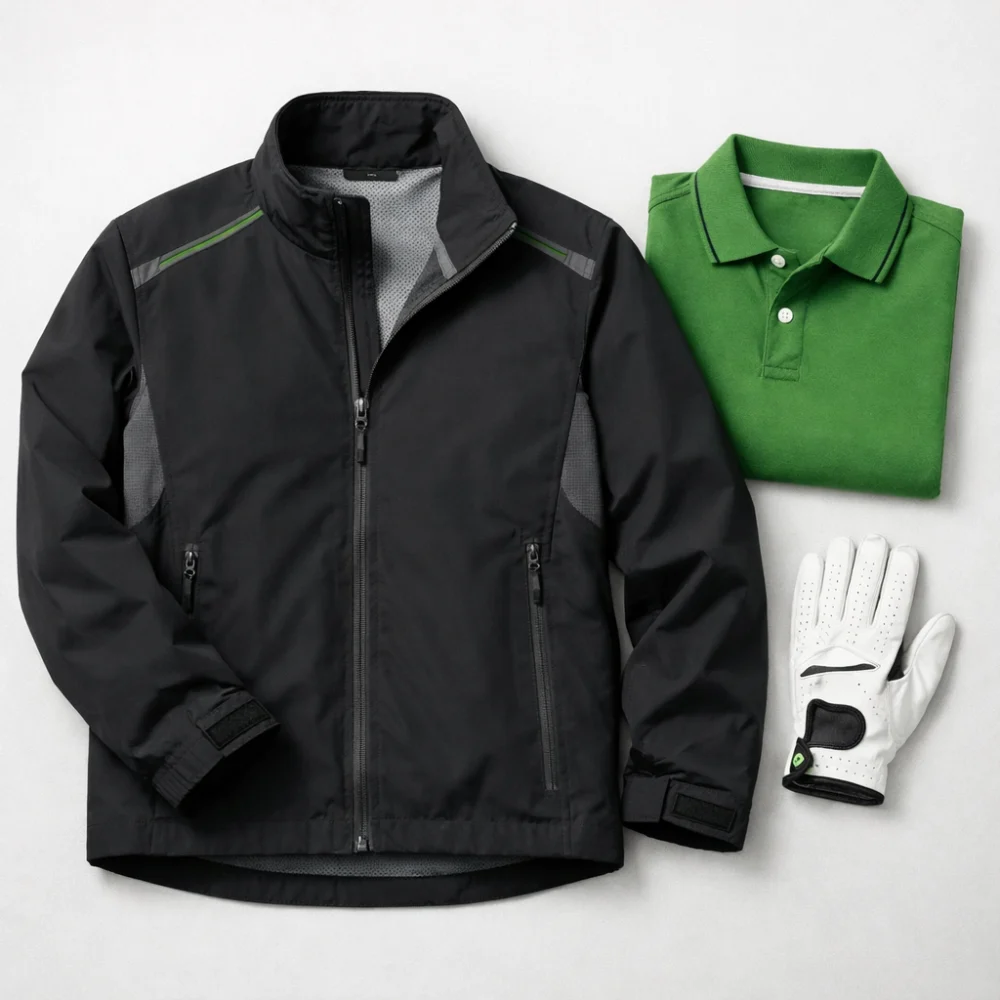
Men’s golf jackets are built to help you stay comfortable when the weather changes on the course. The right choice depends on whether you need light wind protection, rain resistance, extra warmth or a balance of all three.
Because golf involves repeated swings and walking, a jacket that feels fine off the course may still be awkward to play in. The main buying question is not simply how warm or waterproof it is, but how well it matches the conditions you usually face and the amount of movement you want.
Specifications vary by model, so always check the individual product page before buying.
What should you look for in a men’s golf jacket?
Start with the weather you are trying to handle, then think about how much freedom of movement you want through the shoulders and arms. A lighter jacket is often easier to swing in, while a more protective jacket may be better for wet or cold rounds. The main trade-off is usually protection versus breathability and bulk.
| Feature | What it means | Why it matters | What to check |
|---|---|---|---|
| Weather protection | How much resistance the jacket offers to wind, rain or cool air | Helps you stay comfortable in changing conditions | Look for the level of protection described on the product page and match it to your typical weather |
| Mobility | How easily you can rotate and swing in the jacket | Affects comfort during play | Check the cut, stretch features and whether the jacket is intended for golf movement |
| Breathability | How well the jacket lets heat and moisture escape | Helps reduce clamminess when walking or layering | See whether the product notes mention breathability or ventilation |
| Warmth | How much insulation or layering support the jacket provides | Important for colder months and early starts | Consider whether you need a shell, a light layer or something more insulating |
| Fit | The shape and amount of room through the body and sleeves | Influences both comfort and layering | Check the fit description and whether you plan to wear it over a polo, mid-layer or both |
| Packability | How easy it is to carry or store when not worn | Useful when conditions change during a round | Consider whether you want something light enough to keep in a bag |
Key decision criteria
Weather protection
Think first about the conditions you are most likely to face. If you mainly want a barrier against light wind, a lighter jacket may be enough. If you often play in persistent rain, you will want a more protective option, but that can bring a trade-off in weight, warmth and breathability.
Mobility and swing comfort
Golf jackets should support a full swing without pulling at the shoulders or bunching around the elbows. Stretch panels, articulated sleeves or a more athletic cut can help, but the exact design varies. Look closely at the fit description and any mention of freedom of movement.
Layering
Many buyers wear a jacket over a polo or a mid-layer, especially in cooler weather. If you plan to layer, allow enough room for comfort without buying so loose that the jacket feels bulky. A jacket that is comfortable over one thin layer may feel restrictive over two.
Fabric and finish
Different jackets are made for different balances of softness, protection and ease of care. A smoother outer finish may be better for shedding drizzle or wind, while a softer feel may be preferable for everyday wear. The useful check is how the jacket is described for its intended use rather than assuming one fabric is automatically better.
Pockets, fastening and details
Small details can affect everyday use. A full zip may be easier to adjust during a round, while pocket layout can matter if you want to keep small items secure. These features are worth checking, but they should not outweigh fit and weather suitability.
Common jacket types and variants
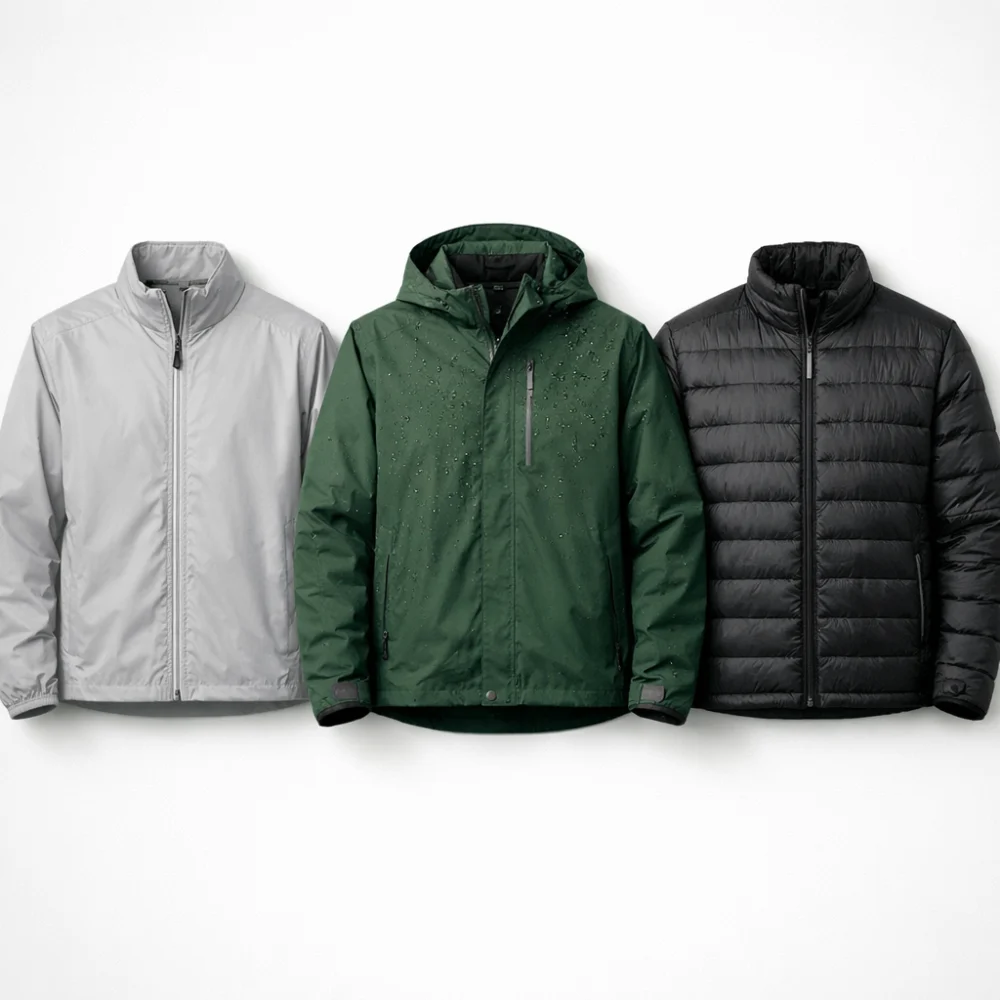
Men’s golf jackets are usually chosen by function rather than fashion alone. The most common practical differences are whether the jacket is mainly for wind, rain or warmth.
- Wind jackets: useful for breezy days and lighter protection. They tend to be easier to move in, but they may not suit heavy rain or cold conditions.
- Waterproof jackets: better when rain is a regular concern. They offer more protection, but may feel less airy and can be less compact.
- Insulated or padded jackets: suited to colder weather. They can be comfortable off the course too, although they may feel too warm or bulky for mild conditions.
- Lightweight stretch jackets: a versatile middle ground for changeable weather. Their limitation is that they may not provide the same level of protection as more specialised options.
Which type suits which buyer?
| Buyer need | What to prioritise | Why |
|---|---|---|
| Frequent wet-weather rounds | Rain protection and reliable coverage | Comfort depends more on staying dry than on a lighter feel |
| Windy but mild conditions | Lightweight wind resistance and mobility | Too much insulation can be unnecessary and restrictive |
| Cold early-morning tee times | Warmth and layering room | Keeping warm matters most before the round has warmed up |
| Occasional use or mixed conditions | A balanced jacket with adaptable fit | A versatile option may be more practical than a highly specialised one |
| Prioritising easy storage | Packability and low bulk | A jacket that stores neatly is easier to keep in the bag |
Common mistakes and misunderstandings
- Choosing only by waterproofness: a jacket can be protective but still uncomfortable if it restricts your swing or feels too warm.
- Buying too tight a fit: golf movement and layering both need a little room, so a very close fit can be limiting.
- Ignoring breathability: protection is useful, but if the jacket traps too much heat it may feel unpleasant during longer walks.
- Assuming one jacket works for every season: a lightweight wind layer and a colder-weather jacket solve different problems.
- Overlooking care requirements: some jackets need more careful washing or storage than casual outerwear, so check the care advice.
Safety and suitability caveats
Choose a jacket that suits the way you actually play and the conditions you usually face. If you expect rain, cold or wind, do not rely on appearance alone; check the product information carefully for the intended level of protection. For any jacket, make sure the fit allows comfortable movement and does not interfere with your normal swing or layering.
Maintenance, storage and lifespan considerations
Golf jackets generally last better when they are cleaned and stored according to the care instructions on the product page or label. Some outerwear benefits from gentle washing and air drying, while heavier insulated pieces may need more careful storage to keep their shape. If you plan to use the jacket often, think about whether it will be easy to keep clean after wet or muddy rounds.
How to compare options efficiently
- Decide whether you need wind protection, rain protection, warmth or a balance of these.
- Check the fit and whether you will wear the jacket over one layer or more.
- Compare mobility-focused details such as stretch, sleeve shape and overall cut.
- Look at breathability and packability if you expect changing conditions.
- Read the individual product page carefully for the exact features and care guidance.
Summary buyer decision checklist
- Have I matched the jacket to the weather I usually play in?
- Will it allow comfortable movement through the swing?
- Is there enough room for the layers I expect to wear underneath?
- Does the level of protection fit my needs without adding unnecessary bulk?
- Have I checked the individual product page for the exact details and care advice?
Frequently asked questions
Do I need a waterproof golf jacket?
Only if you regularly play in wet weather or want better rain protection than a light layer can give. Some buyers are better served by a wind jacket or a lighter outer layer if rain is infrequent. The right choice depends on how often you actually encounter wet rounds.
What is the difference between a golf jacket and a regular casual jacket?
A golf jacket is generally chosen with movement and playability in mind. A casual jacket may be warm or stylish, but it is not always as comfortable for swinging or layering during a round. The key difference is usually how the jacket is designed to support sport rather than everyday wear alone.
Should I size up for a golf jacket?
Not automatically. It depends on the jacket’s cut and whether you plan to wear it over other layers. If you expect to layer up, make sure the fit gives enough room without becoming too loose for comfortable movement.
Are lighter jackets always better for golf?
Not always. Lighter jackets can be easier to swing in, but they may not be enough for cold or wet conditions. A lighter option works best when the weather is mild and you want less bulk.
How important is breathability?
Very important if you walk the course or play in changeable weather. Without enough breathability, you may end up feeling damp or overheated even when the jacket is protecting you from wind or drizzle. It is one of the most useful checks for comfort.
What should I check before buying online?
Check the intended weather use, the fit description, any mobility or stretch details, and the care instructions. It is also sensible to compare the jacket’s practical purpose with how you plan to use it, rather than assuming all golf jackets perform the same job.

