
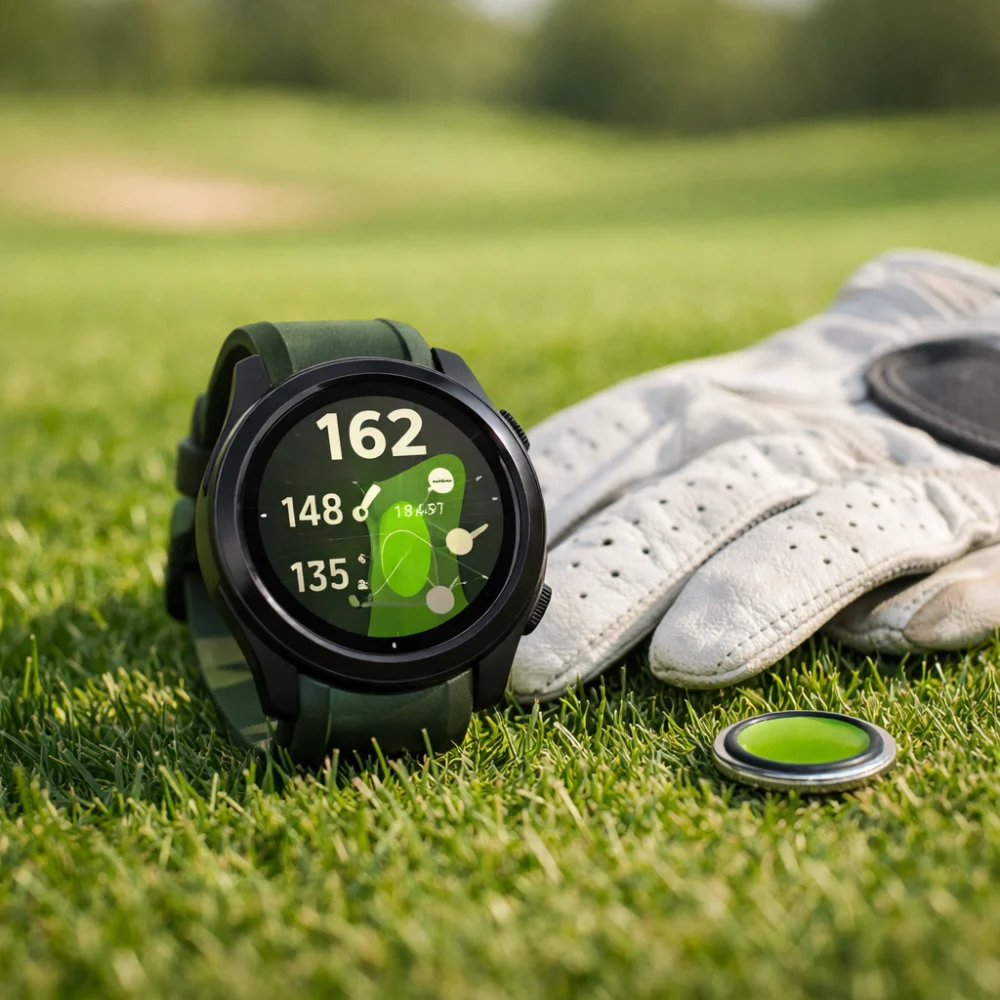
GPS golf watches are for golfers who want distance information on the wrist rather than carrying a separate handheld device or relying on the course signage. They are popular with players who want a quick glance at yardages, a simpler way to move round the course and a more compact option than larger golf tech.
The right choice depends on how you play, how much information you want to see during a round and how much setup you are comfortable with. Some buyers want a simple watch that shows front, middle and back distances, while others prefer more detailed course information or extra features.
Because GPS golf watches vary quite a lot between models, it helps to focus on the information you need during a round and the level of convenience you want off the course as well. Specifications vary by model, so always check the individual product page before buying.
What should you look for in a GPS golf watch?
Start with the basics: clear yardage information, an interface you can read quickly and a watch size that feels comfortable throughout 18 holes. Then decide whether you want a simple distance watch or a model with extra course detail and added golf features. The main trade-off is usually simplicity versus detail, with more functions often bringing more menus, more setup and sometimes a busier display.
| Feature | What it means | Why it matters | What to check |
|---|---|---|---|
| Display style | How the watch presents yardages and course information | A clearer display is easier to read quickly during play | Whether the screen suits your eyesight, pace of play and preference for simple or detailed information |
| Controls | Buttons, touch control or a mix of both | Controls affect ease of use in wet weather and while wearing gloves | Whether the control method suits how you normally play |
| Course detail | The level of mapping or hole information shown | More detail can help with planning, but not every golfer needs it | Which on-course views are included and how easy they are to understand |
| Wearability | How the watch feels on the wrist | Comfort matters if you wear it for a full round | Case size, strap style and whether the watch looks practical for everyday wear too |
| Battery approach | How the watch is powered and how often it needs charging | You want enough power for your typical round pattern | Any stated battery details on the product page and whether that suits your routine |
| Extra golf features | Functions beyond basic yardages | Useful extras can add value, but only if you will use them | Whether features such as score tracking or performance tracking are included and relevant to you |
Key decision criteria explained
Ease of use
Many buyers underestimate how much easier a simple watch can be during a round. If you mainly want fast yardages, look for a watch that keeps the interface straightforward and does not bury core information behind too many screens. If you like data and are happy exploring menus, a more feature-rich watch may suit you better.
Course information
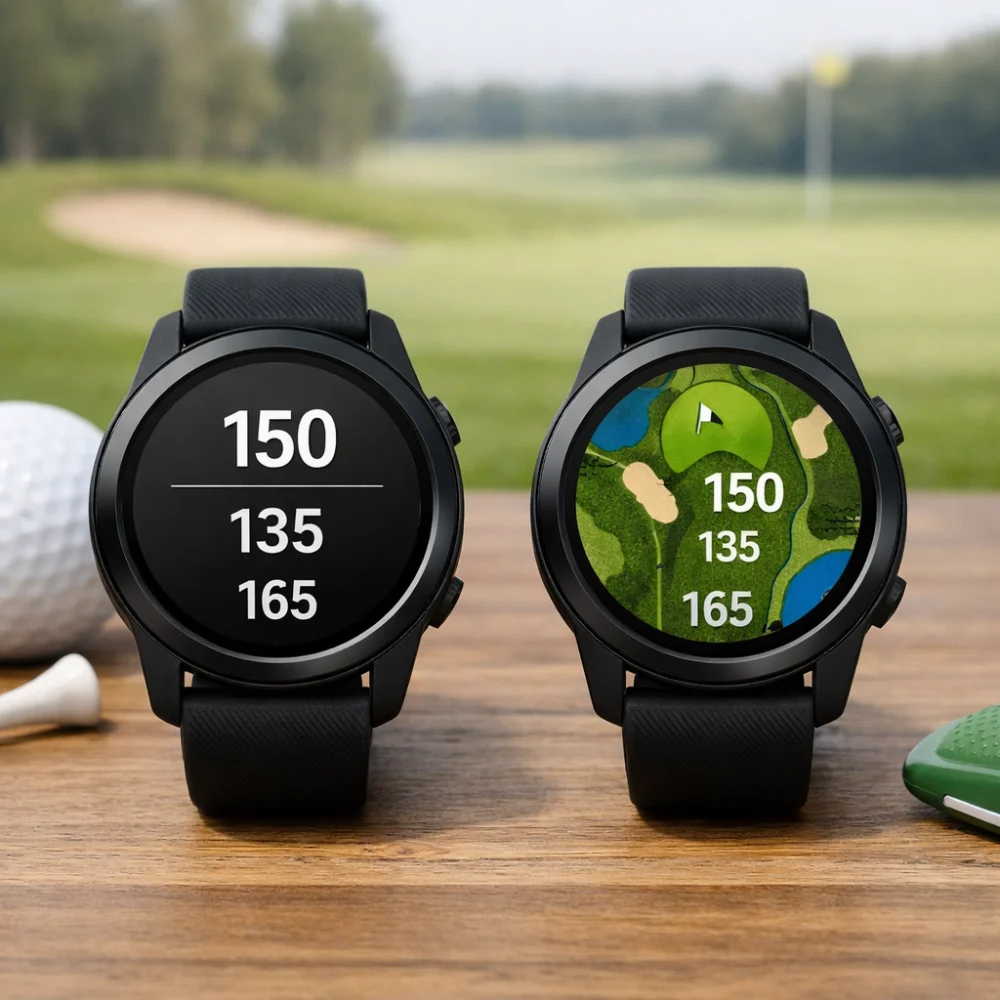
Different watches can present golf information in different ways, from basic distance readings to more detailed course views. More detail can be helpful if you like to plan approach shots carefully, but some golfers prefer a less cluttered display. Think about what you actually use on the course rather than paying for features you may ignore.
Comfort and size
A golf watch should be comfortable enough to wear for a full round without distraction. Size, weight, strap feel and how the watch sits under a sleeve can all affect day-to-day satisfaction. A large screen may be easier to read, but it can also feel more noticeable on the wrist.
Battery and charging routine
Charging habits matter more than many buyers expect. If you play often, travel for golf or sometimes forget to charge devices, check whether the watch’s stated battery approach matches your routine. The right answer is not always the longest battery on paper; it is the one that suits your week.
Extra functions
Some GPS golf watches include added features such as score keeping or performance tracking. These can be useful if you want more than distance readings, but they also add complexity. It is usually better to choose a watch that does a few things well than one with many features you will not use.
Types of GPS golf watch
Within this category, the main differences are usually about complexity rather than completely different product types.
- Simple distance watches show core yardages in a clear format and suit golfers who want quick information with minimal fuss.
- Feature-rich golf watches add more course detail or performance functions and suit buyers who want a broader toolkit.
- Touchscreen models may be easier to navigate for some users, while button-controlled watches can feel more dependable in wet conditions or when wearing gloves.
The limitation of a simpler watch is that it may not show as much course detail. The limitation of a more advanced watch is that it can take longer to learn and may feel more complicated than you need.
Which watch suits which kind of buyer?
| Buyer need | Better fit | Why |
|---|---|---|
| First-time GPS user | Simple watch with clear core distances | It keeps the learning curve low and makes the round easier to follow |
| Golfer who values quick pace of play | Easy-to-read display with uncomplicated controls | Fast checks matter more than deep menu options |
| Player who likes planning shots | Watch with more course detail | Extra views can help when you want more context before a shot |
| Buyer who wants less to carry | Watch rather than a handheld device | It keeps GPS information on the wrist and out of the bag pocket |
| Gift buyer | Model with straightforward operation | A simpler watch is usually easier for the recipient to start using |
Common mistakes to avoid
- Choosing by features alone. A long list of functions is not useful if the watch is hard to read or awkward to use.
- Ignoring comfort. A watch can be technically suitable but still feel too bulky or distracting for regular play.
- Assuming every watch displays information in the same way. Layout and readability can make a big difference in use.
- Overlooking routine needs. Think about charging, packing and whether you want something suitable for everyday wear as well as golf.
Safety and suitability caveats
GPS golf watches are generally a straightforward buying decision, but suitability still depends on how and where you play. Check that the display, controls and any extra features fit your normal round conditions, especially if you often play in wet weather or prefer to keep your setup simple. If you want a watch mainly for golf, make sure the golf functions are the ones you will actually use.
Maintenance, storage and lifespan considerations
Most buyers should think about charging, keeping the watch clean after use and storing it safely between rounds. If you play often, a simple routine makes ownership easier: charge it regularly, wipe it down after use and keep it somewhere protected when not in use. If a model offers extra features or a more detailed display, that can also mean a bit more setup and more to remember when you first start using it.
How to compare options efficiently
- Decide whether you want basic distances or more detailed golf information.
- Check which control style feels easiest to use for your hands and playing conditions.
- Compare comfort, screen readability and overall wearability.
- Look at any extra functions and decide whether they are genuinely useful to you.
- Read the individual product page carefully before choosing.
Summary buyer decision checklist
- Do I want a simple distance watch or one with extra golf features?
- Is the display easy enough to read quickly during play?
- Will the watch feel comfortable for a full round?
- Do the controls suit my preference and playing conditions?
- Will the charging routine fit how often I golf?
- Am I paying for features I will actually use?
Frequently asked questions
Do GPS golf watches replace a handheld GPS device?
They can, for many golfers, because the main course information is available on the wrist. Some players still prefer a handheld device for a larger display or a different layout, so the better choice depends on how you like to read information during a round.
Is a golf watch easier to use than a rangefinder?
Often, yes, if you want quick yardages without pointing a device at the target. A rangefinder and a watch solve slightly different problems, so the easier option depends on whether you want speed, visual targeting or both.
Are more features always better?
Not necessarily. Extra functions can be useful, but they also make a watch more complex and may add clutter to the interface. Many buyers are happier with a model that does the essentials clearly.
Can I wear a GPS golf watch off the course?
Some buyers do, especially if they prefer a watch that feels practical day to day as well as on the course. Whether that makes sense depends on the size, style and overall comfort of the model you are considering.
What matters most for a beginner?
Beginner golfers usually benefit from clear distances, simple controls and an interface that does not distract from the round. A watch that is easy to understand is often more useful than one with advanced functions that take time to learn.
How do I avoid buying a watch that feels too complicated?
Focus on the core question: what do you want to see during a round? If the answer is mainly basic yardages, choose a watch built around that need and treat extra features as optional rather than essential.

