
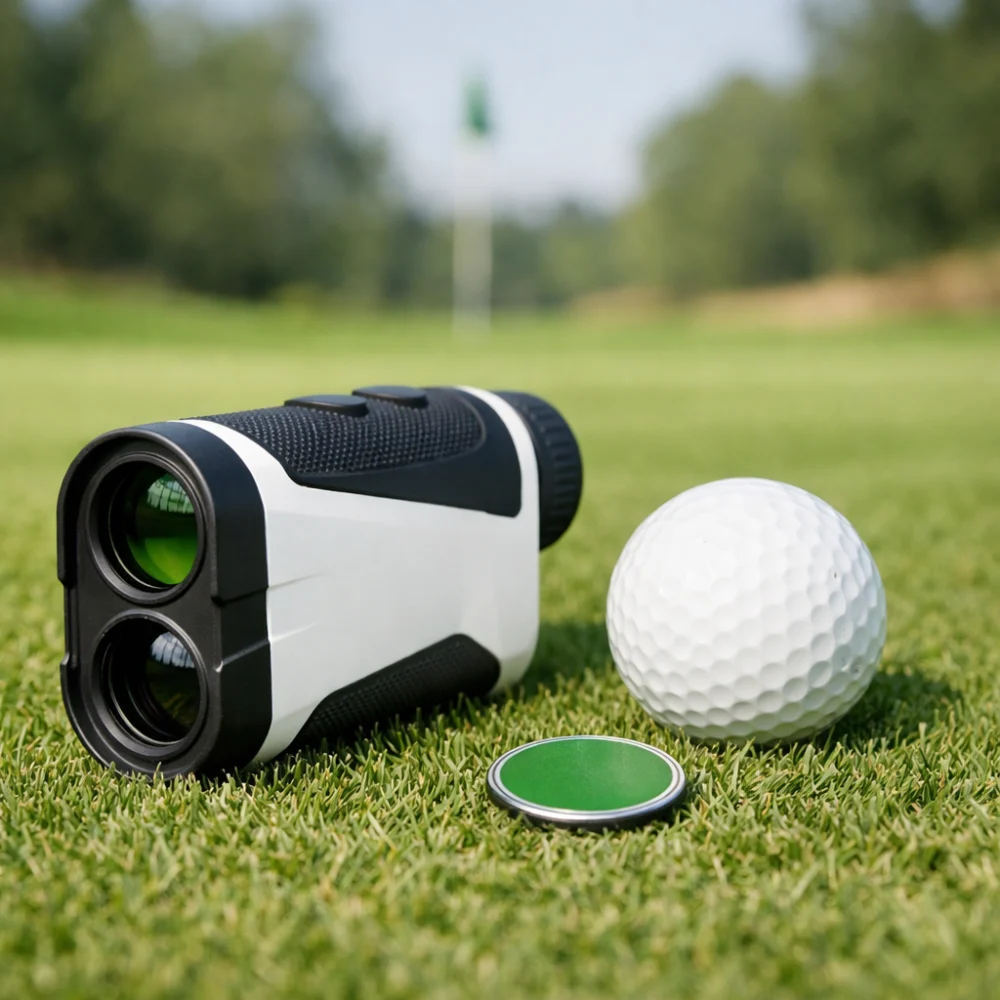
Golf laser rangefinders are for golfers who want a direct distance reading to a target such as a flag, bunker edge or hazard. They are usually chosen by players who prefer a quick, point-and-measure approach rather than relying only on course markings.
If you are comparing rangefinders for the first time, the main challenge is not spotting more features, but deciding which ones are actually useful in your round. A simple model may be enough for many players, while others will value extra convenience such as slope toggles, flag-lock cues or easier viewing through the eyepiece.
This guide focuses on the buying decisions that matter most: how the rangefinder is used, what the display and locking functions mean, and where convenience features justify the extra cost or complexity.
What should you look for in a golf laser rangefinder?
The best starting point is how you want to use it on the course. Some golfers mainly want straightforward distance checks, while others want help with target acquisition, steadier viewing or extra features that make repeated measurements easier. A good choice balances clarity, speed and the features you will genuinely use.
Specifications vary by model, so always check the individual product page before buying.
| Feature | What it means | Why it matters | What to check |
|---|---|---|---|
| Target acquisition | How easily the device helps you focus on the flag or other object | Affects speed and confidence when measuring a specific point | Look for flag-lock or pin-lock features if you want easier targeting |
| Display and view | How clear the readout is through the viewfinder | Important for quick reading in different light and for comfortable use | Check whether the screen, magnification and eyepiece suit your preferences |
| Slope or incline function | Whether the device can factor in uphill or downhill shots | Useful for practice and some rounds, but not needed by every golfer | Confirm whether it can be switched on and off if you need a more flexible option |
| Measurement range | The distance the unit is designed to measure | Should match how far you normally need to check targets | Compare the stated range on the product page and consider your typical course use |
| Ease of carry | How convenient it is to handle, store and move between shots | Matters if you value a compact, simple accessory | Look at size cues in the product description and any carrying accessories mentioned |
| Power source | How the device is powered | Affects upkeep and whether you prefer rechargeability or replaceable batteries | Check the product page for charging or battery details |
Key decision criteria explained
How you measure on the course
Think about what you need to measure most often. If you mainly want the distance to the flag, a straightforward laser rangefinder is often enough. If you want to compare several targets during a round, a model with quicker locking or clearer target identification can save time and reduce second-guessing.
Slope and incline features
Slope functions can help estimate playing distance on uphill or downhill shots, but not every golfer needs that extra layer. Some players prefer a simpler model for practice or situations where they do not want the feature engaged. The useful question is whether you want that assistance often enough to make it worth the added complexity.
Viewing comfort and clarity
Rangefinders are used through an eyepiece, so comfort matters more than many shoppers expect. Magnification, display legibility and how easily the device picks up the target all affect the experience. If you find small viewfinders tiring, choose a model whose product details suggest an easier viewing experience.
Power and upkeep
Some models are rechargeable, while others use replaceable batteries. Rechargeable designs can suit golfers who use the device often, while replaceable batteries may appeal if you want a familiar, simple power setup. The right choice depends on how you prefer to manage charging and spare power over time.
Common types and variants
Simple distance-only models
These are aimed at golfers who want the core job done without extra functions. They suit buyers who value ease of use and a more straightforward purchase decision. Their main limitation is that they may not offer the extra assistance some golfers want for slopes or faster target acquisition.
Models with slope adjustment
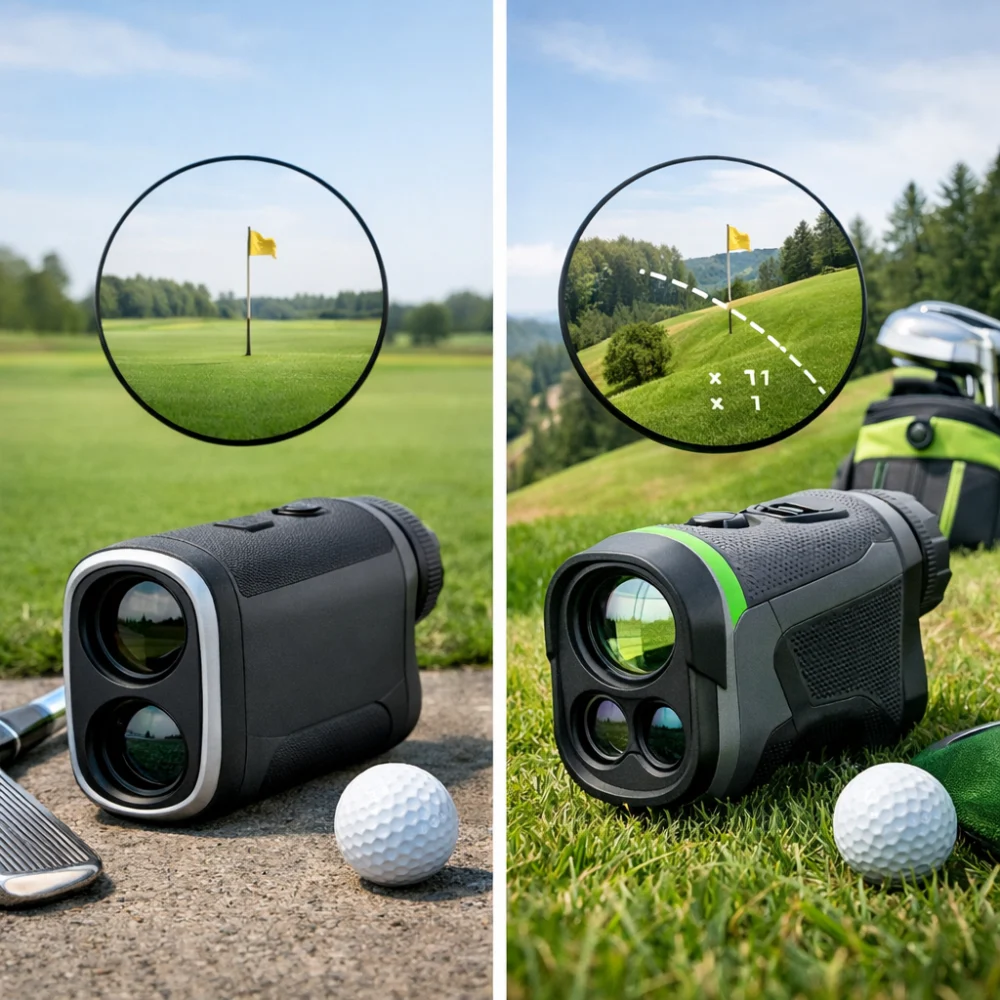
These add an additional layer of shot information that some golfers find helpful. They can be a good fit for players who want more context on uphill and downhill holes. The trade-off is that the feature adds complexity, so it is worth checking whether it can be turned off when needed.
Models with flag-lock or vibration cues
These are designed to make it easier to confirm you have locked onto the flag rather than a background object. They can be especially useful if you want faster, more confident readings. The main limitation is that the quality of the experience still depends on the specific model and how easy it is for you to use.
Which type suits different buyers?
| Buyer need | Helpful features | Main trade-off | Good check before buying |
|---|---|---|---|
| Beginner or occasional golfer | Simple operation, clear reading, straightforward distance measurement | Fewer extras, but less to learn | Look for an easy-to-understand product description and basic target measurement |
| Regular golfer who wants faster targeting | Flag-lock, vibration cues, clear viewfinder | More features can mean more cost and more choices to understand | Check how the locking and target confirmation features are described |
| Player interested in slope information | Slope or incline adjustment with an option to switch it off | Added complexity compared with a basic unit | Confirm that the slope function is clearly stated on the product page |
| Buyer who wants easy day-to-day handling | Compact form, comfortable grip, practical power option | Convenience features may vary by model | Review any size, charging or battery details given |
Common mistakes to avoid
- Choosing by headline range alone. A long stated range is not the same as the distance you will actually measure easily on every shot. Think first about how the device performs on the targets you care about most.
- Paying for features you will not use. If you only want basic yardages, extra functions may add cost without improving your round.
- Ignoring ease of use. A rangefinder that is awkward to view or slow to settle can be more frustrating than a simpler one.
- Assuming every slope function is the same. Look at how the product describes the feature, and whether it can be switched off if you prefer.
Practical suitability and caveats
Golf laser rangefinders are best seen as measuring tools, not as a substitute for judgement on the course. Conditions, target shape and your own viewing confidence can all affect how useful a reading feels in practice. If you are buying for a specific league, competition or local rule set, check any course or event requirements before relying on a slope-equipped model.
Specifications vary by model, so always check the individual product page before buying.
How to compare options efficiently
- Start with your main use: simple yardages, faster target lock or added slope information.
- Shortlist the features that matter most and ignore the rest.
- Compare viewfinder comfort, target locking and power type side by side.
- Weigh convenience against simplicity rather than chasing the longest feature list.
- Read the individual product page carefully before you decide.
Summary buyer checklist
- Does it match the kind of distance checks you want to make?
- Do you need slope, or would a simpler model suit you better?
- Is the target-locking method clear enough for your use?
- Does the viewfinder look comfortable and easy to read?
- Is the power setup convenient for the way you plan to use it?
- Have you checked the product page for the exact features and any limitations?
Frequently asked questions
What is a golf laser rangefinder used for?
It is used to measure distance to a target on the course, such as the flag or another point you want to play to. Many golfers choose one because it gives a direct reading without needing to estimate by eye.
Do I need slope if I only play casually?
Not necessarily. Many casual golfers are well served by a straightforward distance-only model, especially if they want something simple and easy to use. Slope is more of a preference than a requirement for most buyers.
What is flag-lock or pin-lock for?
It helps the device identify and confirm the target you are aiming at. That can make readings feel more reliable when the flag is close to other objects in the background.
Are rechargeable rangefinders better than battery-powered ones?
Neither is automatically better. Rechargeable models can suit frequent users who prefer charging, while battery-powered models may suit those who want a familiar replace-and-go setup. The better choice depends on your routine.
How important is magnification?
Magnification affects how comfortably you view the target through the device. It is worth considering if you care about easy aiming and clear sight of the target, but it should be balanced with the overall viewing experience.
Can I compare rangefinders just by their stated distance range?
It is a useful starting point, but not the whole story. Ease of target acquisition, display clarity and practical handling can matter just as much in everyday use.
What should I check on the product page before buying?
Check the stated features, the power type, whether slope can be switched on or off, and any notes about target locking or viewing aids. That gives you a better sense of how the product will suit your round.

